


William IV Bench
A william iv bench brings substantial timber and architectural presence to a hallway or drawing room.
William IV Bench
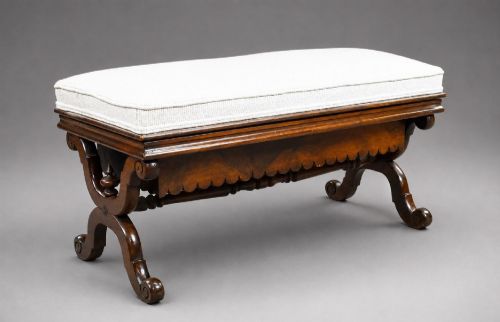
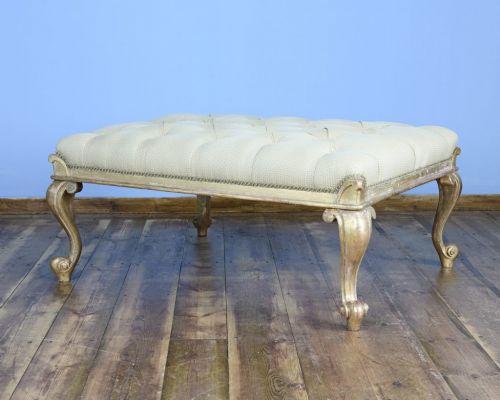
A william iv bench unites robust seating forms with the heavy proportions characteristic of the era, frequently taking the shape of a long hall bench, window seat, or double-ended sofa. These pieces span the nineteenth century alongside related forms like footstools, settees, and chaise longues.
Makers of the period worked within the william iv, regency, and rococo revival styles, often employing carved mahogany or rosewood. Surviving examples frequently show architectural roll ends or rule ends designed for formal entrance halls and grand reception rooms.
Materials and construction
Timbers like mahogany and rosewood form the structural foundation of these seats, frequently enhanced by carved detail, parcel gilding, or brass mounts. Workshops selected dense hardwoods capable of supporting heavy scroll arms and substantial frame members.
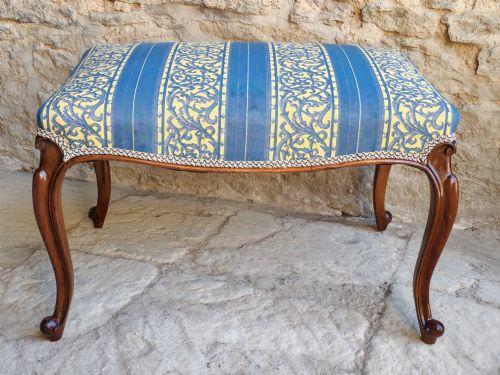
Upholstery materials range from leather and damask to hessian and kilim coverings, secured over traditional webbing and stuffing. Structural joinery relies on heavy framing to support the grand scale typical of the period.
Several footstools arrive upholstered in traditional kilim, proving that nineteenth-century designers appreciated a bold splash of tribal flat-weave.
Judging quality and craftsmanship
Quality rests upon the crispness of the timber carving and the architectural balance of the frame. Pieces with well-defined scroll ends and substantial proportions demonstrate superior workshop execution.
The choice of primary timber and secondary framing woods influences the overall integrity of the piece. Master craftsmen utilised dense mahogany or figured rosewood paired with refined joinery details.
Miles and Edwards·Gillows·Rudolph Ackermann
The William IV Bench Glossary
- Curule stool
- An X-framed stool design originating in classical antiquity and revived during the nineteenth century. This form utilises intersecting curved supports to create a strong architectural profile.
- Roll end
- A scrolled terminal on a bench or sofa arm where the timber curls outward. It defines the profile of many nineteenth-century window seats and hall benches.
- Parcel gilt
- Partially gilded timber ornament applied to carved wooden details. This technique highlights specific motifs against a dark mahogany or rosewood ground.
- Récamier
- A type of chaise longue featuring two raised ends of unequal height, named after a famous portrait subject. It represents the more elaborate seating forms found in period interiors.
- Kilim
- A flat-woven textile used historically for upholstery and floor coverings. It provides a durable patterned surface on nineteenth-century footstools and small benches.
William IV Bench: Frequently Asked Questions
Where should I place a william iv bench?
These long seats suit wide hallways, entrance passages, or beneath large windows where their architectural timber frames can be viewed in the round. Their substantial scale allows them to function effectively as focal points in large rooms.
Positioning them away from direct heat sources helps protect the polished mahogany or rosewood surfaces and the underlying nineteenth-century joinery from excessive drying.
How do I care for leather upholstery?
Leather upholstery on period benches benefits from occasional light cleaning with a damp cloth followed by a suitable natural wax dressing to maintain suppleness. Avoid harsh chemical cleaners that can strip the historic finish.
Keeping the material conditioned prevents cracking and helps preserve the integrity of the original hide or period replacement leather over decades of use.
How can I identify the correct period?
Nineteenth-century pieces from this era display distinct stylistic markers such as heavy scroll arms, robust mahogany or rosewood timbers, and carved foliage details. Construction methods typically involve heavy framing and traditional hand-cut joinery.
Comparing the proportions and decorative motifs against documented examples helps distinguish these works from later revival furniture.