
Mahogany Upholstered Bench
A mahogany upholstered bench brings refined seating to a hallway or bed end, combining rich timber frames with tactile textile covers.

What these pieces are
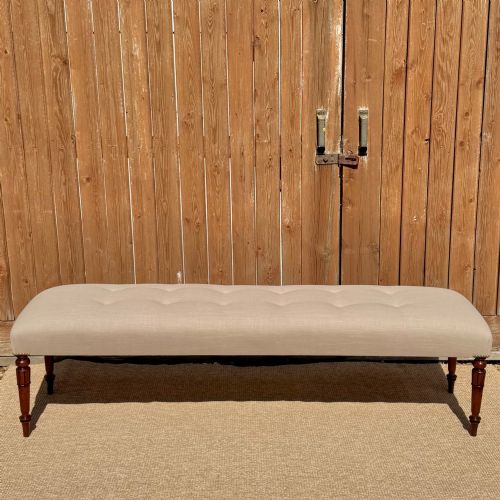
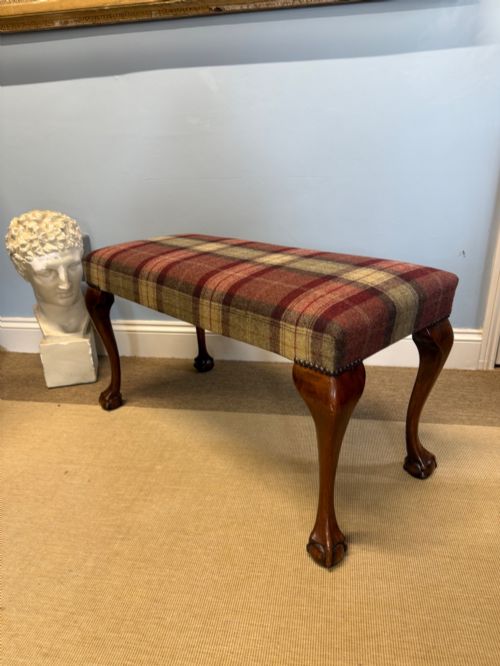
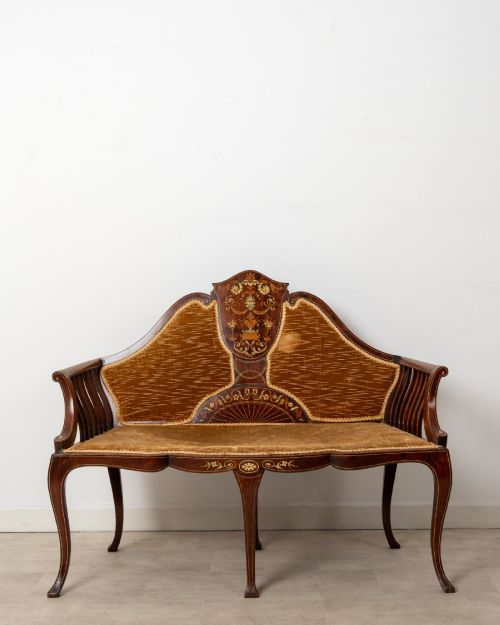
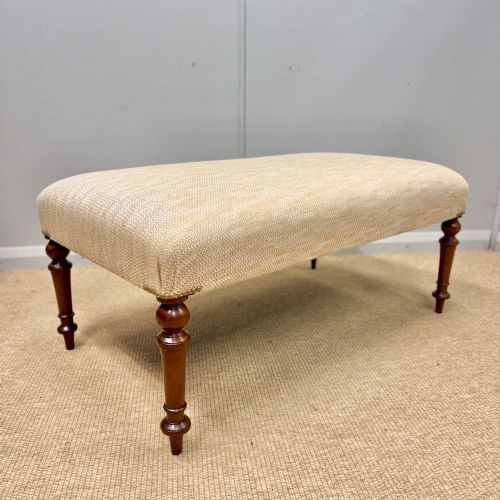
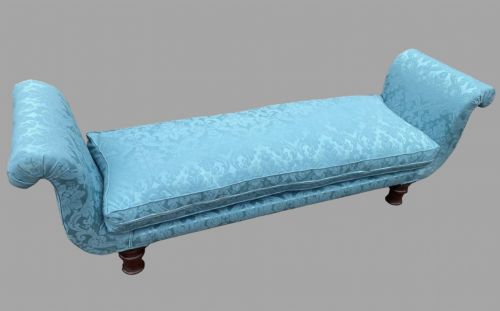
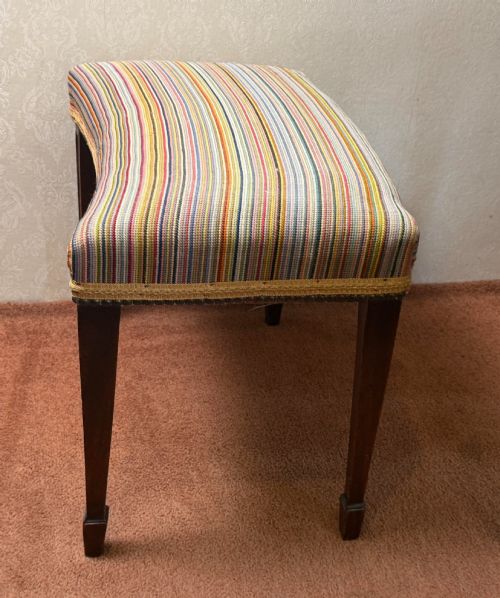
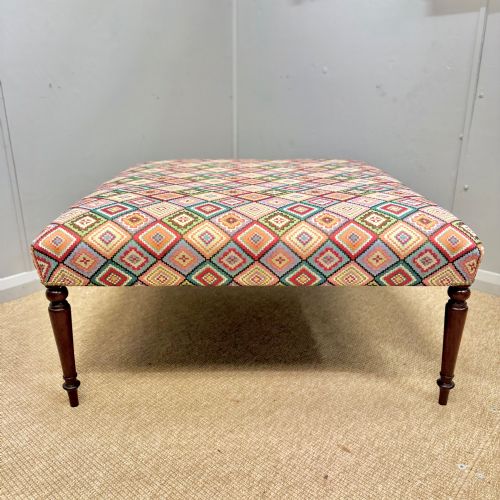
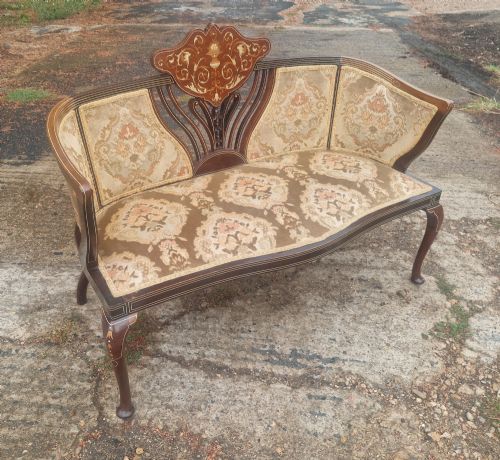
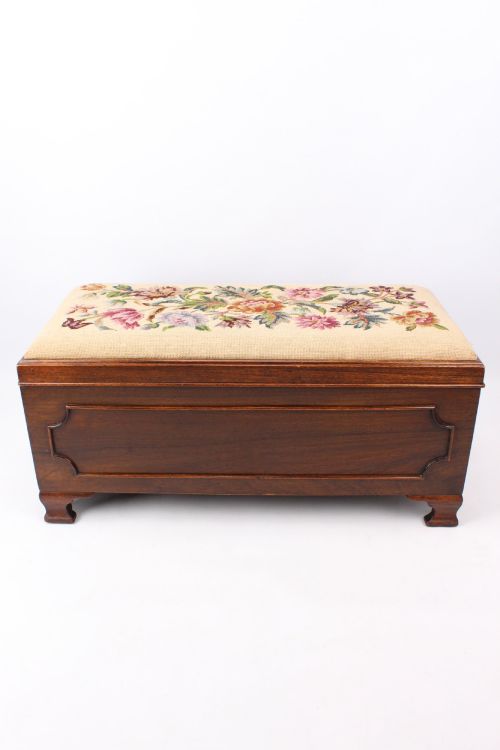
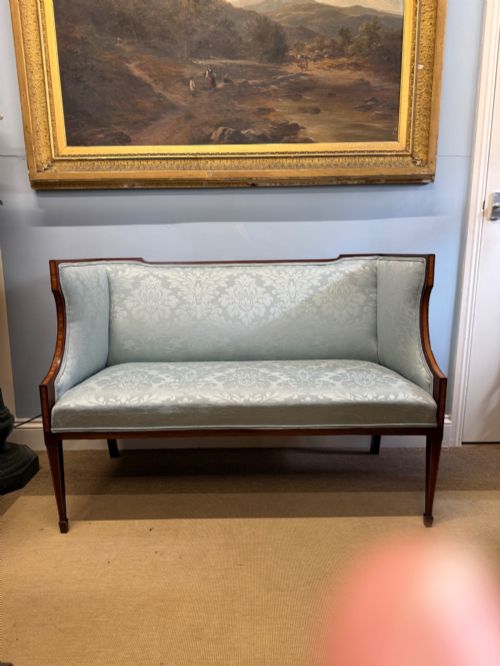
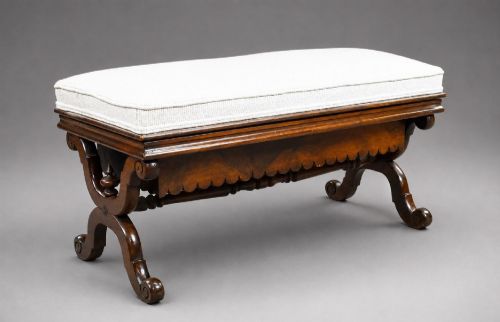
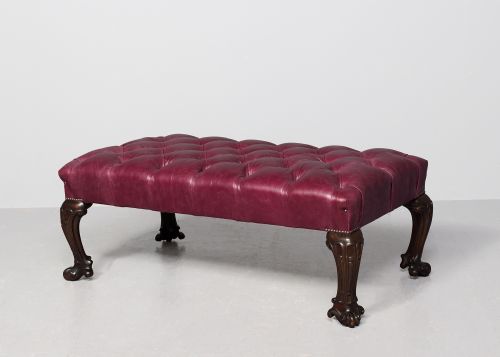
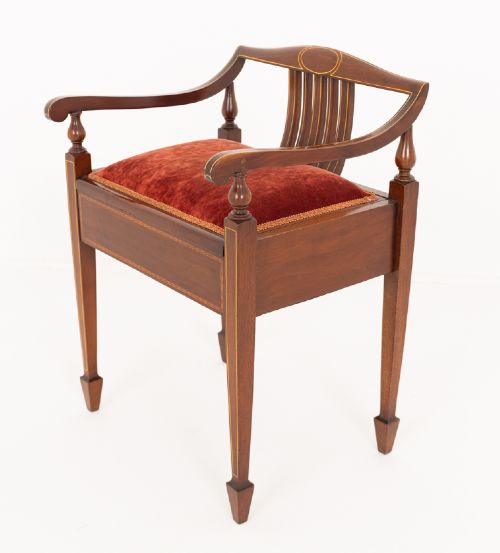
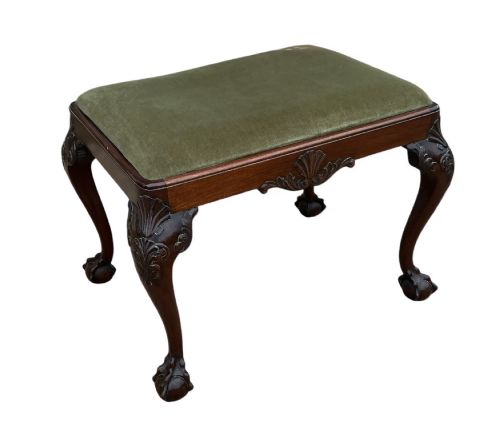
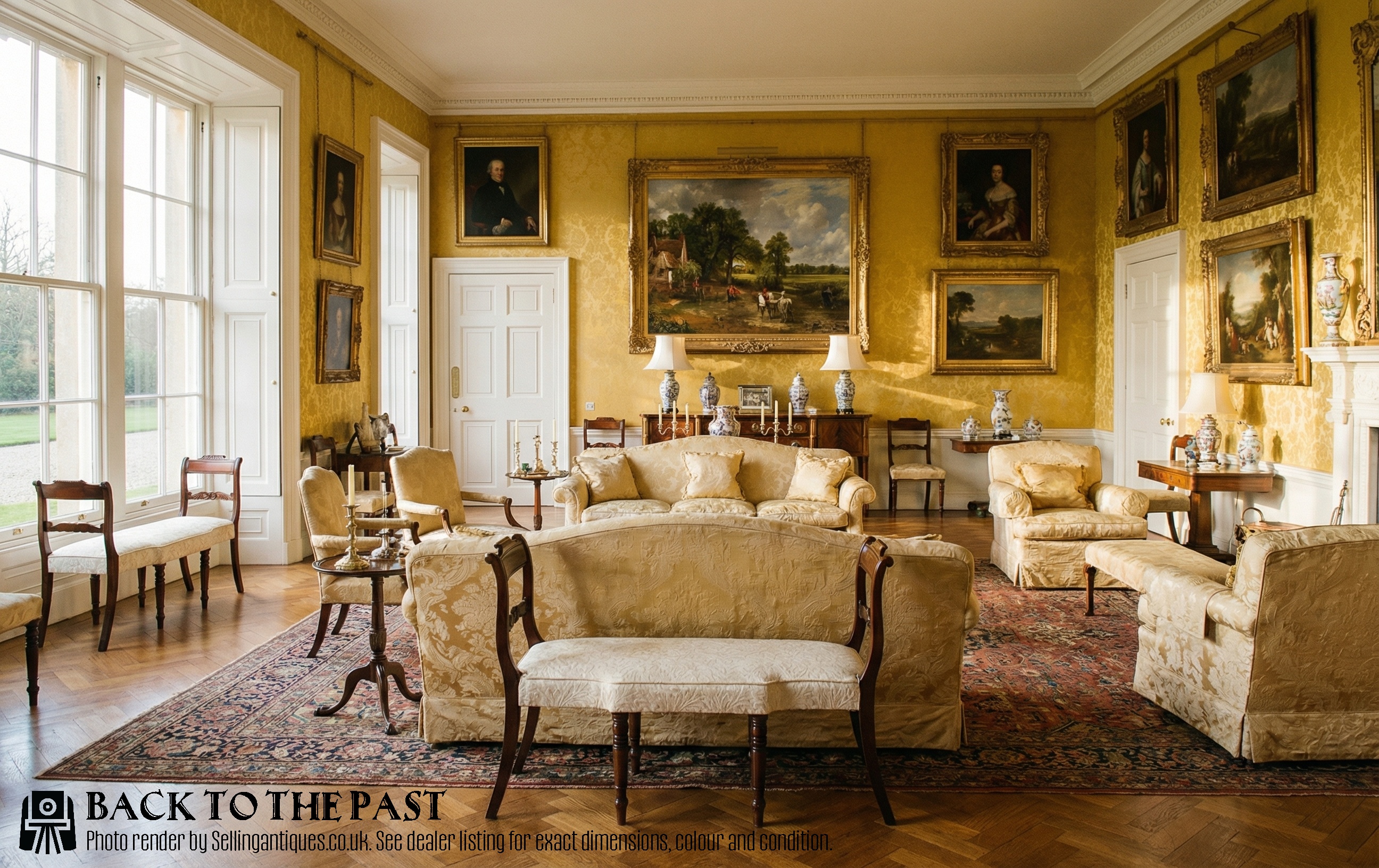
A mahogany upholstered bench encompasses functional seating forms such as stools, window seats, long benches, and salon sofas spanning the Georgian, Regency, William IV, and Victorian periods. Buyers exploring this category encounter sturdy timber frames paired with varied upholstery treatments, from plain fabric to deep buttoned leather.
The pieces listed on this page run from early nineteenth century George III examples down to late nineteenth century Victorian and Sheraton Revival creations. Forms range from compact X-framed stools and bed foot stands to long benches and window seats designed for specific architectural spaces.
How they were made
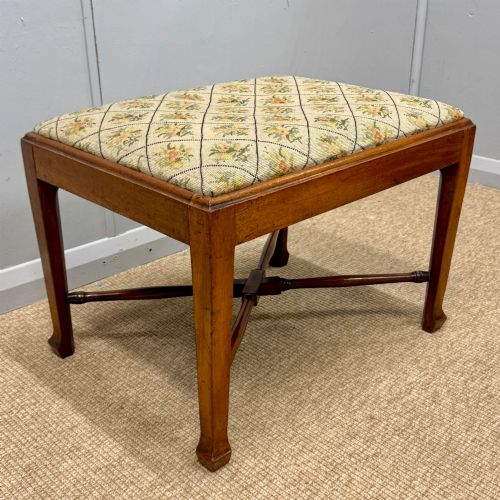
Cabinet makers utilised solid mahogany and flame mahogany veneer for the structural frames, sometimes enriching the timber with marquetry inlay to create decorative contrast. Joinery was executed by hand, shaping sturdy supports like the characteristic X-frame stool construction.
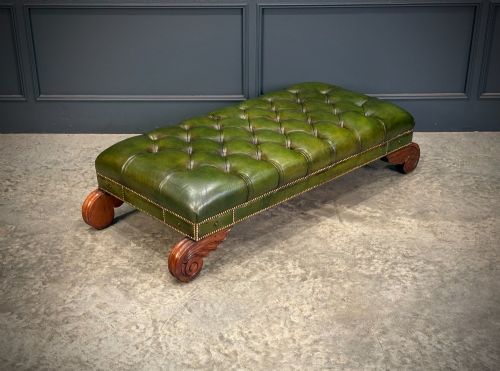
Upholstery techniques involved durable fabric, leather, and fabric upholstery secured to the wooden frames. Certain pieces incorporate detailed brass-studded finishing alongside buttoned leather work to fasten the padding securely.
Retail Price Guide 2026
Typical UK retail prices for mahogany upholstered bench, calculated from the Sellingantiques database of over a million retail prices indexed since 2003. This retail price guide relies exclusively on Sellingantiques data; no external sources or auction records are used, so the figures do not describe the wider market.
Periods represented span from George III and Regency through William IV to Late Victorian.
What varies in quality
Quality rests upon the selection of timber, distinguishing plain mahogany boards from highly figured flame mahogany veneer and crisp marquetry inlay. The sophistication of the period styling, from restrained George III lines to elaborate Victorian flourishes, dictates the level of artisan effort invested in the frame.
The integrity of the upholstery execution, including precise leather buttoning and secure brass studwork, separates standard utilitarian seating from refined salon pieces. Maker attribution, such as documented Gillows craftsmanship, further elevates a piece within the historical record.

Gillows of Lancaster
The Mahogany Upholstered Bench Glossary
- Mahogany
- A durable tropical hardwood prized for its deep reddish brown tone and smooth grain. It served as the primary structural material for fine British cabinet making throughout the Georgian and Victorian eras.
- Flame mahogany veneer
- A thin decorative slice of timber cut from wood where the branch meets the trunk, producing a distinctive flickering flame pattern. Cabinet makers applied this to prominent surfaces for visual impact.
- Marquetry inlay
- An ornamental technique of fitting contrasting pieces of wood or other materials into a veneer background to form pictorial or geometric designs. It adds subtle colour variation to the timber surface.
- X-framed stool
- A seating form supported by intersecting diagonal legs forming an X shape. This ancient structural design enjoyed revivals during the Regency and later nineteenth century periods.
- Window seat
- A long, narrow upholstered bench specifically proportioned to fit within the recess of a bay or sash window. These pieces often feature raised ends and elegant arm supports.
Frequently Asked Questions
Where should I place a mahogany upholstered bench?
These versatile seats suit narrow hallways, the foot of a bed, or positioned beneath a large window. Their compact profiles allow them to provide additional seating without cluttering a room.
Matching the period style of the bench to surrounding furniture helps integrate the piece smoothly into an existing interior scheme.
How do I care for the mahogany frame?
Protect the timber by keeping the bench away from direct heat sources and strong sunlight, which can dry out or fade the wood and veneer. Occasional dusting with a soft, dry cloth preserves the natural sheen of the polish.
Avoid using silicone-based sprays, as they build up residue over time and dull the appearance of nineteenth century finishes.
How can I tell a George III bench from a Victorian one?
George III pieces generally display cleaner, more restrained classical proportions influenced by eighteenth century design principles. Victorian examples often incorporate heavier proportions, bolder upholstery treatments, or revivalist ornamentation.
Examining the underlying timber construction and the style of the upholstery studs often clarifies the specific period of manufacture.