



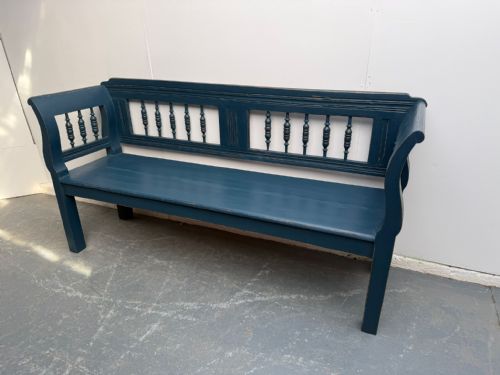


Victorian Entry Bench
A victorian entry bench welcomes visitors with carved wood, heavy timber construction, and practical under-seat storage designed for nineteenth-century hallways.
Victorian Entry Bench
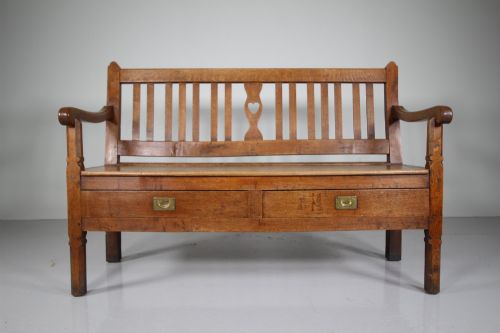
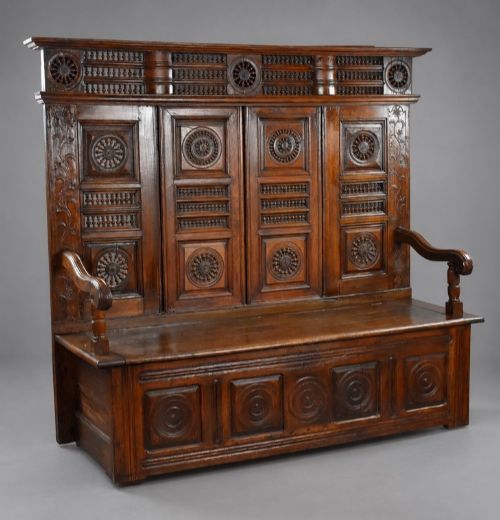
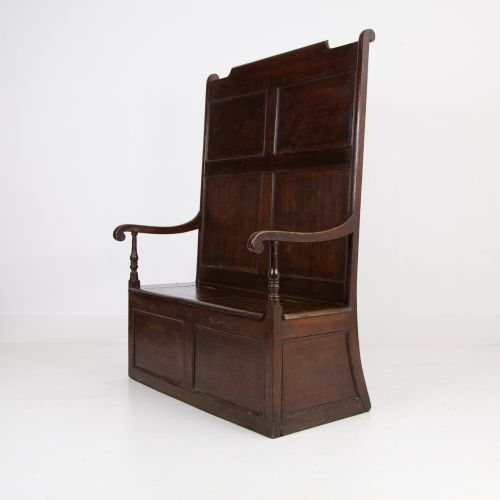
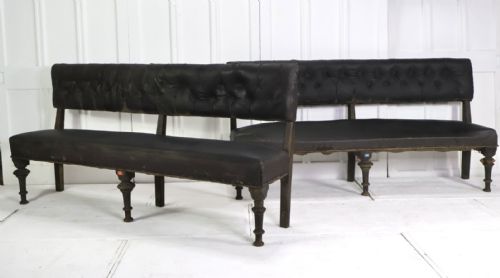
A victorian entry bench provides seating and storage in a hallway or corridor, drawing on forms like church pews, box settles, and monks benches. These pieces come in lengths from narrow two-seater hallway seats to long church pews originating from nineteenth-century institutions and country houses.
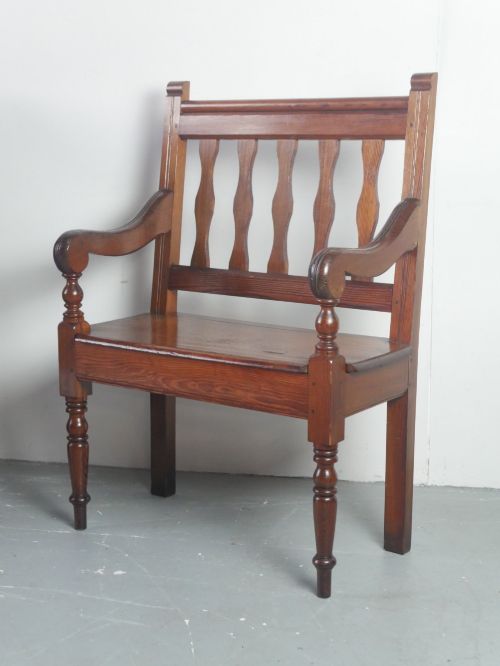
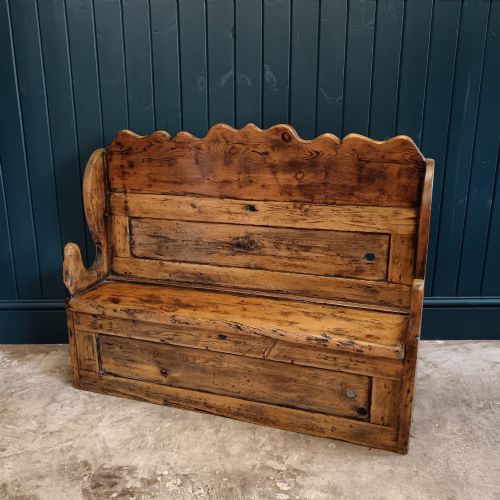
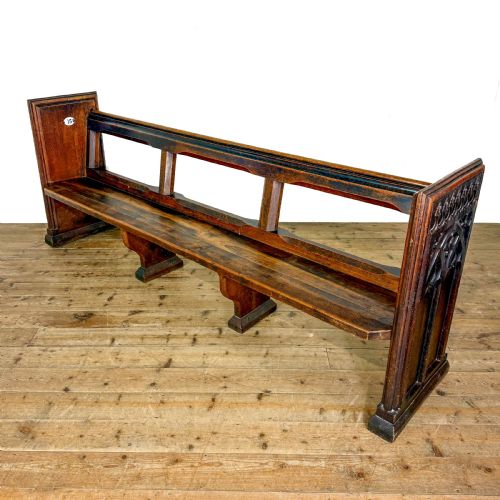
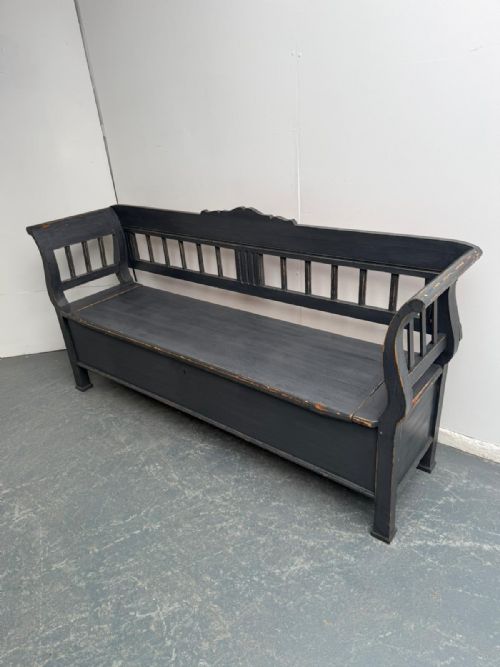
The most common examples on this page are carved oak settle benches and painted pine box seats, alongside walnut chairs and pitch pine church pews. Many incorporate hinged seats opening to reveal storage compartments for boots and coats.
Regional variations include Welsh country benches with heart motifs, Irish country house benches, and continental Hungarian painted pieces. Makers also produced specialised hall stands combining benches with umbrella racks and mirror frames.
Assessing Quality
Quality rests on timber selection and the depth and crispness of the hand carving across panels and backrests. Heavy golden oak, figured walnut, and dense pitch pine indicate superior material grade compared to utilitarian softwoods.
The integrity of the original joints, hinges, and lift-up mechanisms dictates the structural merit of a box settle or monks bench. Retained original paint finishes on Hungarian pine pieces carry higher merit than later stripped or repainted surfaces.
Parnassian examples by recorded cabinet makers or workshops show finer proportions, crisp moulding details, and balanced overall design.
Nineteenth-century hall furniture includes box settles, church pews, and combined stick and hat stands.
Hampton & Son's·Shoolbred·Richard Bridgens
The Victorian Entry Bench Glossary
- Settle
- A wooden bench with a high back, solid arms, and often a box compartment beneath the seat. This form protected sitters from draughts in entrance halls.
- Monks bench
- A convertible seat featuring a hinged back that folds down onto the arms to form a table. It serves a dual purpose in compact spaces.
- Church pew
- A long wooden bench originally manufactured for ecclesiastical buildings and repurposed for domestic hallways. They frequently feature pitch pine or oak construction.
- Hall stand
- A piece of hall furniture combining a seat with vertical panels, coat hooks, a mirror, and umbrella stands. They manage outerwear in entrance spaces.
- Gothic Revival
- A nineteenth-century design style incorporating pointed arches, tracery, and medieval architectural motifs into furniture. It appears frequently on carved oak benches.
Victorian Entry Bench: Frequently Asked Questions
What is a monks bench used for?
A monks bench serves as a hallway seat with a high back and enclosed storage beneath the timber lid. By pivoting the back forward, the piece transforms into a flat-topped table.
Historically, this dual functionality suited smaller domestic spaces where furniture needed to adapt during the day. In modern homes, they provide practical seating and concealed storage for hallway clutter.
Where did hall benches go in Victorian homes?
Victorian hallway furniture stood in entrance lobbies, corridors, and stair landings to greet arriving guests. They offered a place to sit while removing boots and heavy outdoor garments.
They also functioned as a spot to leave walking sticks and umbrellas in the integrated stands frequently attached to the backboards.
How do I care for a painted pine settle?
Painted pine box settles require cleaning with a soft, dry cloth to remove dust without damaging original pigments. Avoid harsh chemical cleaners and excessive moisture on antique painted surfaces.
Applying a light, microcrystalline wax can protect exposed wooden edges and unpainted interior pine boards. Keep the furniture away from direct heat sources to prevent wood splitting.
Are church pews comfortable for daily seating?
Church pews feature upright wooden backs and solid plank seats designed to encourage attentive posture rather than lounging. Their shallow depth requires careful placement for relaxation.
Many owners add loose cushions or custom squab pads upholstered in linen or wool to improve comfort for everyday hallway use.