

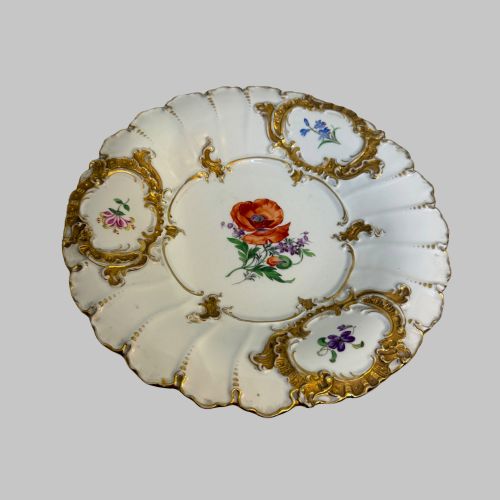


White Porcelain Serving Dish
White porcelain serving dish forms span centuries of delicate hand-painting, crisp moulded bodies and utility across English, European and Asian kilns.

White Porcelain Serving Dish
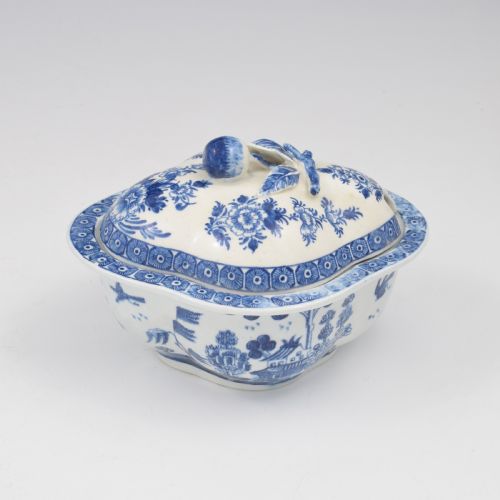
A white porcelain serving dish encompasses platters, tureens, junket dishes and chargers designed for formal dining and table presentation. The selection spans the 18th century through to the early 20th century, drawing together domestic English factories, European houses and Asian export wares.
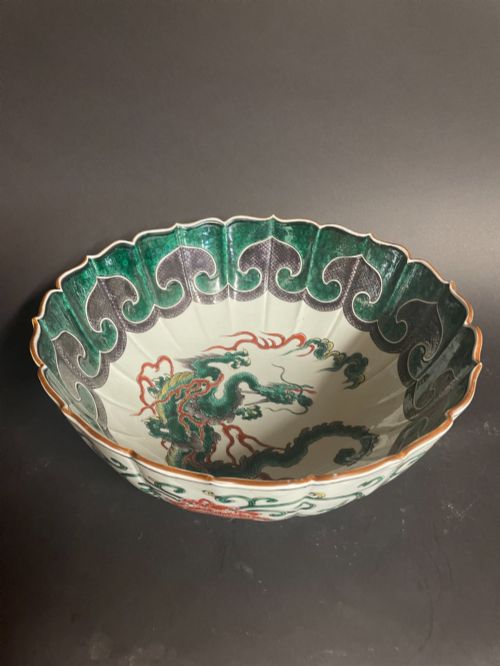
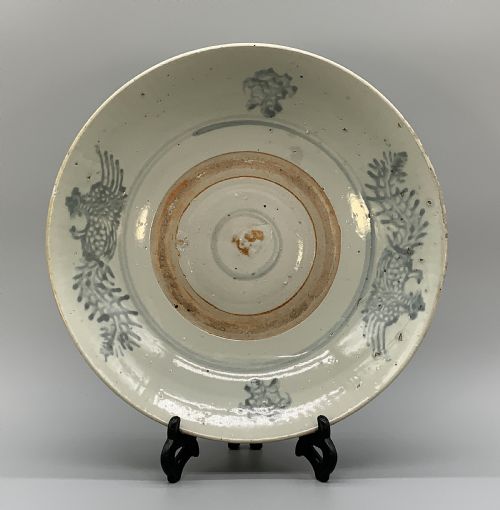
English pieces from this selection originate predominantly from historic manufactories such as Worcester, Derby, Bow and Minton. Alongside these sit Continental European services, Chinese export porcelain from the Qianlong and Ming periods, and Japanese Imari or Arita ceramics.
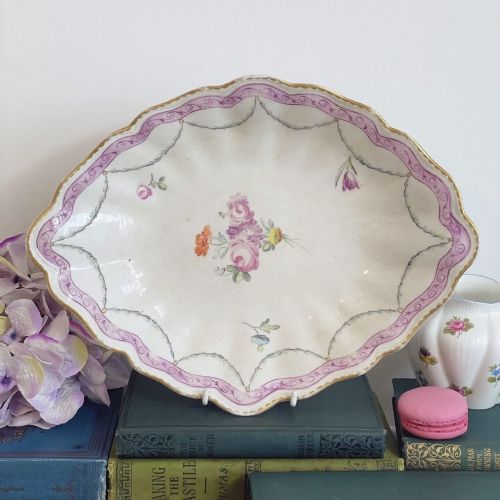
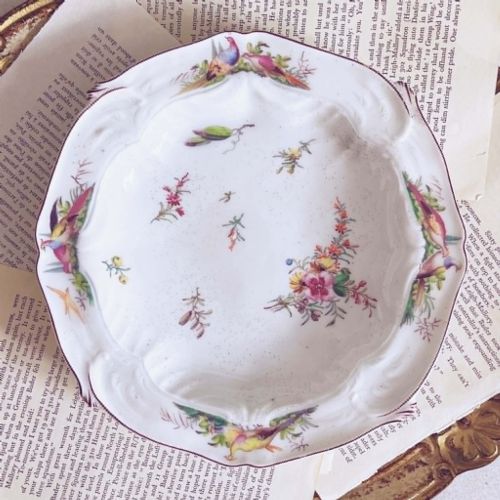
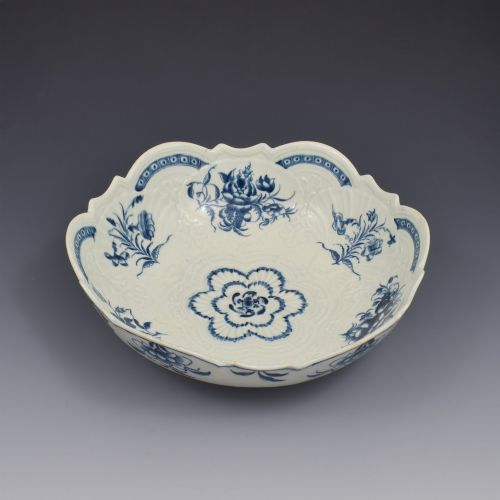
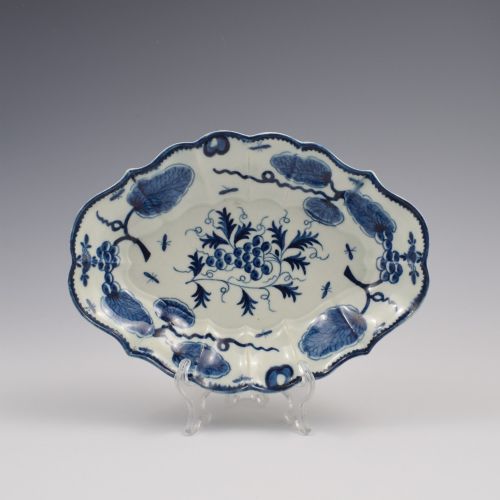
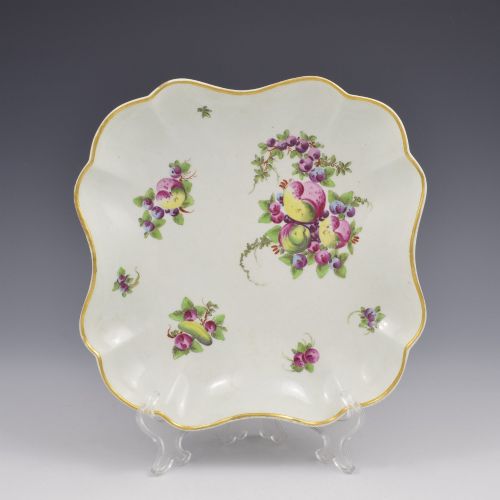
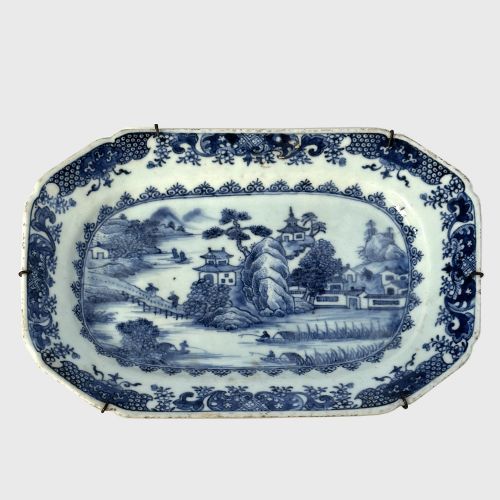
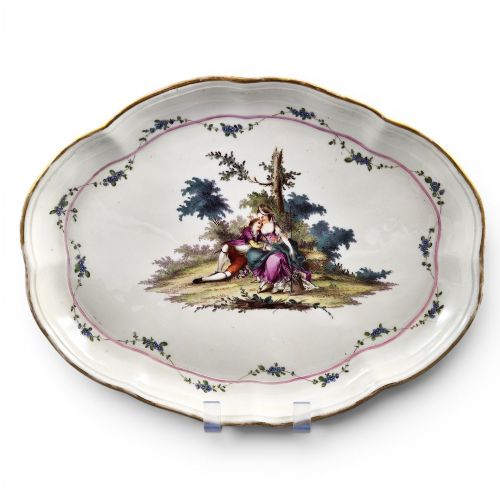
The physical forms include lobed dessert dishes, octagonal serving trays, lidded sauce tureens and expansive platters. Buyers find both crisp blue-and-white patterns and polychrome painted decoration enriched with gilding.
Materials and production methods
Makers utilised soft-paste and hard-paste porcelain bodies, frequently finished with a clear or white glaze that provided a smooth canvas for subsequent decoration. Ironstone and pottery bodies also appear alongside traditional porcelain in the broader grouping.
Decoration relied on hand-painted polychrome pigments, underglaze blue, enamel colours and applied gold leaf. Many pieces incorporate moulded relief elements, such as bamboo, lotus motifs or fluted edges, shaped directly in the wet clay before firing.
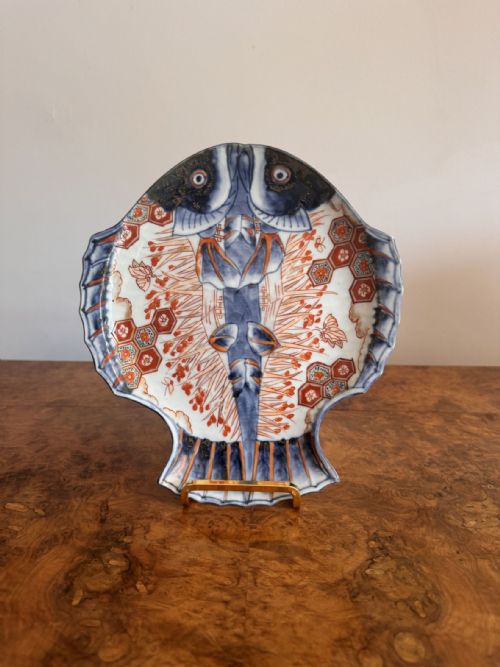
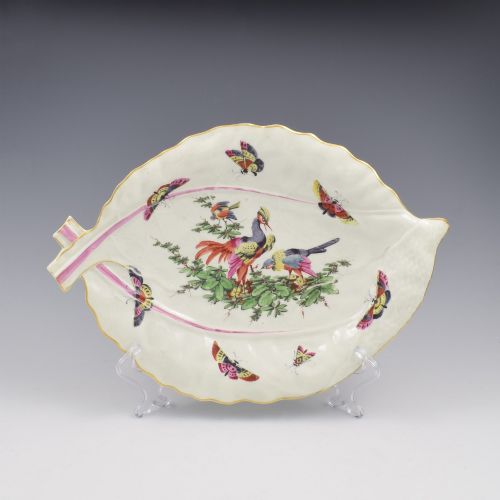
Several plates abandon standard circles entirely, taking the form of swimming fish, fan segments and botanical leaves.
Assessing quality in antique tablewares
Quality rests upon the crispness of the porcelain moulding, the refinement of the paste and the precision of the hand-painted brushwork. Superior examples display clean white glazes free from excessive kiln freckling, coupled with vibrant, well-controlled enamel colours.
The distinction between standard domestic wares and exceptional factory output lies in the detail of the artistry, such as finely rendered botanical studies or birds, and the careful application of gilding. Provenance indicated by period factory marks adds further weight to an object.
Dr Wall Worcester·Flight Barr and Barr·Derby Porcelain·Minton·Coalport·Mason·Meissen·Müller Volkstedt
The White Porcelain Serving Dish Glossary
- Soft-paste porcelain
- A glassy porcelain composition fired at lower temperatures than hard-paste, common in 18th-century English factories. It produces a warm, slightly creamy body.
- Hard-paste porcelain
- A true porcelain made from kaolin and petuntse, fired at high temperatures to create a dense, vitreous and highly durable white body.
- Junket dish
- A shallow dish traditionally used for serving junket, a sweetened curd dessert, often featuring lobed or fluted rims.
- Charger
- A large decorative plate or platter used primarily for display or as a base setting during formal dining.
- Tureen
- A deep covered vessel designed for serving soups, sauces or entrees at the dining table.
White Porcelain Serving Dish: Frequently Asked Questions
How do I care for antique porcelain serving dishes?
Wash these pieces by hand in warm water using a mild detergent, avoiding automatic dishwashers entirely to protect the historic glaze and delicate gilding. Store them securely with padded dividers between stacked platters to prevent rim chipping.
Keep them away from rapid temperature changes, such as microwave ovens or direct oven heat, which can crack the old ceramic body or destabilise historical repairs.
Were these dishes meant for everyday dining?
Many of these forms, particularly the large platters, tureens and junket dishes, were created for formal dining services and public display during feasts. Wealthy households utilised them to serve meats, vegetables and sweet courses.
Smaller dessert dishes and plates were brought out specifically for the final courses of a meal, reflecting the stratified nature of historic table service.
How can I tell 18th-century porcelain from later copies?
Examine the glaze and body under good light to observe the characteristic pooling, subtle imperfections and translucency unique to early soft-paste or hard-paste formulas. Weight, foot-rim wear and hand-mixed pigments provide reliable clues to genuine period manufacture.
Factory marks, where present, help anchor pieces to specific eras, though many early items relied on painted workman's ciphers rather than formal stamps.
What is Chinese export porcelain?
Chinese export porcelain comprises ceramics manufactured in China specifically for trade and shipment to Western markets from the Ming dynasty onwards. These wares combined traditional Chinese potting techniques with shapes and decorative motifs tailored to European tastes.
Platters and tureens from the Qianlong period demonstrate this cultural exchange, featuring blue-and-white landscapes or famille rose enamels.