

White Opaque Twist
White opaque twist drinking vessels are eighteenth-century glass pieces that collectors prize for their intricate, milky enamel stems.
White Opaque Twist
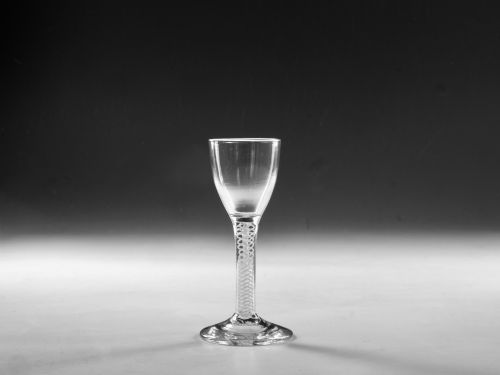
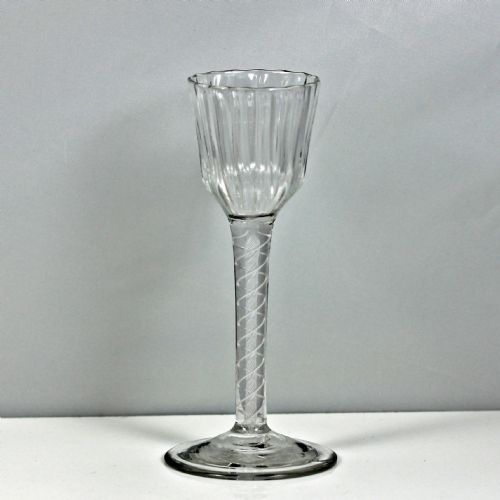
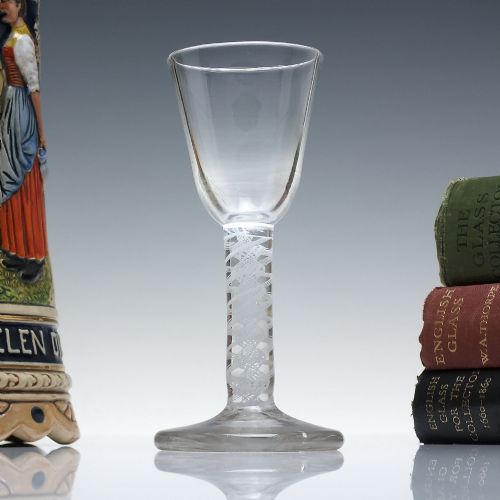
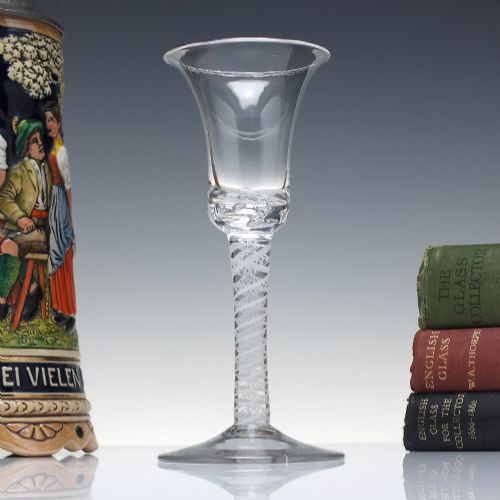
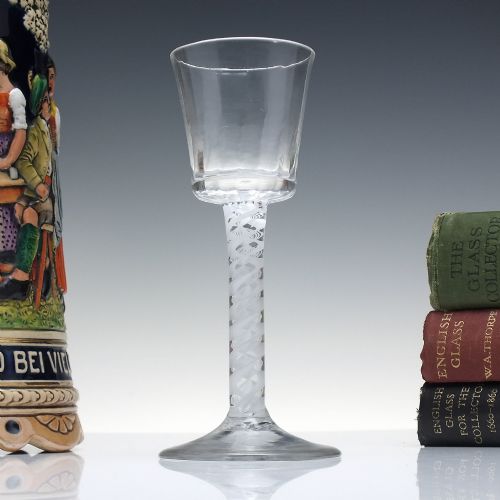
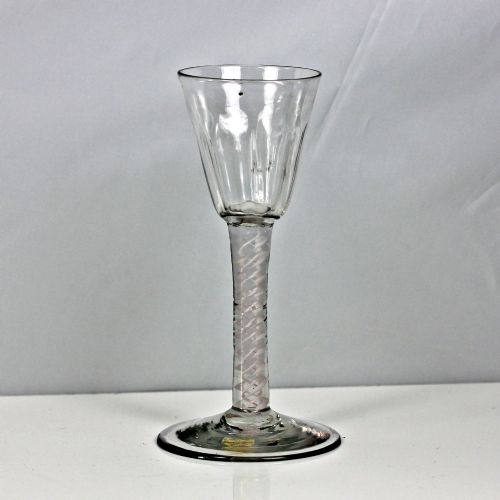
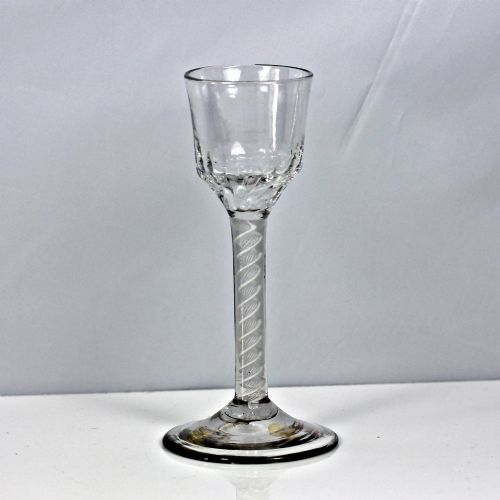
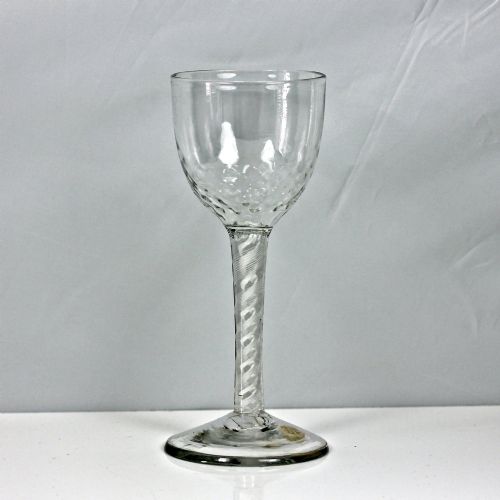
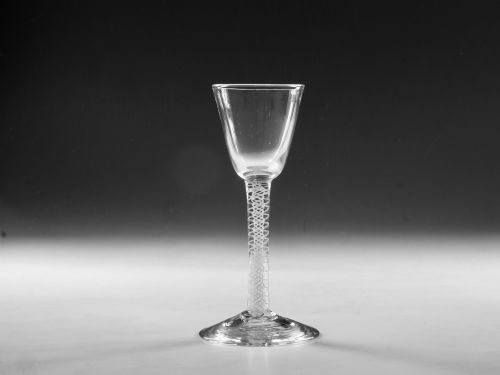
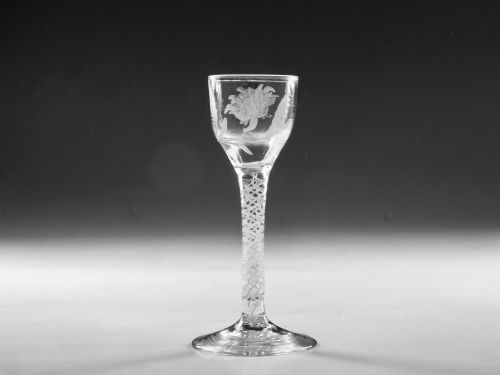
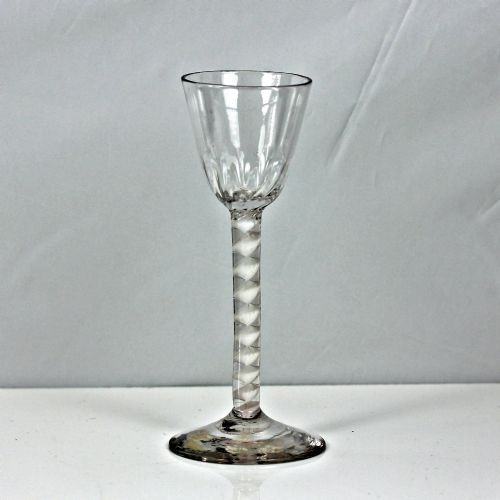
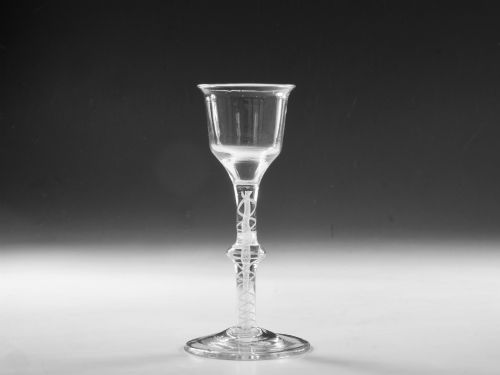
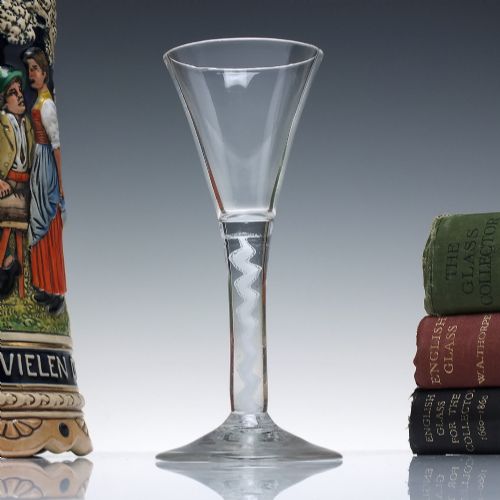
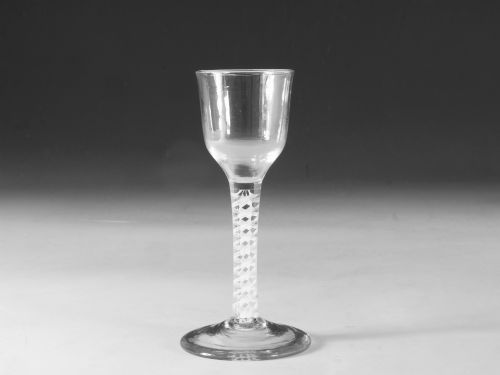
A white opaque twist is a piece of eighteenth-century English glassware, most commonly found as a wine glass from the Georgian period. These drinking glasses feature clear lead glass bowls supported by distinct stems enclosing opaque white enamel threads. The forms span various bowl shapes including ogee, bucket, rounded funnel, and trumpet, alongside specific drinking vessels such as ale glasses, ratafia glasses, and sweetmeat glasses.
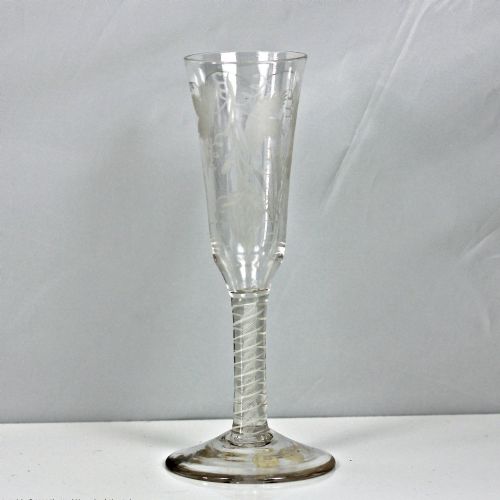
The majority of these pieces originate from the mid to late eighteenth century, specifically between 1750 and 1770. Alongside standard wine glasses, buyers encounter specialised forms like firing glasses with heavy feet, heavy ale glasses with hop and barley engravings, and compact ships glasses designed for stability at sea.
Materials and construction
Glassmakers created these stems using lead glass and lead crystal for the clear components, combined with white enamel to form the internal threads. The manufacturing technique involved drawing and twisting glass rods that contained opaque white enamel twists enclosed within a clear glass outer layer.
Makers produced different visual structures inside the stem, creating single series twists, double series twists, and multi-spiral variations. Certain examples incorporated structural variations into the stem itself, such as single or multiple knops, while bowls occasionally featured flute-moulding or wrythen ribbing.
White Opaque Twist Retail Price Guide 2026
Typical asking prices for white opaque twist among the pieces listed under this phrase on Sellingantiques today, from the lower quarter to the upper quarter. They describe what is for sale here now, not the wider market.
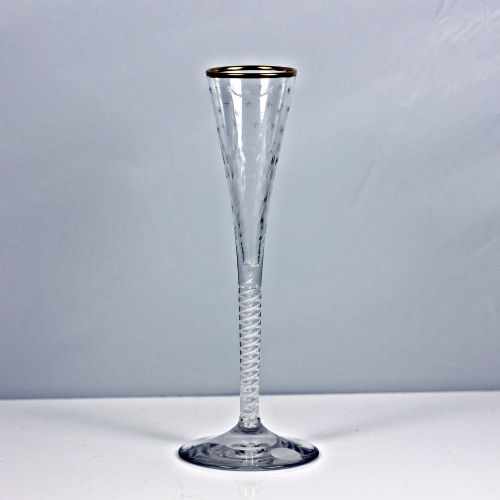
The available object types span wine glasses, ale glasses, champagne vessels, and sweetmeat glasses featuring single, double, and multi-spiral twists.
Distinctions in quality
Quality rests in the complexity of the internal stem formation and the crispness of the glass moulding. Double series and multi-spiral twists demand greater skill from the glassmaker than straightforward single series designs.
Additional refinement appears in the decorative treatment of the bowl, where delicate hop and barley engraving or gilding elevates the standard of the piece. The precise execution of moulded bowl details, such as wrythen fluting or ribbed ogee contours, separates standard examples from more elaborate specimens.
The White Opaque Twist Glossary
- Opaque twist
- A stem formation enclosing white enamel threads inside clear glass. This technique defined British drinking glasses during the mid-eighteenth century.
- Double series
- A stem containing two distinct pairs or sets of enamel twists operating in opposite directions. This arrangement creates a dense, complex visual lattice within the lead crystal.
- Ogee bowl
- A bell-shaped drinking vessel contour that curves outward at the rim and inward toward the base. It is frequently paired with opaque twist stems on Georgian wine glasses.
- Firing foot
- A heavy, thick glass base designed to withstand the impact of being slammed onto a table during toasts. These sturdy feet appear on eighteenth-century drinking glasses.
- Ratafia glass
- A narrow, flute-bowl vessel utilised for serving sweet cordial or fruit-flavoured liqueurs. These tall glasses often feature delicate opaque twist stems.
White Opaque Twist: Frequently Asked Questions
How do I date a white opaque twist?
Dating relies upon stylistic markers from the Georgian era, combined with the manufacturing characteristics of the lead glass and the form of the bowl. Most examples date from the middle decades of the eighteenth century through to 1770.
Changes in bowl shapes, such as the prevalence of ogee and rounded funnel profiles during the 1760s, help narrow down the period of production. Examining the weight of the metal and the complexity of the enamel threads provides further chronological context.
What is the difference between single and double series?
A single series stem contains one set of opaque white enamel threads twisted through the clear lead glass. A double series stem incorporates an additional set of threads, often pairing an outer lace or corkscrew twist with an inner core of straight threads.
Double series examples present a more intricate visual pattern inside the stem. This added complexity required higher technical proficiency from the eighteenth-century glassmaker.
Were these glasses used for wine?
Georgian drinking vessels served various beverage functions depending on their specific bowl shape and capacity. While many functioned as wine glasses, others were tailored for ale, sweetmeats, champagne, or liqueurs.
Ale glasses often featured taller, straighter bowls frequently engraved with hop and barley motifs. Smaller specialised vessels accommodated strong cordials or desserts.
How should I display my glass?
Display these eighteenth-century pieces in a stable cabinet away from direct sunlight and heavy foot traffic vibrations. Ensuring the glass rests on a flat, even surface protects the heavy lead crystal and delicate foot rims.
Because these are fragile historical objects, avoid placing them near the edge of shelving. Gentle handling during cleaning helps preserve the structural integrity of the lead glass and internal enamel twists.