

English Opaque Twist
English opaque twist drinking glasses bring eighteenth-century drinking culture to life through intricate white enamel filaments spun inside lead crystal stems.
English Opaque Twist
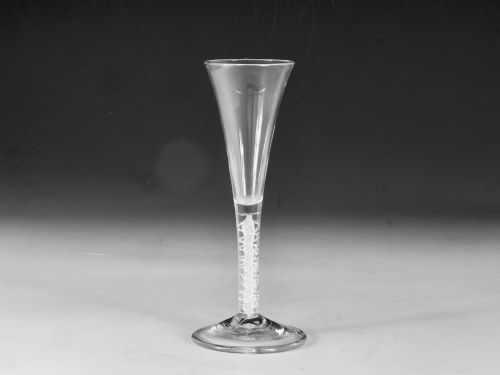
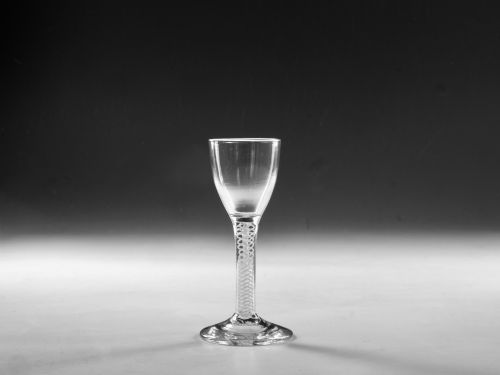
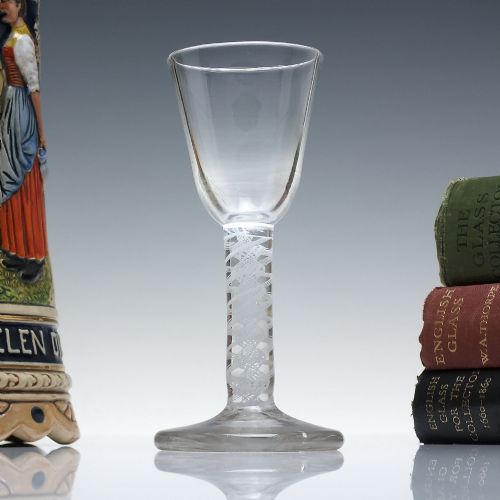
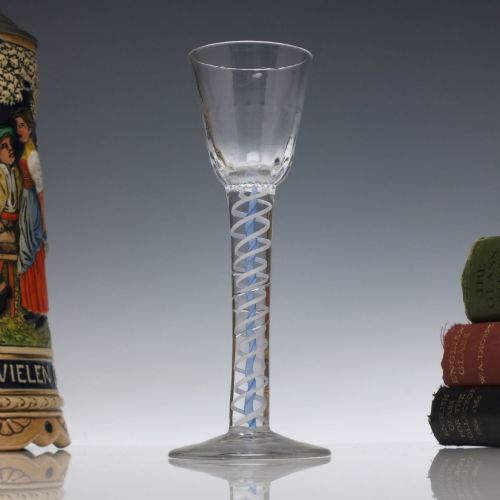
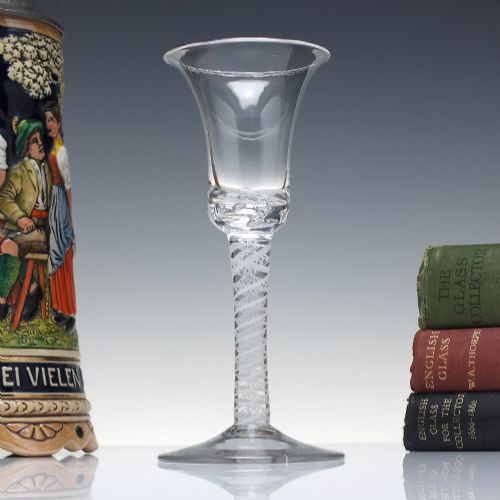
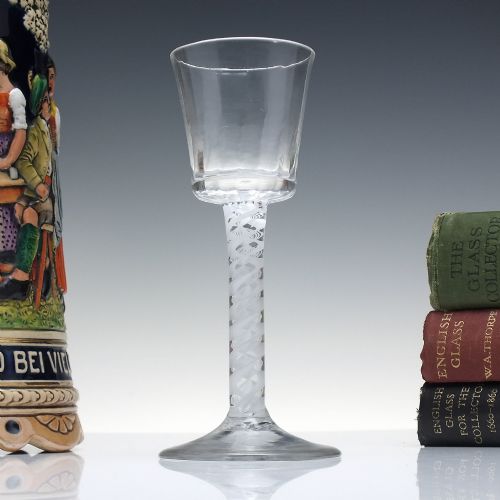
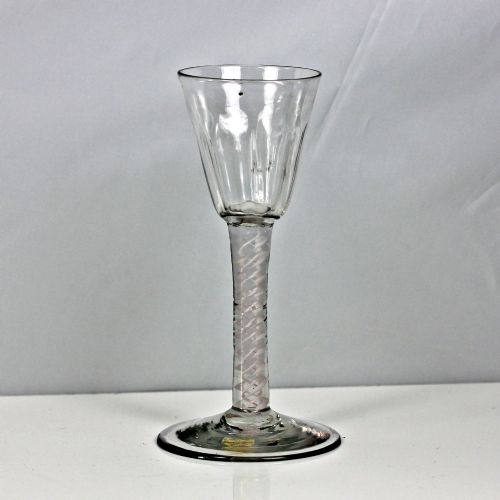
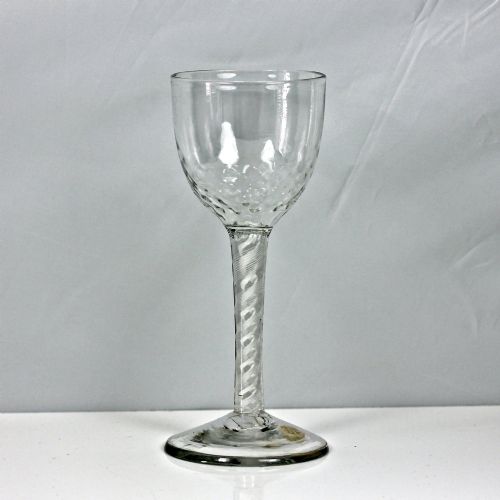
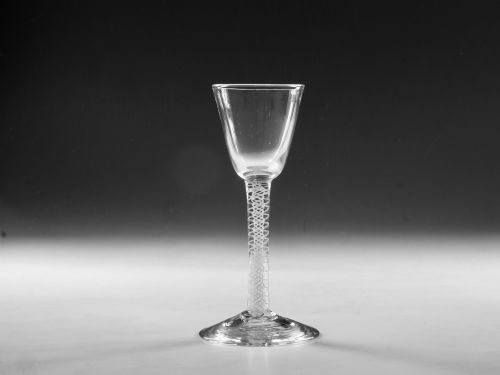
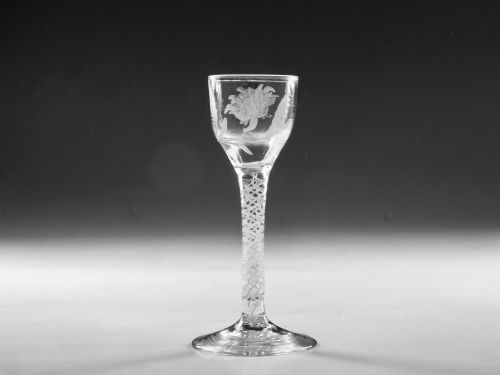
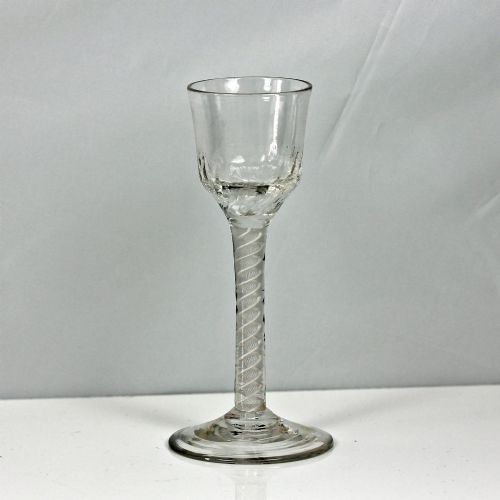
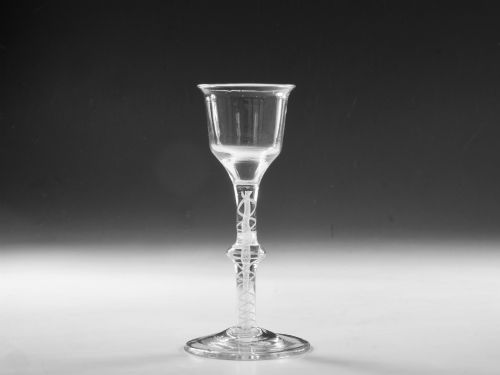
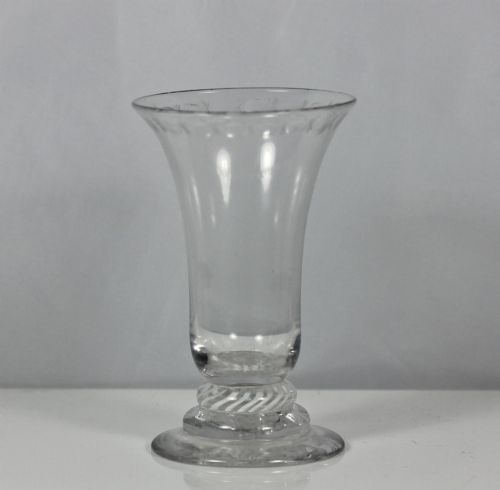
When you search for English opaque twist, you are looking at eighteenth-century glassware defined by white enamel threads drawn through the interior of the stem. The pieces appearing here date predominantly from the Georgian period, specifically around the seventeen-fifties, sixties, and seventies. They take the form of wine glasses, cordial glasses, ale glasses, and jelly glasses.
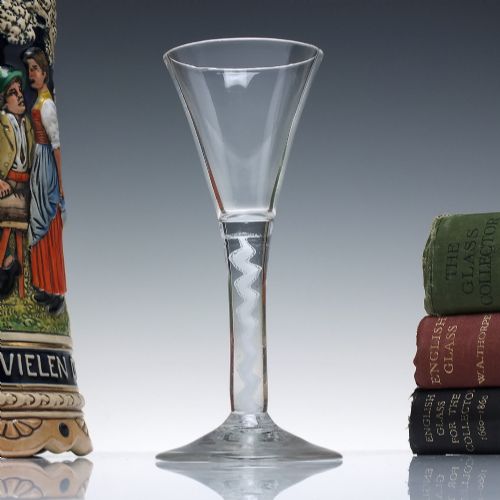
The most common version met on this page is the wine glass with an ogee, trumpet, or ribbed bucket bowl above a straight stem. Collectors also encounter variations such as firing feet, ratafia glasses, and goblets. These drinking vessels originate from eighteenth-century English glasshouses.
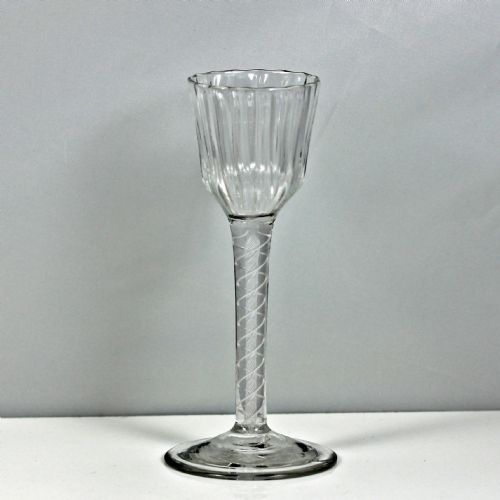
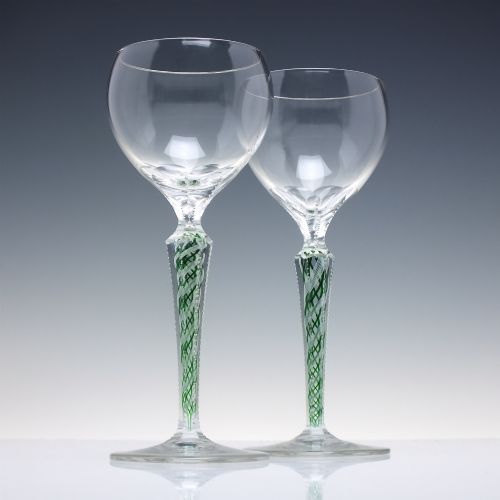
Stem formations vary widely between single series, double series, and multi-spiral twists. Some incorporate moulded bowls featuring wrythen or flute patterns, whilst others display engraved or gilded surfaces. The fundamental constant remains the opaque white enamel twist enclosed within clear lead glass.
How they were made
Glassmakers fashioned these pieces using lead crystal and lead crystal glass combined with white enamel. The distinctive stems were produced by drawing and twisting canes of glass embedded with opaque white enamel rods before shaping the vessel by hand.
Bowls were formed separately, often utilising moulds to create flute-moulded or wrythen patterns before attachment to the twisted stem and conical foot. Engraved and gilded ornamentation was applied post-formation by specialist hands using wheel-engraving techniques.
English Opaque Twist Retail Price Guide 2026
Typical asking prices for english opaque twist among the pieces listed under this phrase on Sellingantiques today, from the lower quarter to the upper quarter. They describe what is for sale here now, not the wider market.
Listings show lead crystal and opaque enamel combined into single series, double series, and multi-spiral stem formations.
What varies in quality
Quality rests in the precision and complexity of the internal twist formation. Multi-spiral and double series twists demand greater skill from the glassmaker than simpler single series variants.
The presence of supplementary decorative work, such as engraved or gilded bowls, elevates a piece. Furthermore, uncommon bowl shapes like the firing foot or specific flute-moulded profiles distinguish superior examples from standard tablewares.
The English Opaque Twist Glossary
- Opaque twist
- A stem containing white enamel threads spun within clear lead glass. This technique gained popularity in mid-eighteenth-century English glass production.
- Double series
- A stem configuration featuring two distinct sets of twists, usually an outer spiral enclosing an inner core of threads.
- Firing foot
- A heavy, thickened folded foot designed to withstand being slammed onto a tavern table. These feet are found on small glasses used for toasts.
- Ratafia glass
- A tall, narrow vessel used for drinking sweet fruit cordials. They often feature extended drawn bowls and delicate stems.
- Wrythen moulded
- A decorative spiral pattern impressed into the bowl of a glass during manufacture. This technique creates a subtle optical swirl in the clear metal.
English Opaque Twist: Frequently Asked Questions
What is an opaque twist glass?
An opaque twist glass is an eighteenth-century drinking vessel featuring white enamel threads spun inside its clear lead crystal stem.
Glassmakers manipulated these enamel rods while the metal was hot to create intricate spiral patterns visible through the transparent exterior.
How do you date an opaque twist glass?
Dating relies on stylistic clues, metal weight, and manufacturing characteristics associated with the Georgian period. Most examples date from the middle decades of the eighteenth century.
Formations of the bowl, foot style, and the complexity of the internal twist help narrow the decade of production.
What are single and double series twists?
A single series twist contains one set of enamel threads, whereas a double series incorporates two distinct twist formations within the same stem.
Double series examples typically pair an outer cable or spiral with an inner lace or column of opaque threads.
Were these glasses used for wine?
These vessels served various alcoholic beverages depending on their specific bowl shape and capacity. While many functioned as wine glasses, others were tailored for ale, cordials, or ratafia.
Smaller versions with thick feet were designated for celebratory toasts.