


White Ceramic Dog
White ceramic dog figures bring centuries of domestic charm into a room, spanning Staffordshire poodles, spaniels and continental porcelain hounds.
White Ceramic Dog
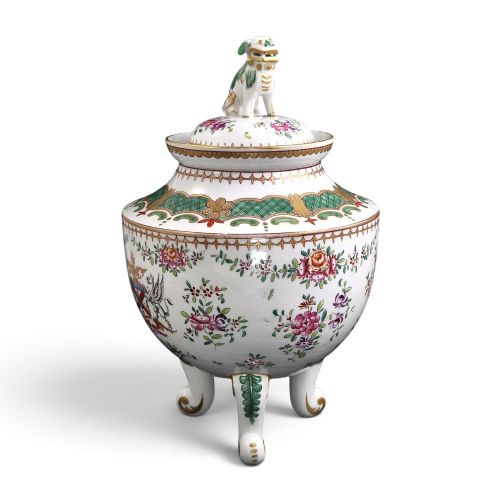
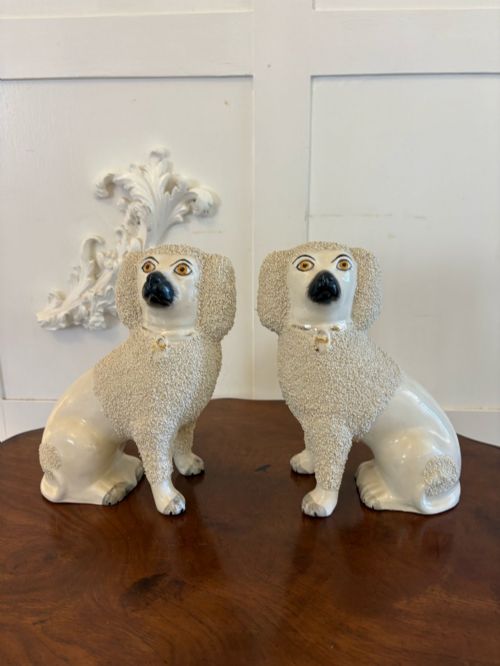
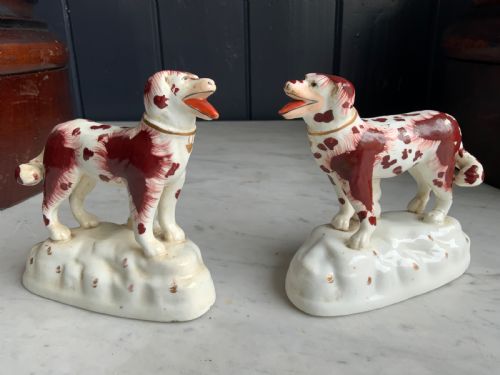
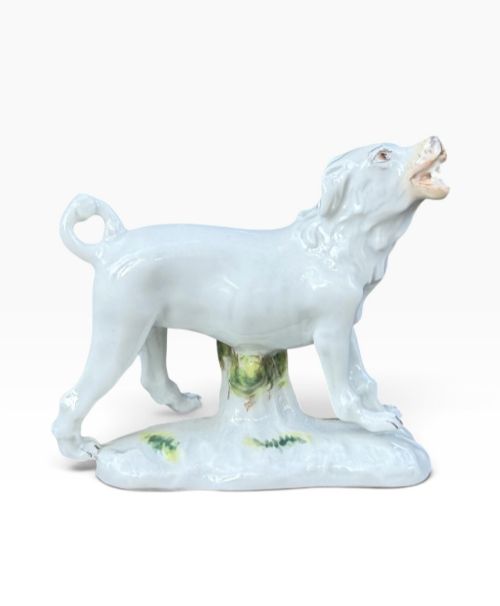
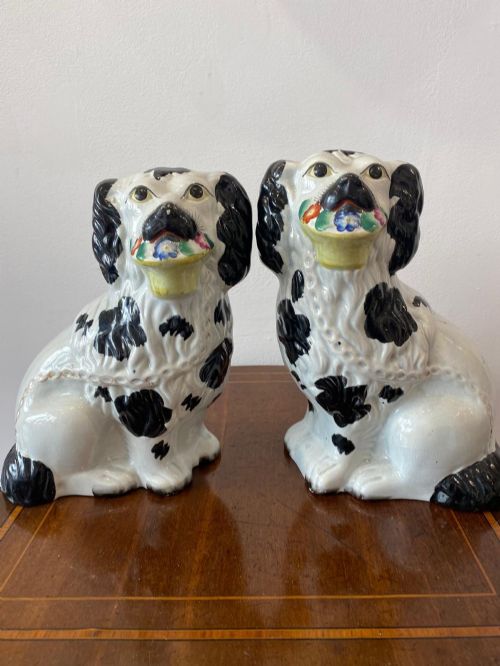
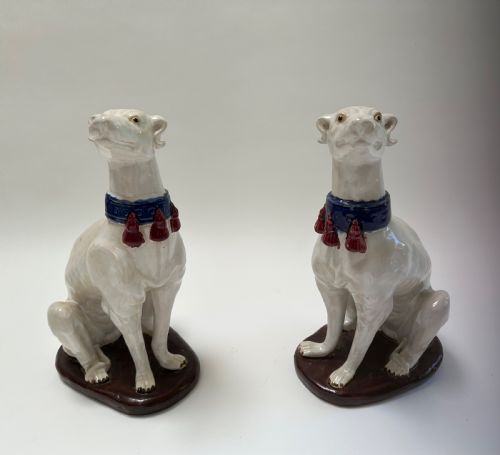
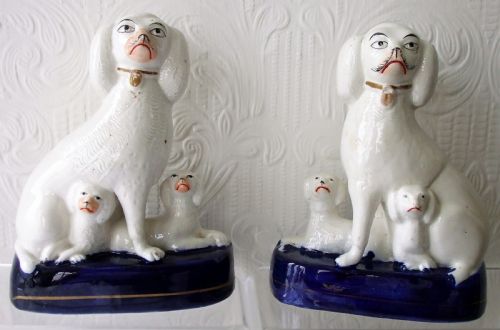
A white ceramic dog search uncovers a rich variety of canine figures, predominantly English Staffordshire earthenware pairs alongside continental porcelain and Japanese Hirado pieces. Buyers frequently encounter Victorian spaniels, poodles and terriers modelled as seated pairs, money boxes or Toby jugs.
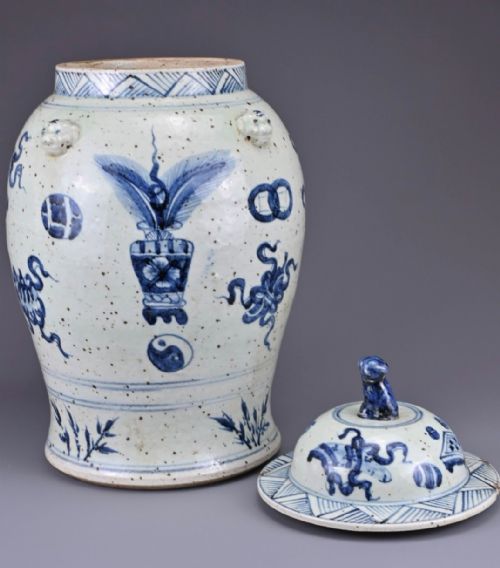
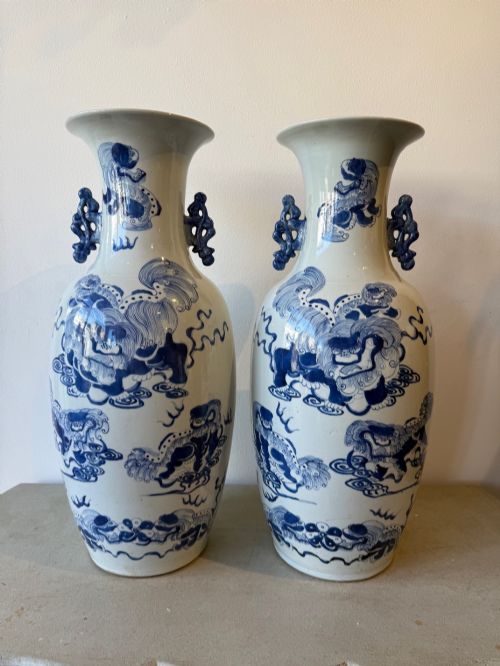
The selection extends beyond standard earthenware to include specialised forms such as German porcelain table lamps, Parian sculpture groups and Blanc de Chine guardian lion dogs. These objects reflect the nineteenth and early twentieth century fascination with animal ornamentation in domestic interiors.
How they were made
Firing methods varied from standard ceramic kilns to specialised European porcelain works, resulting in smooth white glazes or textured surfaces designed to catch the light. Hand painting added finishing touches to eyes, muzzles and surrounding bases.
Listings feature Victorian earthenware, German porcelain and Japanese Hirado ceramics, demonstrating international nineteenth century approaches to animal sculpture.
What varies in quality
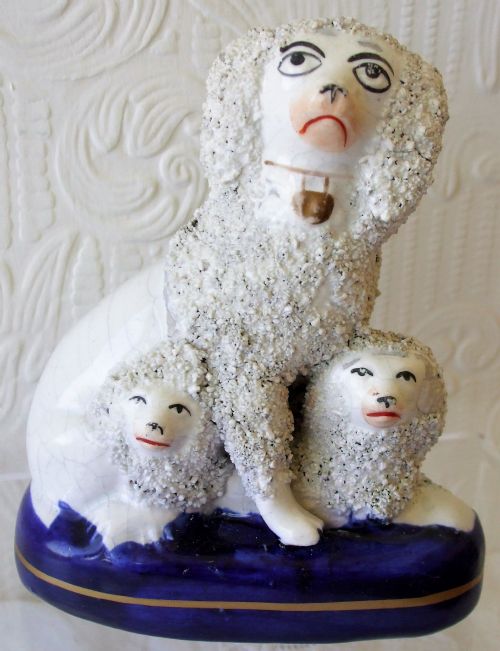
Quality rests in the crispness of the modelling and the sensitivity of the hand painting on the face and coat. Superior pieces display finely articulated fur and expressive eyes rather than flat, uniform factory decoration.
The preservation of original gilt accents, gold leaf and lead glaze surfaces without excessive wear distinguishes finer examples. Pairs that retain their original matching stance and proportions command stronger interest from collectors.
Thomas Parr·Minton·Meissen·Samson Paris
The White Ceramic Dog Glossary
- Staffordshire
- Pottery manufactured in the Staffordshire region of England, famous for domestic figures and animal groups. These earthenware pieces were widely produced in the nineteenth century.
- Blanc de Chine
- A French term for white Chinese porcelain made at Dehua, featuring a smooth, milky glaze. It translates literally to white from China.
- Earthenware
- Porous pottery fired at lower temperatures, commonly used for traditional Staffordshire dog figures. It requires a glaze to become impermeable to liquids.
- Parian
- A type of fine white biscuit porcelain resembling carved marble, developed in the nineteenth century. Sculptures made from this material often depict classical or animal subjects.
- Lead glaze
- A glossy coating containing lead oxide applied to pottery before firing to give a smooth finish. This technique enhances the whiteness of the underlying ceramic body.
White Ceramic Dog: Frequently Asked Questions
How do I date antique Staffordshire dogs?
Staffordshire figures are dated by examining the modelling style, base characteristics and application of glaze or enamel colours. Earlier nineteenth century examples often feature heavier potting and distinct vent holes underneath.
Changes in facial expression and collar designs also help narrow down the decade of production between the Regency era and the late Victorian period.
Were these dog figures meant for display?
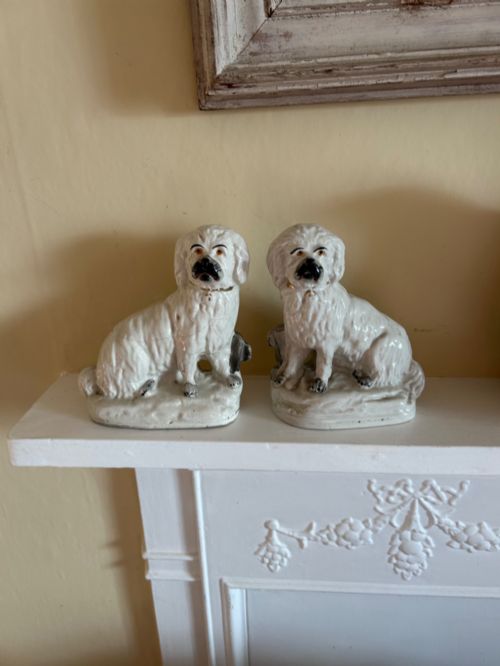
Most ceramic dogs served as decorative chimney ornaments, traditionally displayed as facing pairs on mantelpieces in nineteenth century homes. Some specific forms functioned as money boxes or practical items like jugs and table lamps.
Their primary role was decorative, bringing a sense of warmth and respectability to domestic interiors of the period.
How should I clean my ceramic dog?
Dust white ceramic and porcelain figures gently with a soft, dry brush to prevent dirt accumulation in crevices and painted areas. Avoid harsh chemical cleaners or soaking, especially on pieces with gilt highlights or enamel decoration.
If washing is necessary, use lukewarm water with a mild soap and dry thoroughly with a soft cloth.
What is a Comforter spaniel?
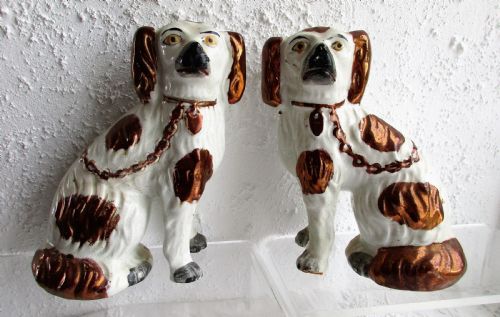
Comforter spaniels refer to the small toy spaniels popularised during the Victorian era, often depicted seated with alert expressions and gold chains painted on their chests. They earned their name because owners kept them as lap dogs for comfort.
Potters reproduced these popular pets in pairs so they could sit symmetrically on either side of a fireplace.