


Earthenware Dog Figure
An earthenware dog figure brings domestic history to life on a mantelpiece through charming animal portraits from past centuries.
Earthenware Dog Figure
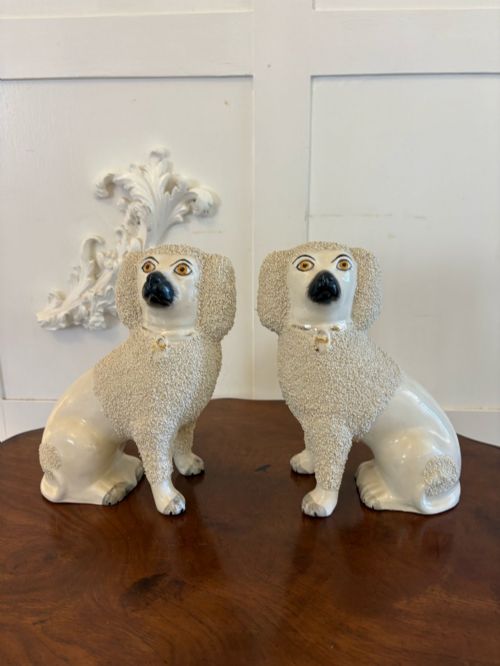
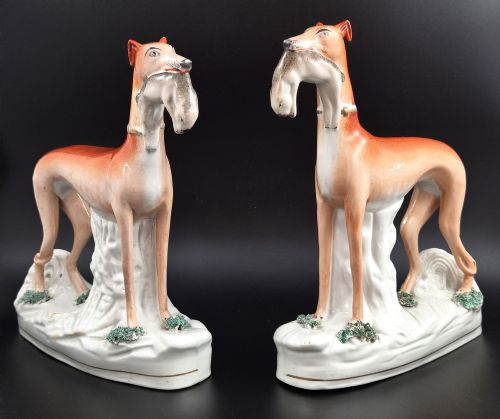
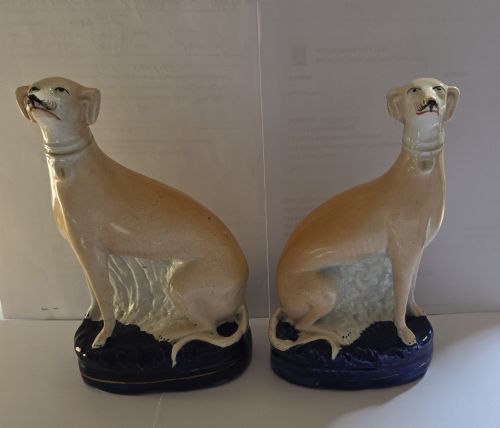
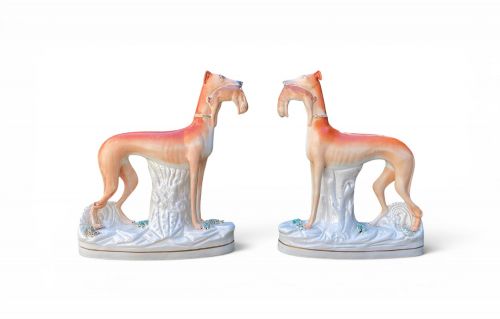
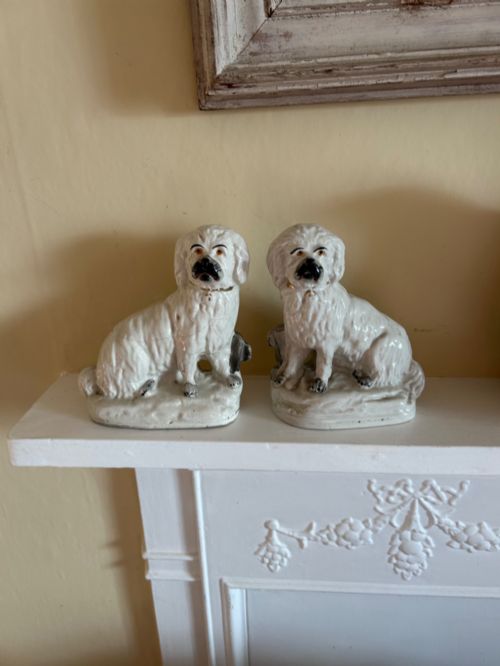
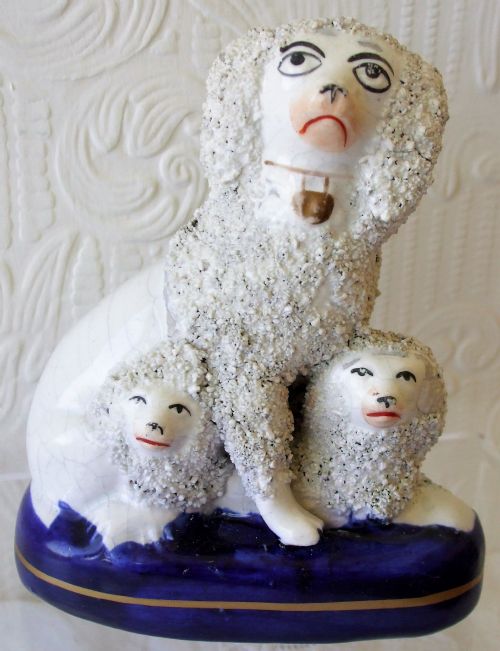
An earthenware dog figure represents a delightful category of ceramic sculpture collected for its character and historical appeal. When searching this phrase, the buyer most frequently encounters Staffordshire pottery models dating from the nineteenth century, including spaniels, greyhounds, poodles, and pugs.
These ceramic animals appear both as single figures and as matched pairs, sometimes serving utilitarian purposes such as money boxes, quill holders, or clock groups. Alongside traditional British mantel dogs, the listings also encompass international pieces like Japanese Kutani models and Chinese pottery Buddhist lions.
The assortment spans Georgian beginnings through Victorian popularity into Edwardian times, capturing various breeds in seated, standing, or hunting poses. Most examples reflect British country pottery traditions, offering an accessible entry point into antique ceramic collecting.
How they were made
Details such as gold leafing appeared on select pieces to highlight chains, lockets, or base lines. The combination of moulded ceramic bodies and hand-applied surface decoration ensured that individual figures retained unique painted nuances despite production in quantity.
Earthenware Dog Figure Retail Price Guide 2026
Typical asking prices for earthenware dog figure among the pieces listed under this phrase on Sellingantiques today, from the lower quarter to the upper quarter. They describe what is for sale here now, not the wider market.
The selection includes regional British pottery traditions alongside international ceramic art from Japanese Meiji and Qing Dynasty periods.
What varies in quality
The retention of original enamel colours and gold leaf significantly influences desirability. Earlier pieces often display more spirited modeling and attentive glazing compared to later mass-produced variants.
Thomas Parr·Enoch Wood factory·Wedgwood & Co. Ltd
The Earthenware Dog Figure Glossary
- Earthenware
- A porous type of pottery fired at lower temperatures, commonly used for traditional ceramic figures. It requires a glaze to become impermeable to liquids.
- Lead glaze
- A shiny coating applied to pottery before firing, which gives earthenware figures their characteristic smooth and reflective surface. This finish protects the underlying clay body.
- Enamel paint
- A hard, glossy paint applied over the glazed ceramic surface to add colour to eyes, collars, and markings. It allows for finer decorative detail after the main kiln firing.
- Quill holder
- A functional ceramic piece featuring a small receptacle designed to hold writing feathers on a desk. These often take the form of recumbent greyhounds or dogs with baskets.
- Figurine
- A small, decorative three-dimensional sculpture representing a human or animal form. In pottery, these pieces were widely produced for domestic display during the nineteenth century.
Earthenware Dog Figure: Frequently Asked Questions
What are Staffordshire comforter spaniels?
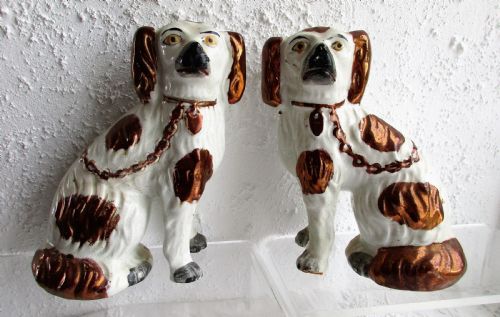
Staffordshire comforter spaniels are iconic ceramic dog figures traditionally displayed on Victorian mantelpieces, usually facing each other as a pair. Potters modeled these spaniels with feathered coats, golden chains, and gentle expressions to mimic popular lapdogs of the era.
Collectors often find these spaniels equipped with splashes of copper lustre or bright enamel markings. They became a staple of British domestic interiors during the nineteenth century.
How do I date an earthenware dog figure?
Dating these ceramic figures involves examining the clay body, glaze characteristics, and painting style underneath the piece. Nineteenth-century examples typically feature heavier earthenware bases and hand-painted details that differ from twentieth-century reproductions.
Makers' marks or specific functional designs, such as quill holders or money boxes, also offer clues to the period of manufacture. Comparing the breed representation and styling helps narrow down the decade.
Were these ceramic dogs purely decorative?
While many figures served simply as mantel ornaments, a significant number fulfilled practical household functions. Potters incorporated inkwell bases, money box slots, clock surrounds, and quill holders into the designs.
These functional items allowed Victorian households to combine domestic amusement with everyday utility. Owners used them on writing desks and sideboards just as frequently as on parlor mantelpieces.
How do I care for antique earthenware?
Caring for antique earthenware figures requires keeping them away from direct sunlight and areas prone to high humidity. Gentle dusting with a soft, dry brush preserves the delicate enamel paint and glaze surfaces.
Avoiding harsh cleaning agents prevents damage to the porous clay and historic finishes. Stable placement on flat surfaces ensures these fragile ceramic sculptures remain safe.