
Pair Staffordshire Figurines
Pair staffordshire figurines bring cheerful Victorian character to a mantelpiece, offering symmetry and charm through modelled animals and historical figures.
Pair Staffordshire Figurines
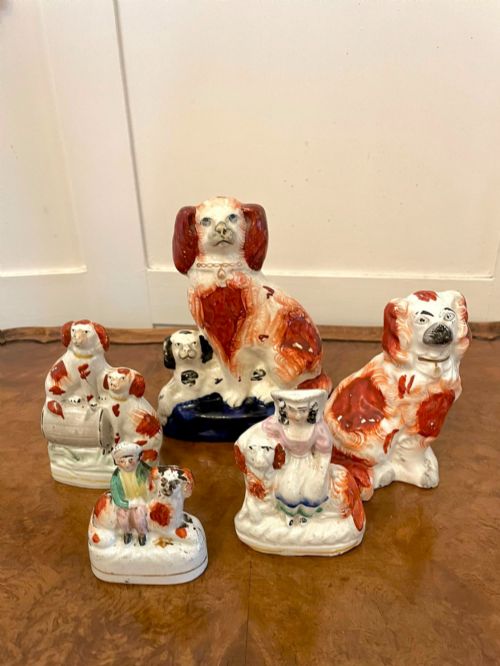
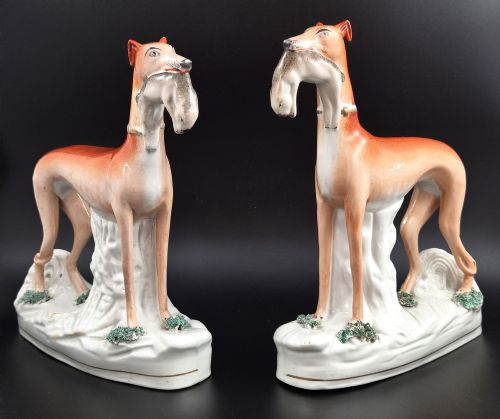
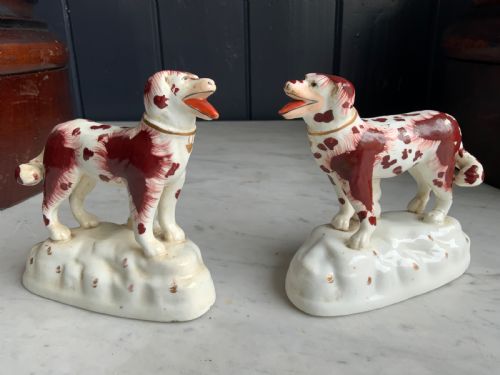
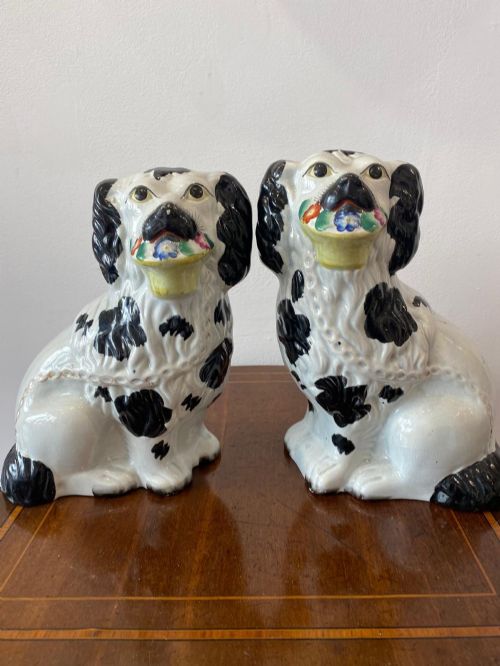
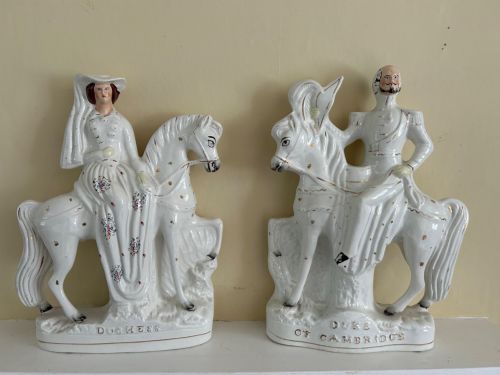
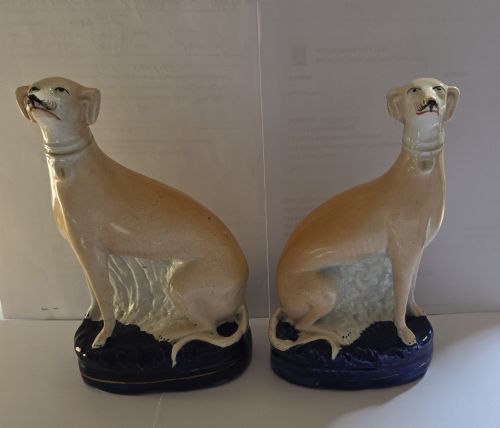
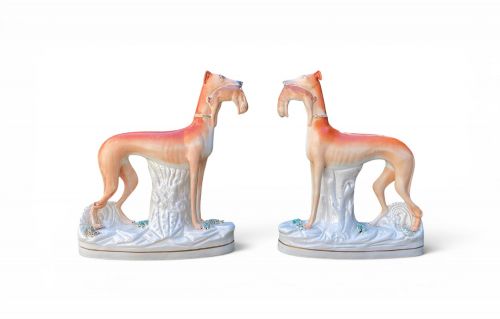
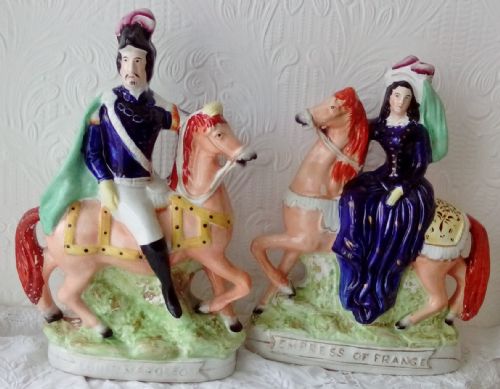
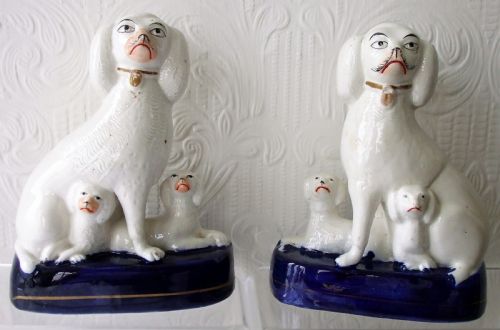
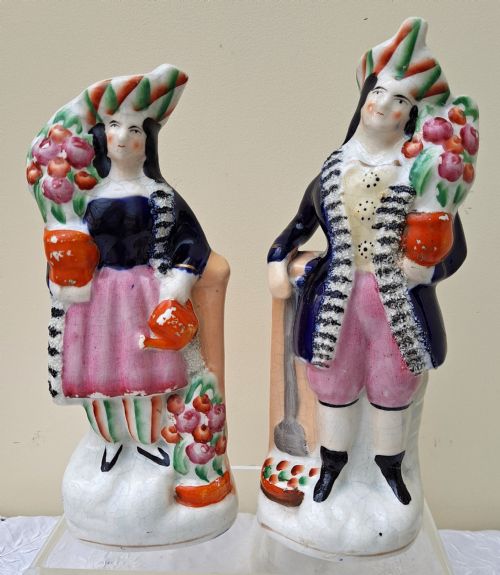
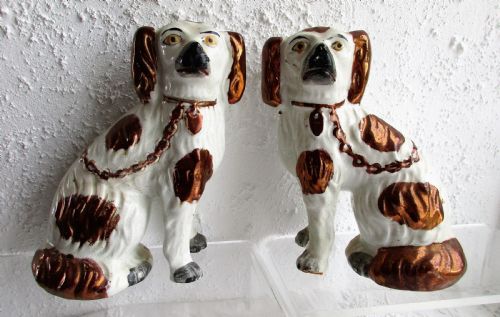
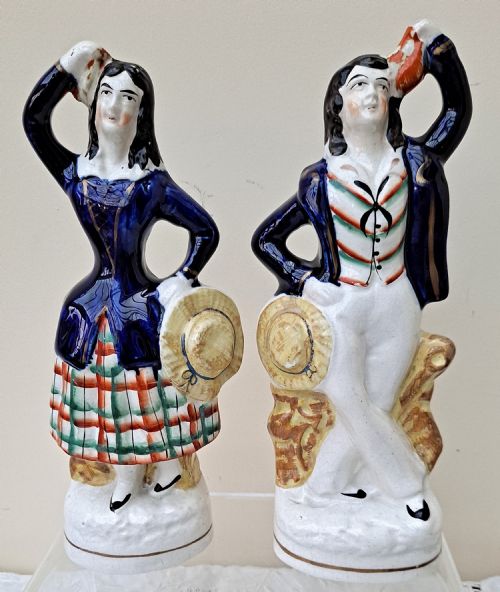
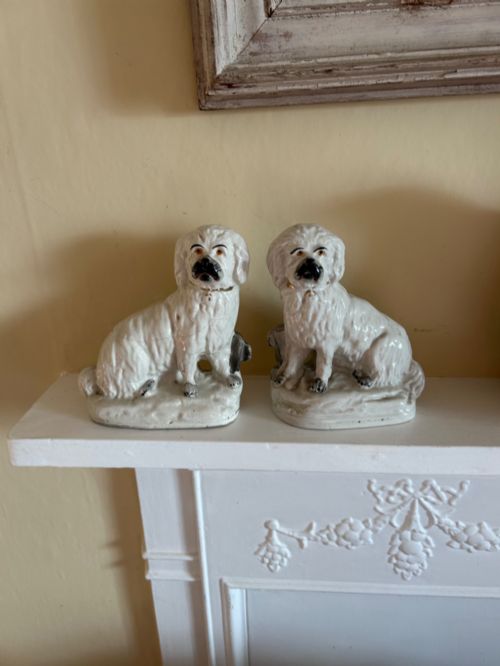
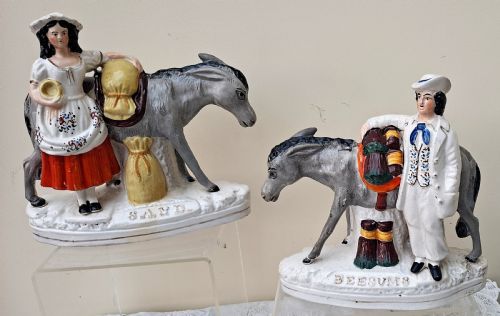
When searching for pair staffordshire figurines, collectors encounter earthenware models created in the potteries of nineteenth-century England. These mantel ornaments span subjects from spaniels, greyhounds and lions to theatrical characters, royalty and pastoral gardeners.
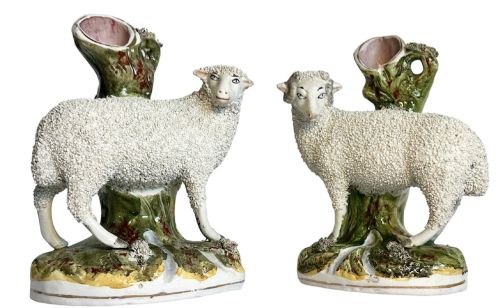
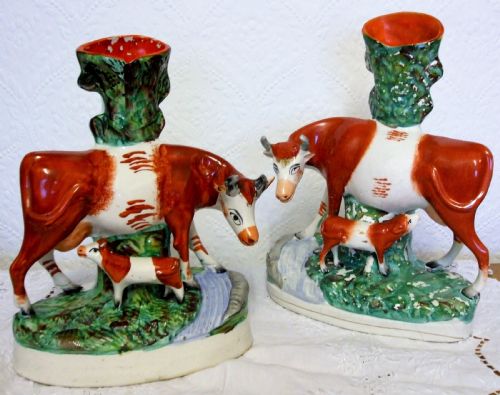
The pieces on this page are predominantly Victorian productions, ranging from mid-nineteenth-century examples to later 1900 items. They appear as seated dogs, spill vases, flatback figures and sculptural pairs designed to balance each other on opposite ends of a shelf.
How They Were Made
Potters shaped these earthenware figures using ceramic moulds before applying lead glaze to seal the clay body. Many examples feature flat backs to sit flush against cottage walls, constructed primarily for display in domestic interiors.
Makers embellished the fired ceramic using enamel paint, gilt, and gold leaf highlights. Certain varieties incorporate specialised treatments such as copper lustre or treacle glaze to achieve their distinctive surface finish.
Poodles modelled with actual clay curls give new meaning to a bad hair day.
What Varies in Quality
The finesse of the modelling and painting distinguishes superior figures from simpler production pieces. Crisp facial details, carefully applied enamel colours, and clean gilding elevate the visual impact of a matched pair.
Scale and complexity also influence the standing of a pair, with large greyhounds, lions, or multi-figure spill vases demonstrating greater ambition in the pottery than standard small spaniels.
Thomas Parr·Wooley
The Pair Staffordshire Figurines Glossary
- Flatback
- A figurine moulded with a flat, unadorned reverse side designed specifically for placement against a wall or mantelpiece.
- Spill vase
- A hollow cylindrical container incorporated into the figurine design, intended to hold wooden spills used for lighting pipes and fires.
- Pearlware
- A refined earthenware developed in the late eighteenth century featuring a subtle bluish glaze that pools in crevices.
- Treacle glaze
- A dark, rich brown transparent lead glaze that imparts a glossy, treacle-like finish to the ceramic surface.
- Earthenware
- Porous pottery fired at lower temperatures, forming the primary structural body for the vast majority of these figures.
Pair Staffordshire Figurines: Frequently Asked Questions
Why were they made in pairs?
Potters produced these ceramic figures in mirror-image pairs to satisfy the Victorian desire for symmetry on mantelpieces and sideboards.
Placing one animal or character at each end of a fireplace created a balanced and orderly display within the nineteenth-century parlour.
What are spill vases used for?
Spill vases combined decorative sculpture with a practical household function by incorporating a small cylindrical holder alongside the main figure.
These holders stored thin wooden spills used to transfer flames from the hearth to candles and lamps before matches became common.
How do I identify a flatback?
A flatback figurine has a plain, unpainted reverse side because it was intended to stand directly against a wall rather than in the round.
This method saved time and materials during production while keeping the price accessible for middle-class Victorian households.
Were they all made in Staffordshire?
The term Staffordshire describes a major English ceramic manufacturing region encompassing towns such as Hanley, Burslem and Stoke-on-Trent.
While the vast majority originated in these Potteries district workshops, similar earthenware traditions existed elsewhere in the country.