


White Ceramic Dog Ornaments
White ceramic dog ornaments bring character to a mantelpiece, offering centuries of canine charm through earthenware and porcelain figures.
White Ceramic Dog Ornaments
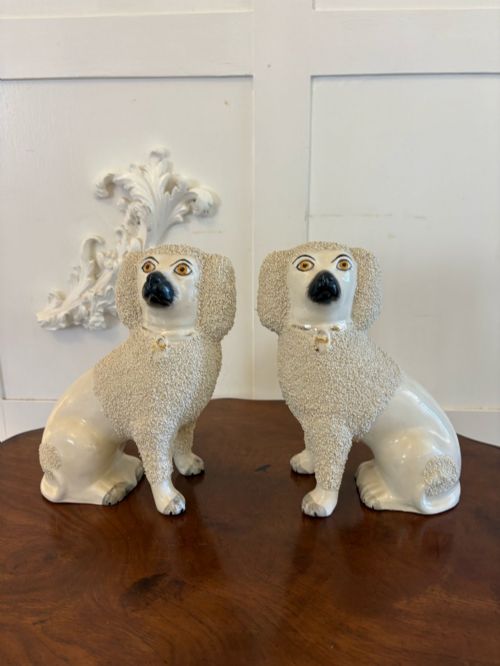
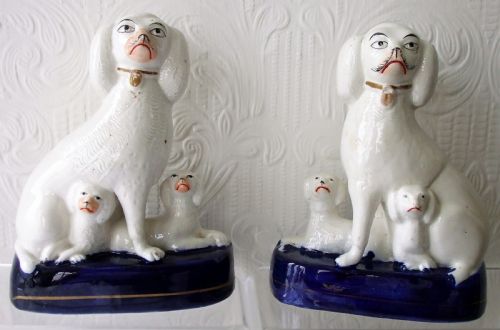
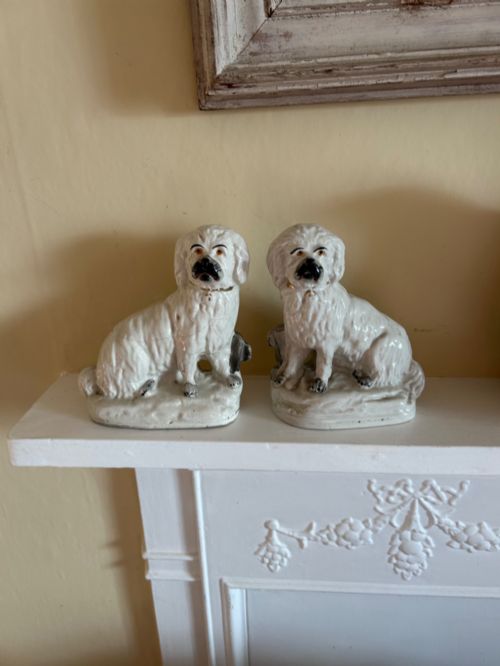
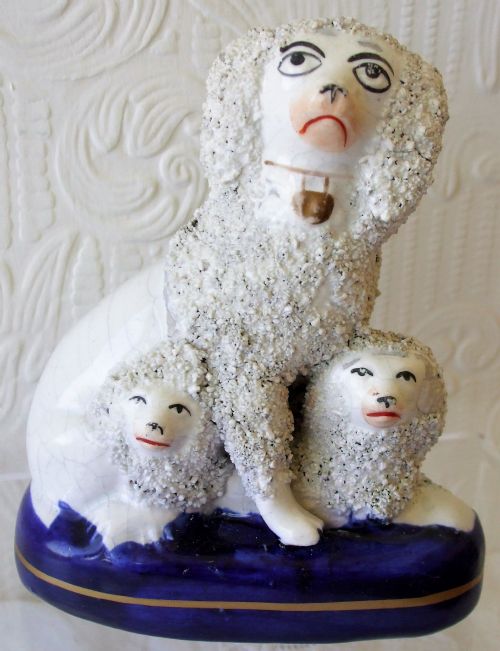
White ceramic dog ornaments encompass traditional pottery figures, decorative ornaments, and sculptural groups created across the nineteenth and twentieth centuries. A buyer searching this phrase encounters predominantly Victorian Staffordshire pottery spaniels, poodles, and terriers, often modelled as facing pairs intended for mantle display.
Earthenware, porcelain and glaze techniques
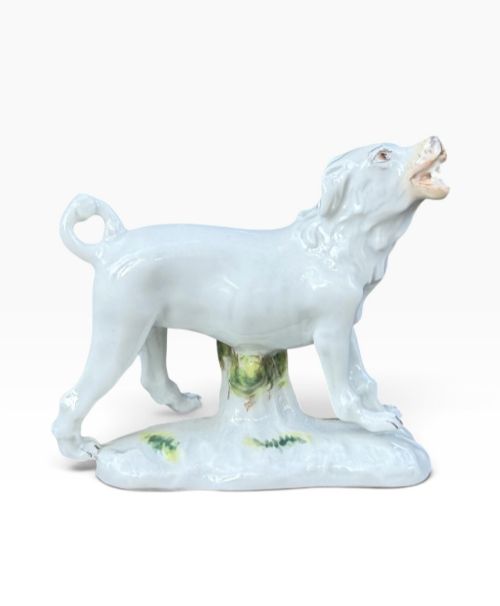
Potters utilised earthenware and porcelain bodies shaped by hand or moulded, finishing surfaces with lead glaze, enamel, and gold leaf highlights. Staffordshire pieces typically combined heavy earthenware with hand-painted details and gilt accents, while continental factories focused on refined porcelain.
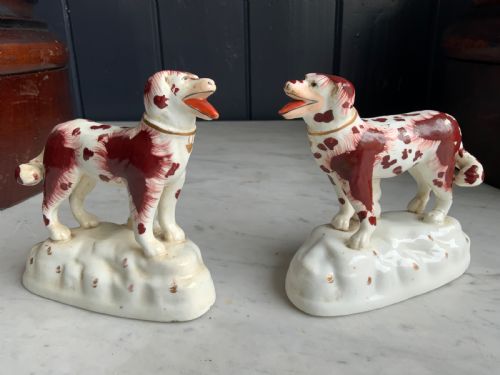
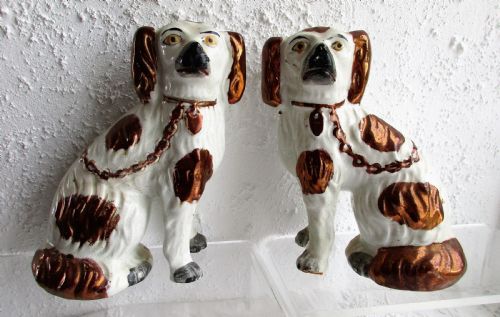
Makers applied copper lustre and enamel decoration over white glazes to define coats and collars, firing the pottery to achieve durable finishes on figures such as spaniels, greyhounds, and poodles.
Listings feature earthenware, porcelain, and parian materials shaped into figures spanning the Victorian era, the nineteenth century, and the nineteen-twenties.
Modelling, painting and preservation
Quality rests upon the crispness of the moulding and the sensitivity of the hand-painted facial expressions, distinguishing domestic production from mass output. Superior examples retain clean white glazes, sharp gilt detailing, and well-defined modelling around the paws and coats.
The integrity of the original enamel colours and the preservation of the ceramic body separate finer cabinet pieces from heavily handled domestic items.
Thomas Parr·Enoch Wood factory
The White Ceramic Dog Ornaments Glossary
- Staffordshire pottery
- Earthenware figures produced by numerous potteries in the Staffordshire region of England during the nineteenth century. These sturdy ornaments often depict spaniels and poodles meant for household decoration.
- Lead glaze
- A glossy coating containing lead oxide applied to pottery before firing to waterproof the earthenware body. It provides the characteristic shine seen on nineteenth-century figures.
- Parian
- A fine white porcelain resembling marble, developed in the nineteenth century for sculptural figures and animal groups. It captures intricate detail without needing a glossy glaze.
- Comforter spaniels
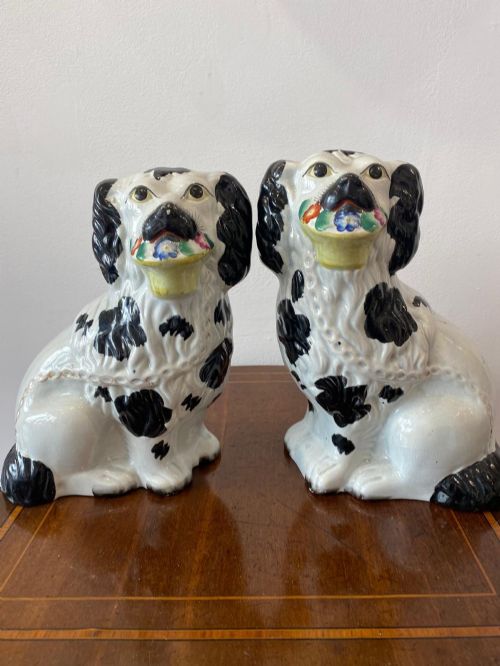
- The popular name for pairs of Staffordshire dogs placed on mantelpieces to guard the hearth. They frequently feature white glazed bodies with gilt highlights.
- Copper lustre
- A metallic glaze technique producing a coppery, reflective sheen on pottery surfaces. Potters used this method to accent collars and details on ceramic dog figures.
White Ceramic Dog Ornaments: Frequently Asked Questions
How do I display white ceramic dog ornaments?
Pairs of Staffordshire dogs traditionally sit on either end of a mantelpiece, facing inward toward the fireplace or room centre.
Single figures and smaller groups fit well on bookshelves, side tables, or within enclosed display cabinets alongside other nineteenth-century ceramics.
What periods do these ceramic dogs come from?
The pieces span the nineteenth and early twentieth centuries, with a strong concentration of Victorian examples dating from the mid to late eighteen-hundreds.
Earlier Georgian pieces and later items from the nineteen-twenties also appear, alongside continental European porcelain productions.
How do I clean antique ceramic dogs?
Dust the figures gently with a soft, dry brush to remove surface particles without disturbing delicate enamel or gilt highlights.
Avoid soaking or using harsh chemical cleaners, as nineteenth-century glazes and painted details can be sensitive to moisture and abrasion.
Were these figures made in pairs?
Many nineteenth-century Staffordshire pottery dogs were modelled and sold as left-and-right facing pairs to sit symmetrically on household mantels.
Makers also produced individual figures, inkwells, and larger sculptural groups depicting various dog breeds with pups.