



Wheelback Kitchen Chairs
Wheelback kitchen chairs bring honest country craftsmanship and robust timber seating into modern dining spaces with timeless practicality.
Wheelback Kitchen Chairs
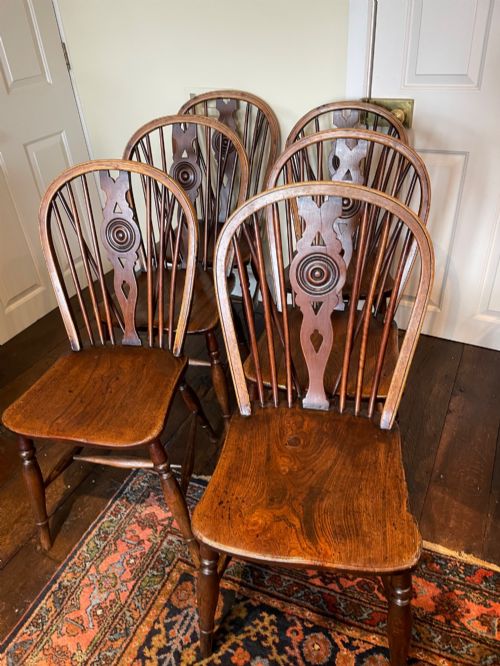
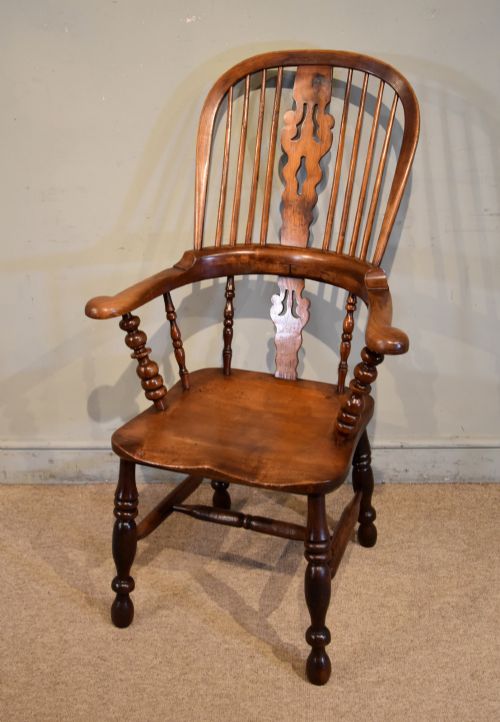
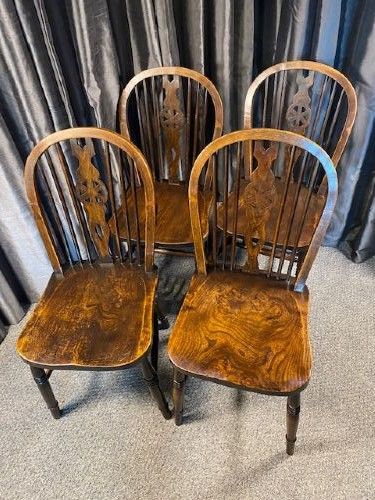
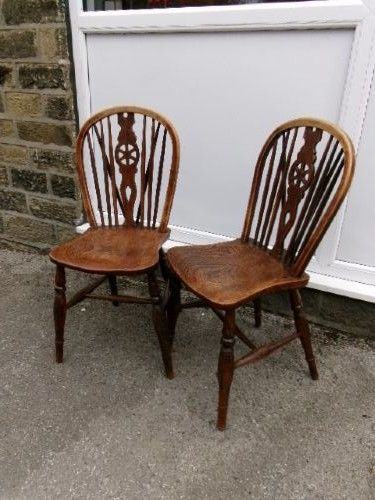
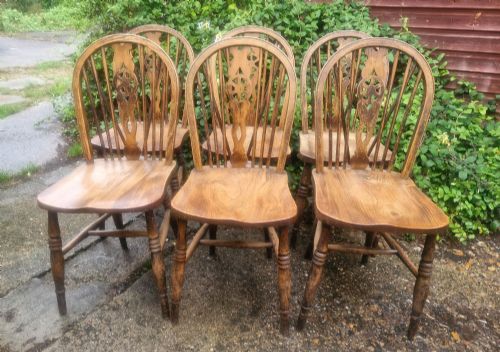
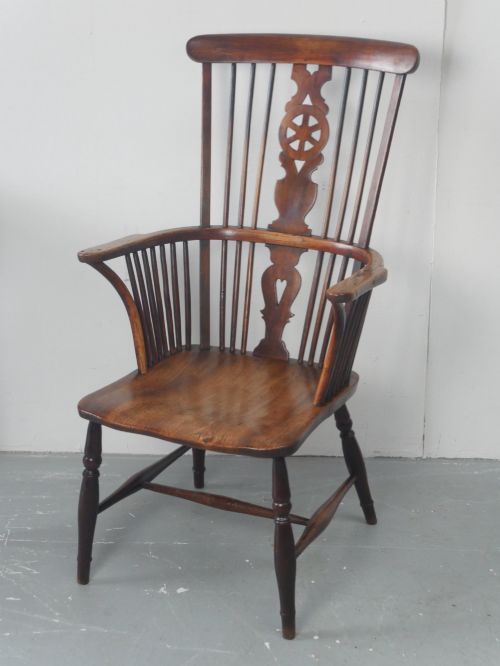
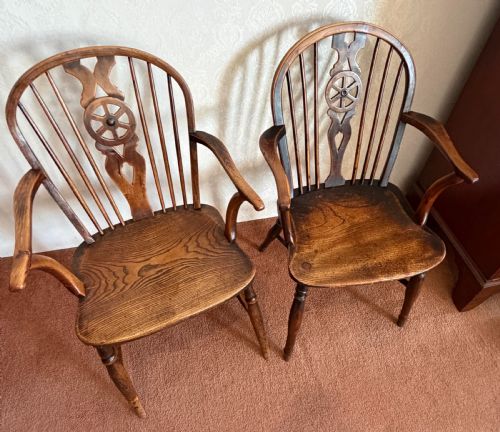
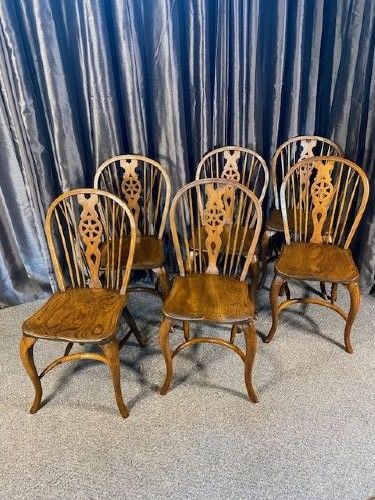
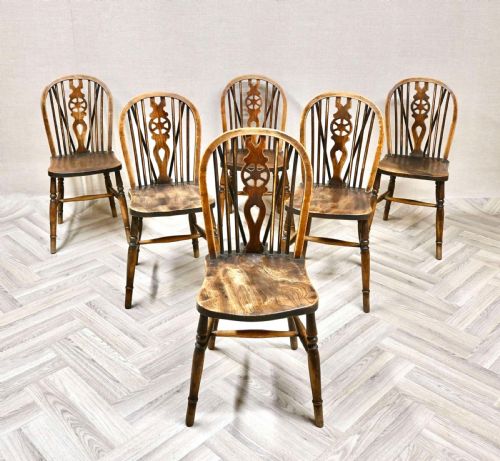
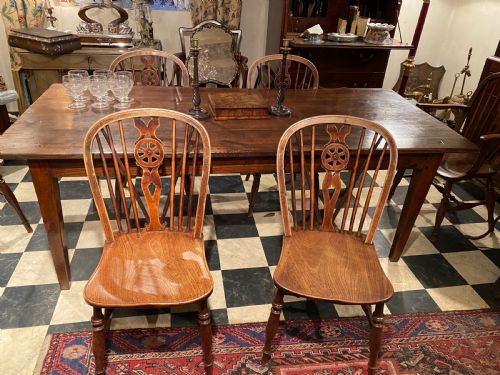
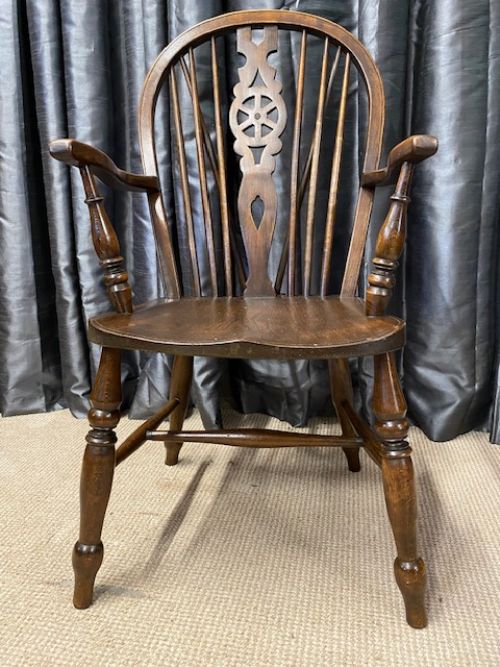
Wheelback kitchen chairs are traditional Windsor seating forms distinguished by a pierced central splat shaped like a cartwheel, designed for everyday domestic utility. When exploring wheelback kitchen chairs, buyers frequently encounter single armchairs, pairs, or larger matching and harlequin dining sets originating from the nineteenth and early twentieth centuries.
The material combination typically unites a solid elm or pine saddle seat with steam-bent beech or ash spindles and frames, reflecting English country and regional vernacular traditions. These pieces appear across Georgian, Regency, Victorian, and Edwardian periods, maintaining a sturdy silhouette suited to daily use around a kitchen or farmhouse table.
Sets range from modest pairs to larger groups of six, seven, or eight dining chairs, occasionally complemented by matching carver armchairs. The structural lineage draws heavily on Windsor chairmaking techniques, where individual components lock into a thick wooden seat rather than relying on a traditional framed chassis.
Materials and construction
Makers utilised distinct timbers for different parts of the chair, pairing dense elm for carved, comfortable saddle seats with resilient ash or beech for turned legs, bows, and spindles. This multi-wood construction allowed each component to perform its specific mechanical role under daily strain.
Steam-bending formed the continuous arched backbows and armrests, while legs and stretchers were shaped on pole lathes before being wedged into bored socket joints in the seat underside.
Wheelback Kitchen Chairs Retail Price Guide 2026
Typical asking prices for wheelback kitchen chairs among the pieces listed under this phrase on Sellingantiques today, from the lower quarter to the upper quarter. They describe what is for sale here now, not the wider market.
Many wheelbacks bear subtle carpenter tally marks carved beneath the seat to keep matched spindle sets together in the workshop.
Assessing build quality
Quality rests primarily in the depth of the sculpted elm seat and the integrity of the wedged joints connecting the undercarriage and back assembly. Superior examples maintain tight, original construction without excessive timber shrinkage or replaced components.
The crispness of the carved wheel splat and the harmonious matching of grain patterns across a set separate standard utility seating from finer country workshop production.
The Wheelback Kitchen Chairs Glossary
- Windsor chair
- A chair built with a solid wooden seat into which the legs and back spindles are separately inserted. This construction method provides exceptional rigidity without heavy framing.
- Saddle seat
- A wooden seat base carved into a concave depression for comfort. Elm was frequently chosen for this part due to its interlocking grain.
- Splats
- The central vertical slat within the chair back, pierced here in the circular form of a wheel. It provides upper back support while defining the regional style.
- Harlequin set
- A collection of dining chairs that share a general style and period but vary slightly in detail or turning. These groups formed organically over time rather than issuing from a single workshop batch.
Wheelback Kitchen Chairs: Frequently Asked Questions
How do I care for antique wooden seats?
Maintain timber moisture by applying natural beeswax periodically and keeping chairs away from direct heat sources. Avoid harsh chemical cleaners that strip the historic finish.
Check the undercarriage wedging occasionally to ensure legs remain firmly seated in the base blocks.
Are these chairs comfortable for daily dining?
The concave carved wooden seats provide surprising ergonomic support during long meals. Adding loose linen pads can increase softness if desired.
Their sturdy frame construction ensures they withstand regular household use without loosening.
How can I date an old wheelback?
Examine the turnings on the legs and stretchers, as earlier nineteenth century examples often display heavier hand-turned profiles. Tool marks and timber shrinkage patterns also indicate age.
Later Edwardian versions tend to feature lighter proportions and more uniform factory turning techniques.
Can I mix these with modern tables?
The warm organic wood tones complement contemporary minimalist or rustic dining tables effectively. Their understated silhouettes prevent them from overwhelming a modern room.
Pairing a harlequin set adds visual texture and historic character to simpler interior schemes.