

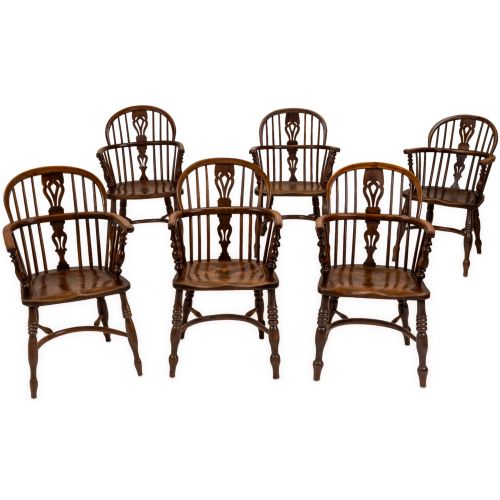
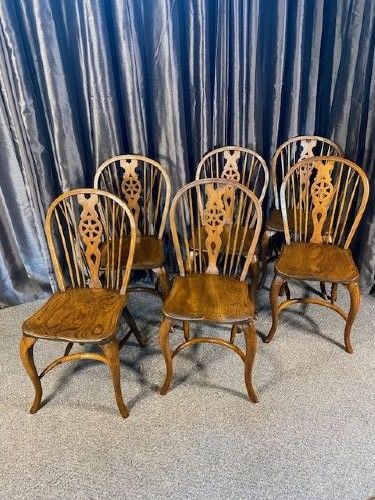
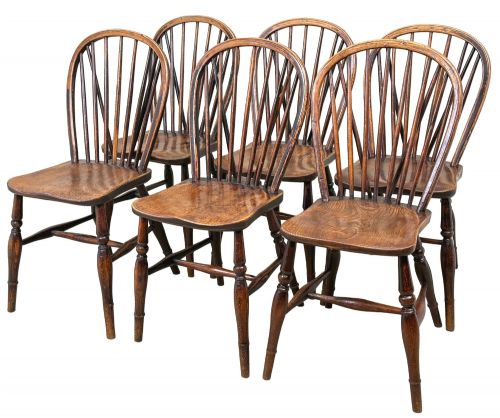
Hoop Back Dining Chairs
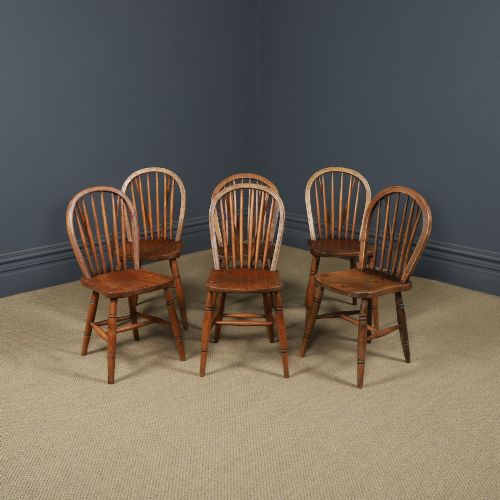
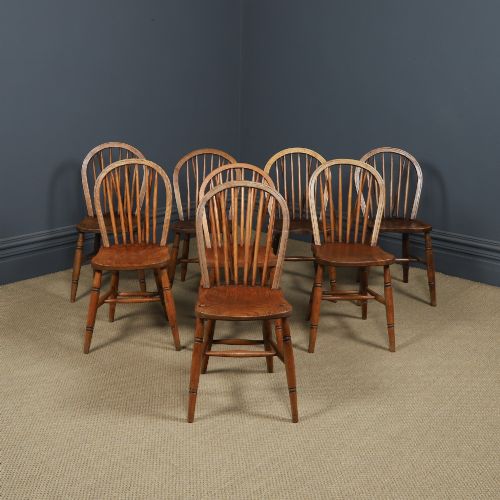
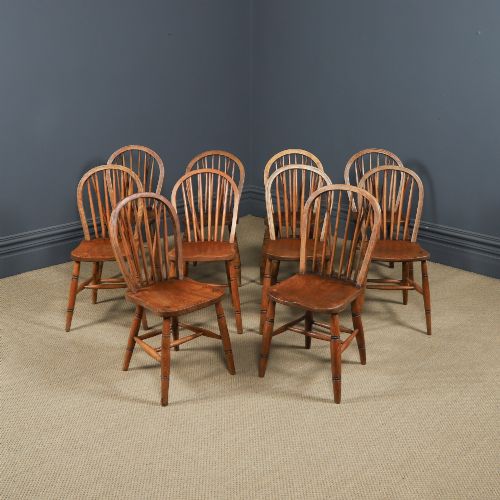
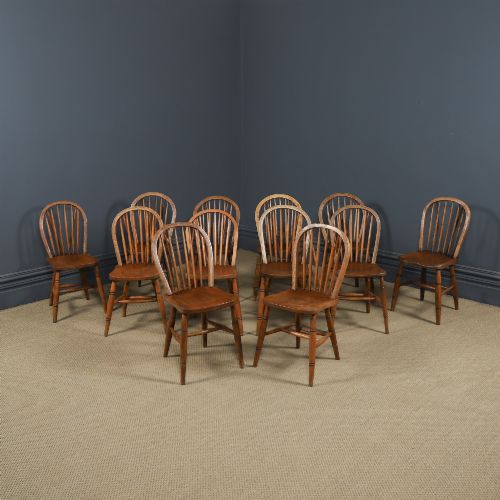
Hoop back dining chairs group the sturdy country Windsor forms and formal mahogany styles that people collect for everyday dining around farmhouse tables.
Hoop Back Dining Chairs
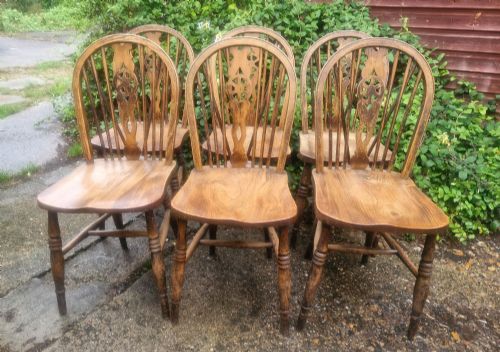
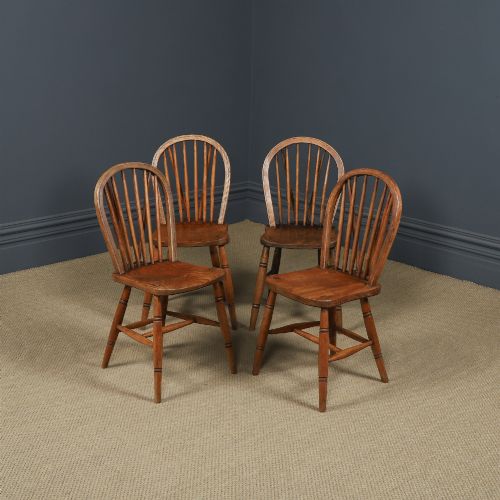
When searching for hoop back dining chairs, buyers encounter a mix of sturdy country vernacular seating and formal parlour designs dating from the Georgian and Victorian eras up to the early twentieth century. The selection spans single armchairs, carvers, and larger matched or harlequin sets suited for modern dining rooms.
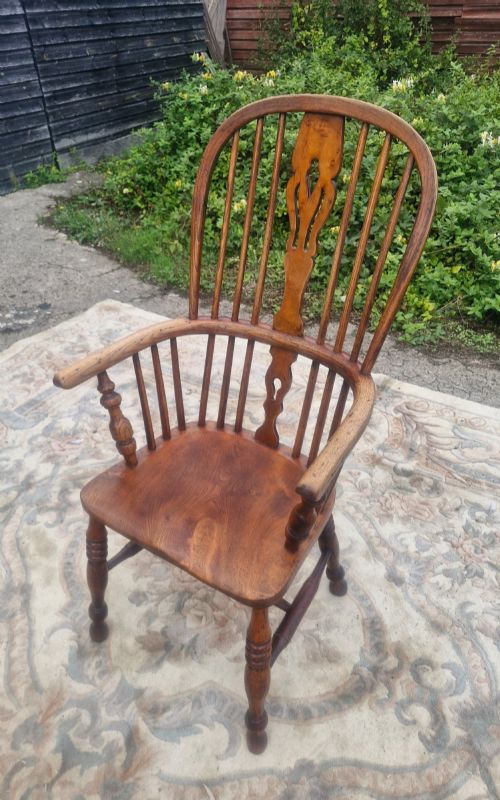
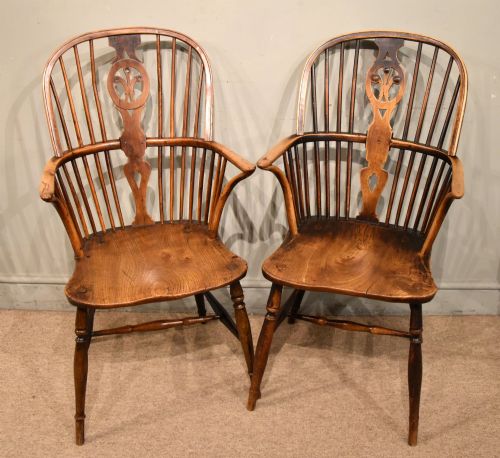
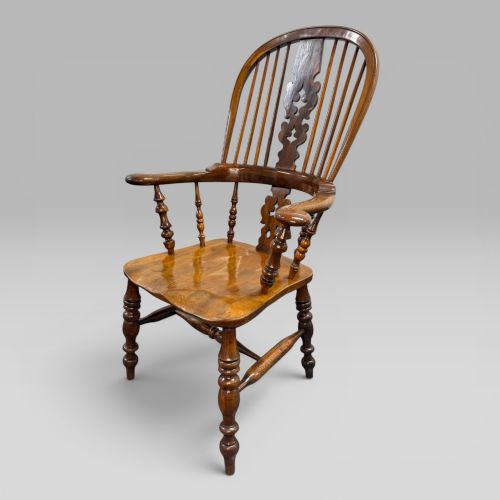
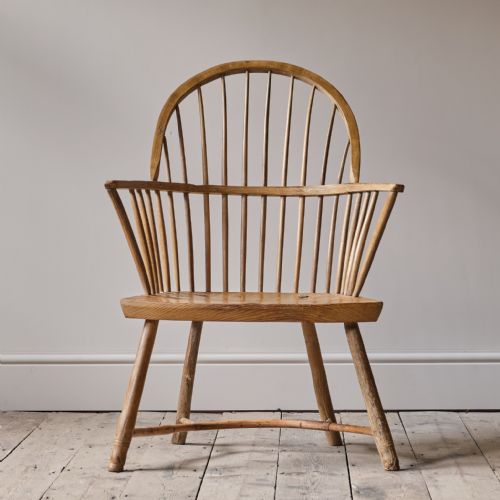
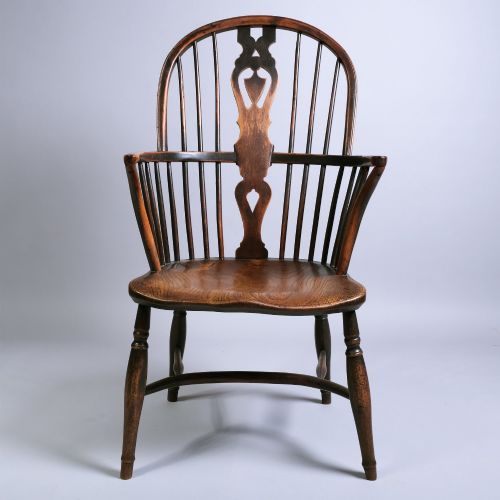
The most common versions on this page are vernacular Windsor chairs originating from English country workshops, frequently featuring shaped elm seats combined with ash, beech, or yew framing. Alongside these robust country types, some listings include formal mahogany dining chairs with curved hoop or balloon backs.
Makers in regions such as High Wycombe produced these pieces in large quantities for kitchens, farmhouses, and commercial spaces. Surviving examples range from low back variations to grand high back Windsor armchairs fitted with crinoline stretchers.
How they were made
Traditional Windsor construction relies on a combination of woods, typically pairing a solid, carved elm saddle seat with steam-bent ash or beech for the continuous hoop and spindle backs. Yew wood appears in finer examples, prized for its dense grain and rich tone.
Makers utilised green woodworking techniques, turning legs and spindles on a pole lathe and tenoning them directly into the thick wooden seat slab. Stretcher systems, such as the crinoline stretcher, added structural rigidity to the undercarriage of chairs destined for heavy daily use.
Hoop Back Dining Chairs Retail Price Guide 2026
Typical asking prices for hoop back dining chairs among the pieces listed under this phrase on Sellingantiques today, from the lower quarter to the upper quarter. They describe what is for sale here now, not the wider market.
Listings span the nineteenth and early twentieth centuries, featuring elm, ash, beech, yew, and oak across vernacular country forms.
What varies in quality
The choice of timber significantly affects the character and durability of each piece, with figured yew wood and deeply dished elm seats sitting at the upper end of the scale. Chairs constructed from dense, well-matched timbers show superior grain patterns and wear more evenly over time.
Proportions and comfort separate ordinary production from finer vernacular work, particularly in the graceful sweep of the steam-bent hoop and the turning of the arm supports. Sets that retain their original matching spindles and uniform patina command greater interest than those assembled later from mismatched parts.
Thonet Fischel·Liberty
The Hoop Back Dining Chairs Glossary
- Windsor chair
- A wooden chair built with a thick solid seat into which the legs and back spindles are separately inserted rather than joined to a frame. This vernacular form developed in English country workshops during the eighteenth century.
- Crinoline stretcher
- An arched undercarriage brace connecting the legs of a Windsor chair to provide extra stability. It often forms a horseshoe shape beneath the seat.
- Wheelback
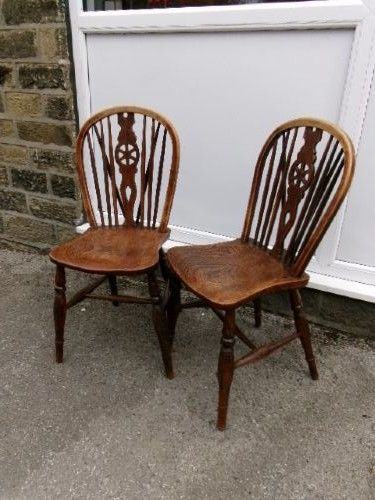
- A Windsor chair variation featuring a pierced splat carved in the shape of a cartwheel. This decorative motif became popular in nineteenth-century kitchen and dining seating.
- Splat back
- A chair design incorporating a central vertical wooden slat down the middle of the backrest. In vernacular seating, this often sits within a stick or hoop framework.
- Harlequin set
- A collection of dining chairs that match in general style, period, or material but vary in minor details. These groups formed over time as individual chairs were gathered together.
Hoop Back Dining Chairs: Frequently Asked Questions
How do I choose a set of dining chairs?
Look for consistent timber choices like ash and elm combinations to ensure visual harmony around your table. Consider whether you need armchairs at the heads of the table alongside simpler side chairs.
Matching sets of four, six, or more provide a unified look, while harlequin sets offer a more collected, relaxed appearance for kitchen dining.
Are these chairs comfortable for long meals?
Traditional Windsor chairs feature saddle-shaped wooden seats carved to fit the body, offering surprising support without upholstery. High backs provide a comfortable rest for the shoulders during extended seating.
Adding loose squab cushions can increase comfort while keeping the original wooden structure visible.
How do I care for antique wooden chairs?
Keep wooden seating away from direct heat sources and drastic temperature changes to prevent the timber from splitting or joints from loosening. Regular dusting and occasional application of appropriate wax help maintain the natural finish.
Avoid using harsh chemical cleaners that can strip the historic patina accumulated over decades of use.
How can I tell the period of a Windsor chair?
Examine the construction methods, tool marks, and wood species used in the seat and undercarriage. Early nineteenth-century examples often feature dense yew wood and slender turned spindles, while later Victorian versions frequently incorporate beech and elm.
Changes in back design, from low solid splats to continuous hoop and stick arrangements, also help indicate the era of manufacture.