
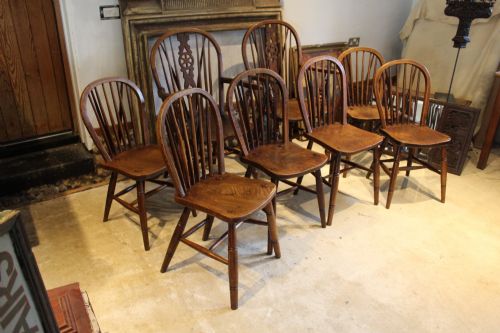
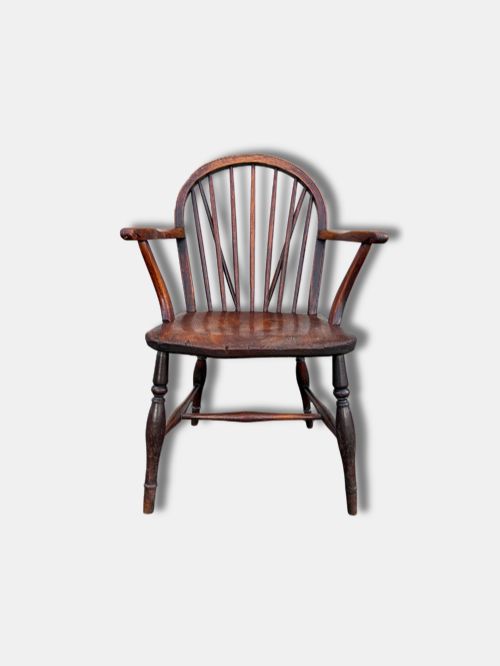
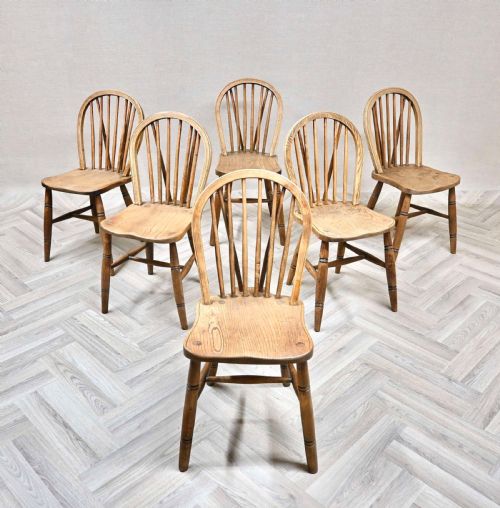
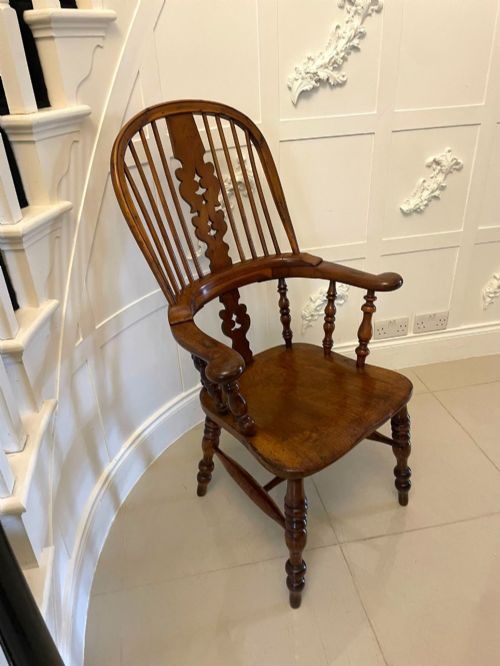


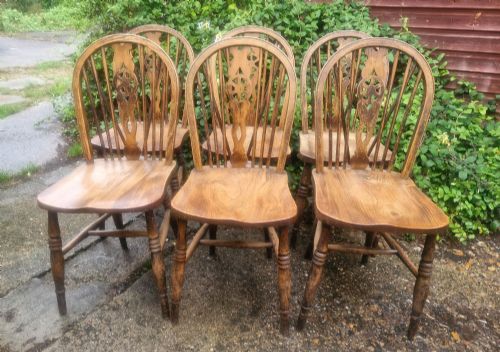
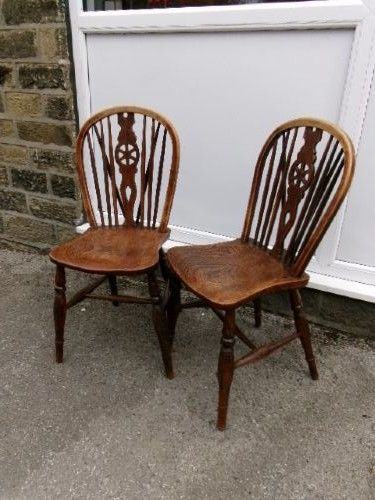
Wooden Hoop Back Chairs
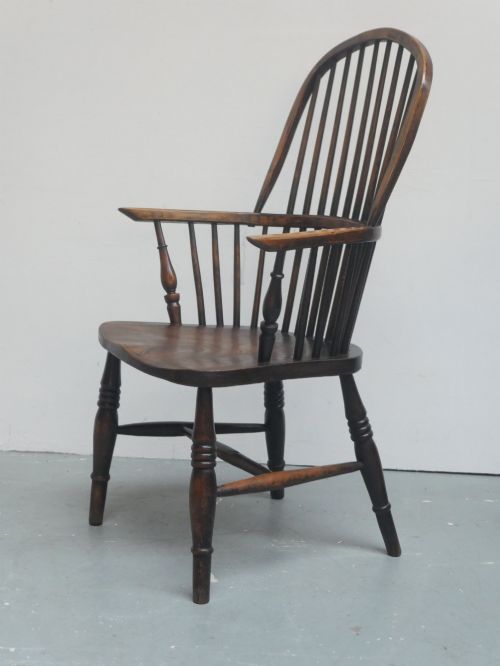
Wooden hoop back chairs are sturdy country seating pieces defined by bentwood backs, offering robust construction and enduring traditional charm.
Wooden Hoop Back Chairs
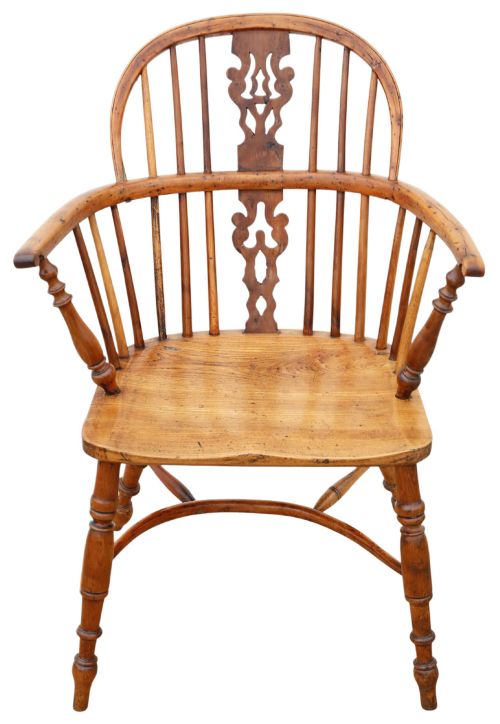
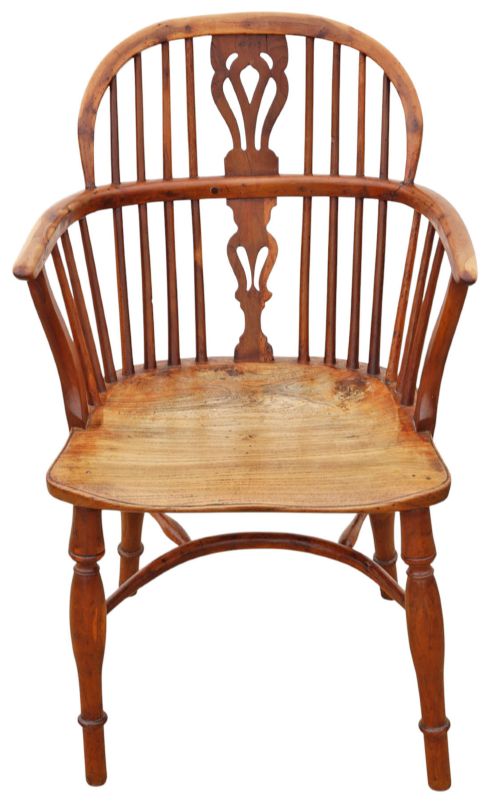
The material combination shapes the character of these chairs, frequently pairing elm seats with yew, ash or fruitwood components. Surviving examples reflect vernacular craftsmanship from distinct regions such as the Thames Valley, West Country, Lincolnshire, Scotland and Wales. Buyers often select these functional seats to anchor rustic dining tables or country house interiors.
How they were made
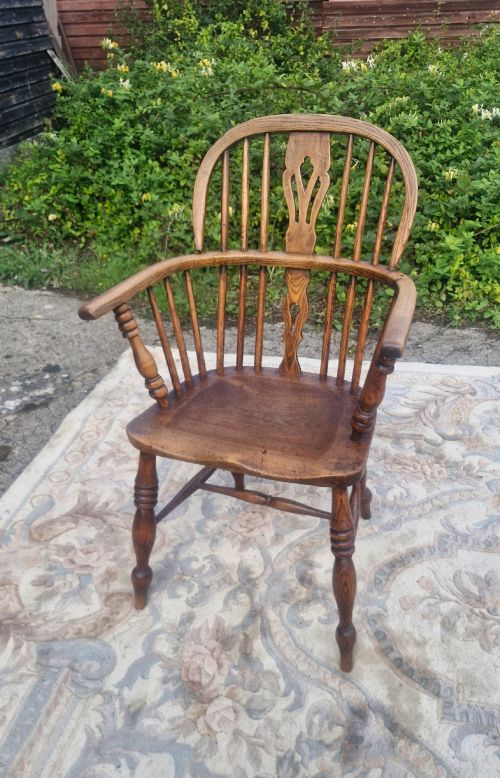
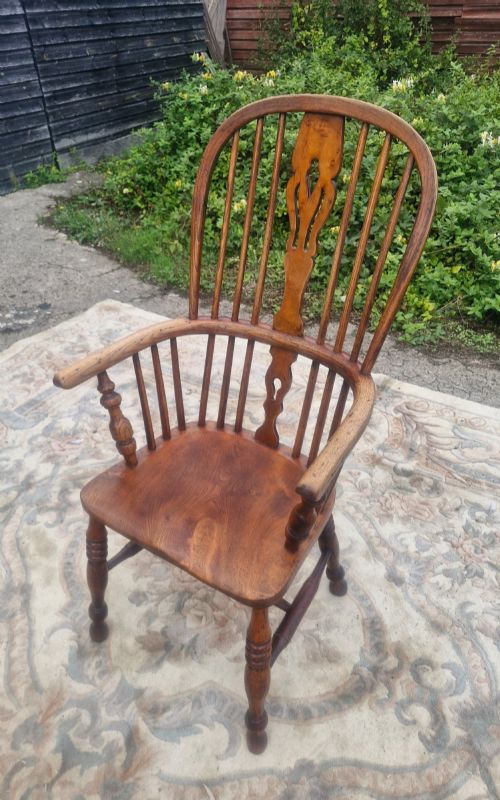
Joiners constructed wooden hoop back chairs using distinct timber selections for different structural components. Solid elm provided stable, carved plank seats capable of resisting splitting, while flexible ash and yew formed the steam-bent hoops, spindles and arm bows.
Makers utilised traditional green woodworking techniques, turning legs and stretchers on pole lathes and shaping spindles by hand. Parts were joined using wedged mortise and tenon construction, creating rigid frames without relying on metal fasteners.
Some chairs preserve centuries of pocket lint trapped beneath the saddle seat through generations of kitchen use.
What varies in quality
The grade of timber selection distinguishes standard utility seating from finer artisan production. Yew wood examples with rich grain patterns command greater attention than simple ash or beech alternatives.
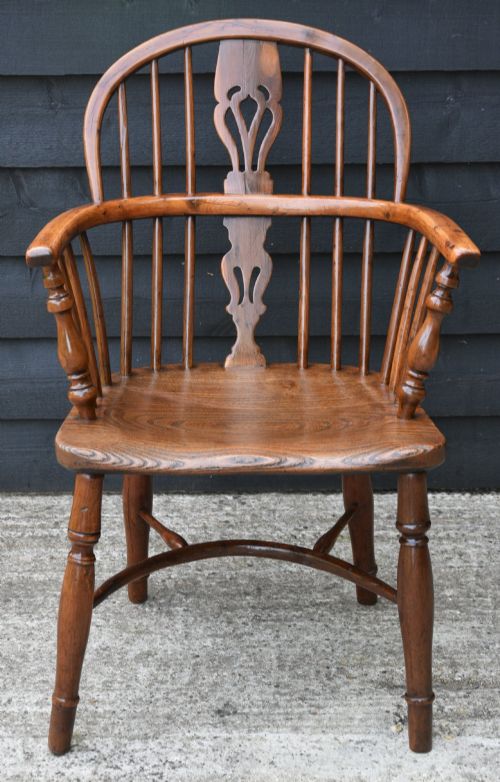
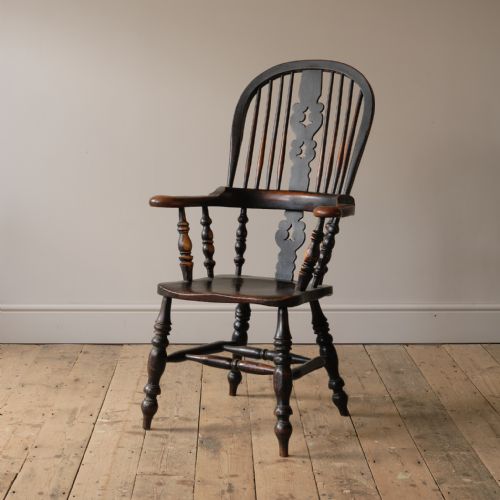
Proportion and structural balance govern the visual success of the piece. Well-balanced arm bows, refined comb or wheel back splats, and original crinoline stretchers elevate the presence of individual chairs.
J SPENCER
The Wooden Hoop Back Chairs Glossary
- Windsor chair
- A chair built with a solid wooden seat into which the legs and back-spindles are driven directly. These traditional seats rely on a heavy saddle-shaped plank for structural stability.
- Hoop back
- A style of chair back formed from a single continuous piece of steam-bent wood shaped into an arch. This technique provides both tensile strength and visual grace.
- Crinoline stretcher
- An arched under-frame joining the legs of a Windsor chair to provide rigidity. This curved brace draws its name from the shape of nineteenth-century fashion petticoats.
- Wheel back
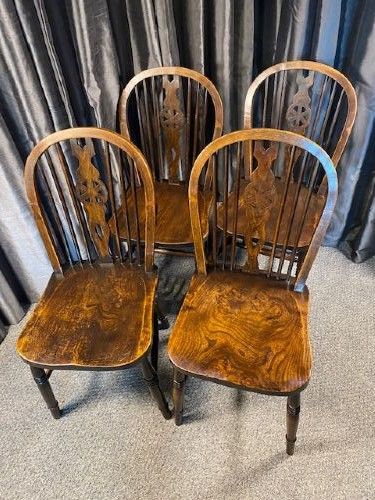
- A Windsor chair design featuring a pierced wooden splat carved in the shape of a cartwheel. This decorative motif became common in nineteenth-century kitchen dining sets.
- Vernacular
- Objects designed and built by local craftsmen using regional materials without academic architectural influence. These pieces prioritise practical utility over formal stylistic convention.
Wooden Hoop Back Chairs: Frequently Asked Questions
What is a wooden hoop back chair?
A wooden hoop back chair is a traditional seating form featuring a continuous bentwood bow connected to a solid plank seat. These pieces draw strength from interlocking turned spindles and solid wood underframes.
Originating in rural workshops, these chairs served functional roles in farmhouses, cottages and kitchens across Britain. Their enduring design combines comfortable saddle seats with robust structural framing.
How do I date a Windsor chair?
Dating relies on examining timber species, tool marks and structural wear patterns on the seat bottom. Earlier eighteenth-century examples often feature deep comb backs and native fruitwood or yew construction.
Nineteenth-century variants frequently incorporate wheel-back splats or elm and ash combinations produced in larger quantities. Regional construction traits further help narrow down the period of manufacture.
Where were these chairs made?
Country chairmakers produced these pieces across various English, Welsh and Scottish regions, utilising locally available timber. Workshops in the Thames Valley and West Country gained particular renown for sophisticated yew wood construction.
Local timber availability dictated material choices, resulting in distinct regional variations in turning styles and arm shapes. Carpenters adapted traditional methods to suit local domestic and agricultural requirements.
How do I live with antique chairs?
Integrating antique country seating into modern spaces adds tactile warmth and historical character to dining areas or living rooms. These robust chairs function reliably for daily dining when placed on even surfaces.
Maintenance involves keeping timber away from direct heat sources and maintaining stable indoor humidity. Regular gentle polishing preserves the natural lustre of aged elm and yew surfaces.