

Solid Wood Side Chairs
Solid wood side chairs bring centuries of practical seating into a room, spanning formal dining rooms and country kitchens through mahogany, oak, and elm.
Solid Wood Side Chairs
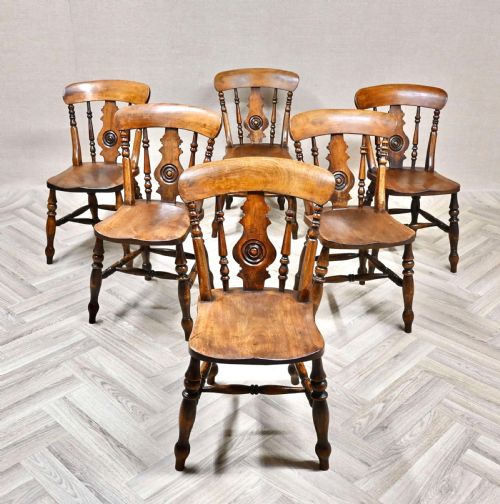
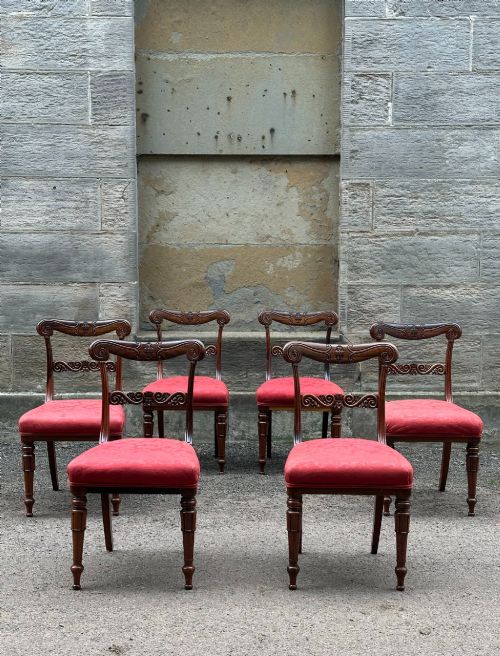
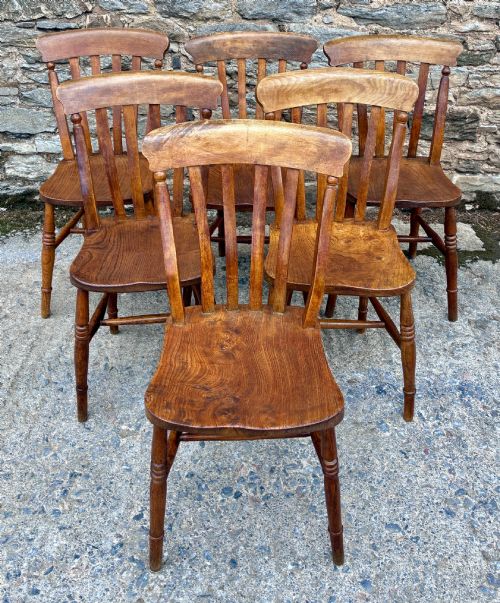
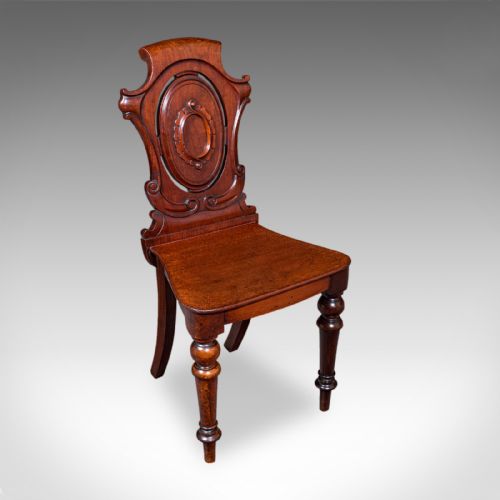
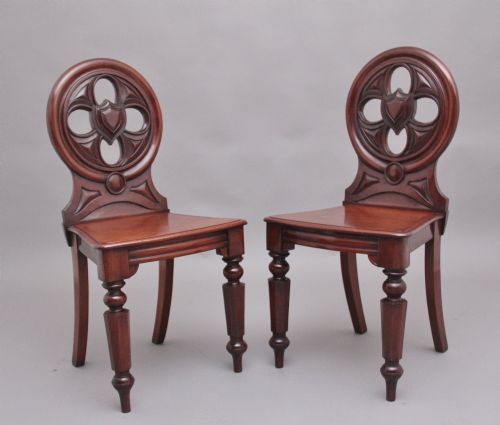
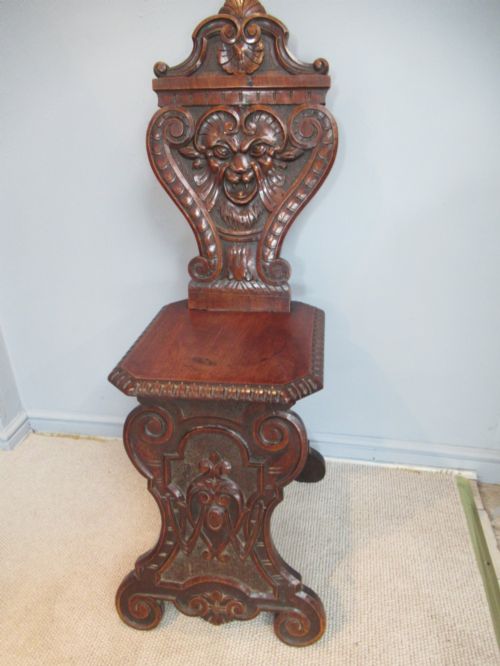
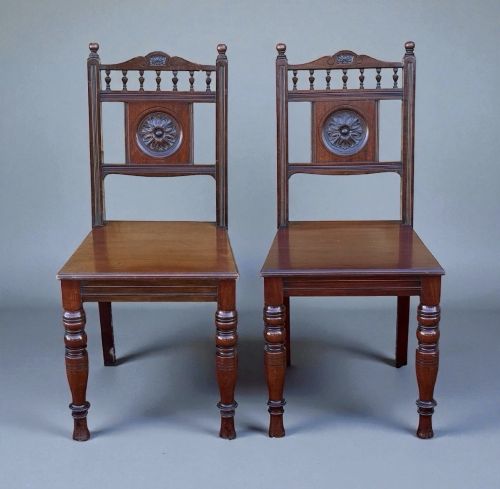
When you search for solid wood side chairs, you encounter seating spanning the eighteenth, nineteenth, and early twentieth centuries, constructed in materials like mahogany, oak, elm, and beech. These pieces encompass formal dining seats, kitchen Windsor designs, and carved hall chairs.
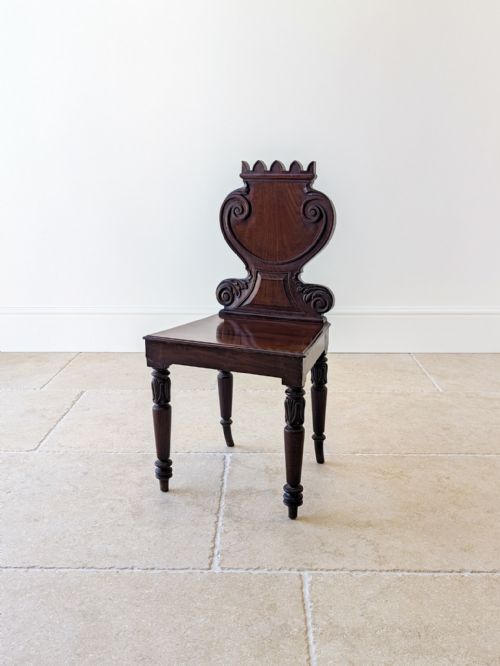
The most common examples on this page are nineteenth-century Victorian and Regency pieces, alongside Georgian items. Hall chairs and kitchen seating dominate the selection, appearing in single pieces, pairs, and larger sets.
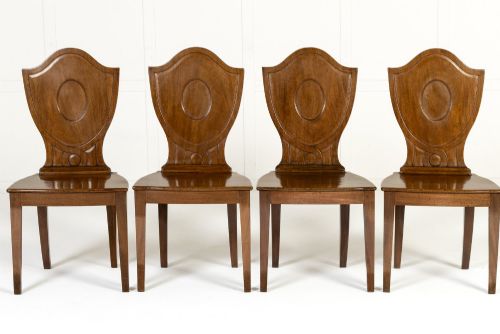
Makers and regional workshops produced these chairs across England, Scotland, and Ireland, utilising local timbers to build sturdy frames. Forms range from simple spindle backs to intricately carved shield back and pelta back designs.
How they were made
Cabinetmakers and country joiners relied on dense hardwoods such as mahogany, oak, walnut, rosewood, and beech, often pairing turned legs with solid timber seats. Construction techniques included mortise and tenon joints for frames and steam-bending for curved Windsor components.
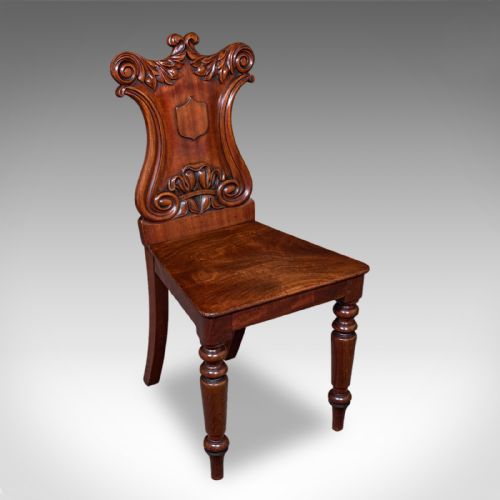
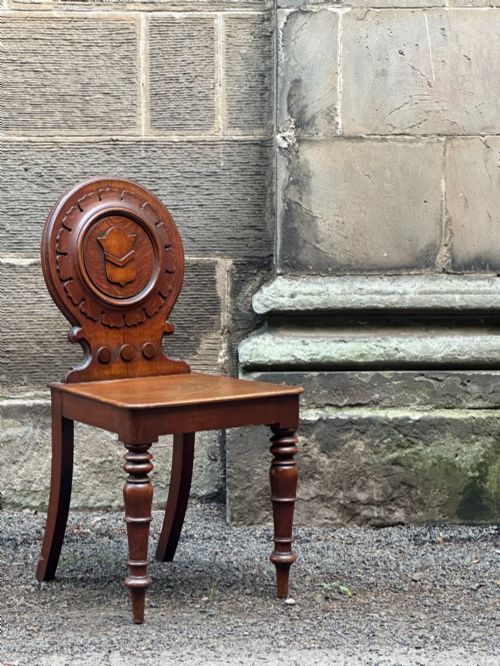
Carving and turning defined the ornamentation, with craftsmen working directly into solid mahogany or oak backs to form heraldic shields, crests, and geometric patterns. Brass accents and upholstery appeared on select dining and reception seats.
What varies in quality
Quality rests in the selection of the timber and the crispness of the hand-carving on the back panels. Dense, figured mahogany and well-matched sets show superior craftsmanship compared to plain utility pieces.
The integrity of the structural joints and the retention of original surface patination determine the grade of a chair. Pieces retaining deep, unblemished polish on solid timber stand apart from heavily restored examples.
Gillows
The Solid Wood Side Chairs Glossary
- Hall chair
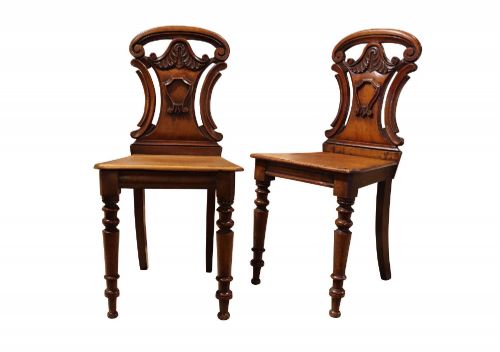
- A rigid wooden seat traditionally placed in an entrance hall, often featuring a solid carved back displaying a crest or shield.
- Windsor chair
- A wooden seat constructed with sticks inserted into a solid sculpted seat plank, featuring a steam-bent bow or comb back.
- Shield back
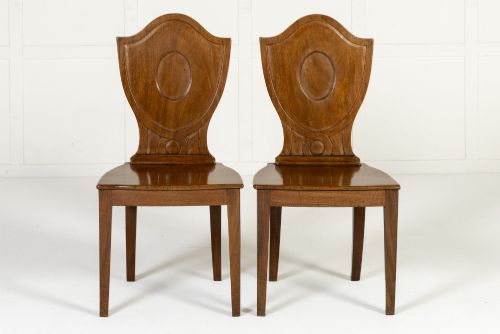
- A chair back shaped like a heraldic shield, popular in Georgian and Victorian formal seating.
- Sgabello
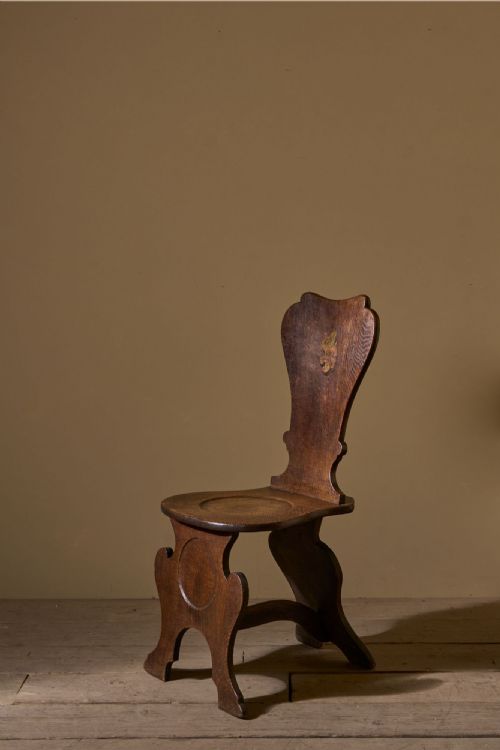
- A Renaissance-style chair form featuring solid trestle supports and a carved wooden back, seen in early oak examples.
- Lathe back
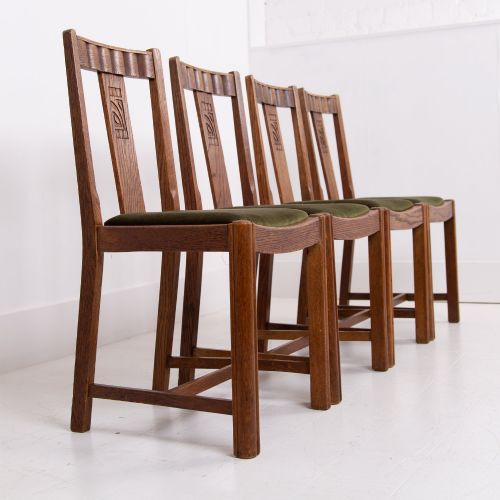
- A chair back incorporating flat wooden slats turned on a lathe, common in nineteenth-century country kitchen seating.
Solid Wood Side Chairs: Frequently Asked Questions
Where were solid wood side chairs used?
These chairs served multiple domestic functions across the home, appearing in entrance halls, formal dining rooms, and farmhouse kitchens. Hall chairs stood against walls for brief seating, while robust Windsor and farmhouse models gathered around dining tables.
Town houses and country estates utilised different forms depending on the room. Formal reception spaces received carved mahogany designs, whereas daily utility required sturdy beech and elm kitchen seating.
How do I care for solid wood chairs?
Maintenance involves keeping timber away from direct heat sources and sudden temperature shifts to prevent wood splitting. Regular dusting with a soft cloth preserves the polish without building up excess residue.
Applying occasional appropriate wax feeds the grain on antique mahogany and oak surfaces. Checking joint stability ensures older frames remain secure during daily use.
How can I tell a Georgian chair from a Victorian one?
Georgian chairs, spanning the eighteenth century and early eighteen-hundreds, typically display restrained classical proportions and fine mahogany carving. They often feature distinct shield or interlaced ladder backs.
Victorian pieces from the mid-to-late nineteenth century frequently exhibit heavier proportions, Gothic Revival influences, or more exuberant carved decoration. Elm and walnut also see widespread use alongside mahogany during this period.
Are matching sets difficult to find?
Assembled sets of six or four appear regularly, though many historic chairs survived as singles or pairs. Dining sets from the nineteenth century occasionally surface together when preserved in original homes.
Kitchen chairs and Windsor styles are frequently found in groups of four or six due to their domestic utility. Hall chairs more commonly survive as pairs intended for opposing sides of an entryway.