



Wheel Engraved Goblet
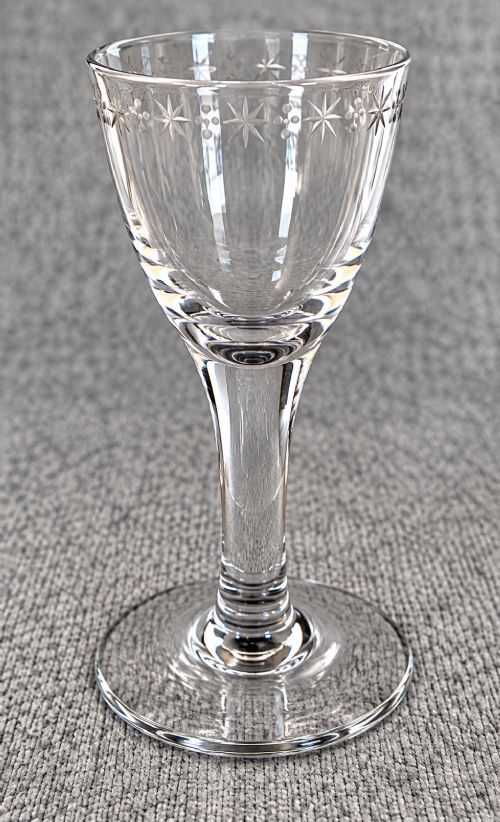
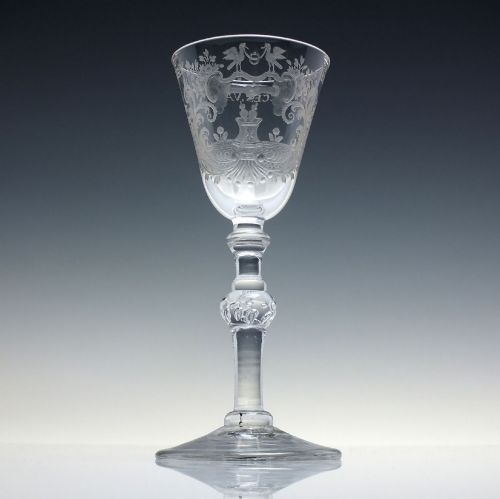
A wheel engraved goblet brings tactile depth to the table, formed from clear glass or lead crystal shaped across centuries.
Wheel Engraved Goblet
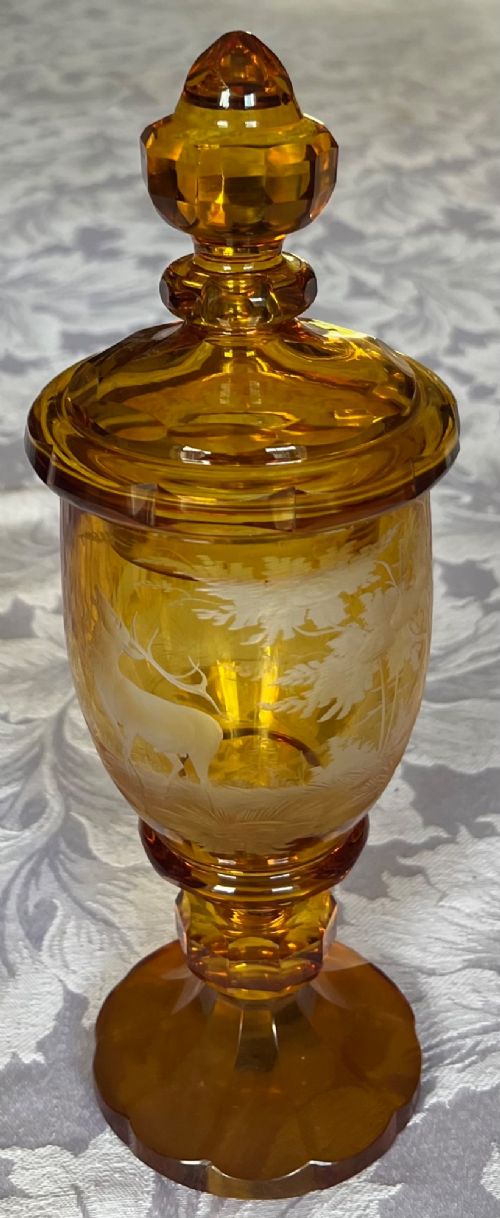
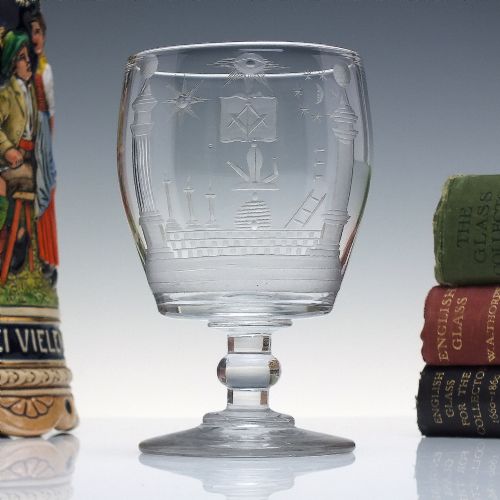
When you search for a wheel engraved goblet, you encounter drinking vessels, rummers, and ceremonial beakers originating from English and Bohemian workshops. These pieces span the eighteenth, nineteenth, and early twentieth centuries, encompassing Georgian, Victorian, and Edwardian periods.
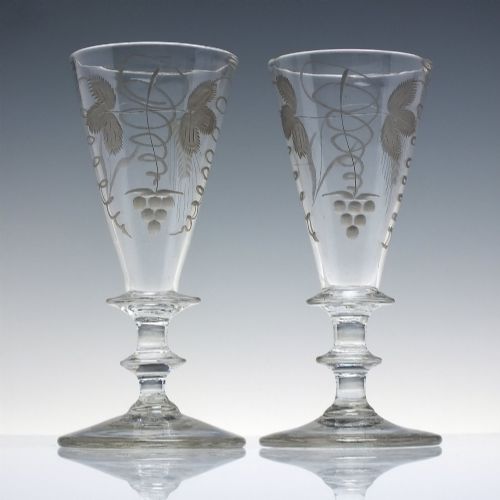
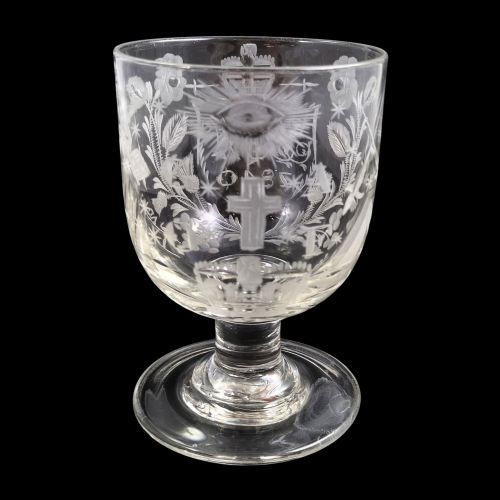
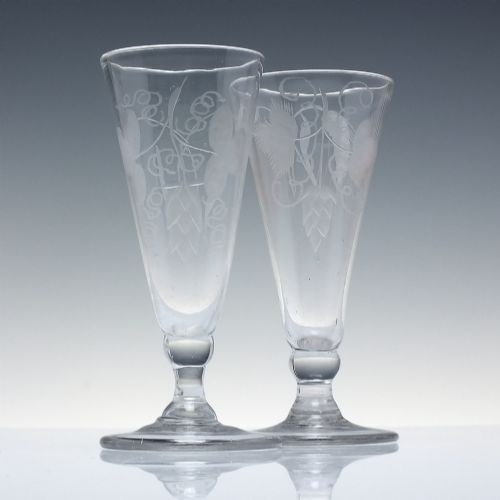
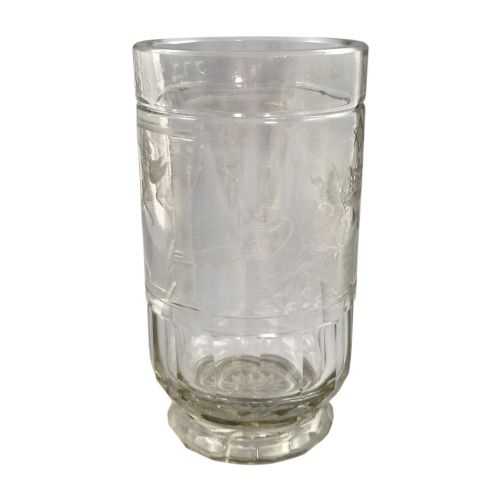
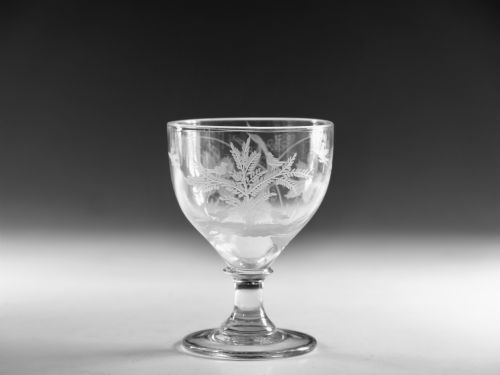
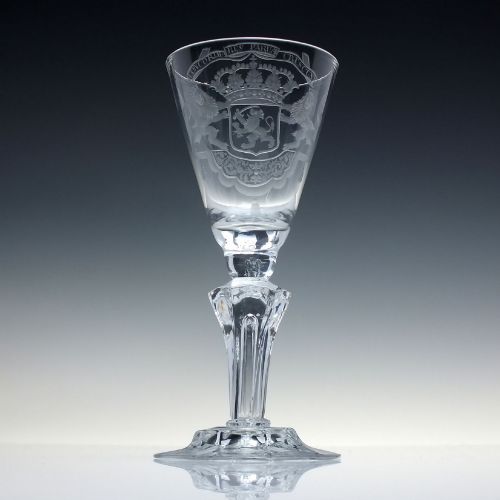
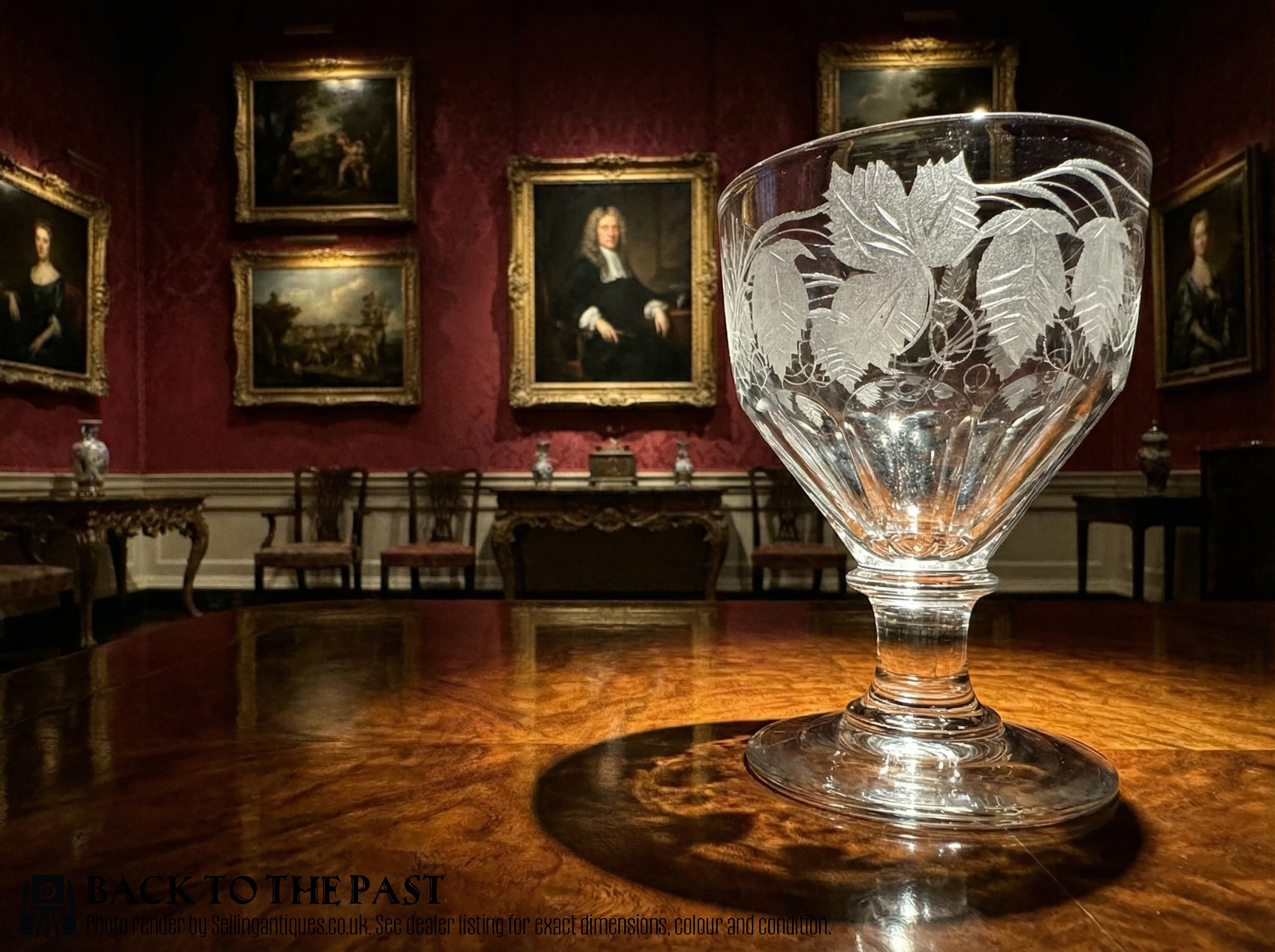
The English examples on this page typically present as lead glass rummers, dram glasses, or heavy baluster wine goblets decorated with hops, barley, or armorial motifs. Alongside these, continental pieces from Bohemia introduce amber glass, roemers, and large ceremonial vessels featuring elaborate animal or architectural scenes.
Forms range from dwarf ale glasses and plain stem wine goblets to massive table rummers and centrepiece bowls. Buyers find both individual drinking glasses and matched pairs or sets intended for formal service.
Factors of quality and execution
Quality in a wheel engraved goblet rests upon the crispness and depth of the cutting alongside the purity of the metal itself. Finer pieces demonstrate confident, fluid lines in the engraving work that display clear dimensionality without blurring at the edges.
The proportions of the vessel, the weight of the lead glass, and the stability of the stem or foot further separate standard production from superior examples. Pieces with balanced walls and clear, resonant metal command greater appreciation from collectors.
Several goblets proudly display sailing ships and initials, perhaps commemorating a thirsty sailor's safe return.
The Wheel Engraved Goblet Glossary
- Rummer
- A large, sturdy drinking glass popular in the eighteenth and nineteenth centuries, often featuring a short stem and a capacious bowl used for beer, ale, or wine.
- Intaglio
- A technique where the design is carved into the surface of the glass rather than left in relief, creating a sunken image.
- Lead glass
- Heavy, high-refractive-index glass containing lead oxide, which increases brilliance and makes the material softer for detailed cutting and engraving.
- Baluster stem
- A thick, turned stem shape resembling an architectural baluster, common on eighteenth-century English drinking glasses.
Wheel Engraved Goblet: Frequently Asked Questions
What is a wheel engraved goblet?
A wheel engraved goblet is a drinking vessel decorated by holding the glass against a small rotating abrasive wheel. This technique creates permanent incisions and detailed motifs across the surface of the bowl.
These vessels include rummers, wine glasses, and ceremonial beakers produced across English and continental workshops from the seventeenth century onward.
How were these goblets used?
Many of these pieces served practical dining functions for wine, ale, and beer at the table. Larger rummers and heavy beakers also fulfilled ceremonial roles, marking marriages, Masonic gatherings, or political loyalties.
Heavier vessels were designed for toasts and communal drinking rather than delicate sipping.
How do I date a glass goblet?
Dating relies on observing the form of the bowl, the construction of the stem, and the composition of the metal. English lead glass pieces from the Georgian era display distinct stem formations like air twists or balusters.
Engraving styles and pontil mark characteristics on the base provide further clues to the manufacturing period, ranging from eighteenth-century Newcastle pieces to Edwardian services.
Can I use antique goblets daily?
While sturdy lead glass rummers were built for regular use, antique goblets require careful handling and hand washing to preserve their engraved surfaces. Sudden temperature changes should be avoided to protect the historic metal.
Many collectors prefer to display these pieces or reserve them for special occasions to prevent accidental damage.