



Large Rummer
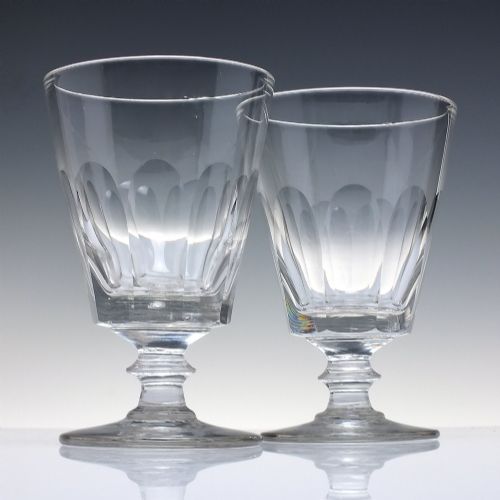
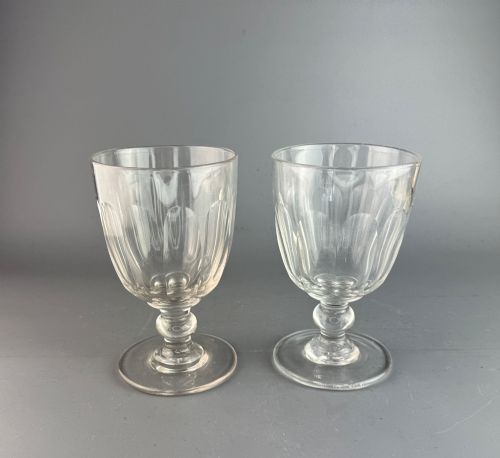
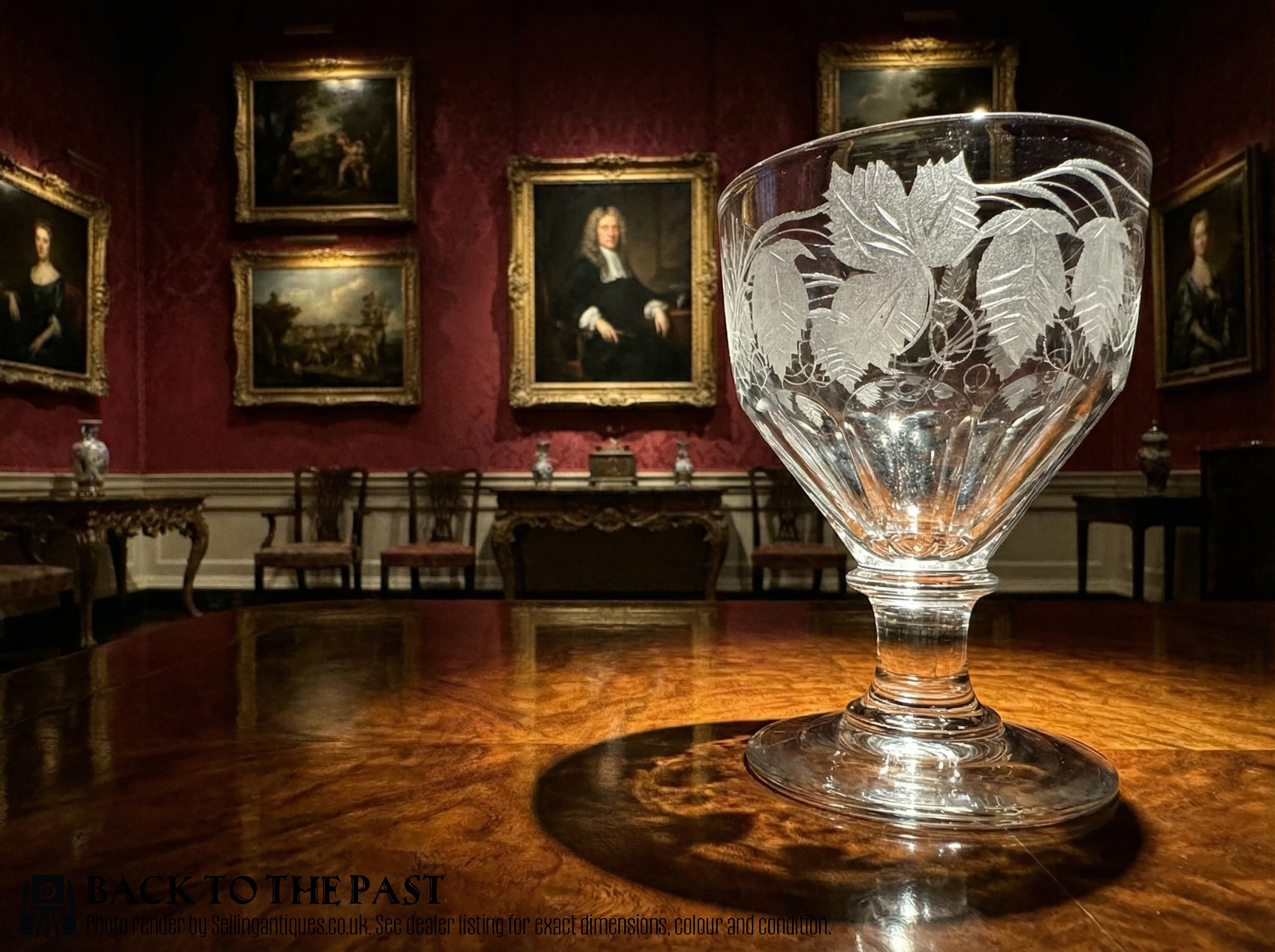
A large antique rummer brings weight and historic character to the table, offering a generous bowl designed for the heavy pours of past centuries.
Large Rummer
A large antique rummer is a substantial drinking glass or goblet intended for robust service, frequently found in Georgian and Victorian forms.
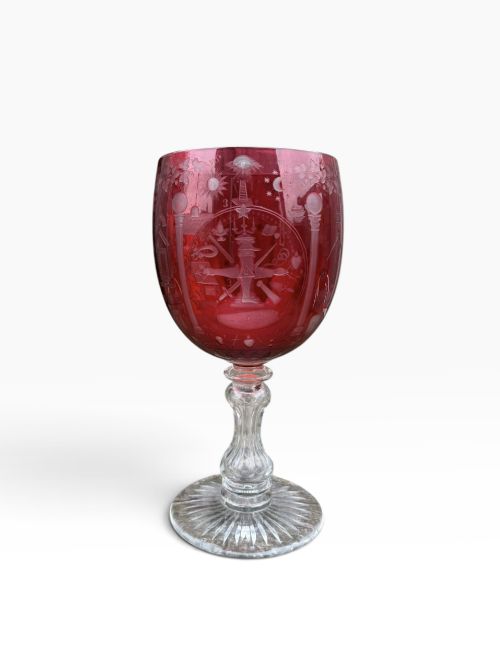
Buyers encounter clear lead crystal alongside occasional coloured examples such as cranberry and amber glass, shaped with ovoid, bucket, or pan top bowls.
The evidence shows these drinking glasses originating from English and Anglo-Irish workshops, spanning from the Georgian period through to the nineteenth century.
Construction and materials
The material composition relies heavily on lead glass and flint glass, yielding the heft and clarity typical of these drinking vessels.
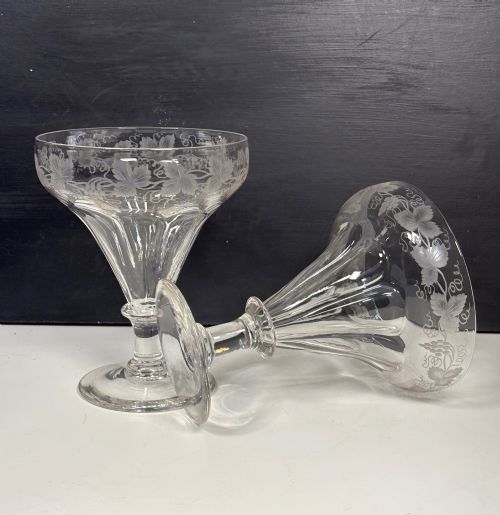
Maker techniques include blow moulding and free blowing, combined with subsequent cutting, engraving, and enamel decoration to finish the bowls.
Some nineteenth-century revellers trusted these heavy vessels so implicitly they had them engraved with masonic symbols.
Judging quality and craftsmanship
Quality rests in the crispness of the hand-cut facets and the precision of the engraved motifs, such as hops and barley or heraldic symbols.
The purity of the metal and the balance of the stem against a heavy bowl separate standard vessels from exceptional examples.
Frits Hechert
The Large Rummer Glossary
- Rummer
- A heavy drinking glass or goblet with a short stem, used historically for wine, ale, or punch.
- Lead Crystal
- Glass containing lead oxide, which increases brilliance, weight, and the ease of cutting.
- Bucket Bowl
- A drinking vessel bowl shaped like an inverted bucket with straight, slightly tapering sides.
- Pan Top
- A bowl form featuring an upper section that flares outward towards the rim.
- Roemer
- A traditional European drinking glass, often green, with a large spherical bowl resting on a ribbed stem.
Large Rummer: Frequently Asked Questions
What were large antique rummers used for?
These large vessels served for drinking ale, porter, or wine during communal gatherings and taverns.
Their substantial capacity made them practical for heavy pours before smaller stemware standardisation.
How do I date an antique rummer?
Dating relies on observing the bowl shape, the weight of the metal, and the style of the cutting or engraving.
Georgian and Regency examples often feature heavy bases and ovoid or bucket bowls, while Victorian pieces show wider decorative variety.
Can I use these glasses for daily dining?
These historic glasses are robust enough for careful table use, though hand washing is essential.
Their heavy lead glass construction makes them durable, but their age warrants gentle handling during dinner parties.
What is the difference between a rummer and a goblet?
A rummer is specifically a heavy, short-stemmed English or Irish drinking glass traditionally associated with punch and ale.
Standard goblets often feature taller stems and lighter bowls intended strictly for wine.