

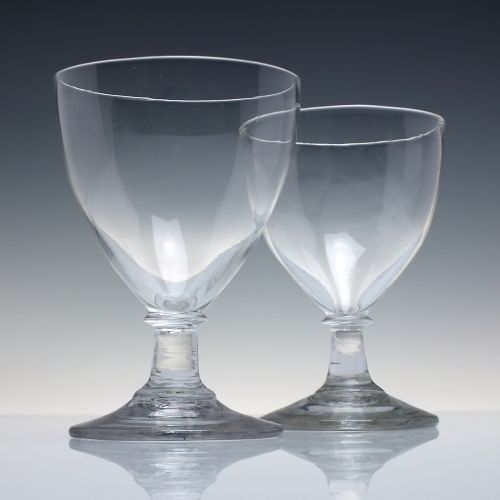


Regency Glass Stemware
Regency glass stemware brings heavy lead crystal and vibrant colour to the table, offering a tangible link to early nineteenth-century dining.
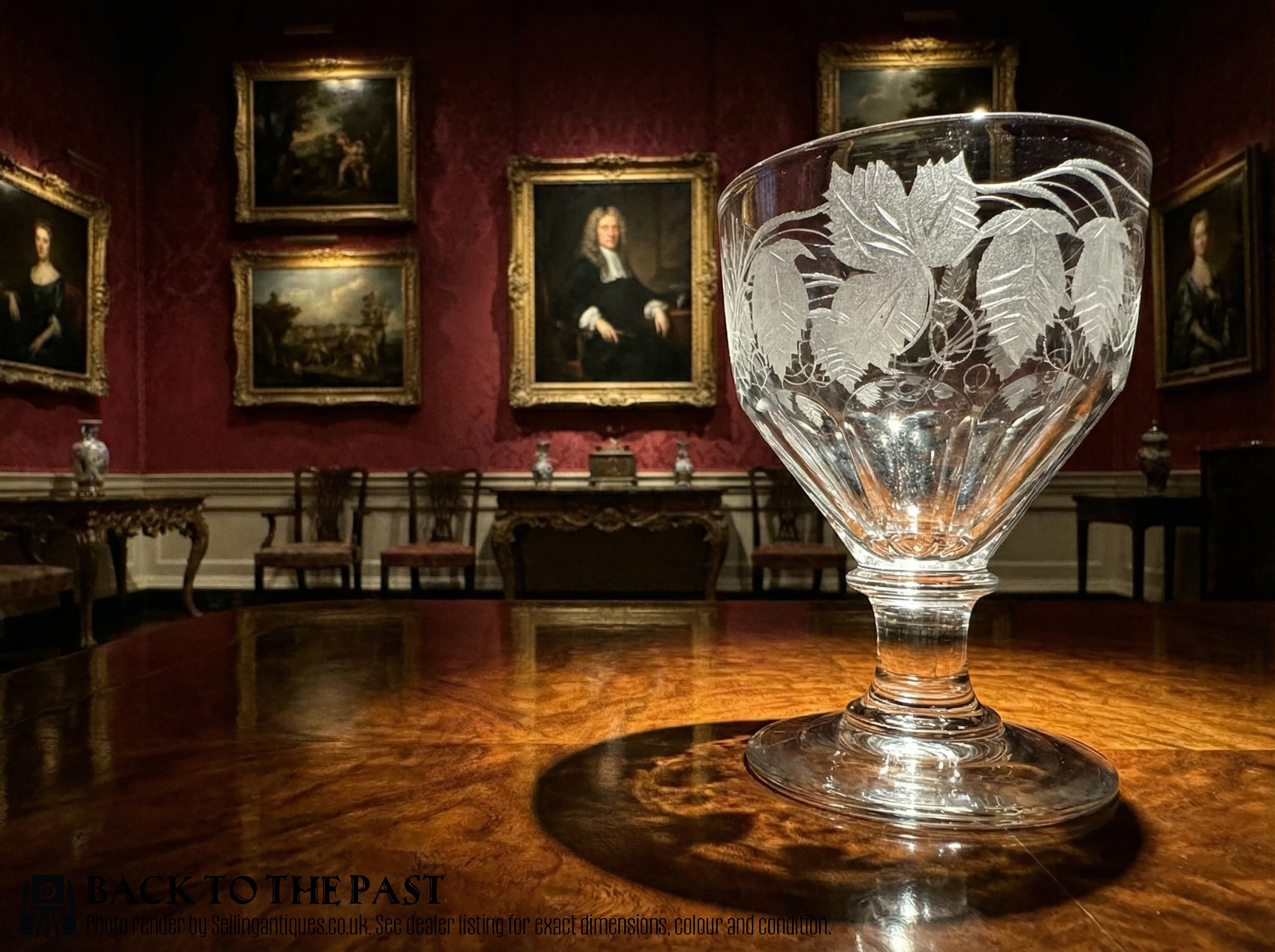
Regency Glass Stemware
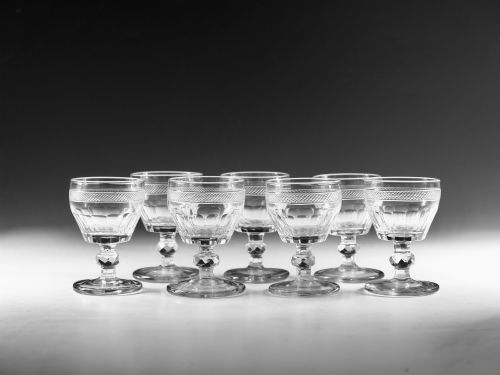
Regency glass stemware comprises drinking vessels and table items produced during the Georgian and Regency periods, spanning clear lead crystal and striking coloured glass. Buyers exploring regency glass stemware will encounter robust rummers, wine glasses, port glasses, sherry glasses, and rinsers.
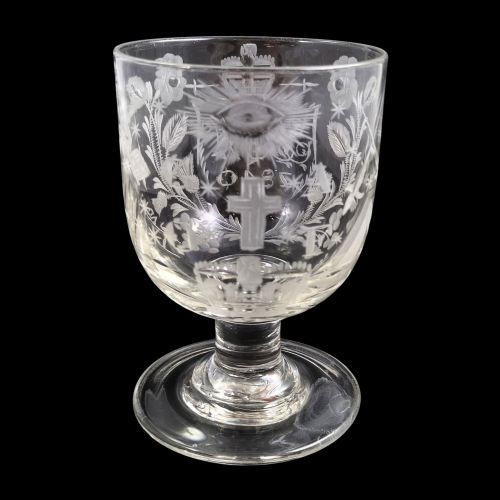
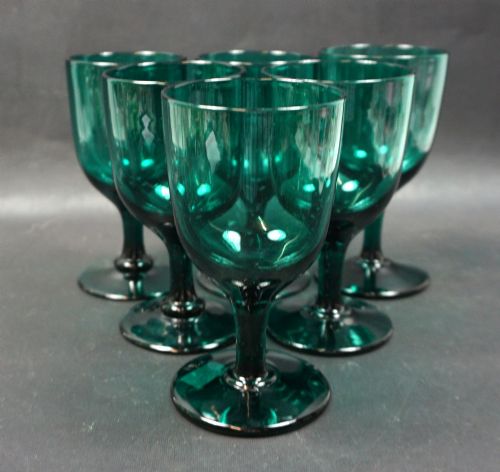
The objects seen here are largely English and Irish in origin, dating principally from around eighteen hundred to eighteen twenty. Forms range from heavy bucket and pan rummers to matching sets of wine glasses in deep tones like Bristol green, turquoise blue, and peacock blue.
How they were made
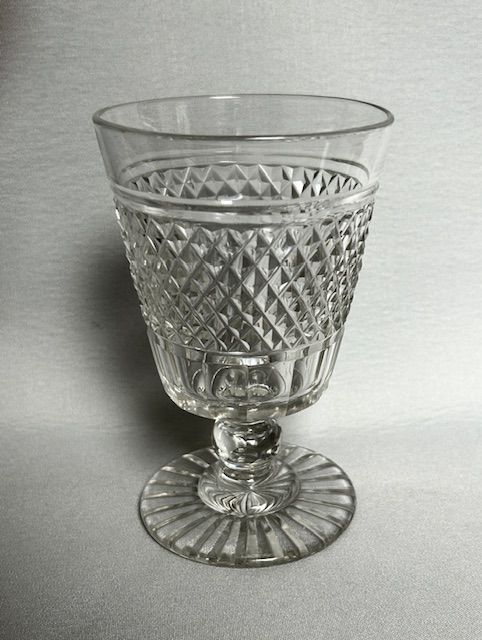
These pieces rely on heavy lead glass and flint glass, shaped through traditional blown glass techniques before undergoing extensive hand-cutting and wheel-engraving. Artisans utilised hobnail cutting and faceted panels to catch the candlelight, creating deep optical effects in the thick metal.
Surface decoration frequently includes detailed wheel-engraved motifs such as hop and barley, armorial crests, or topographical subjects like the Sunderland Bridge. Coloured variants achieved their rich hues through specialised metal oxide additions during the initial glass batch melting process.
Listings feature four distinct glass colours: clear, Bristol green, turquoise blue, and peacock blue.
What varies in quality
Quality rests upon the weight and clarity of the lead crystal, alongside the crispness and depth of the wheel-cut facets. Superior examples display sharp, well-defined cutting that remains tactile and precise across heavy bowls and solid feet.
The distinction between standard table vessels and finer pieces often lies in the sophistication of the engraving and the uniformity of matched sets. Coloured glass quality depends on the saturation and purity of the tone, whether in a single rummer or a set of six wine glasses.
The Regency Glass Stemware Glossary
- Rummer
- A large, heavy drinking glass popular in the eighteenth and nineteenth centuries, used for ale, wine, or punch. These sturdy vessels often feature bucket or ovoid bowls.
- Lead glass
- A type of glass containing lead oxide, which increases brilliance, weight, and workability for cutting. This material forms the heavy substance of most Regency drinking vessels.
- Hobnail cut
- A decorative surface pattern consisting of a series of small, raised pyramidal facets. This texture provides a distinctive tactile grip and brilliant light refraction.
- Rinser
- A bowl-shaped vessel used at the table for washing wine glasses between courses. They feature scalloped rims designed to support the stems of the glasses.
Regency Glass Stemware: Frequently Asked Questions
What were rummers used for?
Rummers served as substantial drinking vessels for ale, wine, or punch during communal and domestic dining. Their heavy bases and thick walls helped prevent tipping on busy tables.
They remained popular through the Georgian and Regency eras, evolving in size from modest tavern cups to large table rummers.
How do I identify Regency glass?
Identification relies on observing heavy lead crystal weights, characteristic Georgian forms, and specific decorative techniques like wheel engraving and panel cutting. Tool marks on the pontil scar underneath the base also offer clues to the period.
Most pieces date between eighteen hundred and eighteen twenty, reflecting the stylistic preferences of the Regency era.
Are coloured wine glasses authentic?
Coloured wine glasses from this era were produced in saturated hues such as Bristol green, peacock blue, and turquoise. Makers added metallic oxides to the molten glass to achieve these permanent colours.
Authentic examples show period-appropriate manufacturing traits and traditional bowl shapes rather than modern pressed fabrication.
Can I use these glasses today?
These historical drinking vessels remain durable enough for careful modern use during special dinners. Hand washing in lukewarm water preserves the fragile lead crystal and antique surface finish.
Avoiding sudden temperature changes protects the heavy metal from thermal shock.