





Welsh Oak Storage Chest
A welsh oak storage chest brings domestic history into a room, offering sturdy utility and deep regional character.

Welsh Oak Storage Chest
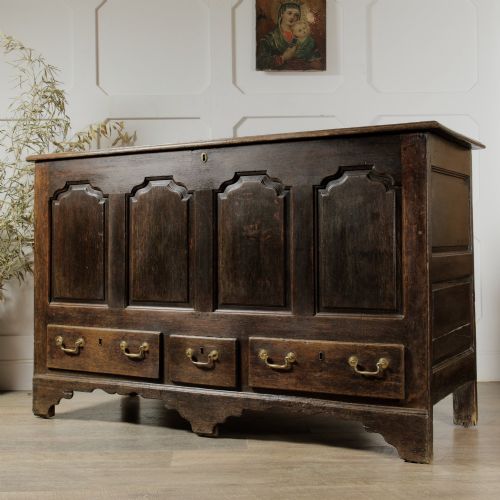
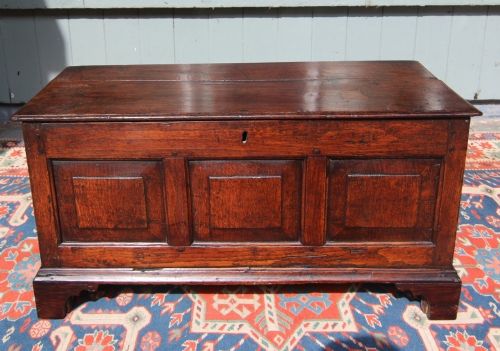
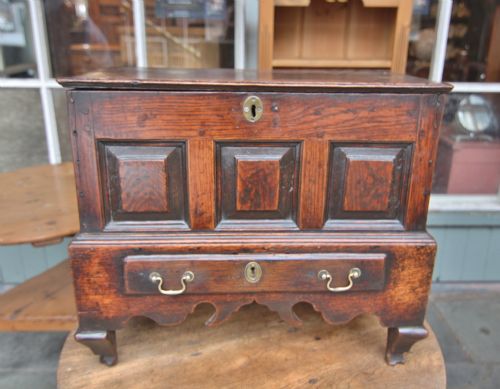
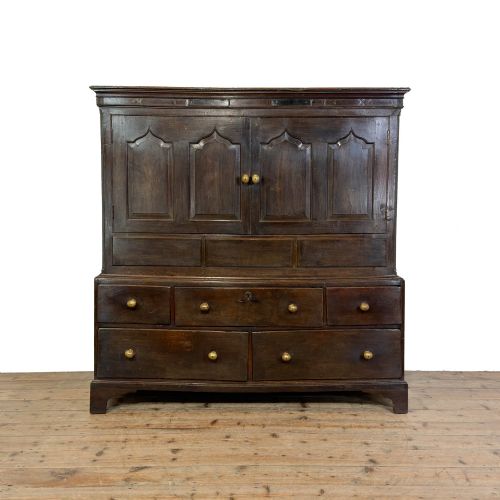
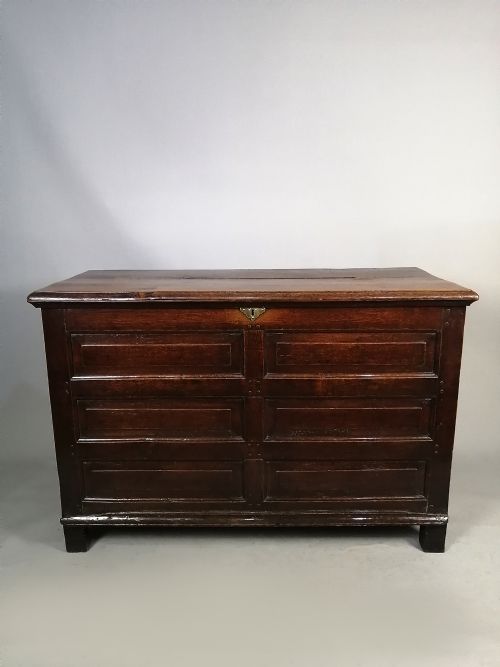
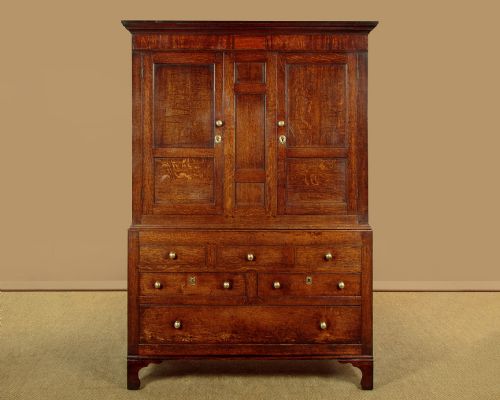
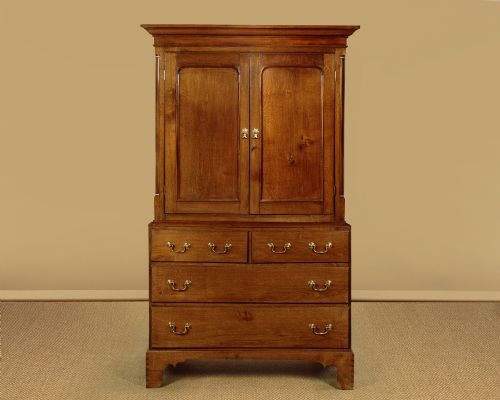
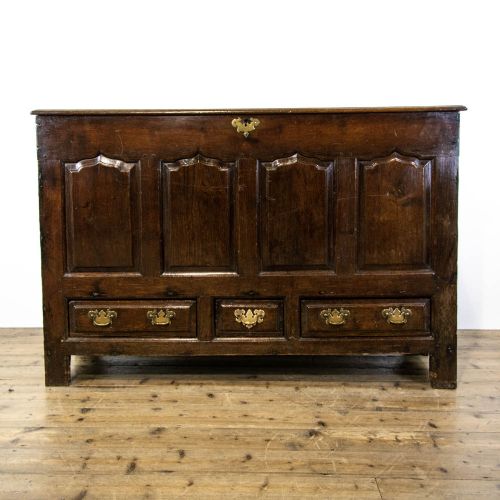
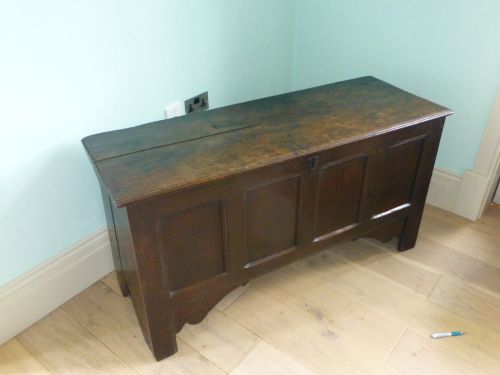
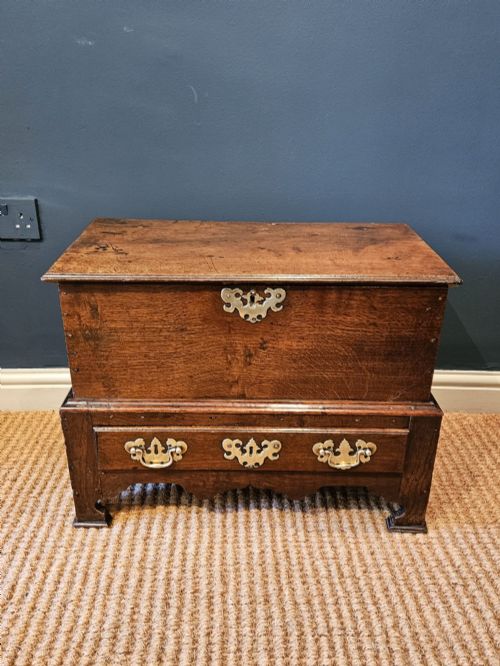
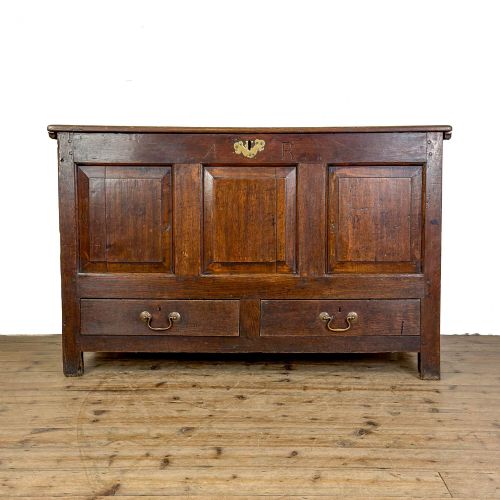
A welsh oak storage chest serves as a practical repository for household textiles and valuables, rooted in centuries of rural craftsmanship. Buyers encounter forms ranging from full-scale coffers and mule chests with lower drawers to miniature coffer baches and press cupboards.
The pieces on this page span from the sixteenth century through the Georgian era and into the nineteenth century, reflecting diverse regional origins such as the Gower Peninsula, Carmarthenshire, and Snowdonia. Domestic utility dictated their construction, resulting in sturdy timber boxes designed to withstand daily use in Welsh homes.
Regional variations appear in both proportion and decorative treatment, distinguishing country workshop output from more formal urban production. Smaller coffer baches provide insight into domestic scale, while larger mule chests and grain arks demonstrate the heavy-duty requirements of rural storage.
Materials and Construction Methods
Solid oak forms the primary structural material across these pieces, selected for local availability and long-term durability. Joinery relies on traditional frame-and-panel construction, pegged joints, and hand-planed boards.
Secondary materials include fruitwood inlay, bone, marquetry inlay, and painted wood surfaces, which add contrast to the dark timber. Wrought iron and brass hinges, locks, and handles secure lids and doors while providing functional detail.
Welsh Oak Storage Chest Retail Price Guide 2026
Typical asking prices for welsh oak storage chest among the pieces listed under this phrase on Sellingantiques today, from the lower quarter to the upper quarter. They describe what is for sale here now, not the wider market.
Some miniature coffer baches were lovingly constructed by apprentice joiners to prove their skill to master craftsmen.
Judging Quality and Character
Quality rests in the integrity of the original timber, the crispness of hand-carved panels, and the survival of untouched surfaces. Pieces retaining original brass or iron hardware and deep patination demonstrate superior historical continuity.
Proportion and regional idiosyncrasy separate standard utility furniture from exceptional vernacular pieces. The integration of fruitwood inlay or distinct regional carving styles elevates the visual interest of a coffer or press cupboard.
The Welsh Oak Storage Chest Glossary
- Coffer bach
- A miniature Welsh chest, often used for holding valuables or documents, sitting on low feet or a small stand.
- Mule chest
- A storage chest featuring one or more drawers built into the base beneath the main compartment.
- Grain ark
- A specialised wooden chest designed for storing grain or meal in rural agricultural dwellings.
- Press cupboard
- A large storage piece combining upper cupboard space with lower drawers or shelving for linen and household goods.
- Vernacular
- Furniture built by local country joiners using regional traditions rather than strict London academic designs.
- Marquetry
- Decorative inlay work using various woods to create pictorial or geometric patterns on the surface.
Welsh Oak Storage Chest: Frequently Asked Questions
How do I date an oak chest?
Dating relies on examining construction techniques, joinery methods, and the evolution of hardware like hinges and locks. Seventeenth-century examples often display pegged frame-and-panel construction with hand-carved motifs.
Later pieces from the Georgian and nineteenth centuries incorporate fitted drawers, machine-sawn elements, and different regional proportions that distinguish them from earlier vernacular work.
Where were these pieces made?
These items originated in rural Welsh workshops, farmhouses, and regional communities from Snowdonia down to Carmarthenshire and the Gower Peninsula. Local joiners utilised native timber to supply domestic storage for farming families.
Regional styles often reveal specific origins through distinct carving patterns, proportions, and local carpentry traditions.
What is the difference between a coffer and a mule chest?
A standard coffer consists of a deep wooden box with a hinged lid accessed entirely from the top. A mule chest adds one or more working drawers beneath the main storage compartment.
This evolution allowed easier access to stored clothing and textiles without needing to lift items directly out of the top well.