

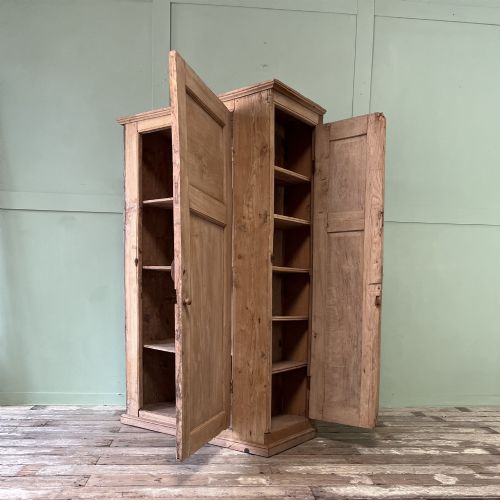
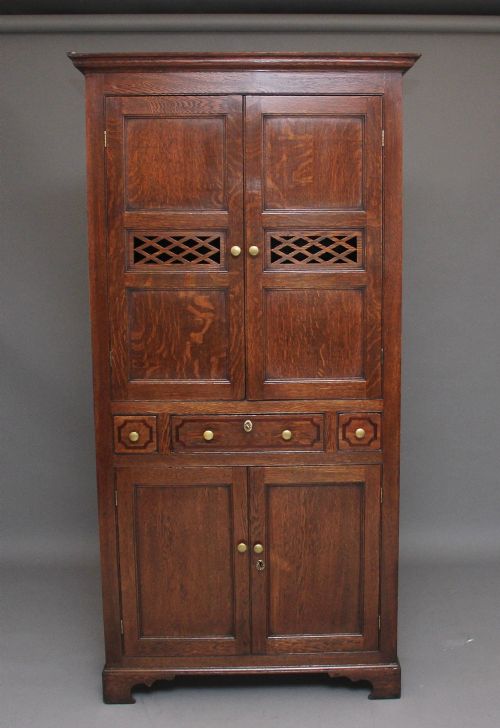
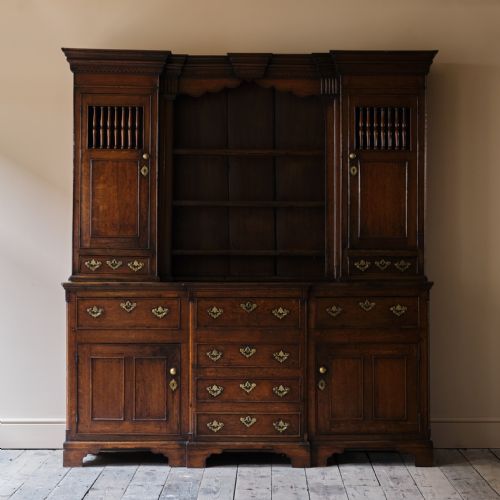


Welsh Bread Cupboard
These welsh bread cupboard examples span sturdy oak and pine storage pieces designed to keep dairy and provisions safe in rural homes.
Welsh Bread Cupboard
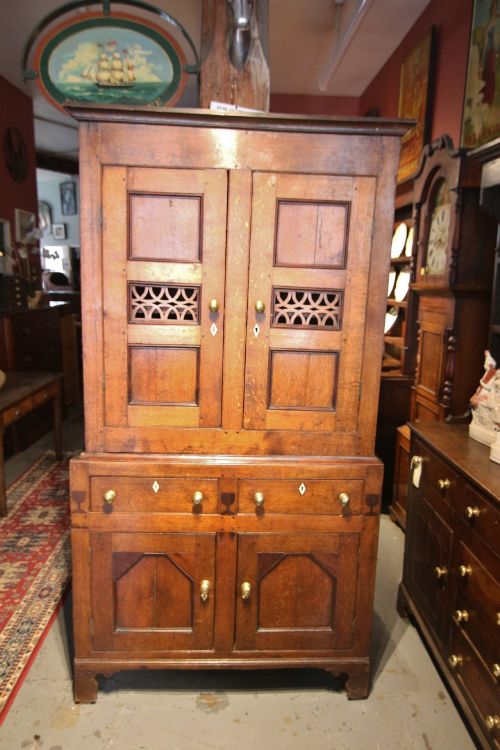
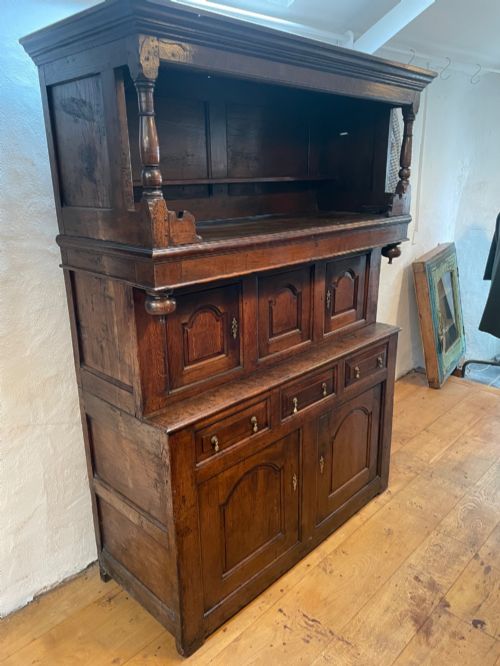
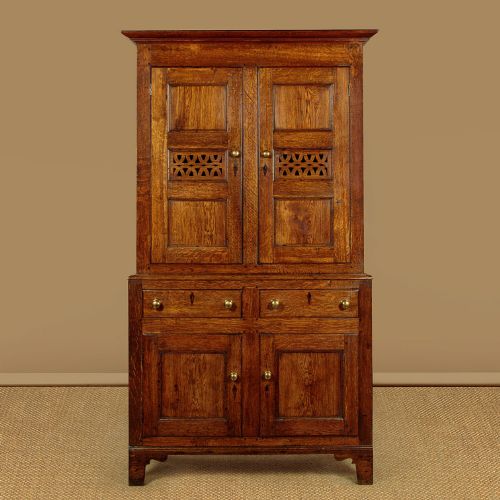
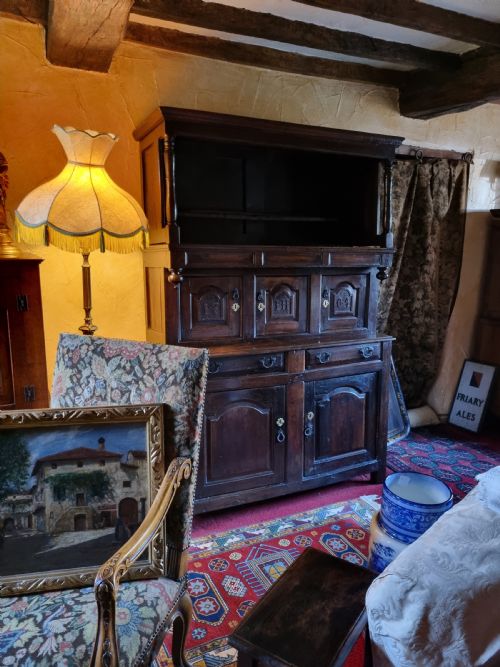
When you search for a welsh bread cupboard, you encounter traditional country storage pieces designed to house daily provisions, including specialised bread and cheese cupboards, food cupboards, and multi-tiered court cupboards such as the deuddarn and tridarn. These examples originate primarily from the seventeenth, eighteenth, and nineteenth centuries, reflecting domestic life in rural Wales.
The most common formats on this page are two-part and three-part cupboards rendered in solid native timbers. They range from small wall-hanging cabinets and pantry cupboards to grander dressers and press cupboards displaying vernacular Georgian or earlier styles.
Materials and construction methods
These items rely principally on solid oak, supported by regional timbers like elm and pine for secondary elements or specific regional variations. Joinery methods involve traditional pegged frame and panel construction designed to withstand heavy domestic use over centuries.
Decorative details are achieved through simple carved motifs, inlaid wood, ebony accents, and occasionally painted finishes. Hardware relies on functional iron and brass hinges and latches integral to the structure.
Welsh Bread Cupboard Retail Price Guide 2026
Typical asking prices for welsh bread cupboard among the pieces listed under this phrase on Sellingantiques today, from the lower quarter to the upper quarter. They describe what is for sale here now, not the wider market.
Materials recorded across current pieces include native oak, elm, and pine, alongside decorative inlay, bone, and brass hardware.
Distinguishing quality and character
Quality in these vernacular pieces rests on the integrity of the original timber, the crispness of any carved detailing, and the survival of early surfaces. Untouched patination and original hardware elevate an example above one with heavy replacement parts.
Proportion and scale also dictate distinction, with smaller wall-hanging formats or complex multi-tiered tridarns showing finer architectural ambition than standard utility cupboards.
The Welsh Bread Cupboard Glossary
- Deuddarn
- A traditional Welsh two-part cupboard featuring enclosed storage sections, typically dating from the seventeenth and eighteenth centuries. These pieces form a cornerstone of rural vernacular furniture.
- Vernacular Georgian
- A style combining formal Georgian architectural proportions with regional country cabinet-making traditions. It bridges urban design trends and local rural workshop practices.
- Bread and cheese cupboard
- A specialised food storage cabinet featuring ventilated doors or panels designed to keep dairy and provisions fresh. These domestic pieces date predominantly from the eighteenth and nineteenth centuries.
Welsh Bread Cupboard: Frequently Asked Questions
What is a welsh bread cupboard?
A welsh bread cupboard is a traditional piece of rural furniture built to store provisions like bread and cheese in domestic settings.
These pieces typically feature ventilated panels or pierced woodwork to allow air circulation around perishable food items.
How do I date an oak cupboard?
Dating relies on examining construction techniques, joinery marks, wood types, and the evolution of stylistic details from seventeenth-century vernacular to nineteenth-century formats.
Early pieces often display hand-split timbers and pegged joinery, while later examples incorporate machine-sawn elements and different inlay styles.
Where were these cupboards made?
These cabinets were constructed in regional rural workshops across Wales by local joiners and carpenters using native timbers.
Maker details are rarely recorded, but construction methods often point to specific regional traditions and materials.
How do I care for antique oak furniture?
Antique oak benefits from stable indoor humidity and temperature levels away from direct heat sources and sunlight.
Applying a traditional beeswax polish occasionally helps nourish the historic timber surface without building up excessive residue.