
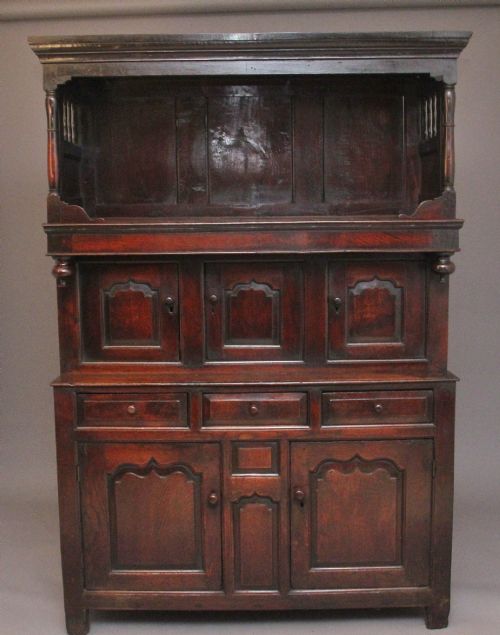


Carved Oak Tridarn
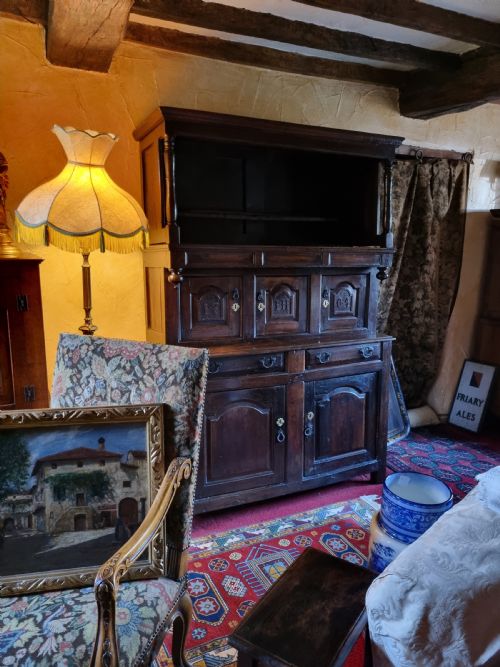
A carved oak tridarn is a towering three-piece Welsh cupboard that dominates a room with imposing grain and tiered display space.
Carved Oak Tridarn
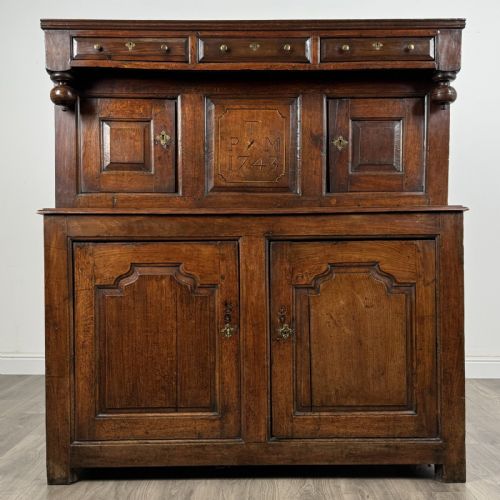
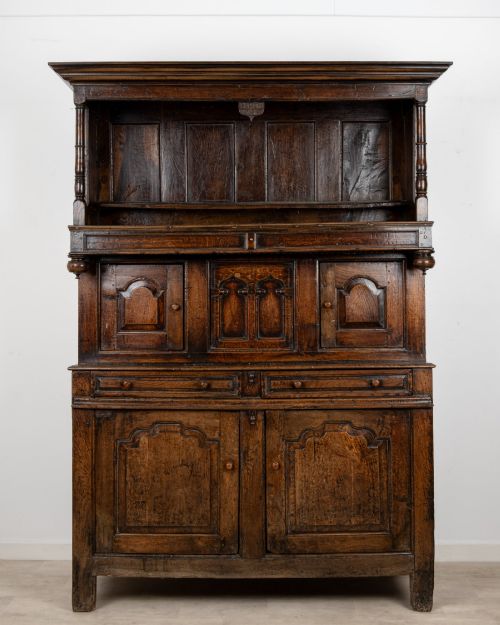
A carved oak tridarn represents the pinnacle of Welsh vernacular cabinet making, constructed in three distinct tiers comprising a base cupboard, a middle section with hanging cupboards or panels, and an open canopy top. These monumental pieces originated in domestic Welsh settings to store food, linen, and display prized vessels.
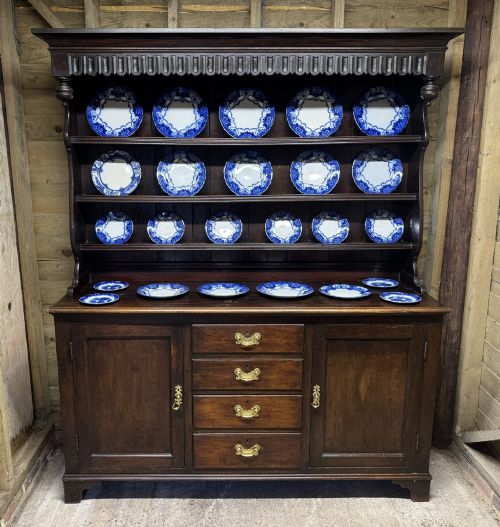
Most examples encountered on this page date from the eighteenth century, alongside seventeenth-century court cupboards and nineteenth-century Welsh dressers. Regional variations highlight styles from Snowdonia and wider Welsh country workshops.
How they were made
Makers utilised solid oak throughout the primary structure, employing joined frame-and-panel construction to accommodate the natural movement of timber over centuries. Selected examples incorporate yew-wood alongside oak, adding tonal warmth to the dense grain.
Hardware consists of wrought iron and brass fittings, securing heavy doors and panel sections. Carved ornamentation adorns the friezes and panels using traditional gouge work and chip carving.
The listings on this site span the seventeenth, eighteenth, and nineteenth centuries, featuring regional Welsh oak and yew-wood constructions.
What varies in quality
Proportional balance and the ambition of the carved decoration set exceptional examples apart from simpler regional work. Architectural details such as turned columns, shaped friezes, and canopy hoods distinguish higher-status commissions from utilitarian storage.
Surface patination and the survival of original timber integrity dictate the standing of a piece. Retaining the authentic three-tier stacking arrangement without extensive reconstruction preserves the historical value of the structure.
The Carved Oak Tridarn Glossary
- Tridarn
- A three-part cupboard originating in Wales, featuring an open canopy top supported on posts above a middle section and a lower base cupboard. This form provides substantial storage combined with display tiers.
- Deuddarn
- A two-part Welsh cupboard lacking the upper canopy stage of the tridarn. It consists of a lower base and an upper cabinet section.
- Court Cupboard
- A joined cupboard style from the seventeenth century featuring recessed upper sections and carved ornamentation. These predecessors heavily influenced later Welsh vernacular forms.
- Vernacular
- Architecture and furniture built by local craftsmen using regional materials and traditional methods rather than adhering to formal metropolitan design styles.
Carved Oak Tridarn: Frequently Asked Questions
What is a tridarn used for?
A tridarn served as a multifunctional storage unit in Welsh homes, keeping dry foodstuffs and linens secure in the lower and middle cupboards. The open upper tier allowed families to display pewter plates and ceramic vessels.
Over time, these imposing structures became status symbols for affluent farming families. Today, they function as focal display and storage cabinets in large dining rooms or hallways.
How do I tell a tridarn from a deuddarn?
A tridarn possesses three distinct architectural tiers, incorporating an open canopy top supported by turned posts above the middle section. A deuddarn is strictly a two-part cupboard, omitting the uppermost canopy stage entirely.
Both forms share robust oak construction and Welsh vernacular styling. Checking the elevation reveals the presence or absence of the top display canopy.
Where were tridarns made?
Tridarns were manufactured primarily in Welsh country workshops by regional joiners and carpenters. Specific regional styles emerge from areas such as Snowdonia, displaying distinct carving patterns and proportions.
Local craftsmen relied on native hardwoods like oak and occasionally yew. The regional variations reflect the isolation and independent aesthetic of Welsh rural cabinet making.
How do I care for antique oak furniture?
Keep antique oak furniture away from direct heat sources and radical humidity shifts to prevent the timber from splitting. Apply occasional applications of beeswax to nourish the dry grain and maintain the surface sheen.
Avoid synthetic polishes that build up sticky residues over decades. Gentle dusting with a soft cloth preserves the historic patination accumulated on the carved surfaces.