
Court Cupboard Oak
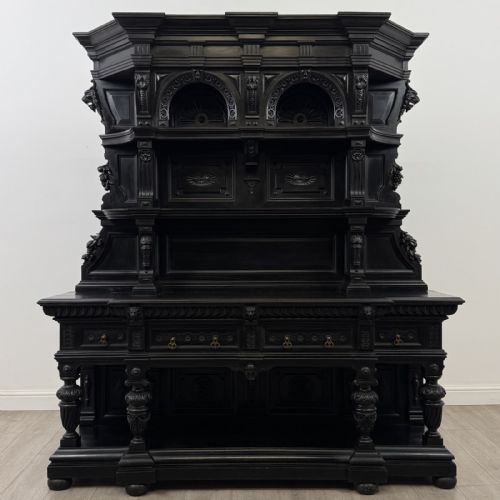
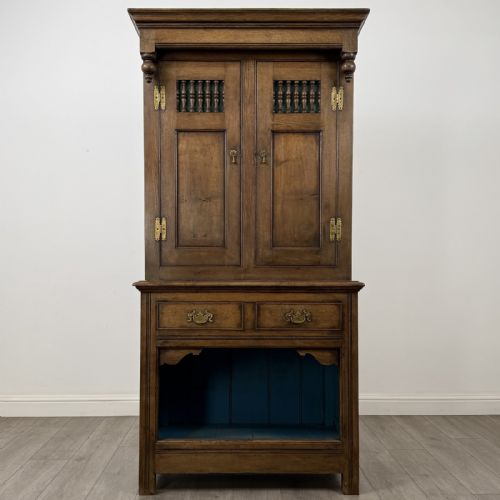
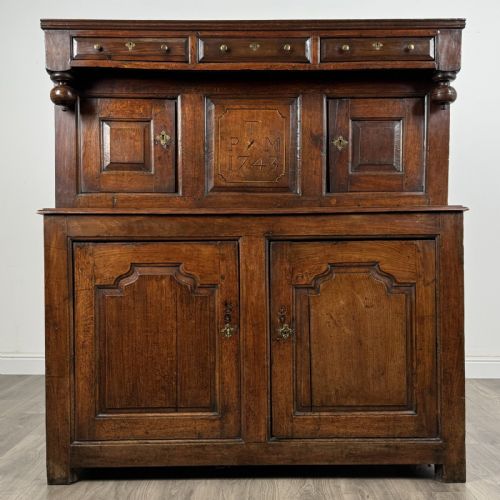
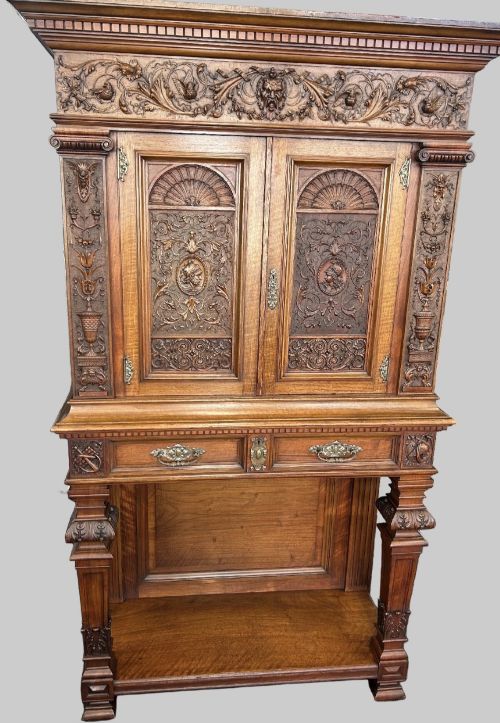
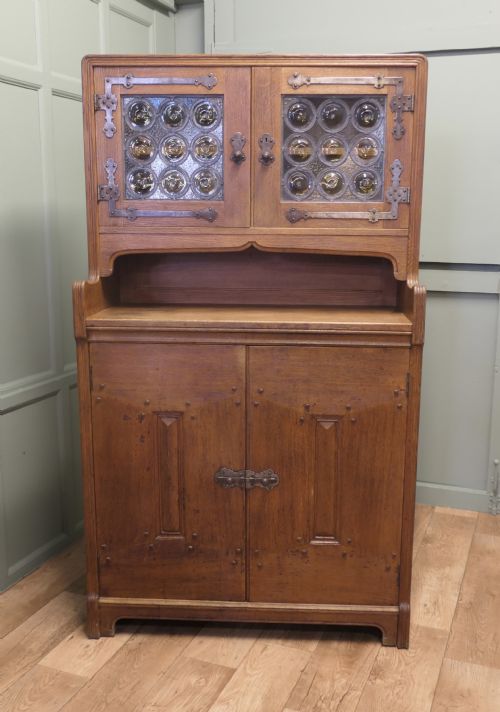
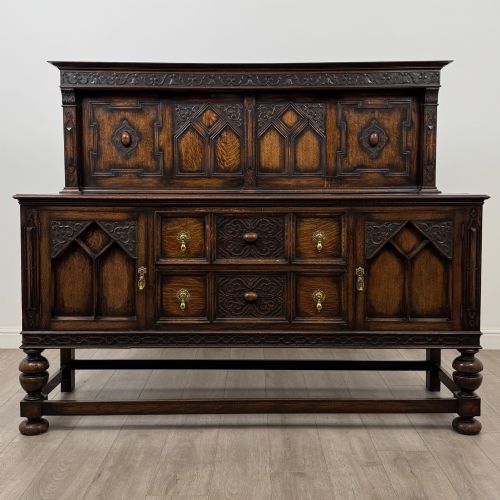
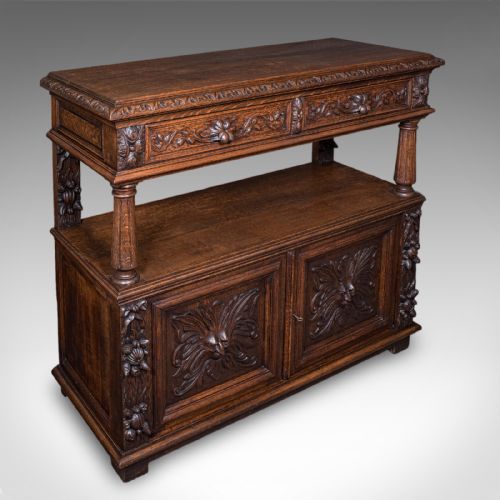
A court cupboard oak piece brings substantial vernacular presence into a room, offering heavy carved panels and deep timber storage.
Court Cupboard Oak
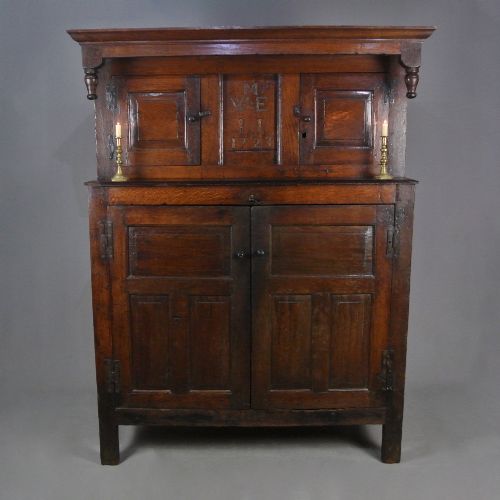
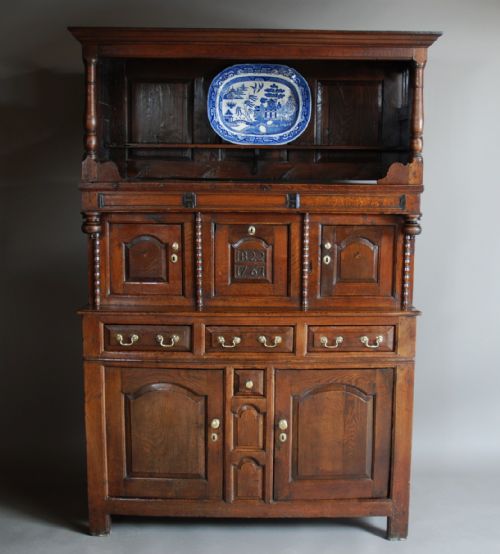
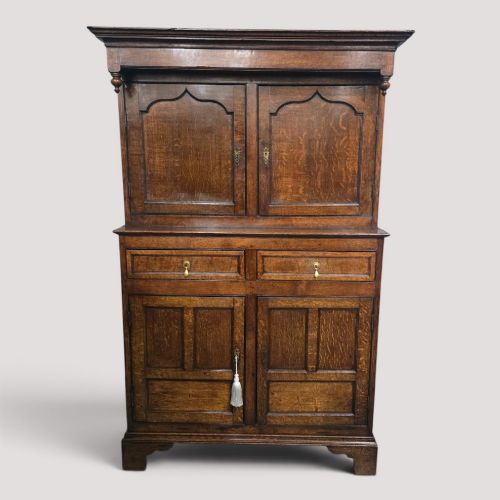
When you search for court cupboard oak, you encounter heavy timber storage furniture originating primarily from the seventeenth and eighteenth centuries, alongside later revival interpretations. These pieces typically combine enclosed lower compartments with recessed upper stages, canopy tops supported by turned pillars, and deep horizontal proportions.
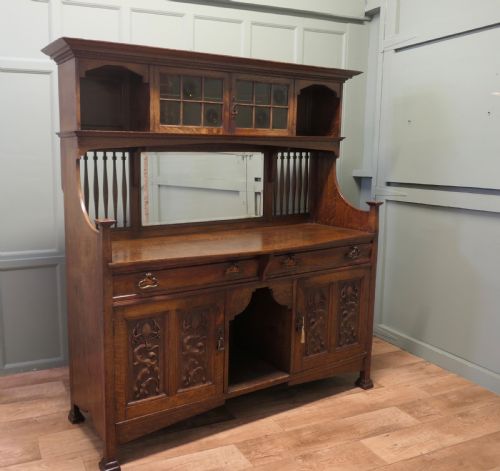
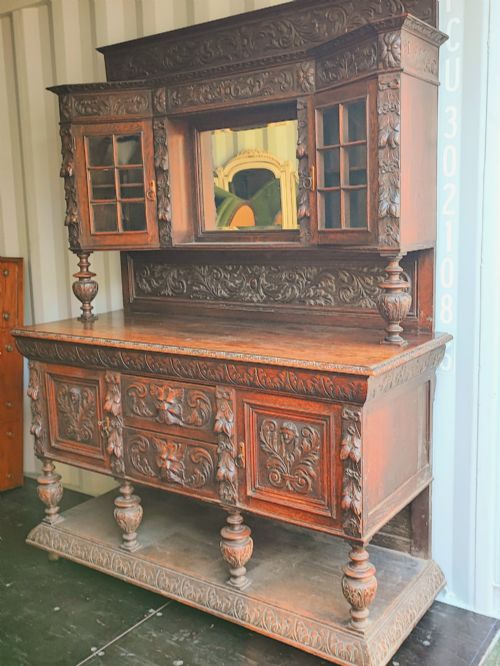
The versions most common on this page range from early joined English and Welsh examples to Victorian and Edwardian Jacobean revival interpretations. Alongside traditional court cupboards and press cupboards, related regional forms such as the deuddarn and tridarn appear frequently in the listings.
How they were made
Joinery traditions govern these constructions, utilising solid English oak alongside iron hardware and brass details. Panels are typically frame-and-panel assembled to allow the timber to move naturally with atmospheric changes.
Carving, geometric panelling, and turned legs define the surface work. Master joiners employed gouges and chisels directly into the grain, applying surface wax or developing patination over centuries of use.
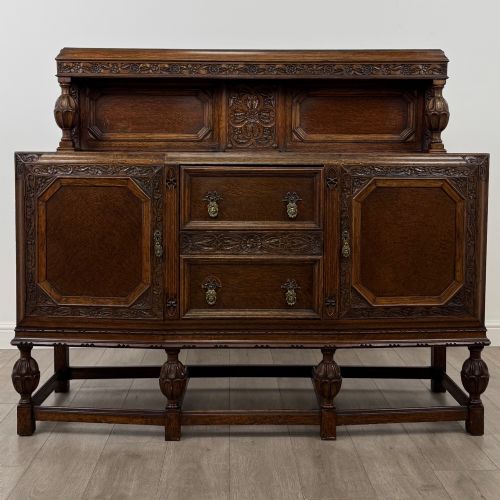
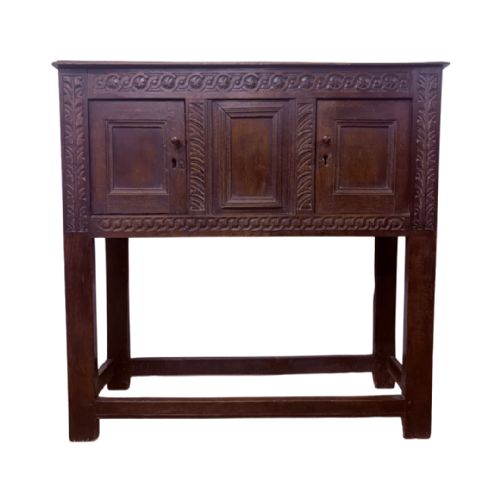
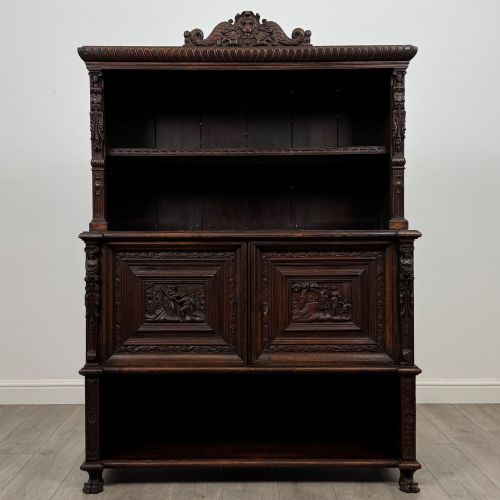
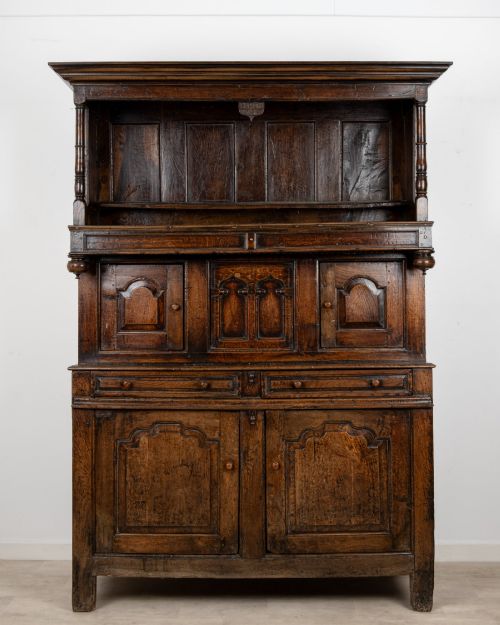
Listings feature seventeeth-century joined examples alongside Victorian Jacobean revival interpretations and Edwardian sideboard formats.
What varies in quality
Surface patination and originality separate exceptional examples from standard ones. Pieces retaining their untouched original finish, early surface depth, and minimal structural timber replacement command greater attention from collectors.
The crispness and depth of the carved pillar panels, geometric mouldings, and canopy details dictate the level of craftsmanship involved. Deeper, more confident toolwork reflects higher workshop standards during both the primary periods and the later revival eras.
Shapland and Petter·Gillows·Liberty
The Court Cupboard Oak Glossary
- Court cupboard
- A traditional two-stage storage piece featuring a recessed upper section supported by pillars. These objects served to display plate and store provisions in wealthy early households.
- Deuddarn
- A traditional Welsh two-piece cupboard originating in domestic vernacular settings. This form provides dual-level enclosed storage behind panelled doors.
- Tridarn
- A three-tier Welsh cupboard incorporating an open display middle stage beneath a closed top canopy. They represent larger developments in regional vernacular joinery.
- Patina
- The deep surface sheen developed by timber through age, handling, and wax polishing. This quality indicates decades or centuries of exposure and maintenance.
- Joined oak
- Construction utilising mortise and tenon joints secured by wooden pegs rather than metal nails. This method forms the structural backbone of early seventeenth-century cabinetwork.
Court Cupboard Oak: Frequently Asked Questions
What is a court cupboard?
A court cupboard is a traditional form of heavy timber storage furniture featuring a recessed upper section supported by columns and lower cabinet space.
Historically utilised in important rooms for displaying plate and storing valuables, these pieces form a cornerstone of early vernacular cabinetmaking.
How do I date an oak cupboard?
Dating relies on examining the construction methods, such as joined pegged framing versus later machine-cut screws, alongside the style of the carved panels and mouldings.
Early seventeenth-century examples display hand-split timber and pegged joinery, while revival pieces from the Victorian and Edwardian eras show standardised sizing and softer machine finishing.
Where were tridarns made?
Tridarns and deuddarns originate primarily from Welsh domestic settings, particularly mountainous regions such as Snowdonia. These regional forms evolved to meet specific local storage needs.
Local joiners built them using native oak, frequently incorporating distinct geometric panelling and bread and cheese storage sections.
How do I care for antique oak?
Antique oak benefits from stable indoor humidity and regular applications of traditional beeswaxes to nourish the dry timber surface. Avoid placing these heavy pieces near direct heat sources.
Gentle buffing maintains the natural surface patina without stripping away the historical character built into the grain over centuries.