
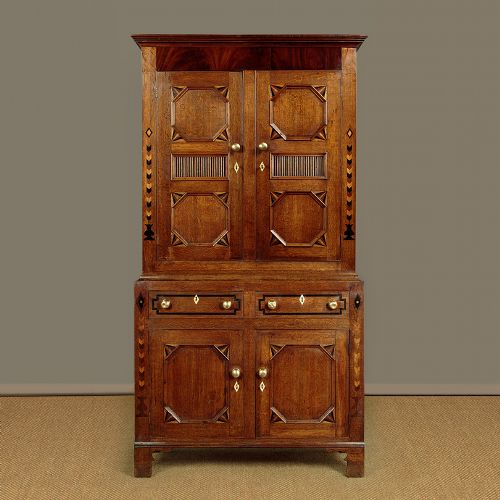


Welsh Cwtch Cupboard
These welsh cwtch cupboard examples are practical country furniture built to hold provisions and linens, offering honest utility and regional character.
Welsh Cwtch Cupboard
A welsh cwtch cupboard is a piece of country furniture designed for storage in domestic settings, taking forms such as press cupboards, food cupboards, and tridarns. These regional items originate primarily from the seventeenth, eighteenth, and nineteenth centuries.
The versions most commonly met on this page are constructed from oak, elm, or pine, reflecting the vernacular traditions of Welsh cabinet making. Pieces range from simple low press cupboards to more elaborate designs featuring inlaid decoration or multiple tiers.
How they were made
Makers constructed these items using solid timbers like oak and elm, often incorporating secondary woods such as pine and holly for contrast. Panel construction and pegged joints provided structural stability for daily use in domestic spaces.
Decoration on these regional pieces frequently includes bone inlay, ebony details, and carved woodwork. Surfaces were finished to highlight the natural grain of the wood without heavy modern varnishes.
The listings span from the seventeenth century to the nineteenth century, utilising materials such as oak, elm, pine, bone inlay, and ebony.
What varies in quality
The standard of a piece depends upon the crispness of its original joinery and the integrity of its timber. Examples with untouched surfaces and well-preserved decorative inlay stand apart from heavily restored alternatives.
Regional distinctiveness also influences standing, as specific design details tied to localities like Snowdonia or Cardiganshire add interest. The sophistication of the timber selection and regional vernacular execution dictates the overall standing of the item.
The Welsh Cwtch Cupboard Glossary
- Tridarn
- A three-tiered Welsh cabinet featuring display shelves and enclosed cupboards. These monumental pieces represent the height of regional vernacular cabinet making.
- Press cupboard
- A two-stage storage furniture form with upper and lower doors enclosing shelving. They were traditionally utilised for storing household linen and clothing.
- Vernacular
- Architecture and furniture built by local craftsmen using regional materials and traditional methods rather than mengikuti fashionable metropolitan styles. This approach prioritises local utility over academic design.
- Bone inlay
- A decorative technique where small pieces of bone are set into the wood surface to create contrasting patterns. It appears on regional country furniture of the eighteenth century.
Welsh Cwtch Cupboard: Frequently Asked Questions
How were food cupboards used?
Food cupboards were utilised in domestic kitchens and pantries to store bread, cheese, and perishables securely away from pests.
Pets and insects were kept from provisions by the use of ventilated panels or slatted doors built into the cabinet design.
How do I date a cupboard?
Dating relies on examining construction methods, timber choice, and stylistic details such as vernacular carving or inlay work.
Items from the seventeenth century often show heavier framing, while nineteenth-century examples display lighter proportions and different hardware.
Are these pieces made of solid wood?
Regional country furniture of this type was constructed using solid native timbers like oak, elm, and pine.
Cabinet makers relied on thick boards for panels and structural frames rather than veneered surfaces.
Where were these cupboards made?
These items were produced by local craftsmen operating within Welsh vernacular traditions, with specific examples attributed to regions like Cardiganshire and Snowdonia.
Makers utilised materials readily available in the local landscape.