


Warm Brown Vanity
These pieces sold as warm brown vanity items encompass dressing tables, desks, and mirrors built to hold personal items in rich timbers.
Warm Brown Vanity
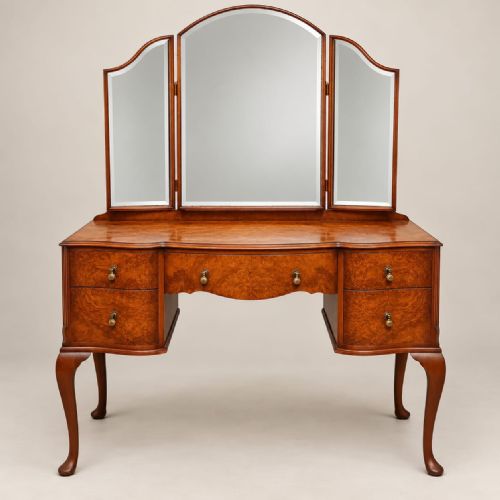
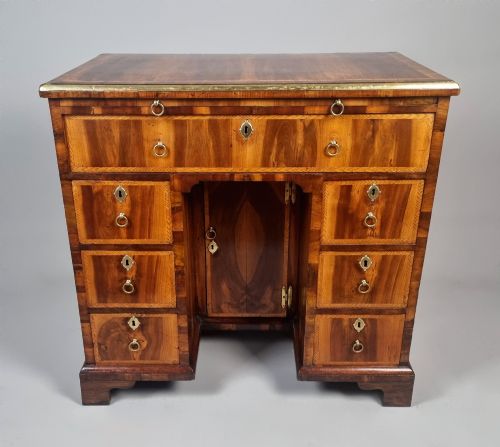
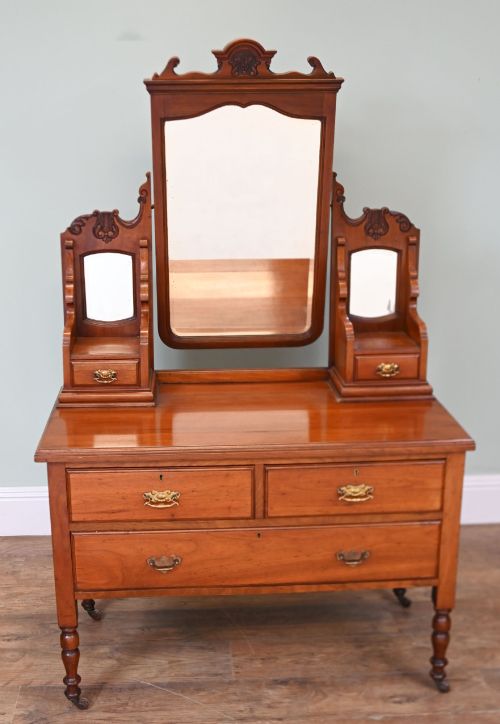
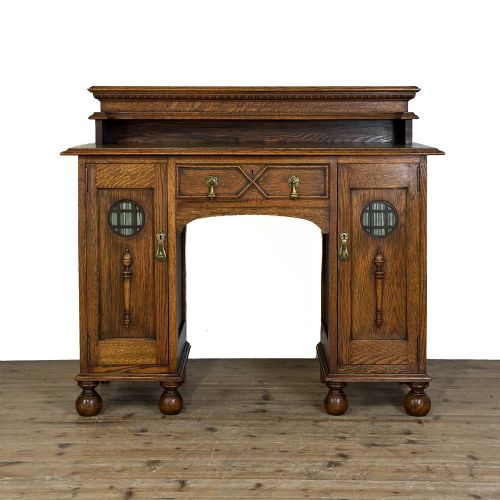
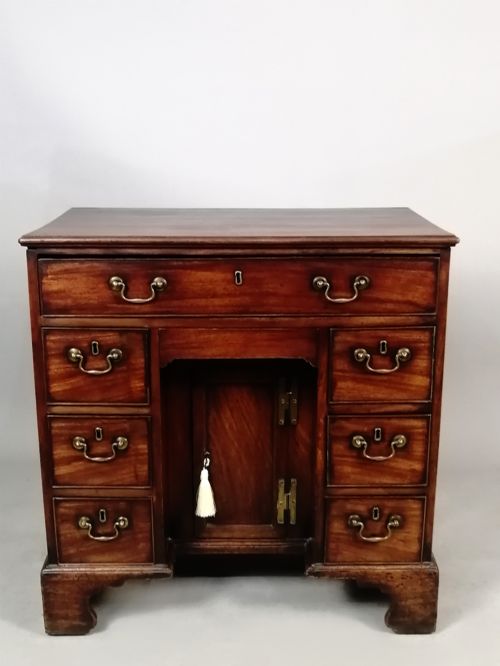
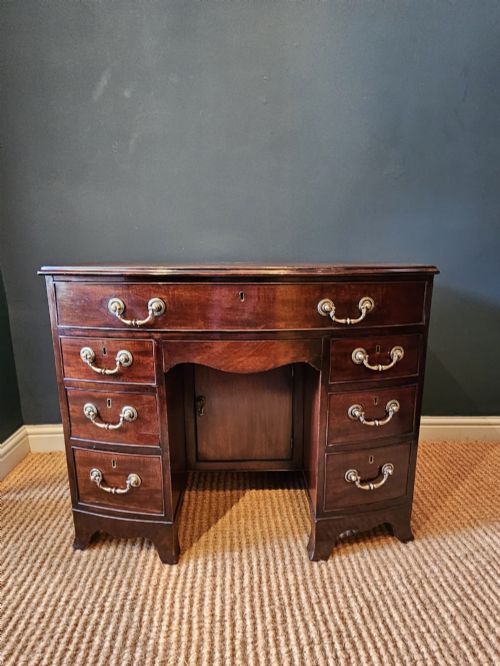
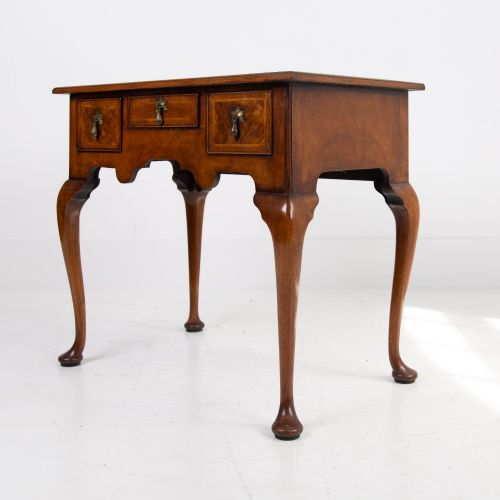
A warm brown vanity search leads buyers to dressing tables, desks, lowboys, and dressing mirrors created across the eighteenth, nineteenth, and early twentieth centuries. These furnishings range from compact oak lowboys and walnut kneehole desks to expansive Victorian duchess dressing tables and Edwardian dressing chests.
The materials that define these items include mahogany, walnut, burr walnut, oak, harewood, and satinwood, often paired with mirror glass and brass hardware. Pieces span stylistic periods from Queen Anne and Georgian through to Arts and Crafts, Art Deco, and Edwardian designs.
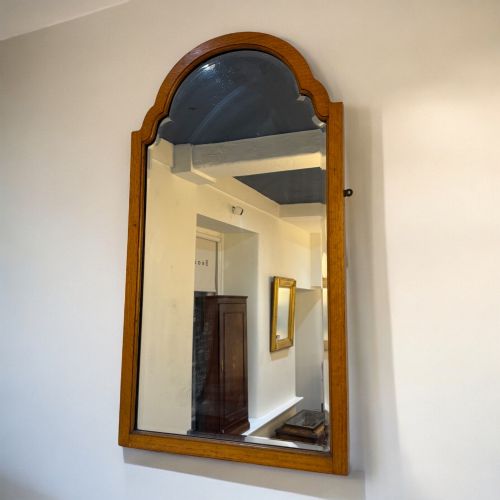
Buyers frequently encounter table top dressing mirrors and vanity cabinets alongside larger fitted dressing tables equipped with swing mirrors. The selection balances utilitarian surfaces with rich cabinetmaking traditions from British and continental workshops.
Materials and Construction
Cabinetmakers utilised dense hardwoods such as mahogany, walnut, and oak to build structural frames, drawer linings, and carcases. Surfaces often display figured veneers including burr walnut and tulipwood, secured with traditional animal glues.
Metal components like brass handles, escutcheons, and ormolu mounts complement the timber, while silvered mirror glass is held within adjustable frames. Joinery methods relied on dovetailed drawer construction and pegged mortise and tenon frames.
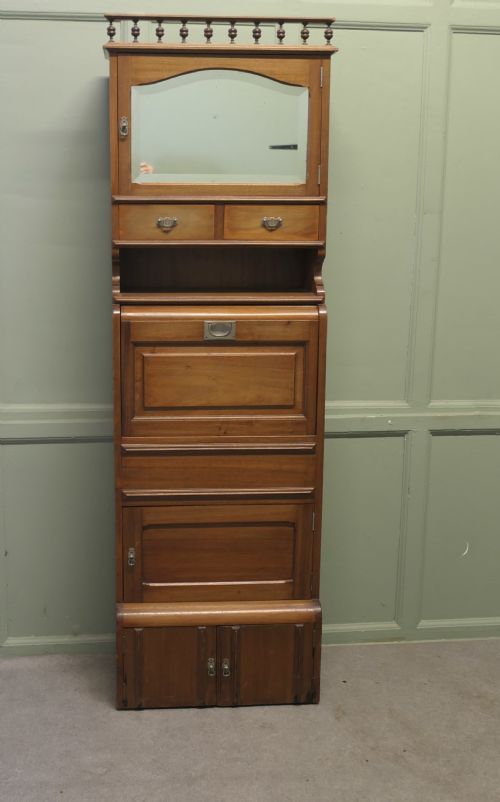
An early French marine vanity cabinet was built with an integrated sink specifically for use on a yacht or boat.
Assessing Quality and Execution
Quality rests upon the selection of timber veneers and the crispness of cabinet joinery, distinguishing finely figured burr walnut or harewood from plain secondary woods. Original brass hardware and undamaged mirror glass elevate a piece above those with replaced elements or later secondary timbers.
The refinement of carved details, such as bracket feet, shaped aprons, or ormolu mounts, separates standard workshop production from master cabinetmaker execution. Structural integrity in moving parts, including swing mirror pivots and secretaire drawers, determines long term utility.
Thomas Rubergall·Maison Pretot Paris·Gillows of Lancaster·J. Shoolbred
The Warm Brown Vanity Glossary
- Lowboy
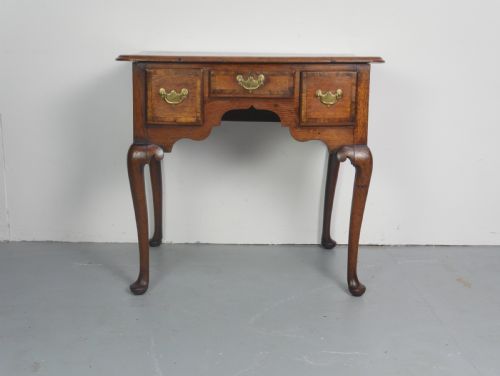
- A small side table with drawers, commonly produced in oak or walnut during the eighteenth century and used for personal grooming or writing.
- Kneehole Desk
- A desk or dressing table featuring a central recess for the legs flanked by pedestals of small drawers.
- Duchess Dressing Table
- A large Victorian dressing table style incorporating a large central swing mirror supported by smaller accessory drawers and a tiered superstructure.
- Secretaire
- A cabinet or desk incorporating a pull down writing flap that conceals fitted small drawers and pigeonholes.
- Ormolu
- Gilt bronze ornamentation applied to furniture, frequently seen on nineteenth century continental pieces.
Warm Brown Vanity: Frequently Asked Questions
What is a lowboy used for?
A lowboy served as a small side table or dressing table in eighteenth century chambers, providing surface space and drawer storage for personal items.
Over time, these versatile tables transitioned from dressing rooms to parlours and hallways as decorative stands.
How do I identify a Georgian dressing table?
Georgian dressing tables typically feature solid mahogany or walnut construction, hand cut dovetails on drawer boxes, and understated brass pulls.
Many examples incorporate folding top surfaces or fitted interior compartments designed to hold grooming bottles and mirrors.
Are vanity mirrors adjustable?
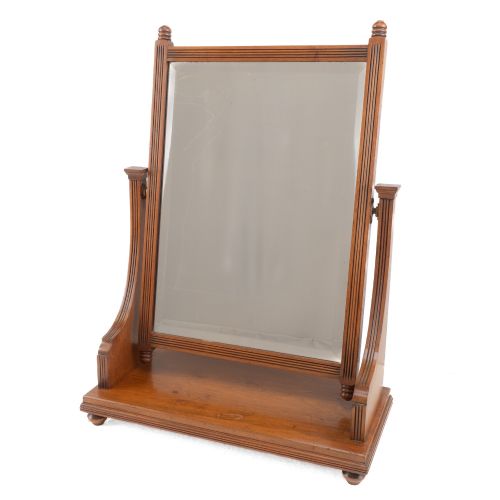
Table top and swing mirrors usually pivot on brass screws or side arms set into upright supports, allowing the user to alter the angle of reflection.
This mechanism was standard on nineteenth century dressing tables and freestanding toilet mirrors.
Where should I place a vanity in a room?
Vanity tables and lowboys function effectively against bedroom walls where natural light from a window strikes the mirror surface.
Compact models also serve as writing desks or side tables in smaller living spaces.