


Victorian Makeup Table
A victorian makeup table brings nineteenth-century elegance to a bedroom, offering fitted mirrors and polished woods designed for daily grooming.
Victorian Makeup Table
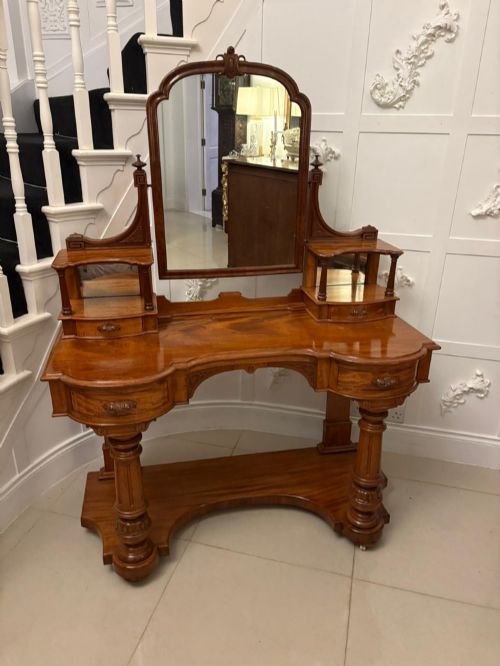
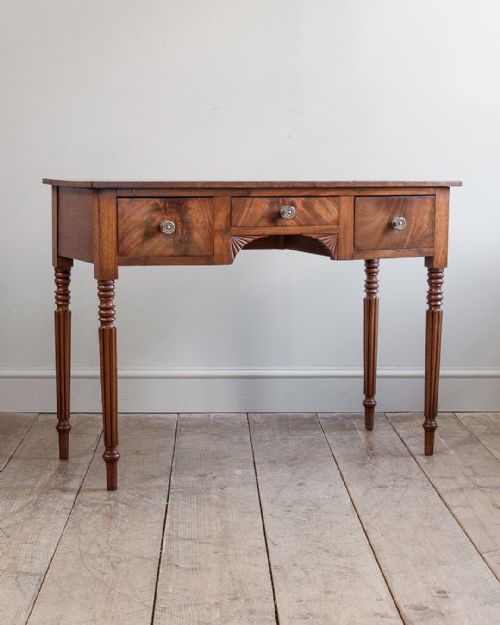
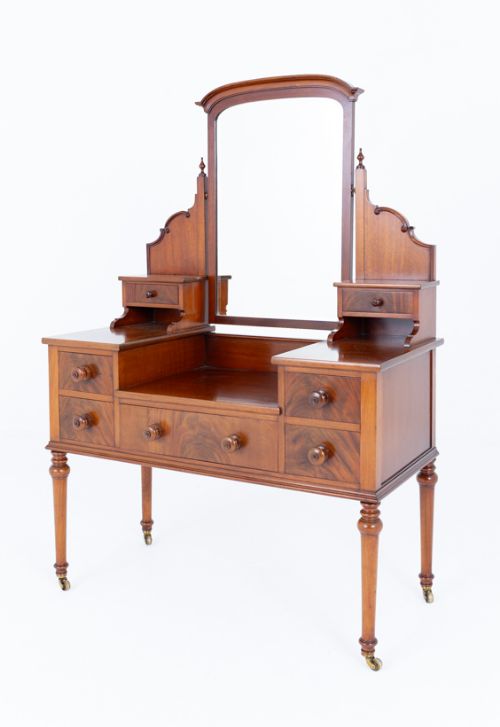
A victorian makeup table is a dressing furniture piece designed for personal grooming and cosmetic preparation. These pieces originate from the nineteenth century, spanning decades such as the eighteen-fifties through to the eighteen-nineties. The selection includes grand pedestal formats, duchess styles, and elaborate marquetry inlaid designs.
Mahogany and burr walnut dominate the pieces seen here, alongside satinwood and kingwood. Some examples incorporate French revival or French rococo revival styling, whilst others display Scottish craftsmanship or Art Nouveau mirror work. Ormolu and Sevres porcelain mounts also appear on select items from this era.
How They Were Made
Cabinet makers utilised dense hardwoods such as mahogany and walnut, frequently selecting burr walnut veneers for rich surface figuring. Satinwood and kingwood were applied for lighter tones and contrasting border details. Frame construction relied on traditional joinery methods suited to heavy timber dressing furniture.
Decorative embellishments included intricate marquetry inlay, brass fittings, and ormolu mounts. Mirror glass was integrated into adjustable frames, sometimes accompanied by Sevres porcelain plaques. French rococo revival and Art Nouveau influences dictated the carved flourishes and mirror shapes.
Listings feature nineteen-century periods spanning from eighteen-fifty to eighteen-ninety, constructed in mahogany, walnut, burr walnut, satinwood, and kingwood.
What Varies in Quality
Quality separates standard utilitarian wash furniture from sophisticated salon pieces through timber selection and decorative ambition. The choice of figured burr walnut or fine satinwood indicates a higher grade of production than plain secondary woods. Master craftsmanship shows in precise marquetry inlay and well-executed carving rather than simple geometric assembly.
The integration of luxury elements such as ormolu mounts and Sevres porcelain plaques elevates an item above standard domestic output. Superior pieces maintain harmonious proportions across pedestal formats or duchess forms, balancing the weight of the timber with the scale of the associated mirror superstructure.
John Taylor of Edinburgh
The Victorian Makeup Table Glossary
- Duchess dressing table
- A large Victorian dressing table featuring a large central swing mirror supported by smaller drawers or trinket boxes. This form became popular during the mid-to-late nineteenth century.
- Burr walnut
- Timber taken from the warted growths on walnut trees, yielding highly figured and swirling grain patterns. Cabinet makers prized this material for decorative veneer panels on high-status furniture.
- Ormolu
- Gilded bronze ornamentation applied to furniture mounts and decorative hardware. It provides a bright metallic contrast against dark hardwoods like mahogany and walnut.
- Marquetry
- The art of applying pieces of veneer to a structure to form decorative patterns and pictures. Makers used various exotic timbers to create contrasting pictorial designs on table surfaces.
Victorian Makeup Table: Frequently Asked Questions
What is a duchess dressing table?
A duchess dressing table is a specific nineteenth-century form featuring a large attached mirror flanked by small drawers or trinket compartments. These tables offer an expansive surface and a commanding presence in a bedroom.
They emerged during the Victorian period as grand pieces of boudoir furniture, prioritising both display and personal grooming functionality.
What woods were used for these tables?
Cabinet makers predominantly utilised mahogany and walnut, often employing burr walnut veneers for decorative impact. Lighter woods like satinwood and exotic kingwood also feature across various regional British and imported designs.
These timbers were selected for their durability and their ability to take a high polished finish.
Where were these tables made?
Production occurred across British workshops and factories during the nineteenth century, with regional centres like Edinburgh producing notable pieces. French revival and rococo influences also inspired domestic makers to adopt continental decorative motifs.
Specific pieces reflect regional timber preferences, such as Scottish satinwood furniture.