

Walnut Writing Slope Desk
These walnut writing slope desks combine rich timber and brass work into portable or fitted writing spaces.
Walnut Writing Slope Desk
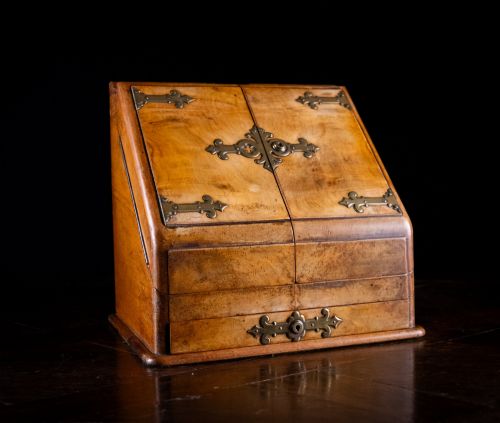
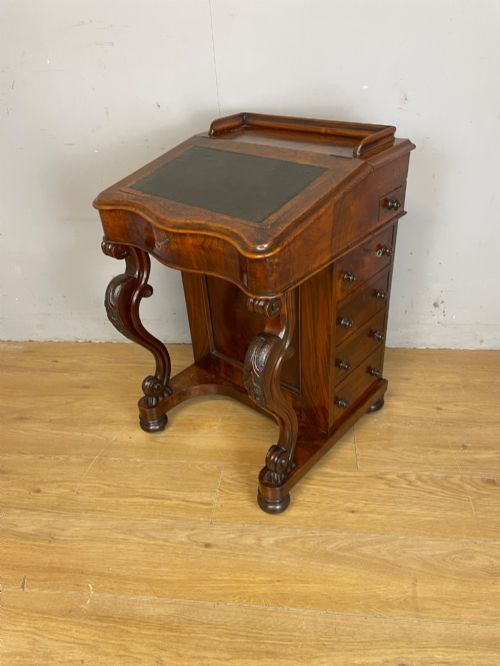
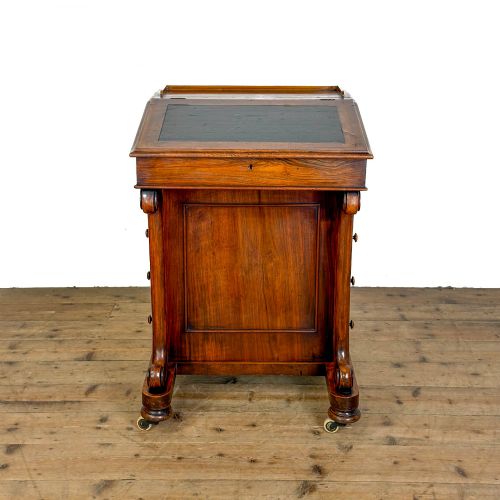
A walnut writing slope desk encompasses portable lap boxes, folding desks, and upright Davenport forms designed for correspondence. These pieces serve as functional writing stations while displaying rich timber figures across their surfaces.
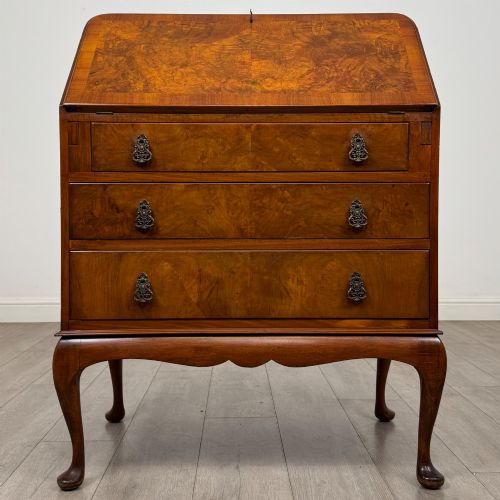
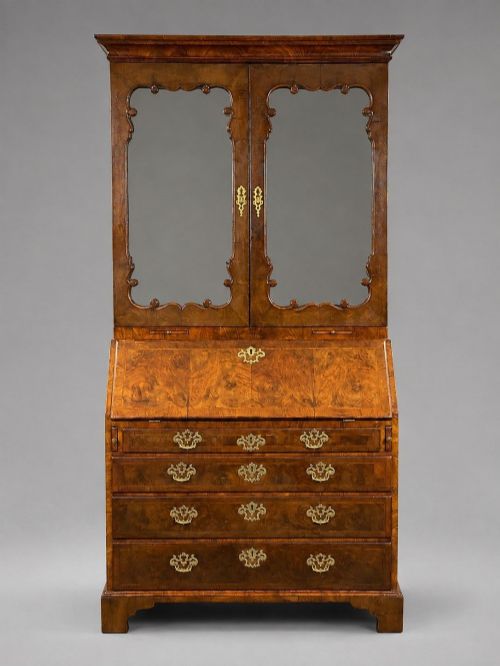
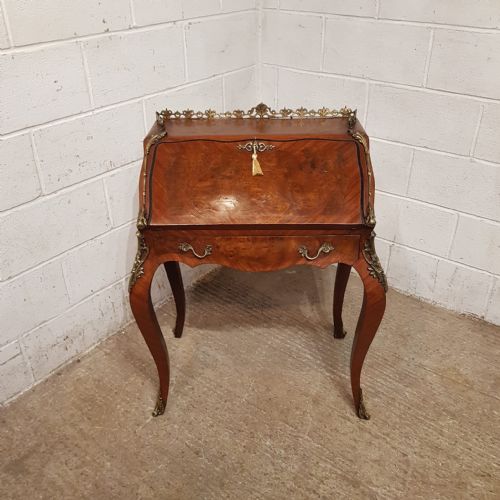
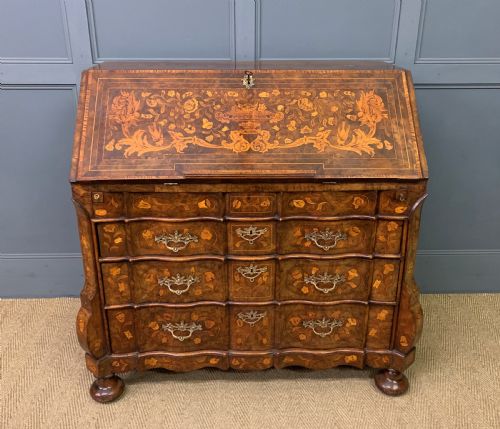
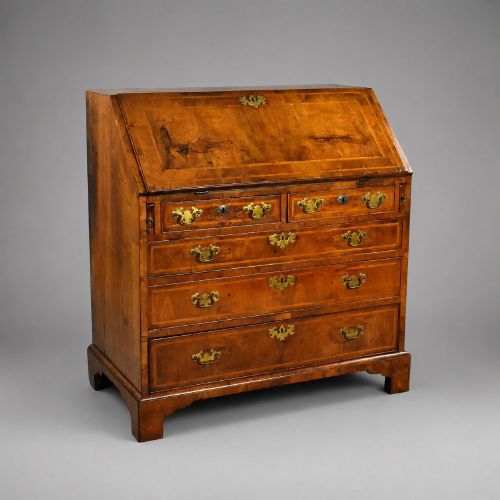
Victorian examples dominate the selection, frequently utilising burr walnut veneers alongside brass binding and fitted leather interiors. Earlier Georgian and Queen Anne pieces appear alongside nineteenth-century iterations to provide varying scales of writing storage.
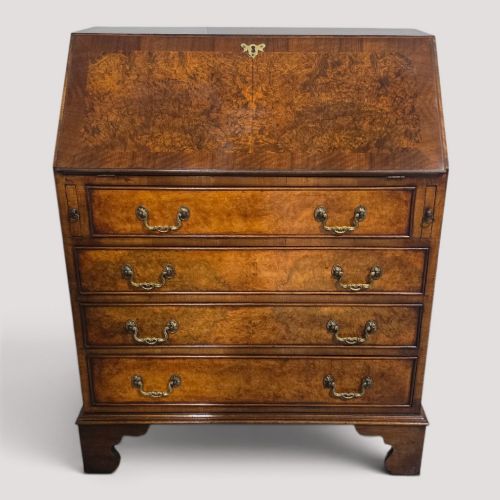
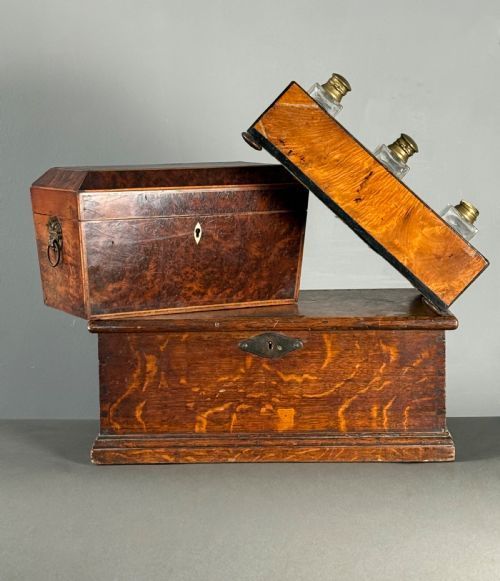
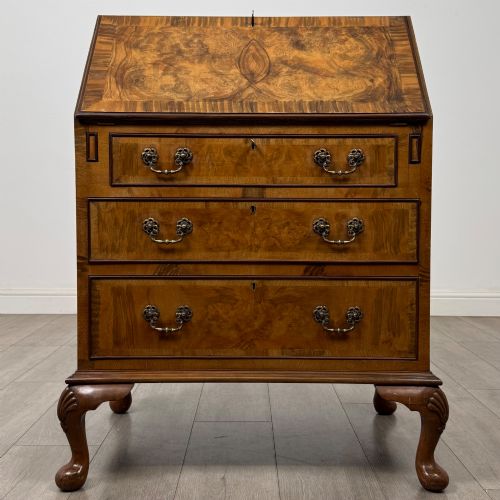
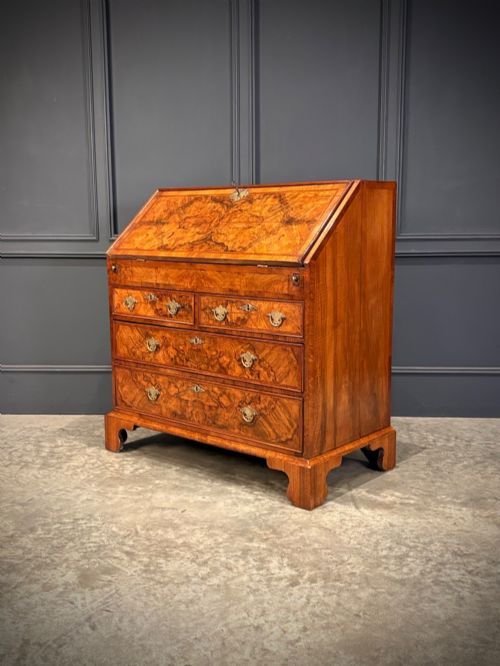
Portable boxes unfold to reveal sloping writing surfaces with compartments for inkwells and stationery. Larger bureau forms integrate these writing compartments above sets of drawers for comprehensive study storage.
Assessing Quality and Execution
The choice of walnut veneer dictates visual impact, with tightly figured burr timber commanding greater presence than plain grain. Match grain patterns across folding lids and drawer fronts reflect higher levels of cabinet making skill.
Internal fittings such as secret drawers, original glass inkwells, and integrated pen trays distinguish comprehensive desks from simpler boxes. The precision of brass inlay and the survival of original ironwork or locks complete the assessment.
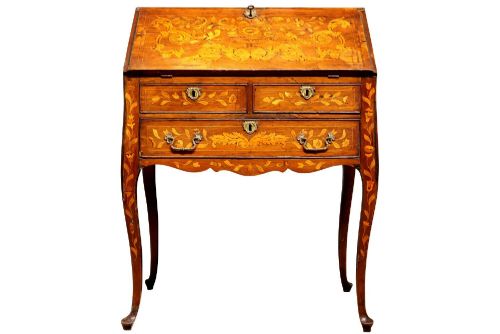
The listings show walnut writing slope desks spanning from the eighteenth century through the Edwardian period, incorporating brass, leather, and boxwood inlay.
Gillow & Co·Sampson Mordan & Co
The Walnut Writing Slope Desk Glossary
- Writing slope
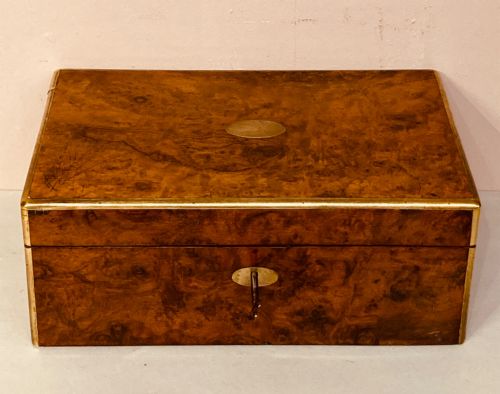
- A portable box with a slanted lid that opens to reveal a compartment for paper and writing implements. These slope downwards toward the writer to provide an ergonomic surface.
- Davenport desk
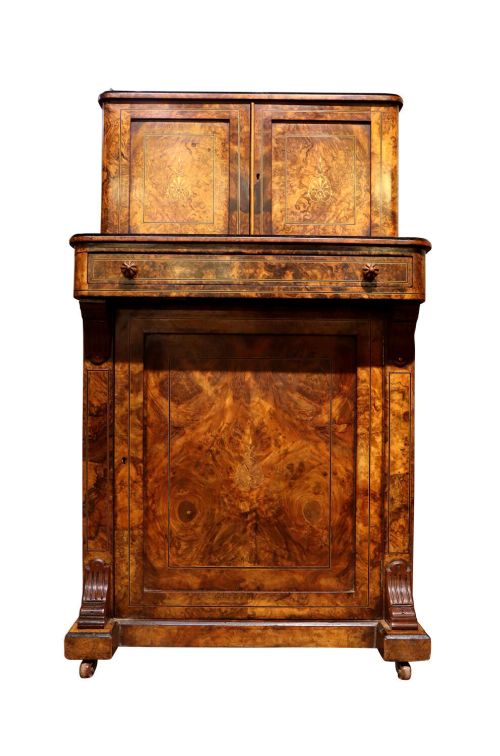
- A compact Victorian writing desk featuring a sloping top above a pedestal of drawers. The stationary compartment often sits on top of the desk body.
- Burr walnut
- Timber taken from the wart or burl growth of a walnut tree, yielding swirling patterns. Cabinet makers prized this wood for decorative veneer work.
- Marquetry
- The art of applying pieces of veneer to a structure to form decorative patterns and floral designs. Artisans employed contrasting woods and bone details to build pictorial scenes.
- Stationery box
- An upright cabinet designed to hold envelopes, paper, and writing accessories. These often accompany writing slopes on larger desks.
Walnut Writing Slope Desk: Frequently Asked Questions
What is a walnut writing slope desk?
A walnut writing slope desk is a portable or stationary writing cabinet featuring a slanted surface for correspondence. These pieces range from lap boxes to standing Davenport desks.
Cabinet makers utilised figured walnut veneers and brass mounts to construct these items, providing dedicated storage for inkwells, paper, and pens.
How do you use a lap desk?
A lap desk opens on a hinge to reveal a sloping writing surface covered in leather or velvet. Writers rest the box on a table or their lap to write letters.
Internal compartments secure stationery, nibs, and ink securely inside the body of the box when closed for transport.
How are Victorian desks different from Georgian ones?
Victorian walnut writing slope desks frequently incorporate burr walnut veneers, brass banding, and elaborate inlays. These nineteenth-century pieces often take portable forms or compact Davenport designs.
Georgian desks lean towards larger bureau forms built with solid walnut or figured veneers, resting on bracket feet rather than resting on tables.
How do you care for antique walnut furniture?
Antique walnut requires stable indoor humidity away from direct sunlight to prevent veneer cracking and timber shrinkage. Regular dusting with a dry cloth maintains the polished surface.
Application of appropriate furniture wax preserves the moisture of the old wood without building up heavy chemical layers.