

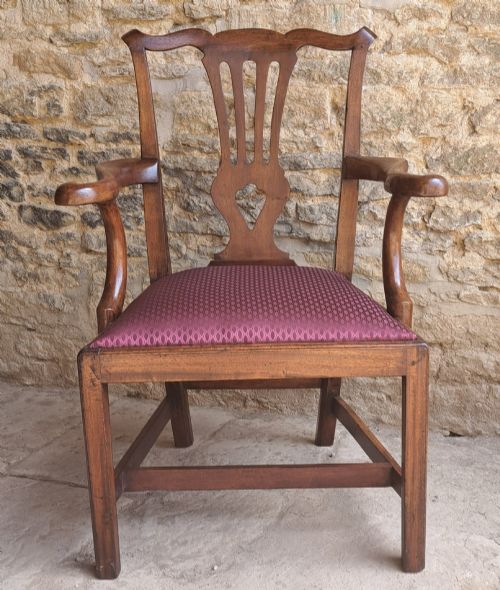


18th Century Irish Desk
An 18th century irish desk brings substantial character and robust native timbers into a room, offering both practical writing space and rich regional cabinet-making history.
18th Century Irish Desk
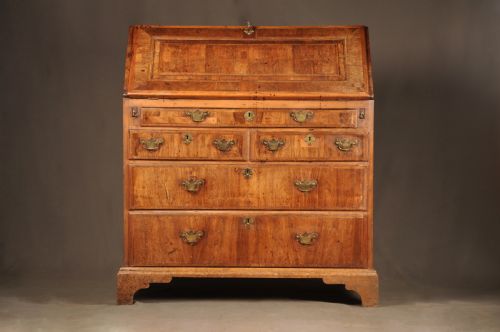
An 18th century irish desk encompasses robust walnut and mahogany bureaux, secretaire cabinets, and library tables produced during the Georgian periods. These pieces reflect the distinct regional craftsmanship of Irish cabinet-makers working under diverse stylistic influences from Queen Anne through to George III.
Bureau forms and desk chairs dominate the selection, often featuring deep carved details and substantial proportions built from dense native or imported timbers. The walnut and mahogany examples show particular regional quirks in their construction and carcass layout.
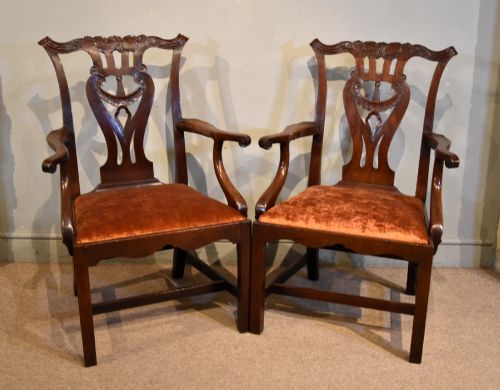
Buyers encounter walnut versions from the earlier decades alongside rich mahogany pieces aligned with George II and George III Chippendale aesthetics. Each form balances utilitarian writing compartments with heavy decorative presence.
Materials and construction
Cabinet-makers relied heavily on solid walnut, red walnut, and rich Cuban mahogany, reinforced with secondary timbers like oak in the internal framework. Brass hardware, leather writing surfaces, and fabric upholstery complete the functional aspects of these desks and chairs.
Joinery techniques involve heavy dovetailing and deep relief carving executed directly into the dense primary woods. The structural framing often employs oak for drawer linings and internal dividers, showing the practical demands placed on these working pieces.
18th Century Irish Desk Retail Price Guide 2026
Typical asking prices for 18th century irish desk among the pieces listed under this phrase on Sellingantiques today, from the lower quarter to the upper quarter. They describe what is for sale here now, not the wider market.
Listings feature walnut, mahogany, oak, and red walnut, spanning the Queen Anne, George I, George II, and George III periods.
Qualities of distinction
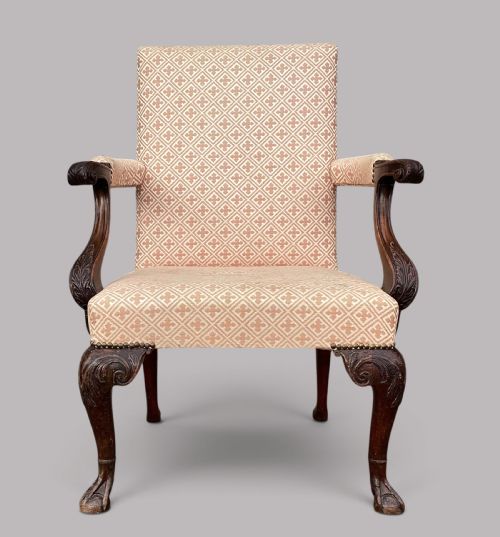
Depth of carving and the selection of timber grain dictate the distinction between standard examples and exceptional pieces. Superior furniture displays crisp, deep relief work on the knees and splats, alongside unsparing timber selection for primary surfaces.
The integrity of the internal fittings, including secret drawers and original brass handles, marks the difference in preservation. Pieces retaining their structural originality without extensive timber replacement stand at the apex of the range.
Giles Grendey
The 18th Century Irish Desk Glossary
- Bureau
- A slope-front desk enclosing fitted small drawers and pigeon holes above a set of long external drawers. It provides a concealed writing surface when the flap is lowered.
- Secretaire cabinet
- A tall case furniture piece incorporating a dedicated writing drawer or pull-out desk section within its upper or middle tiers. These units combine storage and writing facilities in a vertical footprint.
- Metamorphic
- Describing a piece of furniture engineered to transform into multiple functional forms, such as a library table shifting into steps or a reading stand. This mechanism requires precise concealed hinges and folding leaves.
- Chippendale
- A mid-century stylistic vocabulary characterised by exuberant carved motifs, cabriole legs with claw-and-ball feet, and pierced splats. The name derives from Thomas Chippendale's published designs though Irish iterations maintain distinct local weight.
- Corner chair
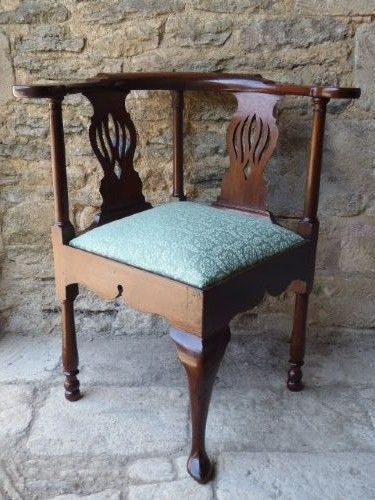
- A seat designed to fit into the angle of a room, featuring a curved continuous backrest supported by three or four posts and a square drop-in seat. They frequently served as writing or desk chairs.
18th Century Irish Desk: Frequently Asked Questions
How do I identify an Irish piece?
Irish pieces often display heavier proportions, distinct timber choices such as red walnut or native oak secondaries, and robust carving styles that diverge from standard English London production.
Look closely at the carcass construction and interior secondary woods to spot regional cabinet-making traditions.
What timber was used most?
Walnut dominates the earlier decades of the century, transitioning into rich Cuban mahogany as trade routes and fashion shifted toward mid-Georgian aesthetics.
Oak frequently appears as a secondary wood for drawer linings and internal framing regardless of the primary exterior timber.
Where should I place a bureau?
A bureau suits studies, libraries, or living rooms where the drop-front flap can remain open for daily use or closed to conceal writing clutter.
Ensure adequate clearance for the fall-front flap and the chair pull-out space when positioning the piece against a wall.
How do I care for old mahogany?
Maintain stable room humidity and avoid direct sunlight to prevent the timber and leather writing surfaces from drying out or splitting.
Apply traditional wax sparingly and polish with a soft cloth to preserve the natural lustre of the wood.