



Slant Top Bureau Chest
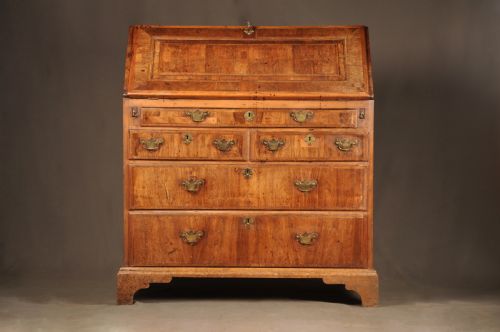
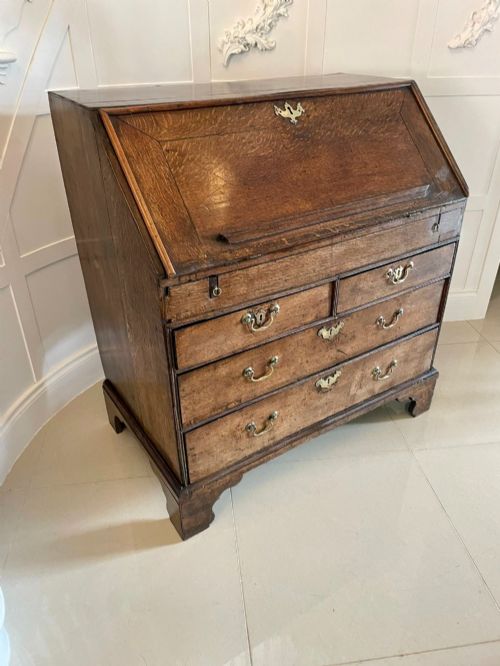
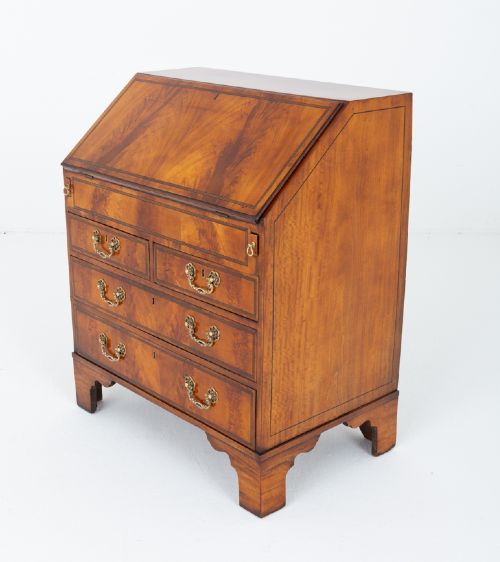
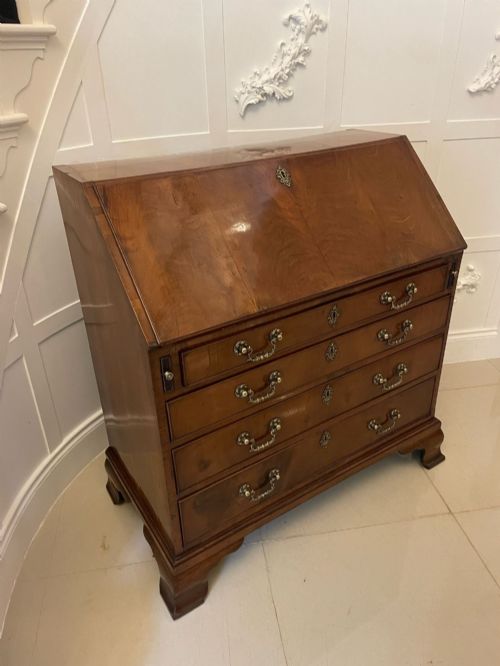
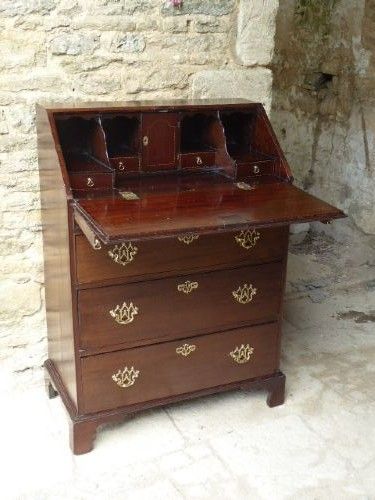
A slant top bureau chest is a fitted writing cabinet with a hinged sloping writing flap, offering concealed compartments and sturdy storage.
Slant Top Bureau Chest
The slant top bureau chest combines a sloping fall front with internal drawers and pigeonholes, designed for correspondence and household administration. These writing cabinets span several centuries, reflecting changing domestic habits and interior tastes.
The examples gathered here range from early walnut and oak constructions to later mahogany and burr walnut iterations. Buyers frequently encounter George III and Georgian formats alongside earlier 17th-century pieces and later Victorian or Edwardian interpretations.
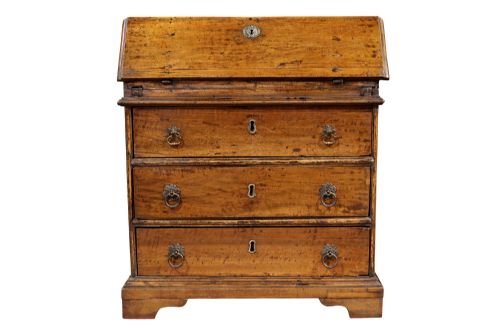
Smaller proportions, such as child's desks or fiddleback mahogany variants, appear alongside grander bureau bookcases. Each piece provides a practical writing surface above graduated drawers for household storage.
Materials and Construction
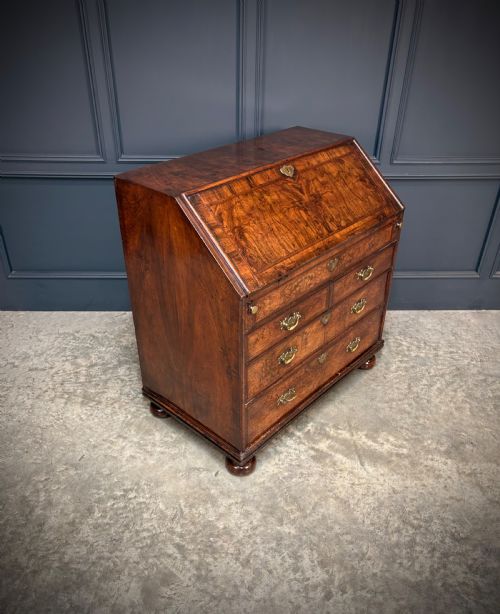
Cabinet makers utilised dense hardwoods like oak, walnut, and mahogany, frequently applying wood veneer or burr walnut over secondary timbers. Satinwood and marquetry inlay appear on later examples, while brass handles and original ironwork furnish the drawer fronts and hinges.
Construction methods relied on solid timber framing and fine dovetailing for the drawer boxes to withstand daily use. The sloping fall front rests on lopers or side supports when opened, revealing a fitted interior of small drawers and pigeonholes.
Slant Top Bureau Chest Retail Price Guide 2026
Typical asking prices for slant top bureau chest among the pieces listed under this phrase on Sellingantiques today, from the lower quarter to the upper quarter. They describe what is for sale here now, not the wider market.
One tiny George III child's mahogany bureau proves that even Victorian toddlers needed to stay on top of their correspondence.
Evaluating Quality
Quality rests upon the selection of timber figures, such as fiddleback mahogany or burr walnut, and the crispness of any inlaid marquetry. Finer pieces display careful grain matching across the fall front and drawer facades.
The complexity and condition of the internal compartments dictate the standing of the bureau. Outstanding examples retain their original brassware, ironwork, and fitted drawer arrangements within the writing well.
Giles Grendey
The Slant Top Bureau Chest Glossary
- Slant top bureau chest
- A writing cabinet featuring a sloping hinged lid that drops to form a desk surface, positioned above storage drawers. This format evolved from simple box desks into sophisticated household furniture.
- Fall front
- The hinged sloping panel that opens downward to create the writing desk. It conceals the pigeonholes and small drawers inside.
- Lopers
- Wooden pull-out brackets or arms that slide out from beneath the writing flap to support it when open. They prevent strain on the hinges.
- Bureau bookcase
- A slant top bureau combined with an upper shelving or cabinet section with glass or solid doors. These tall pieces served as combined writing desks and libraries.
- Marquetry
- Decorative patterns formed by fitting contrasting pieces of wood veneer into a background timber. This technique appears on later Edwardian writing cabinets.
- Fiddleback mahogany
- A highly figured mahogany timber displaying wavy grain patterns resembling the back of a violin. Cabinet makers selected this wood for its decorative optical shimmer.
Slant Top Bureau Chest: Frequently Asked Questions
What is a slant top bureau chest?
A slant top bureau chest is a traditional writing desk featuring a sloping hinged lid that opens to reveal internal compartments, set above a chest of drawers.
These pieces served as private writing desks and secure storage spaces for household documents and ledgers.
How were these desks used?
Owners dropped the sloping lid to write letters, manage accounts, and store correspondence within the fitted interior pigeonholes.
The lower drawers provided practical storage for clothing, linens, or household papers depending on the room they occupied.
How do I date a bureau?
Dating relies on identifying the primary timbers, construction techniques, hardware styles, and overall proportions used by cabinet makers of the period.
Early pieces often utilise solid oak or walnut with hand-wrought ironwork, while later Georgian and Victorian examples favour mahogany and refined brass handles.
Where should I place a bureau?
These pieces suit studies, living rooms, or bedrooms where their compact footprint and practical writing surface can be utilised daily.
Allow sufficient clearance in front of the cabinet for the fall front to open and for a chair to slide underneath.