
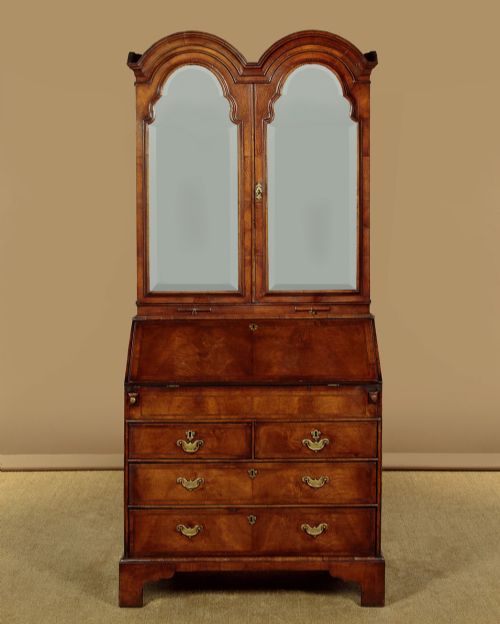
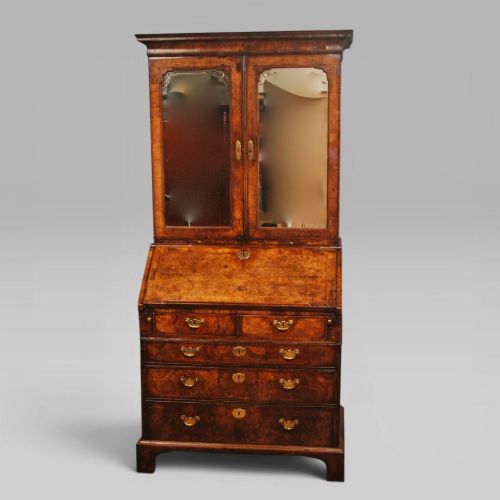
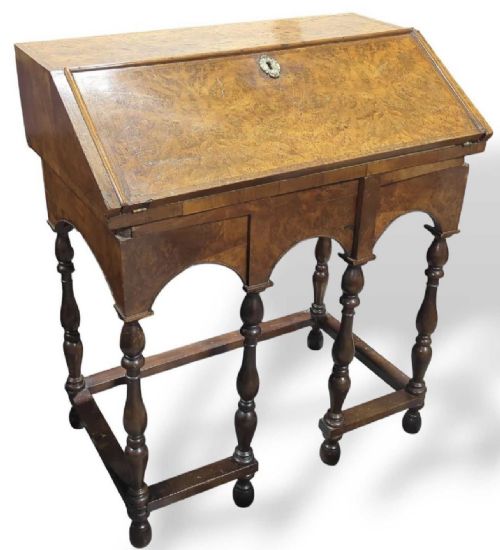
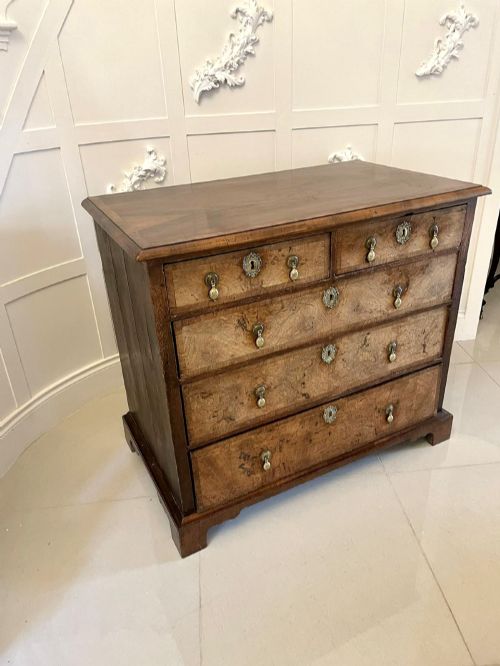


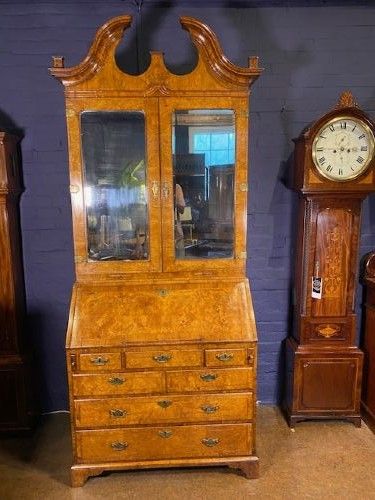
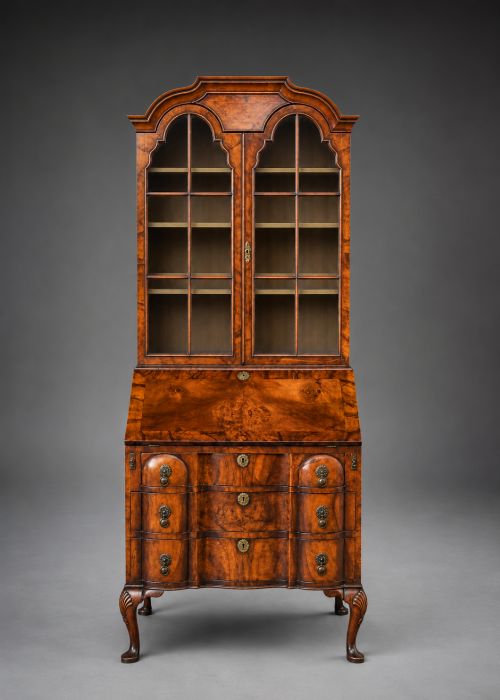
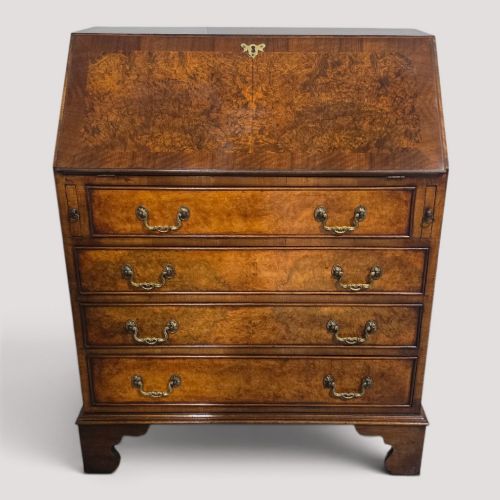
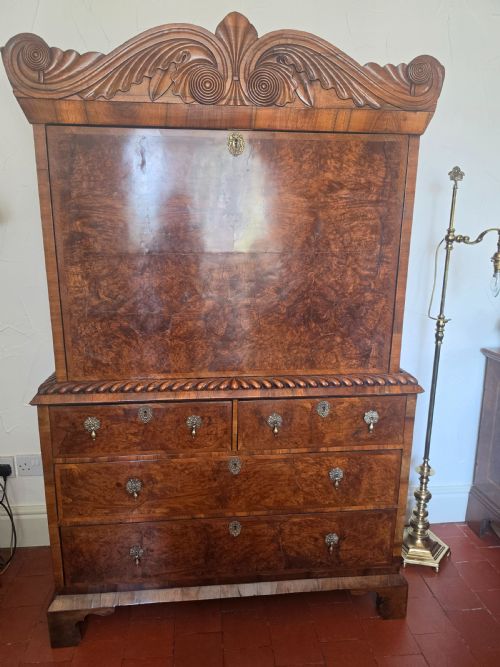
Queen Anne Burr Walnut Bureau
When you search for a queen anne burr walnut bureau, you look for fall-front writing desks defined by rich timber grain and period elegance.
Queen Anne Burr Walnut Bureau
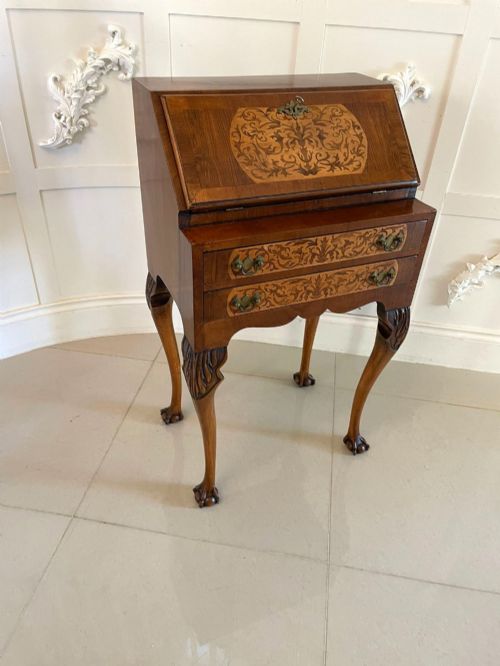
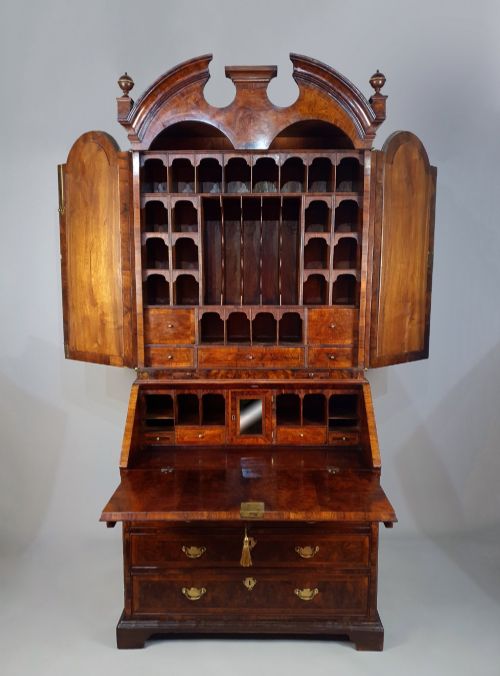
A queen anne burr walnut bureau combines a sloping fall-front writing flap with internal pigeonholes and drawers, resting upon a chest base or stand. These items emerge primarily from the eighteenth century, alongside revival pieces produced during the Edwardian era and the early twentieth century.
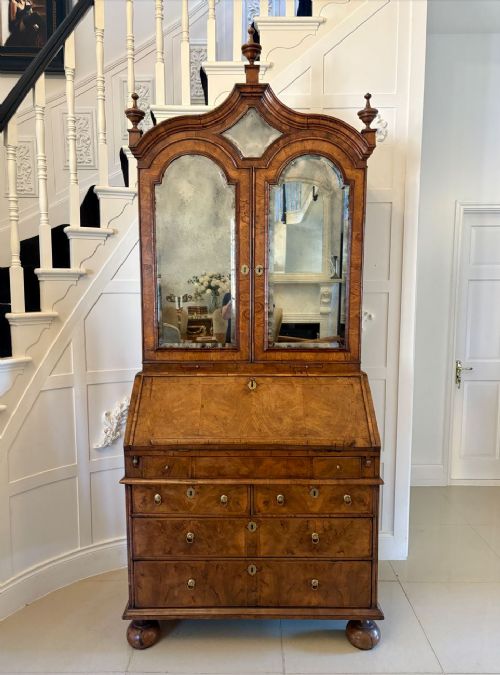
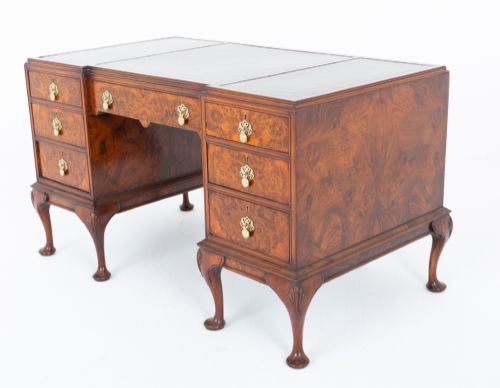
The dominant forms span compact fall-front desks, kneehole desks, and taller bureau bookcases fitted with upper shelving cabinets. Makers utilise walnut, burr walnut veneer, oak, and elm to construct these functional domestic writing surfaces.
How they were made
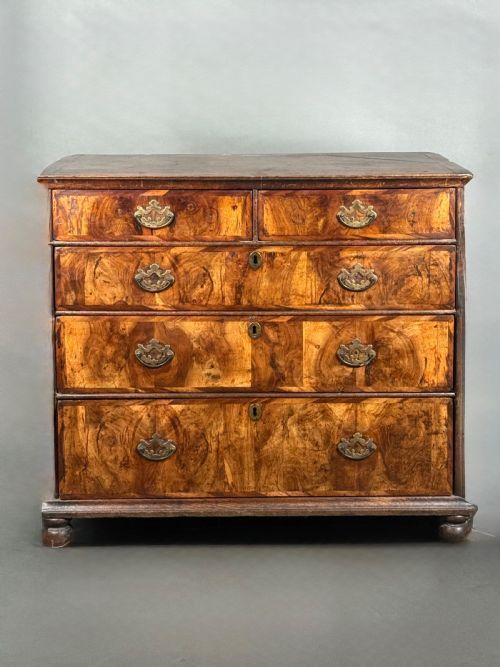
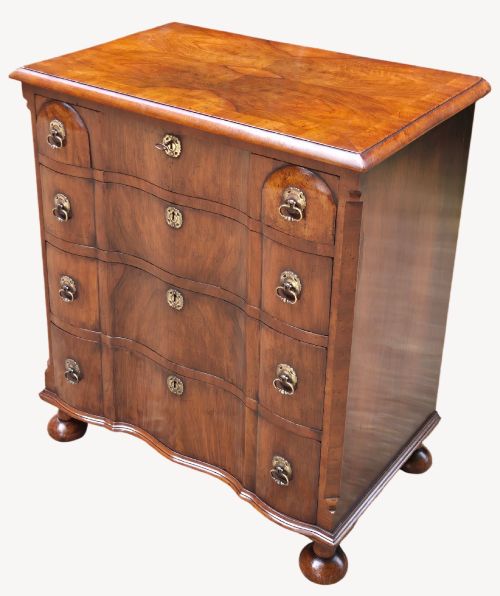
Cabinetmakers select highly figured burr walnut veneer for the primary visual surfaces, laying the timber slices over solid secondary woods such as oak and pine to create striking symmetrical grain patterns. Artisans then apply decorative featherbanding and crossbanding around the borders of the fall-front flap and drawer fronts.
Brass handles, escutcheons, and hinges secure the moving parts, while leather writing surfaces appear on related pedestal desks and writing tables. Joinery relies on traditional dovetailed drawer construction and pegged framing.
Listings span the eighteenth, nineteenth, and twentieth centuries, incorporating oak, elm, brass, glass, and leather alongside burr walnut veneer.
What varies in quality
The visual impact of a queen anne burr walnut bureau depends heavily on the vibrancy and tightness of the burr walnut figuring across the fall-front and drawer facades. Superior examples exhibit matched veneer panels that flow logically across the construction rather than disjointed timber cuts.
Proportion and interior arrangement differentiate standard cabinetwork from exceptional commissions, particularly where secondary woods, fine herringbone stringing, and original brass hardware remain intact. The depth of the colour and the preservation of the polished finish dictate the overall presence of the piece.
Wylie & Lochhead Glasgow·Maples of London
The Queen Anne Burr Walnut Bureau Glossary
- Burr walnut
- A figured wood grain taken from the wart-like growths on walnut trees, prized for its swirling patterns. Cabinetmakers slice this timber into thin veneers for decorative furniture faces.
- Featherbanding
- A delicate form of inlay utilising small strips of veneer arranged in a herringbone pattern to frame drawer edges and fall-fronts. This technique requires precise hand-cutting.
- Fall-front
- A hinged writing flap that drops down to form a horizontal desk surface while concealing internal compartments. It lifts back vertically to secure the desk contents.
- Escutcheon
- A protective brass plate surrounding a keyhole that prevents the surrounding wood from wearing down over time. These plates often feature chased or engraved detailing.
- Kneehole desk
- A compact writing table featuring a central recess for the sitter's legs, flanked by pedestals of small drawers. This form became popular during the early eighteenth century.
Queen Anne Burr Walnut Bureau: Frequently Asked Questions
How do I spot an eighteenth-century bureau?
Examine the construction methods visible inside the drawers and along the backboards, where hand-cut dovetails and solid oak or pine linings indicate early manufacture. Period pieces also display authentic timber shrinkage and patination that modern replicas cannot replicate.
Compare the carcass proportions and the style of the bracket feet against known examples from the seventeen-hundreds. Secondary woods and traditional hand-cut fixings offer further clues to true age.
Where were bureaus used in the home?
These pieces served as private writing desks and storage cabinets for correspondence, household accounts, and valuable documents in wealthy domestic interiors. Owners kept the fall-front locked to protect confidential papers.
They stood primarily in parlours, studies, or bedrooms where family members managed daily correspondence. The internal compartments kept inkwells, quills, and stationery organised.
How do I care for burr walnut veneer?
Keep walnut furniture away from direct sunlight and strong heat sources to prevent the delicate burr veneer from drying out and lifting. Maintain a stable room temperature to protect the timber.
Apply high-quality beeswax sparingly and buff it gently with a soft cloth to nourish the grain. Avoid using modern silicone sprays or abrasive cleaning products.
What is the difference between a bureau and a bureau bookcase?
A standard bureau consists of a desk base with a sloping writing flap and drawers, designed to stand alone against a wall. It provides a compact surface for writing alongside storage.
A bureau bookcase adds an enclosed shelving cabinet with glazed or panelled doors directly on top of the desk base. This taller combination piece offered additional display and storage space for libraries.