


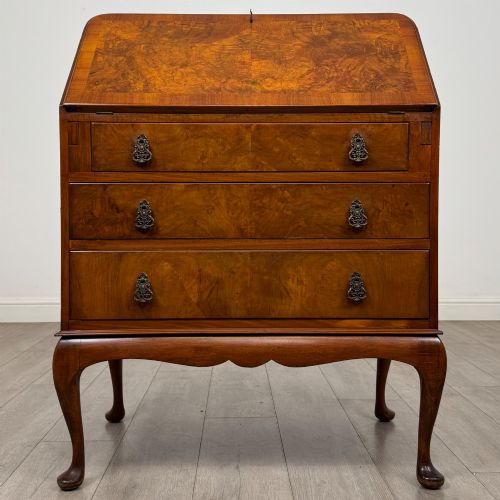
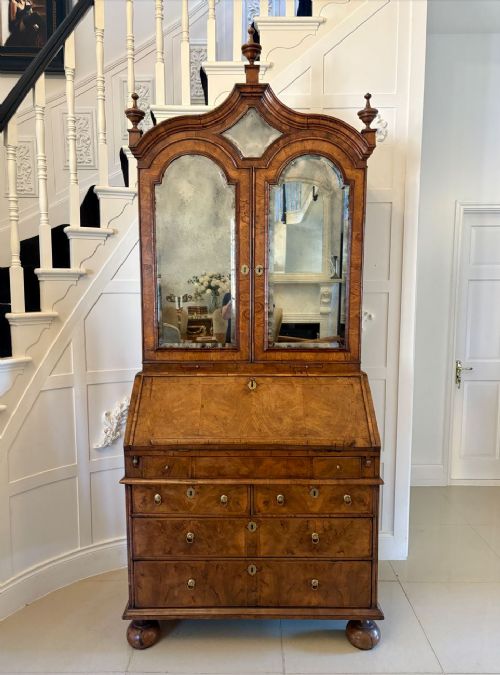
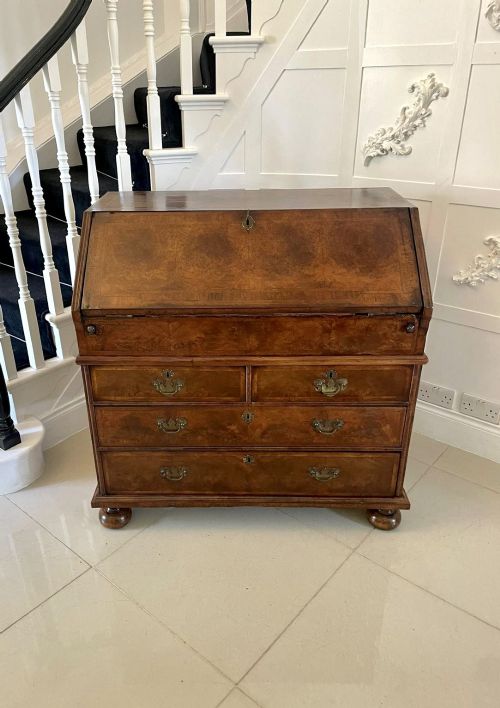
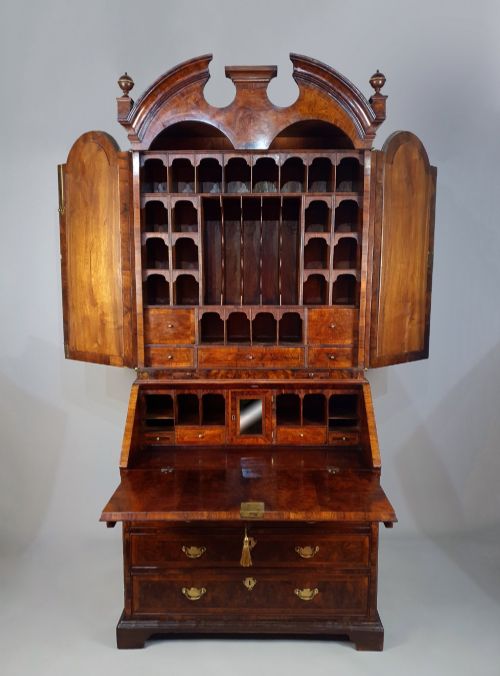
Walnut Writing Desk Cabinet
A walnut writing desk cabinet gathers centuries of fitted timber, drop-front drawers, and secret compartments into a single commanding piece of furniture.
Walnut Writing Desk Cabinet
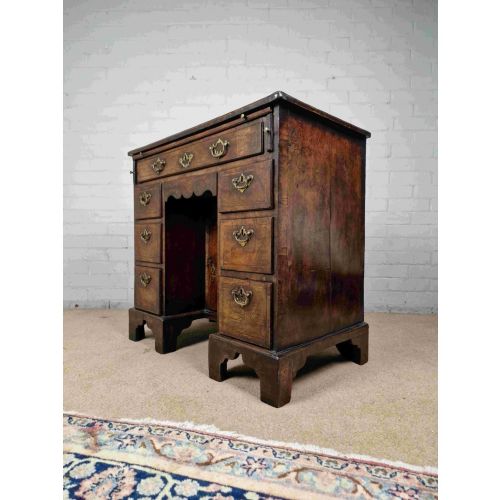
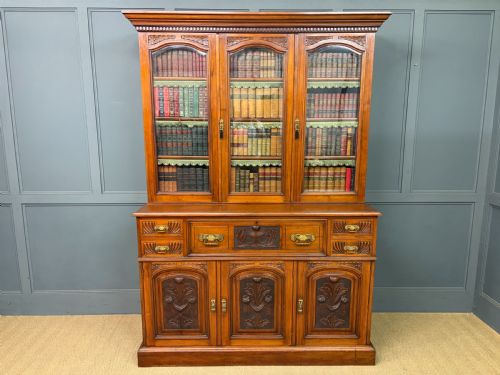
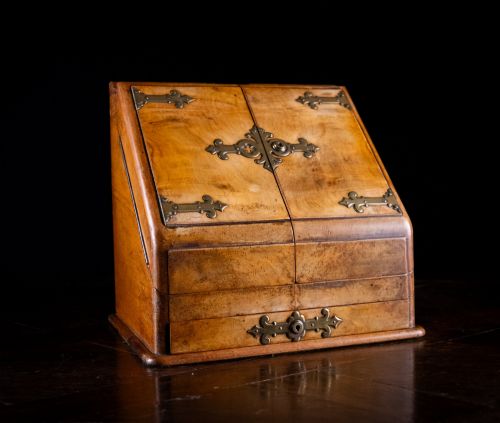
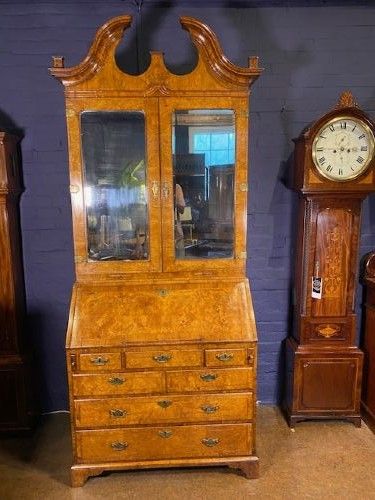
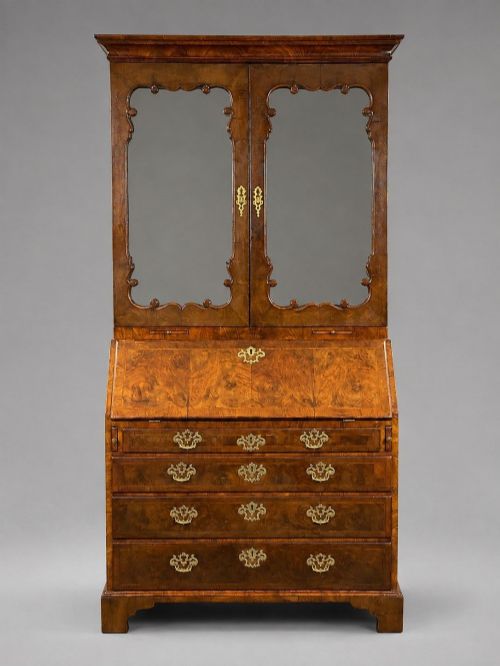
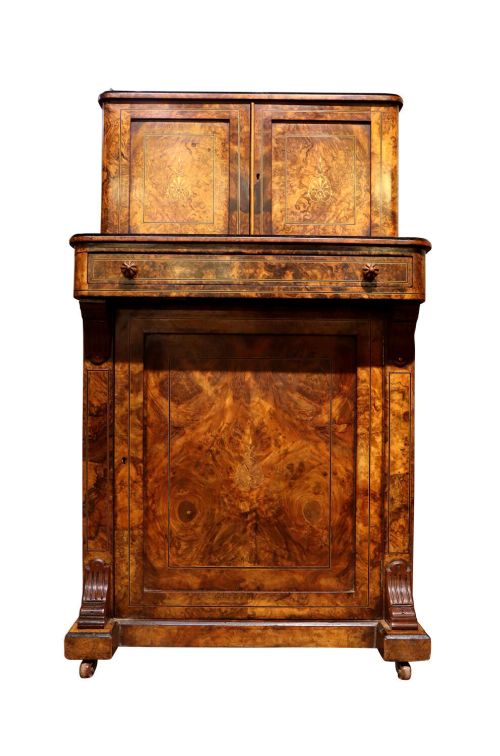
A walnut writing desk cabinet combines a concealed writing surface with compartmented storage, taking forms such as bureau bookcases, secretaires, and davenports. Buyers seeking this search phrase encounter tall two-part case pieces with glazed upper doors alongside compact Victorian desk cabinets and drop-front bureaux.
The pieces span from the seventeenth century through the Georgian and Victorian eras into twentieth-century Art Deco and Edwardian designs. Eighteenth-century examples frequently employ bureau bookcase proportions, while nineteenth-century variations introduce piano-top cylinders and brass-inlaid writing compartments.
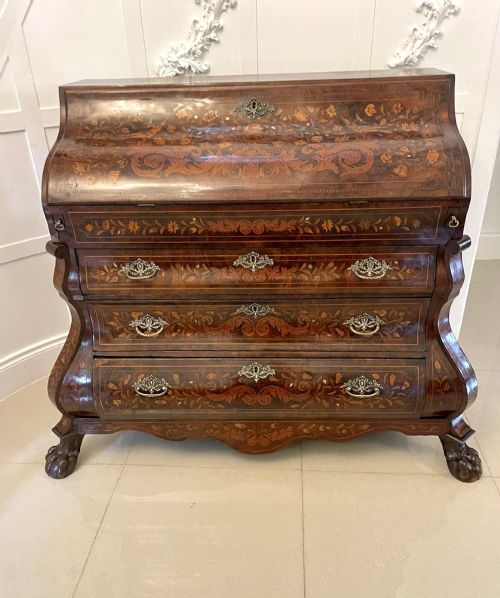
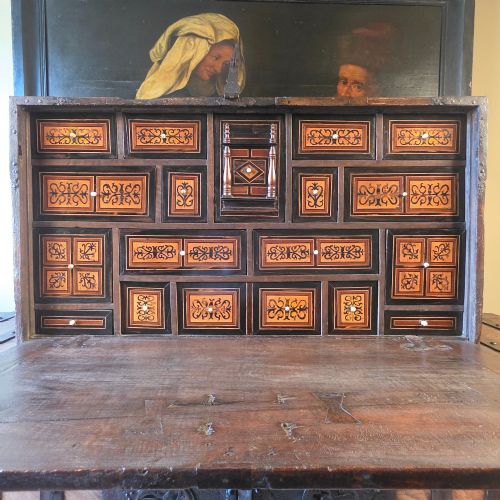
Origin points range across English workshops to Continental makers in France, Italy, and the Netherlands. Regional preferences shape the construction, yielding Dutch marquetry facades, Spanish bargueño cabinets, and Venetian veneered surfaces.
How they were made
Cabinet makers built primary carcases in oak or pine, then applied matched veneers of walnut and burr walnut across the visible surfaces. Timber selection relied on figuring, using featherbanding and herringbone patterns to frame drawer fronts and fall flaps.
Decorative embellishments incorporated fruitwood marquetry, brass mounts, glass panels, and leather writing inserts. Surface detailing utilised floral marquetry inlays and gilt bronze mounts on Continental pieces, while interior drawers received intricate pigeonholes and sliding candle supports.
Candle slides pull out beneath the upper mirror doors of early walnut bureau bookcases to illuminate the writer's evening correspondence.
What varies in quality
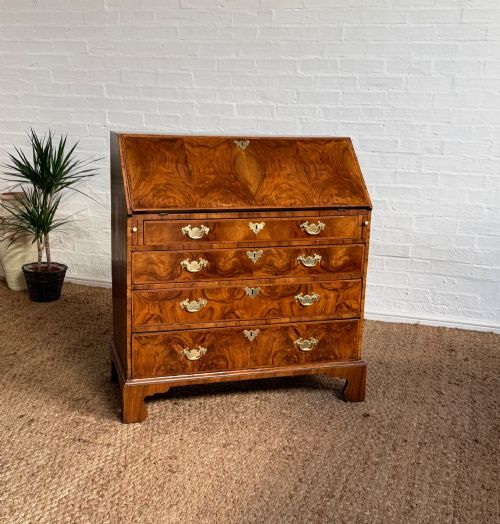
Quality rests upon the continuity of the timber grain across drawer tiers and the precision of the marquetry inlay. Superior examples display carefully selected burr walnut veneers that wrap symmetrically around keyholes and panel margins.
Internal joinery distinguishes high-tier workshop output from standard production, seen in secondary woods, hand-cut dovetails, and the retention of original brass hardware and fitted writing compartments.
F.H. Marshall & Co Glasgow·Asprey
The Walnut Writing Desk Cabinet Glossary
- Burr walnut
- Timber harvested from walnut tree growths, yielding highly figured, swirling grain patterns. It is sliced into veneers for principal cabinet facades.
- Bureau bookcase
- A dual-section form comprising a sloping desk fall over drawers below, surmounted by a shelved and glazed cabinet top. Early versions divide into three distinct modular tiers.
- Escritoire
- A tall writing cabinet featuring a drop-front fall that conceals internal pigeonholes and small drawers. The form developed during the seventeenth century.
- Featherbanding
- Narrow strips of veneer laid diagonally in opposing directions to form a herringbone pattern around panel borders. This technique highlights seventeenth and eighteenth-century drawer faces.
- Secrétaire abattant
- A tall vertical cabinet with a hinged writing flap that drops forward to reveal a fitted interior. French examples frequently incorporate marble tops and gilt mounts.
Walnut Writing Desk Cabinet: Frequently Asked Questions
How do I use a bureau desk?
Lower the hinged fall flap to reveal the internal writing surface, pigeonholes, and small document drawers. The writing surface remains supported by wooden pull-out lopers when opened.
Store writing paper, stationery, and ink accessories inside the fitted compartments. When finished writing, lift the flap upright and secure it with a key.
What is a bureau bookcase?
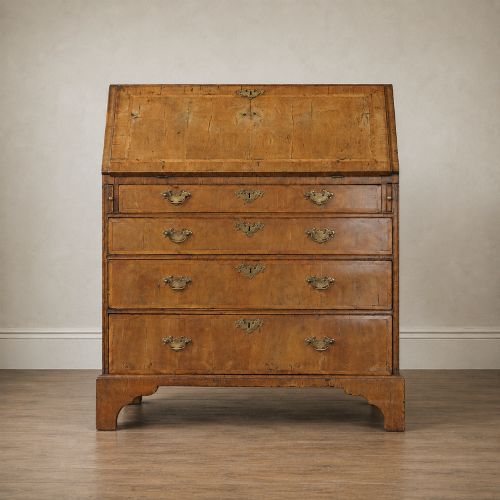
A bureau bookcase combines a lower desk section with an upper shelving enclosure. The lower portion provides a sloping fall-front writing desk above banks of drawers.
The upper section houses adjustable shelves behind glazed wooden doors to store books and display decorative objects. Seventeenth and eighteenth-century examples often separate into distinct stacking components.
How do I date walnut furniture?
Examine the construction methods, secondary woods, and hardware styles used within the internal drawer framework. Seventeenth and early eighteenth-century pieces employ distinct dovetailing, candle slides, and herringbone banding.
Later Victorian and Edwardian iterations introduce machine-sawn timbers, varied brass fittings, and commercial veneer thicknesses. Regional styles and maker stamps provide additional chronological markers.
Where should I place my cabinet?
Position the piece in a study, library, or living room away from direct sunlight and heat sources. Walnut veneers react poorly to rapid temperature shifts and moisture fluctuations.
Allow sufficient clearance around the cabinet to drop fall flaps and pull out desk drawers freely. Ensure the floor surface is level to prevent distortion of tall two-part carcases.