


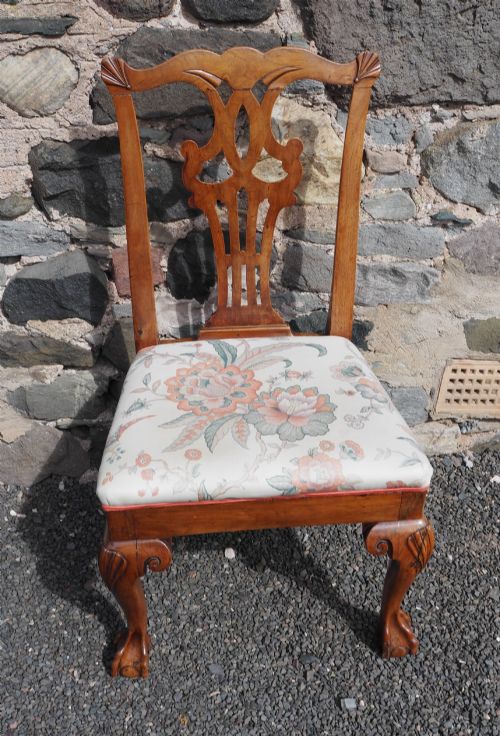
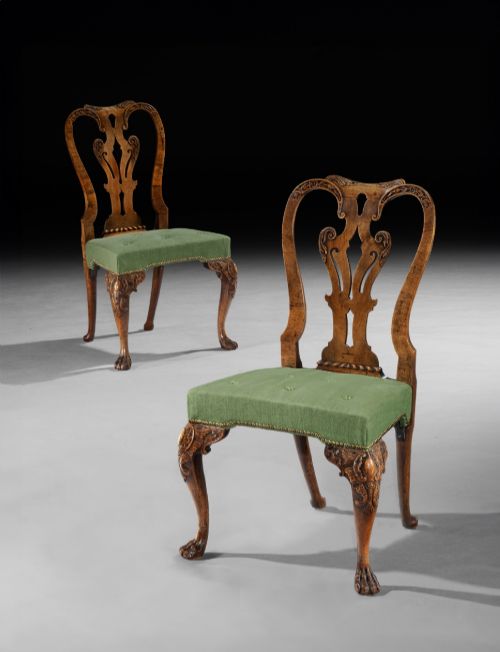
Walnut Upholstered Dining Chairs
These walnut upholstered dining chairs offer rich timber grain and tactile seat coverings, bringing warmth and refined comfort to any dining room.
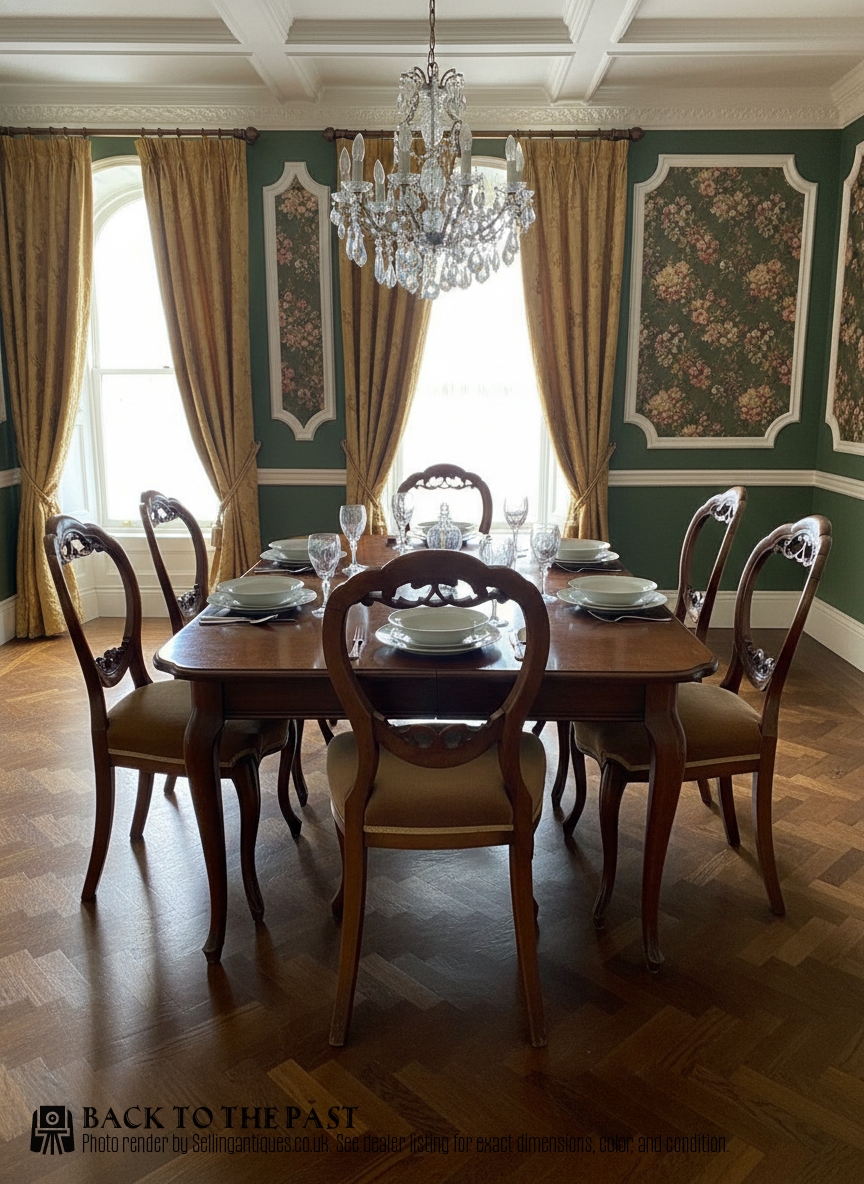
Walnut Upholstered Dining Chairs
When searching for walnut upholstered dining chairs, buyers encounter pieces spanning from the 18th century through the Art Deco era, encompassing styles such as Queen Anne, Georgian, and Victorian. Walnut frames provide a deep, warm tone that darkens gracefully over time, forming a solid structural foundation for padded seats.
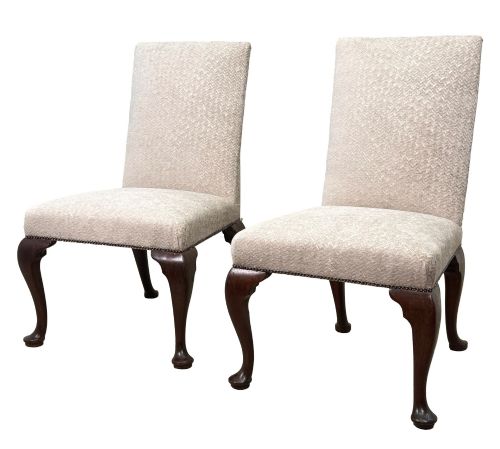
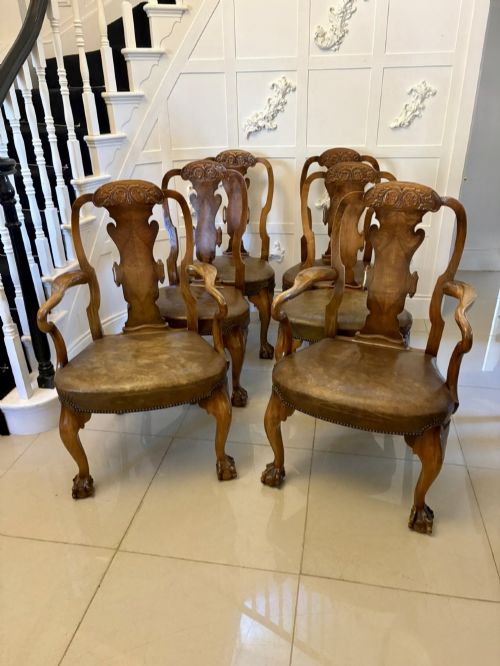
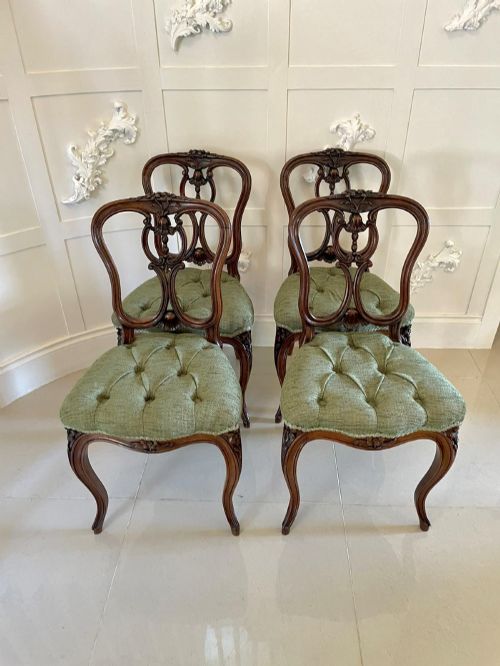
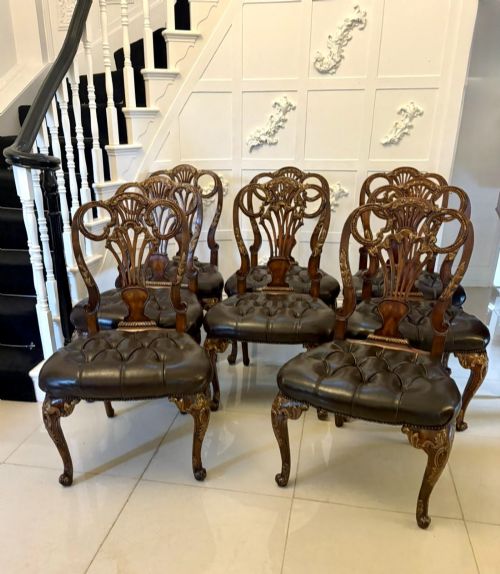
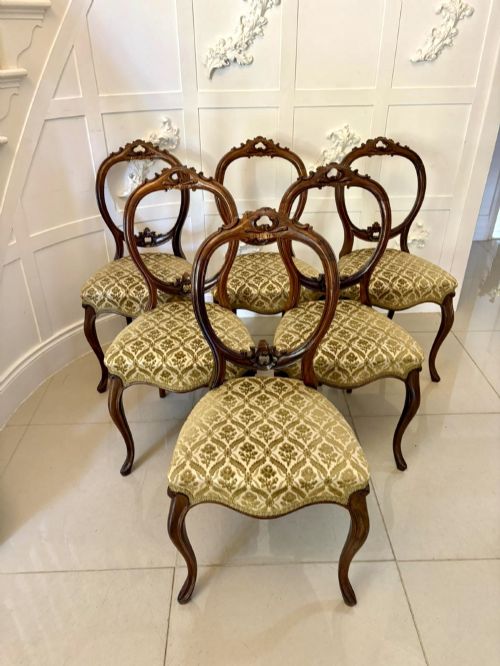
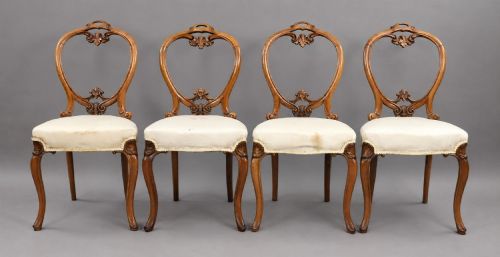
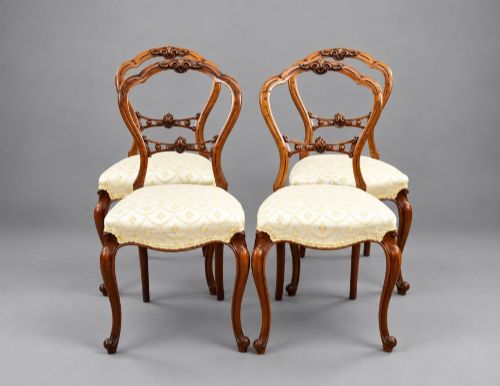
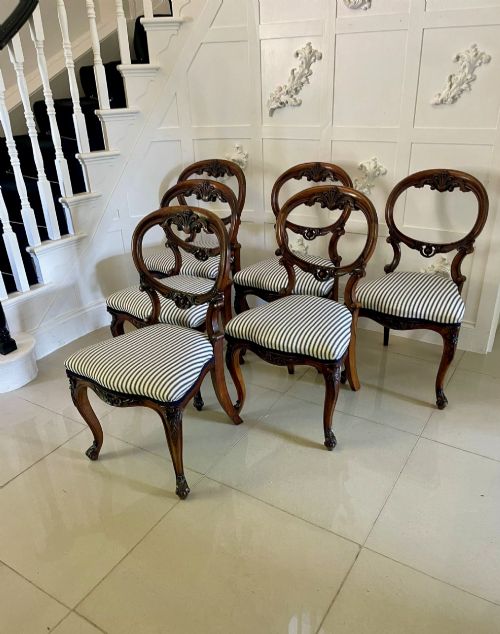
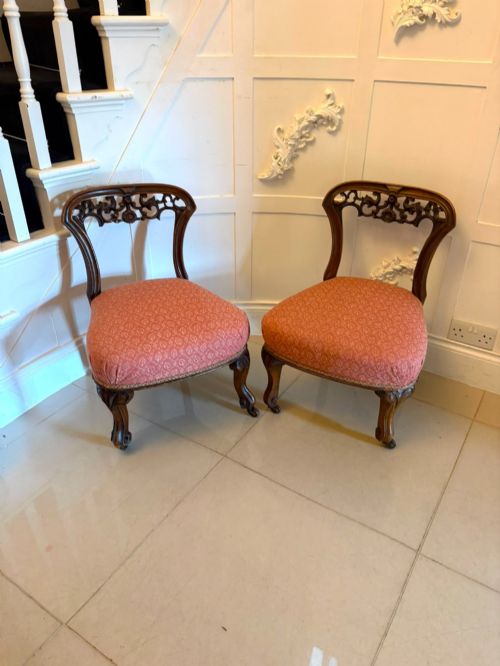
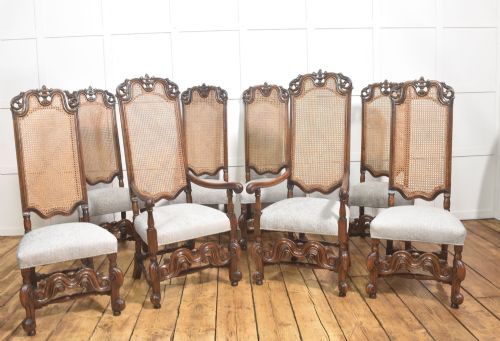
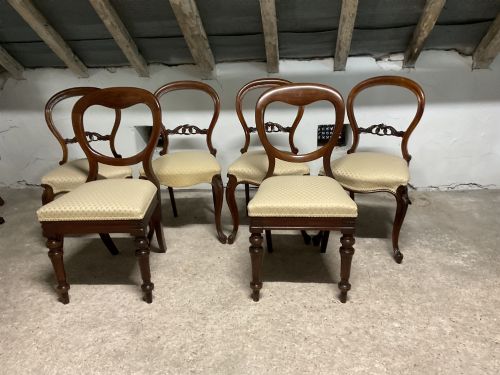
The most common form on this page is the Victorian balloon back dining chair, alongside matched sets of six or eight from the Edwardian and later periods. Side chairs and high-back seating also appear frequently, often featuring cabriole legs or carved decorative motifs on the splat and crest rail.
Earlier 18th-century examples showcase restrained lines and figured grain, while revival pieces from the 19th and early 20th centuries draw heavily on earlier historical vocabularies. Sets range from intimate pairs to extensive dining suites equipped with brass hardware and period textiles.
Materials and construction
Cabinetmakers built these frames using solid walnut and burr walnut veneers, prized for rich figure and depth of colour. Joinery relied on traditional mortise and tenon joints to withstand the daily weight and movement of dining use.
Upholstery techniques developed from early horsehair stuffing held by webbing and linen to later sprung inserts covered in velvet, leather, tapestry, or contemporary textile fabrics. Carved details, such as cabriole legs and scroll terminals, were worked directly into the timber by hand.
Listings feature walnut upholstered dining chairs across Victorian, Georgian, and Art Deco periods, utilising leather, velvet, and tapestry textiles.
Factors of quality
Quality rests primarily in the crispness of the hand carving and the selection of the walnut timber, particularly where figured burr veneers show complex grain patterns. Substantial frame construction without structural movement indicates superior original workmanship.
The integrity of the joinery and the survival of original surface patination distinguish finer examples from standard production. Upholstery standard and textile choice also influence the finished character of the chair, balancing historical accuracy with comfort.
Charles Tozer·Epstein·Lamb of Manchester
The Walnut Upholstered Dining Chairs Glossary
- Balloon back
- An oval or loop-shaped chair back resembling a balloon, which gained widespread popularity during the Victorian period. The curved wooden frame provides comfortable lumbar support.
- Burr walnut
- A specialised veneer taken from the growth excrescences on walnut trees, yielding intricate, swirling grain patterns. It decorates the backsplats and panels of high-status dining chairs.
- Splati
- The vertical central strip of wood within a chair back that connects the seat to the top rail. Carved or pierced splats define the stylistic period of many dining chairs.
- Carolean revival
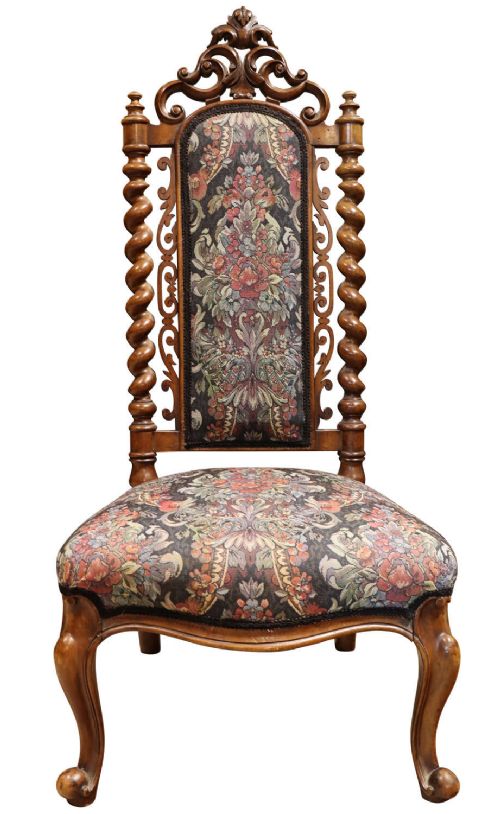
- A late 19th-century design movement mimicking the ornate, scrolling carved walnut furniture of the late 17th century. These chairs typically feature high cane or upholstered backs and twisting barley-sugar supports.
Walnut Upholstered Dining Chairs: Frequently Asked Questions
How do I care for antique walnut frames?
Keep wooden surfaces away from direct heat sources and strong sunlight to prevent the walnut grain from drying out or splitting over time. Apply a microcrystalline wax sparingly and buff gently with a soft cloth to maintain the natural sheen.
Avoid liquid polishes containing silicones, which build up harmful residues. Regular dusting with a dry cloth keeps the carved details and joints free from abrasive particles.
Can I mix different sets of dining chairs?
Mixing chair styles works well when pieces share a common material like walnut or a similar wood tone. Combining side chairs from one period with matching carvers at the head of the table creates a balanced arrangement.
Matching the seat height and general proportion ensures guests sit at a comfortable level around the dining table. Cohesive upholstery fabric can also tie disparate chair frames together visually.
How do I identify a Queen Anne style chair?
Queen Anne walnut chairs typically feature distinctive pad feet, gently curved cabriole legs, and solid vase-shaped back splats without excessive ornamentation. The overall profile emphasises graceful, fluid lines rather than heavy straight timbers.
Later revival versions produced around 1900 often incorporate burr walnut veneers on the splat and crest rail. Examining the construction of the seat frame helps distinguish between an original 18th-century piece and a later interpretation.
What is the difference between a side chair and a carver?
Side chairs lack armrests and have narrower proportions, designed to fit compactly along the sides of a dining table. Carver chairs feature integrated arms and usually occupy the head and foot positions of the dining setting.
Both forms often share identical carved back designs and leg styles within a matched dining suite. Historically, carvers provided additional status and comfort for the host.