




Vintage Walnut Side Chairs
These vintage walnut side chairs bring warmth and distinct period character to a room, offering sturdy seating with rich timber grain.
Vintage Walnut Side Chairs
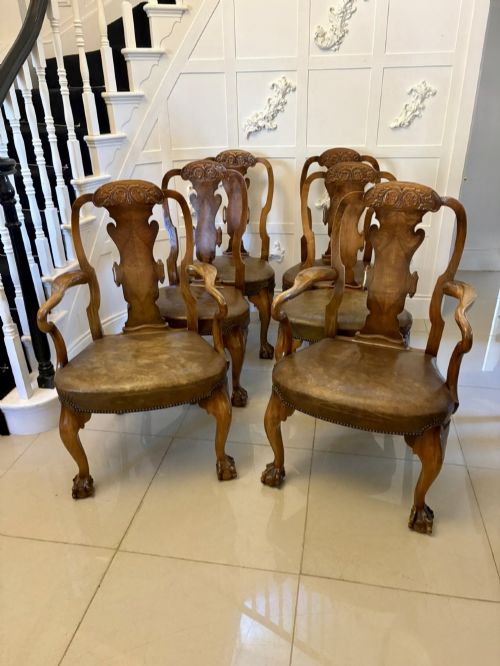
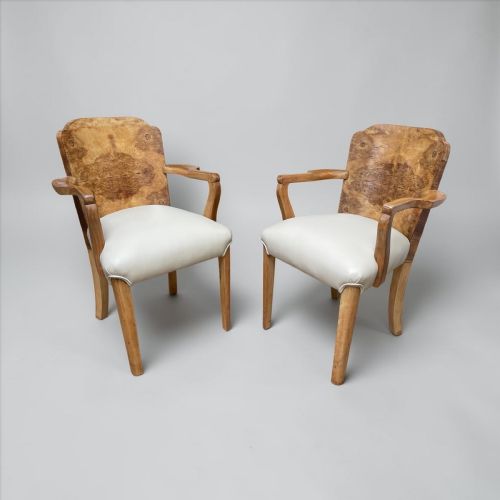
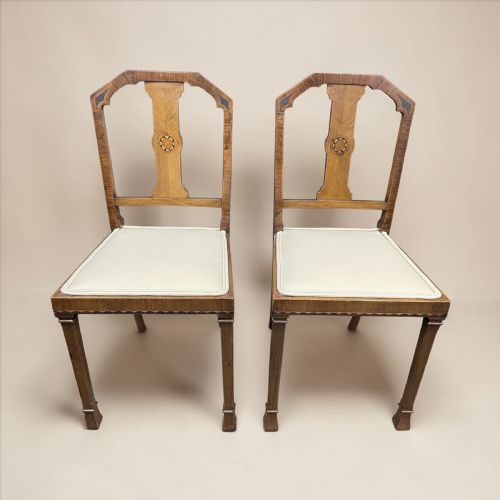
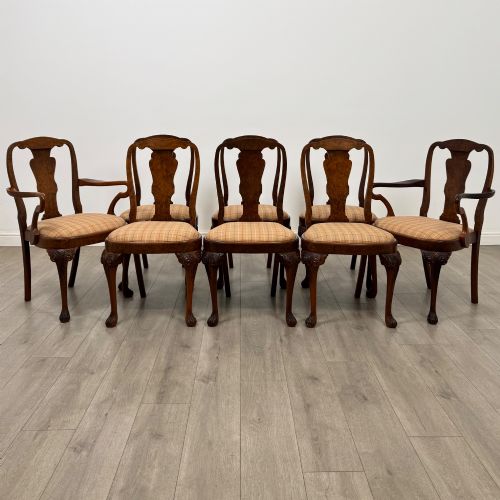
Vintage walnut side chairs encompass a broad span of design periods, ranging from nineteenth-century Victorian examples to twentieth-century Art Deco interpretations. Buyers encounter diverse regional influences and revival styles, including Queen Anne, George II, and Arts and Crafts aesthetics.
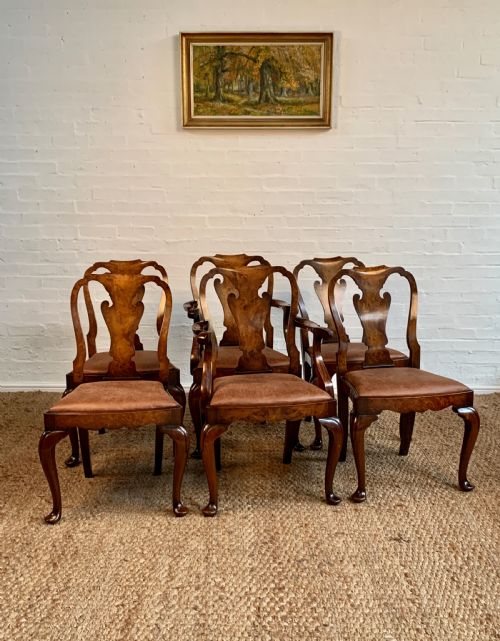
The selection includes matched sets for dining rooms alongside single chairs and pairs suited for bedrooms, halls, and desks. Walnut timber remains the defining material across these forms, often showing varied grain patterns from burr walnut to plain figures.
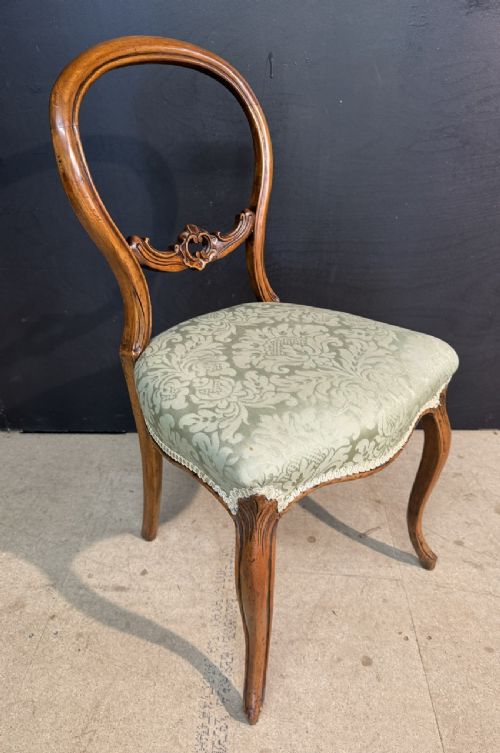
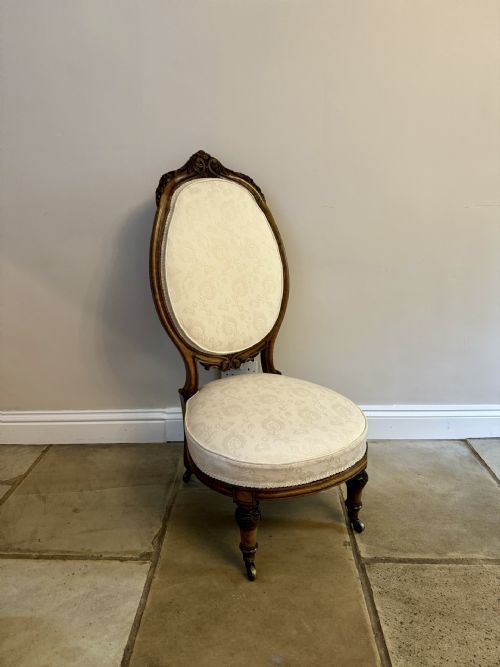
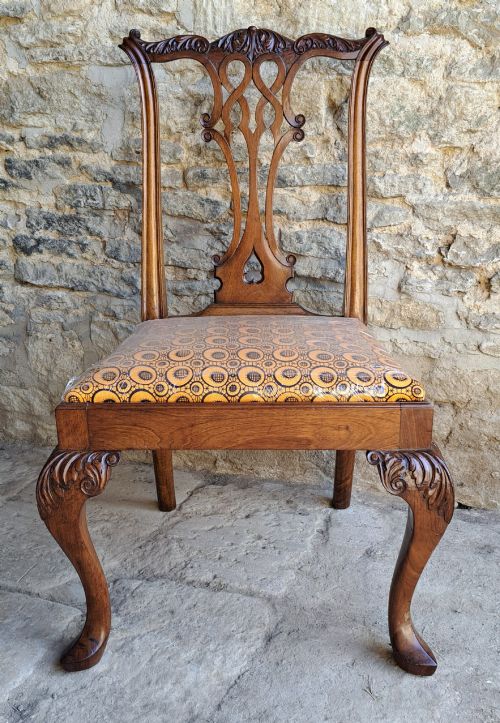
Victorian and Edwardian iterations dominate the current selection, frequently featuring carved details and upholstered seats. Pieces range from formal dining suites to occasional chairs upholstered in fabric, leather, or tapestry.
Materials and construction
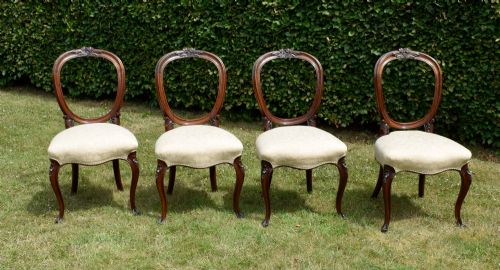
Makers utilised solid walnut and burr walnut veneers over secondary timbers to construct frames, combining structural strength with decorative grain. Traditional joinery secures the joints, while hand-carving defines stylistic elements such as cabriole legs.
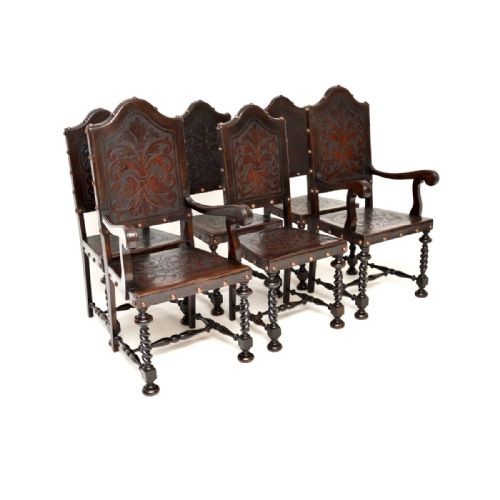
Upholstery methods vary by period, incorporating materials like leather, tapestry, and contemporary textiles secured over padded seats. Additional detailing often includes brass elements and embossed leather panels fixed with traditional tacks.
Listings feature walnut furniture spanning from the mid-eighteenth century through the Art Deco era, including substantial dining sets and occasional chairs.
Assessing quality
Quality rests upon the crispness of the timber carving and the selection of the walnut grain, with burr veneers commanding visual depth. The integrity of the frame construction and the fidelity of revival styles also distinguish finer examples from standard production.
The preservation of original surface patination separates exceptional pieces from heavily restored ones. Additionally, the execution of secondary elements, such as embossed leather or needlepoint upholstery, indicates the original maker's investment in the piece.
Harry and Lou Epstein·Waring and Gillow·Whytock and Reid of Edinburgh·Hille·Shoolbred
The Vintage Walnut Side Chairs Glossary
- Burr walnut
- A figured wood grain taken from the growth burls of the walnut tree, prized for its swirling patterns. It is frequently used for decorative veneer on prominent surfaces.
- Cabriole leg
- A furniture leg that curves out and then in, resembling an animal's curving leg. This form is typical of Queen Anne and eighteenth-century revival styles.
- Side chair
- A chair without arms, designed primarily for dining or occasional use around a room. These pieces fit easily against walls or around tables.
- Needlepoint
- A type of canvas work embroidery used for chair upholstery. It provides a textured, decorative surface often seen on period seating.
Vintage Walnut Side Chairs: Frequently Asked Questions
How do I spot a Queen Anne revival chair?
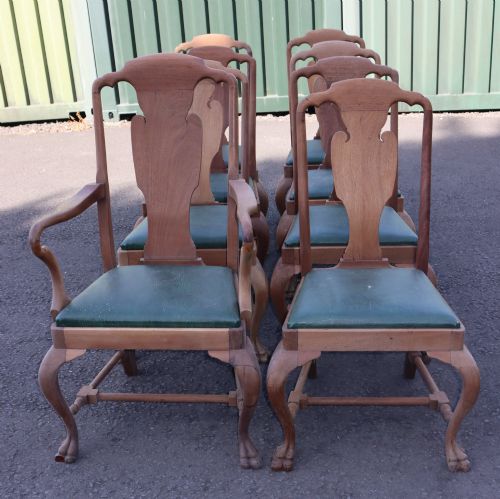
Queen Anne revival chairs typically feature prominent cabriole legs, pad feet, and spoon-backed wooden frames shaped for posture. These elements imitate the distinct silhouette popular in the early eighteenth century.
Makers often paired these curved wooden forms with drop-in seats upholstered in fabric or leather. The wood grain on revival pieces from the twentieth century frequently utilises burr walnut to enhance the historic aesthetic.
Can these chairs be used daily?
Most vintage walnut side chairs are structurally robust enough for daily use, provided the frame joinery remains tight. Walnut is a durable hardwood that supports regular sitting when maintained properly.
Checking the stability of the legs and seat frame ensures longevity in a modern dining setting. Seats with older upholstery may require reinforcement or reupholstering to support everyday wear.
What is the difference between an Edwardian and a Victorian chair?
Victorian chairs generally display heavier carving, darker finishes, and more ornate upholstery styles reflective of nineteenth-century tastes. Their construction tends to be substantial and formal.
Edwardian examples often lean towards lighter proportions and cleaner lines, sometimes drawing on earlier revival styles like Sheraton or Chippendale. The walnut timber on Edwardian pieces can appear brighter or showcase decorative burr veneers.
How do I care for walnut wood?
Walnut benefits from occasional polishing with beeswax to nourish the timber and maintain a soft sheen. Avoiding direct sunlight prevents the rich brown tones from fading over time.
Keeping the chairs away from extreme temperature fluctuations protects the wood and any applied veneer from splitting. Gentle dusting with a dry cloth keeps the surface free from abrasive particles.