
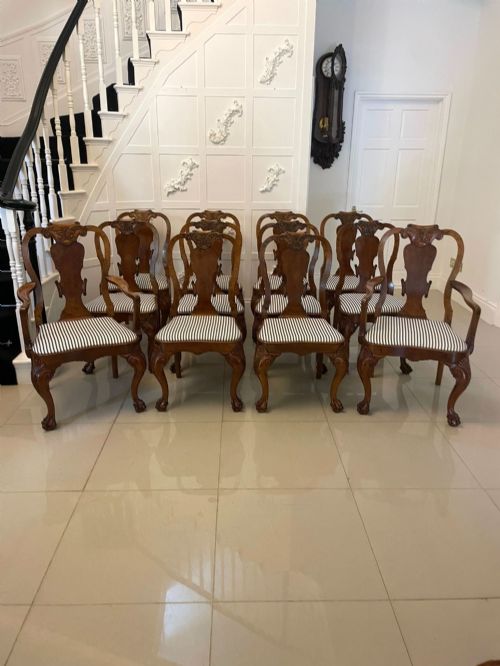
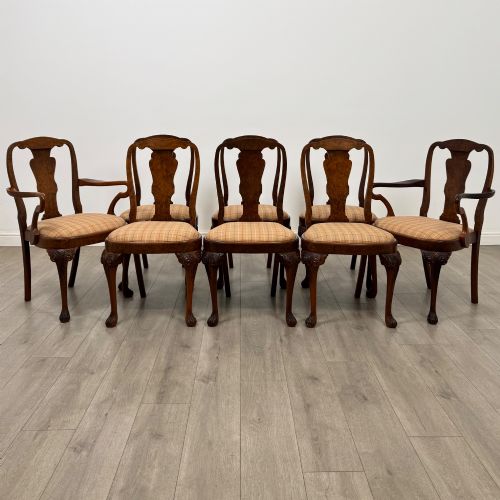
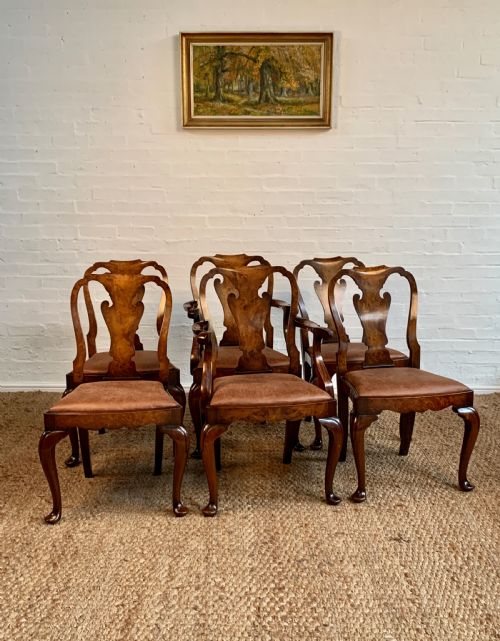
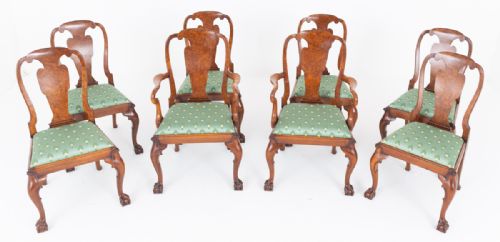


Burr Walnut Carver Chairs
Burr walnut carver chairs bring striking timber grain and traditional form to a room, offering both seating comfort and period presence.
Burr Walnut Carver Chairs
When you search for burr walnut carver chairs, you encounter seating distinguished by figured wooden surfaces and armrests designed to stand at the head of a dining table. The pieces available span several eras, reaching from the eighteenth century through Victorian and Edwardian periods into Art Deco and nineteen-thirties revivals.
You are most likely to meet Queen Anne style examples featuring scrollwork and cabriole legs, alongside streamlined Art Deco cloud-back forms. These dining chairs and armchairs appear as individual items, pairs, or larger sets that include both standard seats and carvers.
Originating from British workshops and cabinet makers, these chairs utilise richly patterned timber veneers applied to structural frames. The historical scope ranges from eighteenth-century originals to revival pieces produced in the twentieth century.
How they were made
Cabinet makers constructed the frames using solid timber such as walnut, then applied thin sheets of burr walnut veneer to the prominent surfaces to highlight the swirling grain patterns. This decorative wood veneer requires precise matching across the backrests and seat rails.
Upholstery forms an integral part of the construction, with drop-in or fixed seats padded and covered in fabric, leather, or velvet. Metal elements such as brass castors or decorative studs occasionally appear on specific period examples to finish the design.
Burr Walnut Carver Chairs Retail Price Guide 2026
Typical asking prices for burr walnut carver chairs among the pieces listed under this phrase on Sellingantiques today, from the lower quarter to the upper quarter. They describe what is for sale here now, not the wider market.
A solitary child's chair occasionally stands among the grand dining sets, offering miniature proportions with full-scale burr walnut grandeur.
What varies in quality
The visual impact of the timber grain separates standard examples from exceptional pieces, as highly figured burr walnut displays intricate swirling patterns across the entire backrest. The depth and clarity of the veneer work dictate the overall visual hierarchy of the seating.
The faithfulness of the period style execution, whether interpreting Queen Anne proportions or Art Deco curves, influences the character of the chair. Cabinet-making precision in the joinery of the armrests and legs determines the structural integrity and lasting presence of the furniture.
Epstein
The Burr Walnut Carver Chairs Glossary
- Carver chair
- An armchair designed specifically to sit at the head of a dining table, featuring supportive armrests. These pieces often matched a larger set of standard dining chairs.
- Burr walnut
- A wood veneer taken from the growth wart of a walnut tree, prized for its swirling and knotty grain patterns. Cabinet makers used this timber on prominent surfaces for decorative effect.
- Cabriole leg
- A furniture leg that curves outward and then tapers inward, finishing in a pad or scroll foot. This shape is characteristic of eighteenth-century and revival furniture styles.
- Cloud back
- An upholstered chair back featuring rounded, stepped contours reminiscent of stylised clouds. This form emerged during the Art Deco period.
- Queen Anne style
- A design movement characterised by pad feet, cabriole legs, and vase-shaped splats in the chair backs. The style experienced revivals during the Victorian and Edwardian eras.
Burr Walnut Carver Chairs: Frequently Asked Questions
How do I identify burr walnut?
Burr walnut is recognised by its distinctive, highly figured grain filled with small knot clusters and swirling patterns. It comes from an abnormal growth on the walnut tree.
Cabinet makers slice this wood into thin veneers to display the complex patterns across flat surfaces like chair backs.
What periods do these chairs cover?
The pieces span from eighteenth-century originals to Victorian, Edwardian, and Art Deco eras. Many examples also date from nineteen-thirties revivals.
Earlier pieces feature classic Queen Anne styling, while later twentieth-century items embrace streamlined modernist curves.
How should I care for velvet upholstery?
Velvet upholstery requires gentle brushing to maintain the pile and prevent flattening over time. Avoid placing the fabric in direct sunlight to preserve the colour.
Professional cleaning is recommended for removing marks without damaging the delicate pile structure.