


Traditional Carved Dining Seating
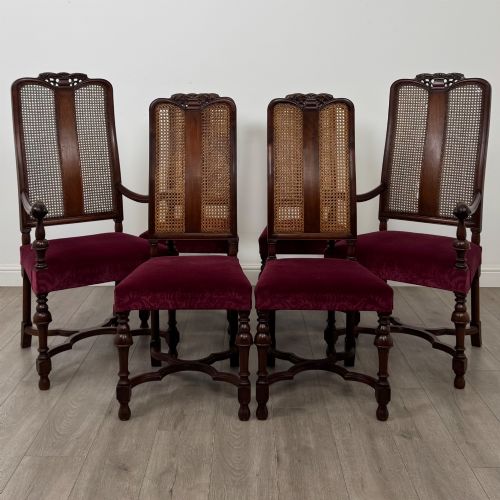
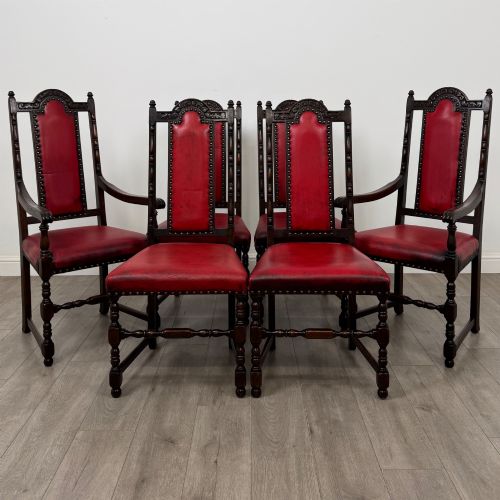
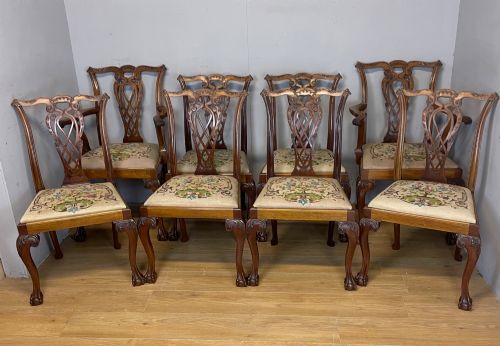
Traditional carved dining seating brings together robust mahogany and oak frames shaped by Victorian, Edwardian and Georgian hands for daily dining tables.
Traditional Carved Dining Seating
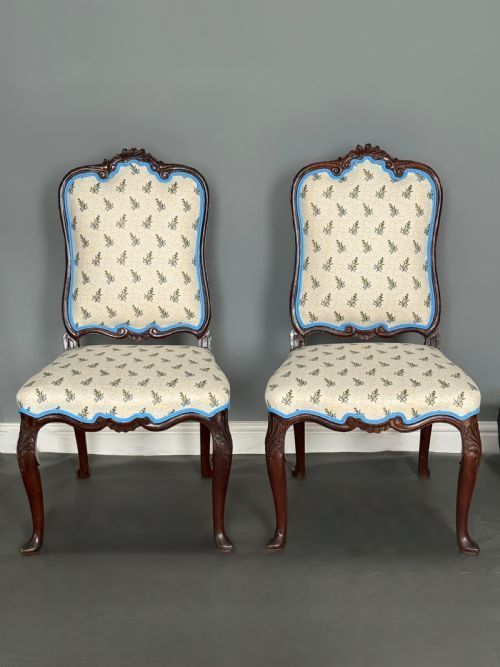
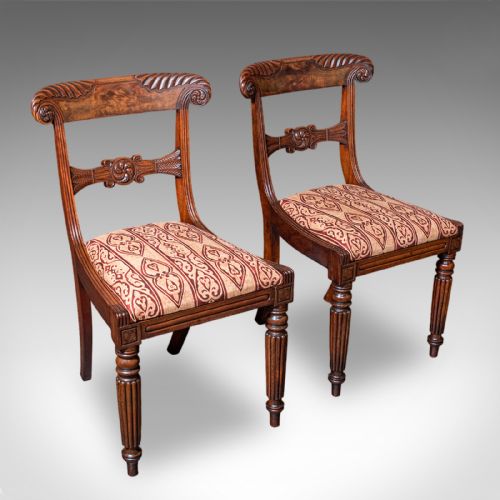
Traditional carved dining seating comprises dining chairs, side chairs, armchairs, hall chairs and benches produced across the eighteenth, nineteenth and twentieth centuries. These forms reflect distinct stylistic revivals, including Jacobean, Regency, Hepplewhite and Chippendale designs executed in substantial timber.
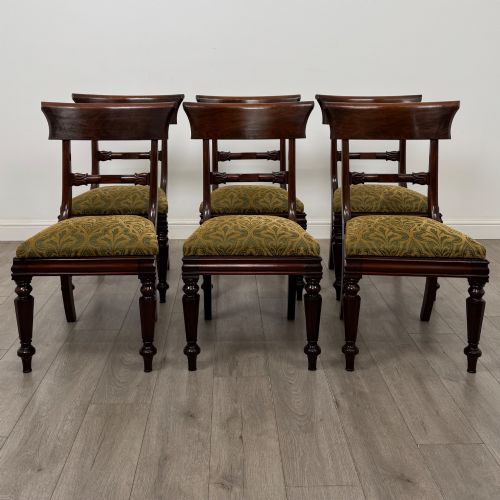
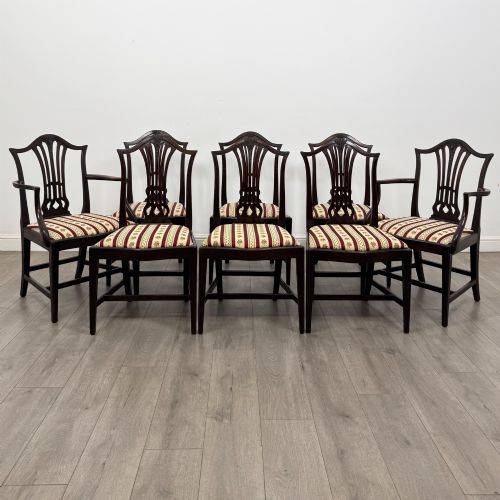
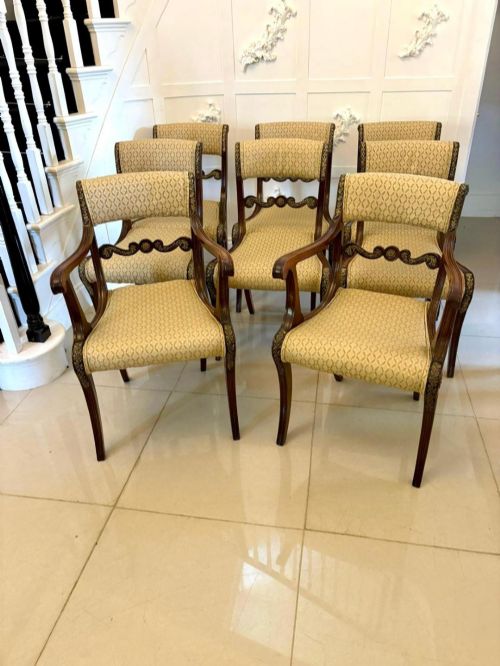
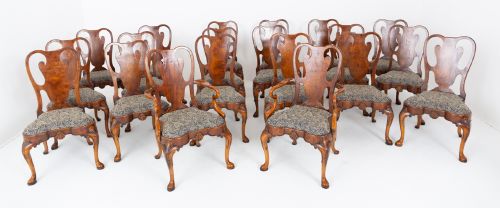
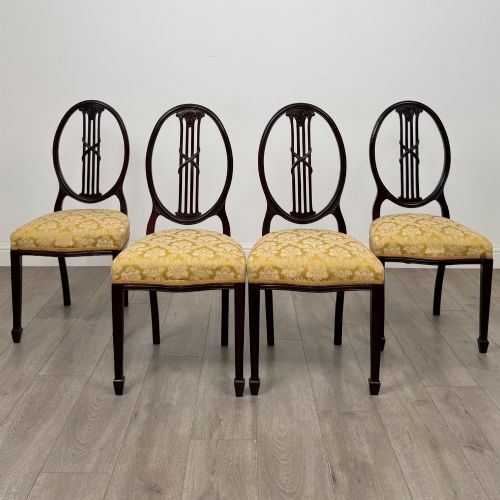
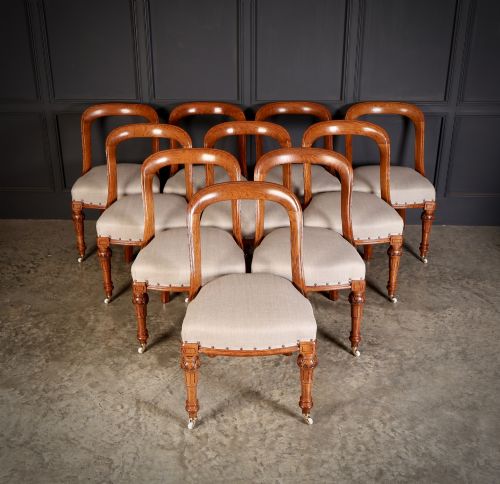
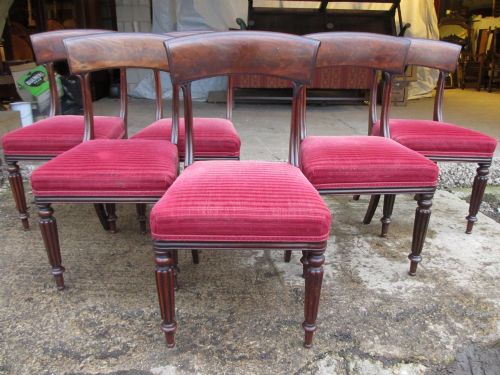
Buyers meet large sets alongside pairs and single armchairs, spanning modest Edwardian oak output to exhibition quality nineteenth-century mahogany suites. The selection includes shield back, balloon back, ladderback and bar back configurations designed around formal and domestic dining spaces.
Origins stretch across English workshops and continental influences, utilising local hardwoods shaped into specific regional forms like Welsh elm Windsor armchairs or Dutch Baroque side chairs. Each period brings distinct proportions and carving depth to the dining room.
How traditional carved dining seating was made
Cabinetmakers worked primarily in mahogany, oak, walnut and elm, selecting dense timbers capable of supporting intricate hand-carved splats, rails and crests. These solid woods provided the structural integrity required for heavy dining use over generations.
Upholstery integrated traditional textiles, leather, velvet and fabric fixed to drop-in or padded seats using brass tacks and webbing. Frame joints relied on traditional mortise and tenon construction, secured without modern adhesives to allow timber movement.
Current listings feature eight distinct periods spanning the 18th century through 1930, with mahogany and oak as dominant materials.
What varies in quality
The depth, crispness and ambition of the hand-carving define the upper tiers of production, distinguishing standard workshop output from exhibition quality pieces. Crisp relief work on shield backs or ball and claw motifs requires superior timber selection and skilled carving hands.
Completeness within large sets influences desirability, particularly when twenty or twelve matching chairs survive together with original leather or textile upholstery. Timber selection also matters, seen in figured Cuban mahogany versus standard utility grades.
Maple and Co·Warings·Charles Tozer
The Traditional Carved Dining Seating Glossary
- Balloon back
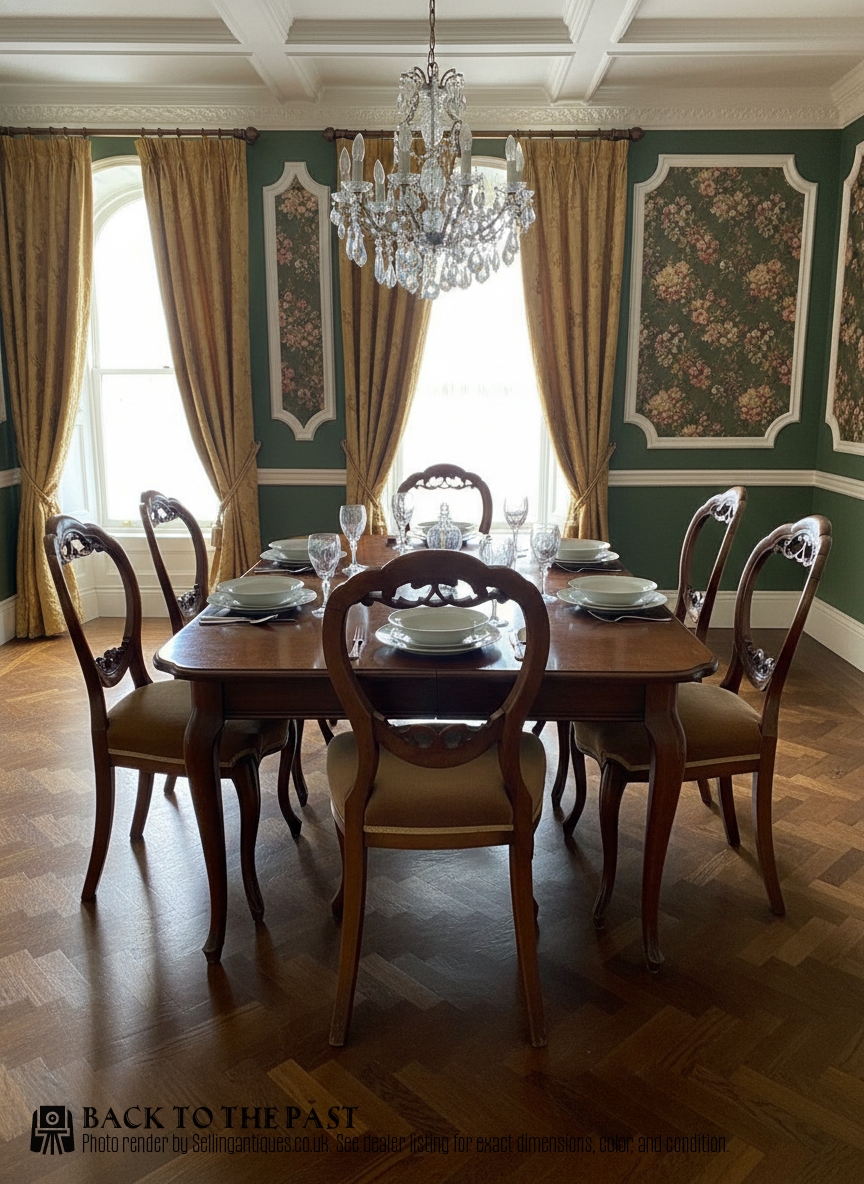
- A rounded, oval-shaped upholstered back frame characteristic of Victorian dining chairs. The continuous curved wooden rail provides ergonomic support while displaying polished mahogany grain.
- Ladderback
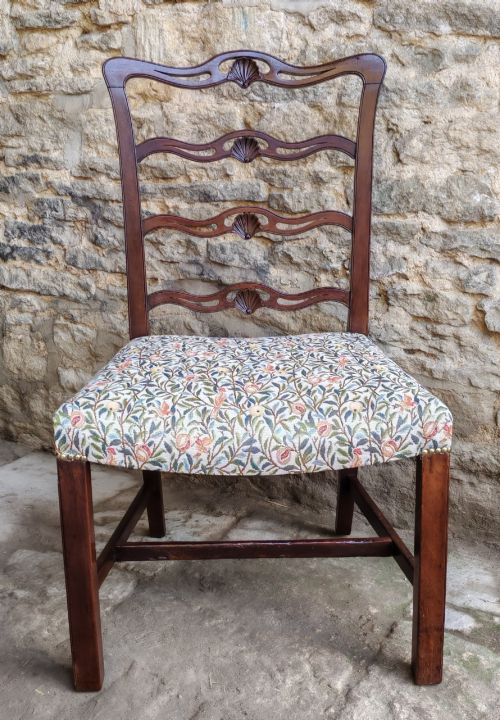
- A chair back featuring horizontal wooden slats or rails stacked vertically between the upright posts. Early examples appear in elm and oak within regional vernacular traditions.
- Bar back
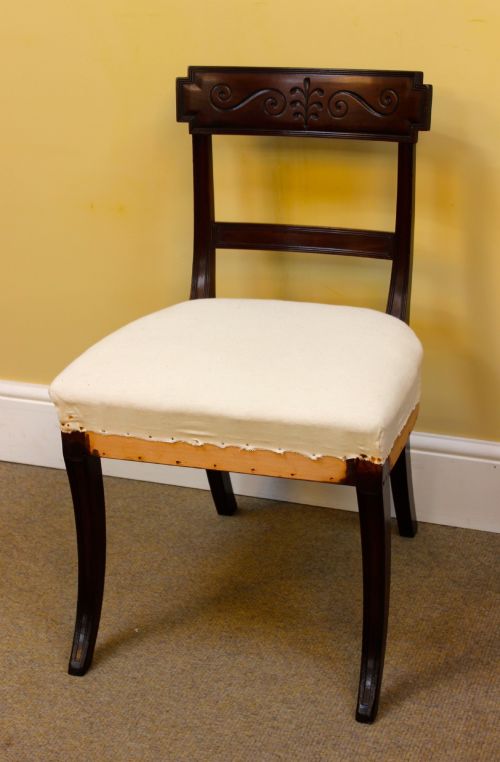
- A dining chair style utilising a horizontal transverse bar across the upper back, frequently carved with central roundels or foliate motifs. This form aligns closely with nineteenth-century William IV proportions.
- Hall chair
- A rigid wooden seat intended for entrance halls rather than prolonged dining, often featuring painted crests or deeply carved armorial backs. These pieces typically lack upholstered pads.
Traditional Carved Dining Seating: Frequently Asked Questions
What periods do these dining chairs cover?
The listings span from the eighteenth century through the Victorian and Edwardian eras up to 1930 production.
Earlier pieces show Georgian and Regency influences, while later examples often adopt revival styles from the twentieth century.
How do I identify a shield back chair?
Shield back designs feature a distinctive frame resembling a pointed heraldic shield enclosing a carved central splat.
These forms appear frequently in mahogany across eighteenth and nineteenth-century dining sets.
Are large sets of dining chairs available?
Sets of ten, twelve and twenty chairs appear alongside standard pairs and smaller groups of four or six.
Larger configurations often include designated carver armchairs alongside matching side chairs.
What woods were used for these seats?
Mahogany and oak dominate the selection, supported by walnut, elm, maple and exotic Cuban mahogany.
Frames often incorporate secondary timbers for internal blocks alongside brass hardware and leather upholstery.
Where were these chairs used originally?
Dining chairs served around formal dining tables in townhouses and country estates, while hall chairs sat in entrance spaces.
Armchairs and carvers functioned as host seating at table ends or as reception seats in morning rooms.