
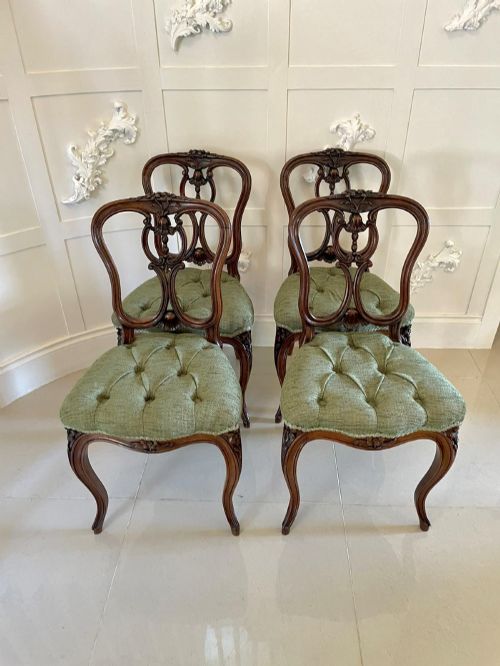

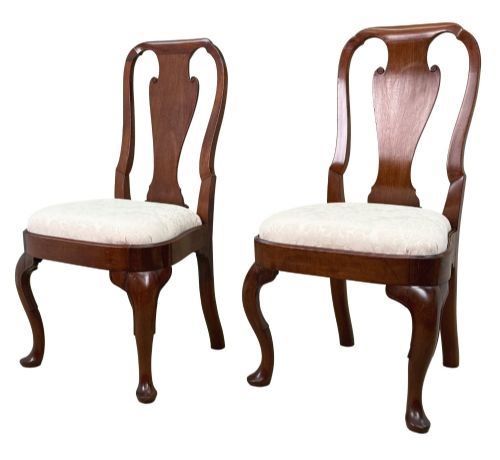
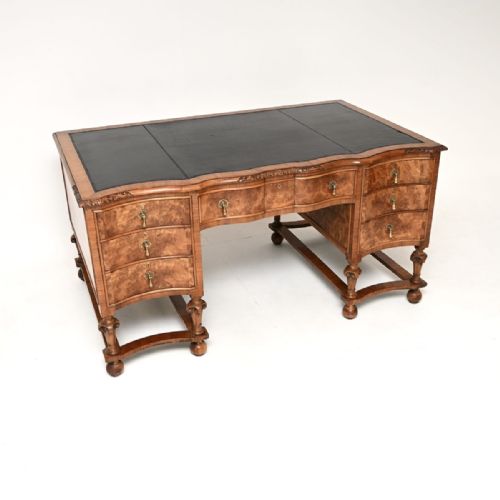
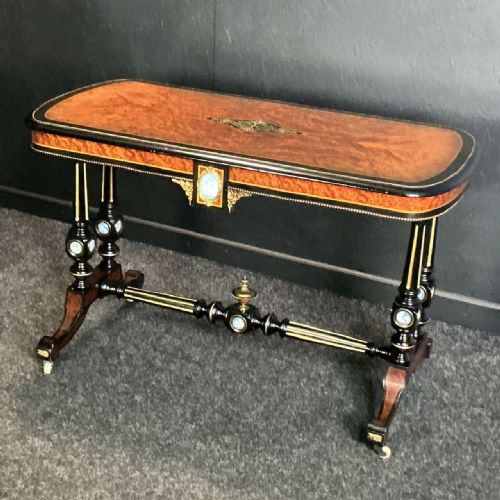
Walnut Side Desk
When you search for a walnut side desk, you enter a world of fine timber work, compact writing surfaces, and historical elegance.
Walnut Side Desk
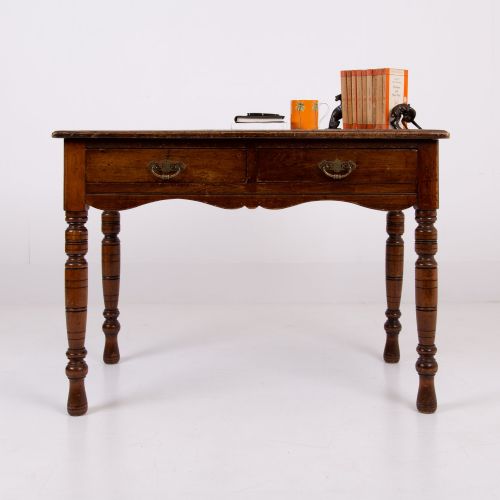
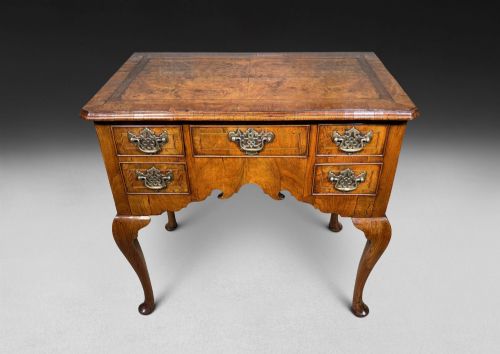
A walnut side desk represents a compact and versatile form of antique writing furniture, designed to fit neatly against a wall or within a study. These pieces combine the utility of a writing table with the aesthetic warmth of walnut timber, ranging from Georgian lowboys to Victorian writing tables and later revival pieces.
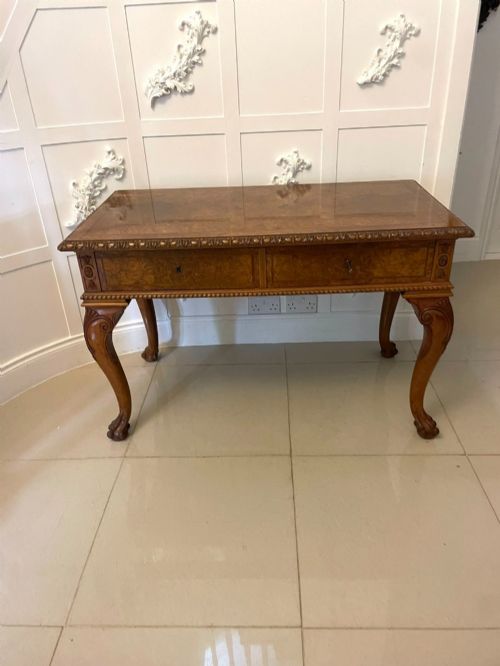
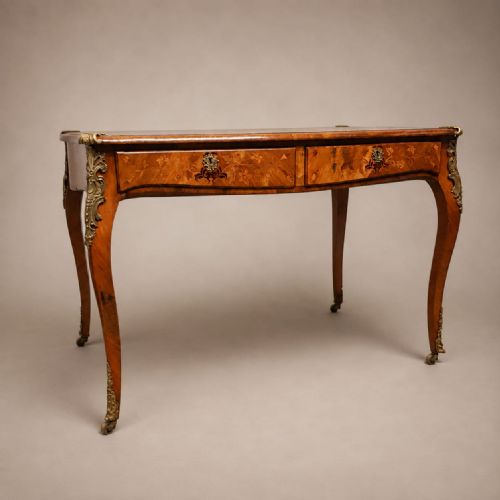
The selections available bring together domestic writing surfaces, lowboys with multiple drawers, and bureau plat desks suited for central room placement. You will encounter both early eighteenth-century examples showing classic proportions and later nineteenth or twentieth-century interpretations influenced by French and English revival styles.
Makers and workshops often utilised figured grain and decorative crossbanding to elevate the appearance of these smaller desks. Their enduring appeal lies in their capacity to provide a dedicated writing space without dominating the floor plan of a modern room.
How they were made
Cabinetmakers constructed these desks using solid walnut frameworks combined with decorative veneers such as burr walnut to create visually striking top surfaces. Secondary woods provided internal framing for drawers, while traditional joinery methods ensured stability across changing environmental conditions.
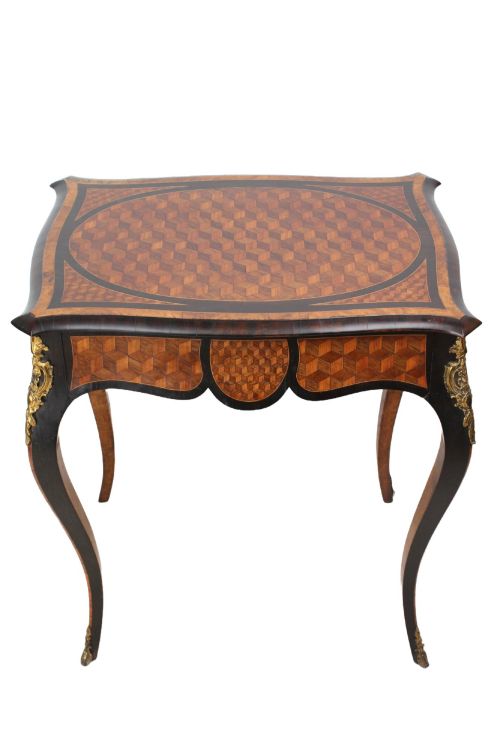
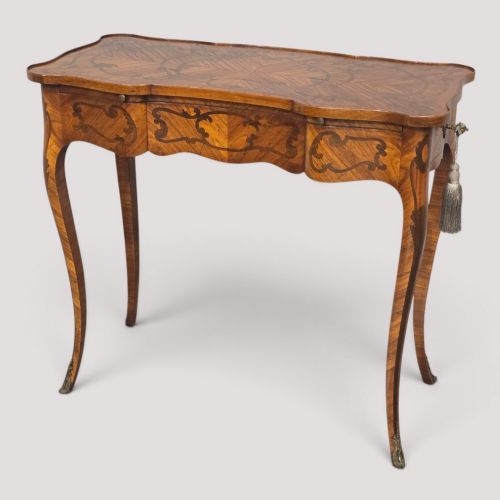
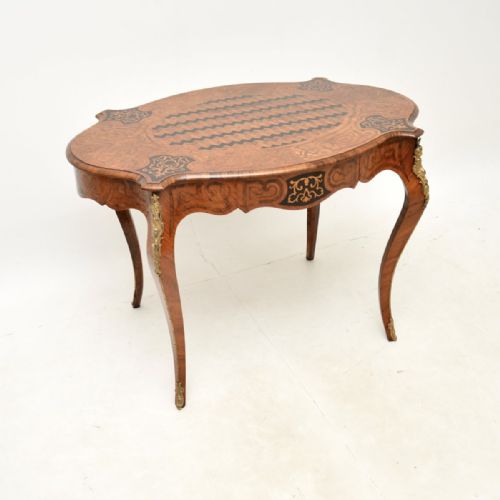
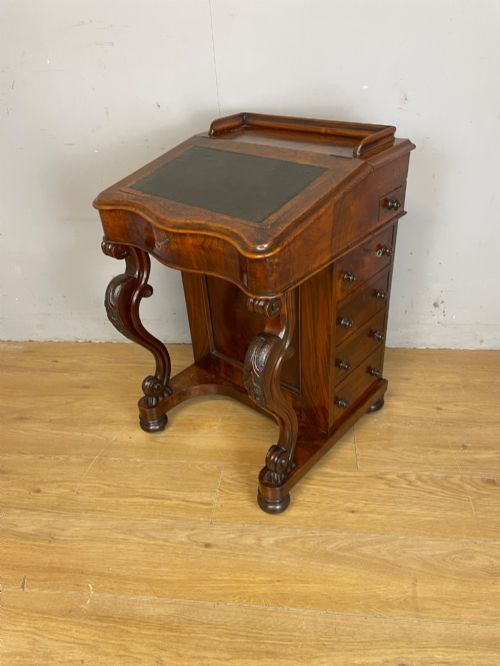
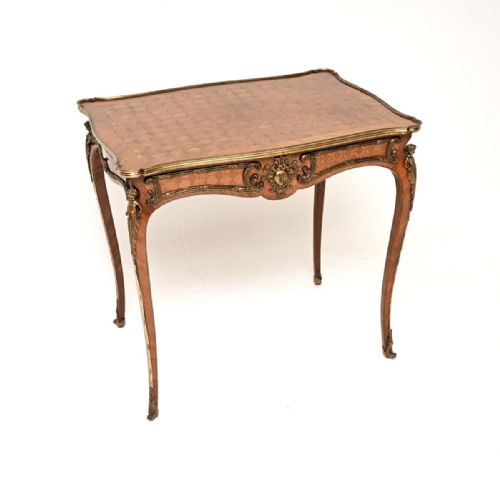
Surface enhancement often involved fine parquetry, marquetry inlay, or polished leather writing inserts framed by subtle brass hardware. Finishing techniques relied on hand-applied polish to bring out the natural depth and figuring of the walnut timber.
Listings feature walnut side desks spanning from the seventeenth century through the Art Deco period, incorporating brass, leather, and ormolu details.
What varies in quality
Quality in these desks rests upon the choice of timber and the precision of the veneer work across the top and drawer fronts. Pieces displaying highly figured burr walnut or intricate marquetry patterns generally reflect a higher level of cabinet-making skill.
Proportion and structural integrity also separate standard pieces from exceptional ones. Well-executed cabriole legs, crisp carving, and original brass fittings indicate a maker who paid close attention to both aesthetic balance and functional longevity.
JAS Shoolbred·Charles Tozer·Maple and Co·Edwards and Roberts·Gillows
The Walnut Side Desk Glossary
- Lowboy
- A small table with a low set of drawers, commonly used as a writing desk or dressing table during the Georgian period.
- Burr walnut
- A prized wood harvested from the abnormal growth of a walnut tree, yielding rich and swirling patterns used for decorative veneer.
- Bureau plat
- A freestanding French writing table featuring a flat top, often finished with leather and mounted with ormolu details.
- Parquetry
- A geometric mosaic of wood pieces used for decorative surfaces on tabletops and desk lids.
- Crossbanding
- A border technique where veneer strips are laid perpendicularly to the main grain to frame a panel or top.
Walnut Side Desk: Frequently Asked Questions
What is a walnut side desk used for?
These pieces serve primarily as compact writing tables or decorative writing surfaces in studies, bedrooms, and reception rooms. Their smaller proportions allow them to function where larger partners desks would overwhelm the space.
Historically, they provided a convenient station for correspondence and estate management. Today, they easily adapt to contemporary laptop use while maintaining traditional aesthetic charm.
Are French revival desks different from English ones?
French revival desks, including bureau plat and Rococo styles, frequently incorporate elaborate marquetry, parquetry, and gilt-bronze or ormolu mounts. They emphasise curved lines and decorative presence.
English variants tend to focus more on architectural symmetry, timber figuring, and functional drawer arrangements within a more restrained silhouette.
How do I care for antique walnut furniture?
Keep walnut desks away from direct sunlight and heat sources to prevent the wood and delicate veneers from drying out or splitting. Maintain a stable indoor environment with consistent humidity levels.
Clean surfaces gently with a soft, dry cloth and avoid modern silicone polishes that can degrade the traditional polish over time.