





Georgian Revival Writing Table
A georgian revival writing table brings eighteenth-century elegance into a modern room through refined proportion and classical detail.
Georgian Revival Writing Table
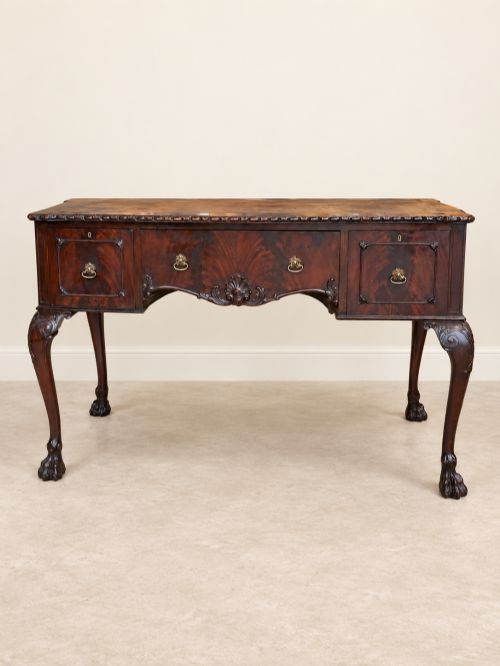
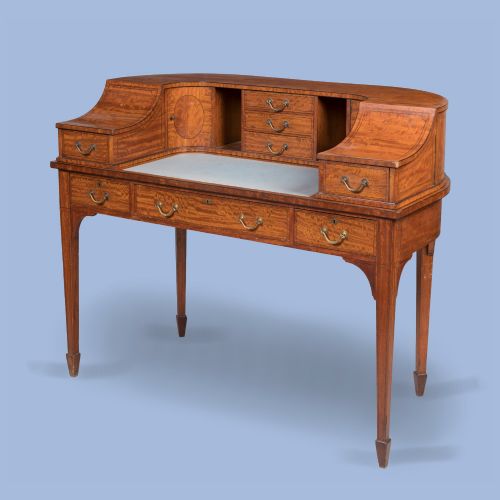
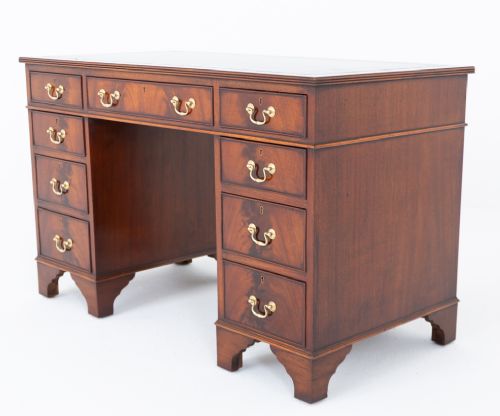
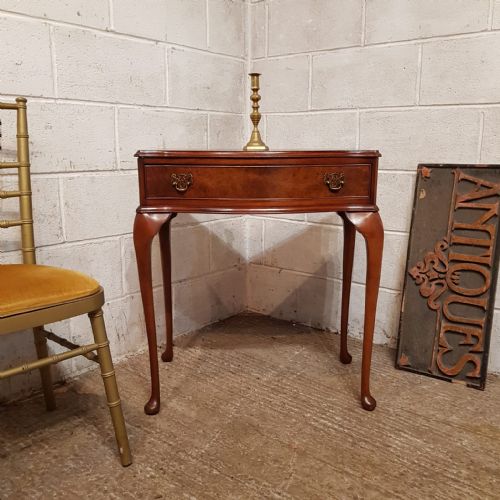
A georgian revival writing table is typically encountered as a mahogany or satinwood desk, side table, or bureau dating from the late nineteenth century into the nineteen-thirties. These pieces adopt the symmetrical lines and classical vocabulary of earlier centuries, reinterpreted by makers working during the Edwardian era and the interwar period.
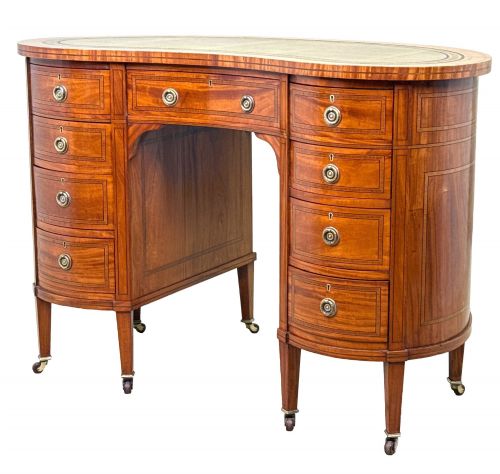
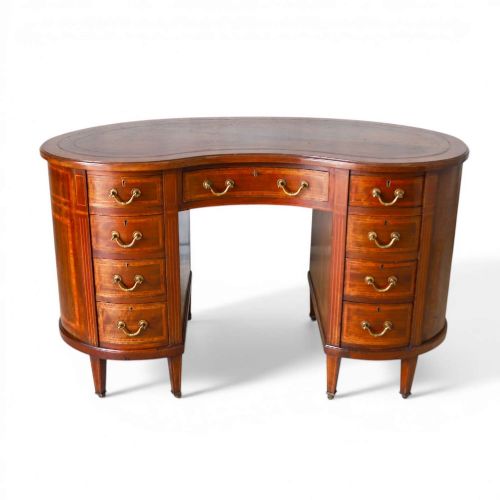
The selection ranges from compact ladies' writing desks and kidney-shaped tables to larger partners desks and drum tables. Mahogany and burr walnut form the core of the inventory, often enriched with satinwood banding or marquetry inlay.
Makers drew heavily on Sheraton, Chippendale, and Queen Anne precedents, producing revival pieces that served functional roles in period libraries and studies. The typical piece bridges nineteenth-century craftsmanship with eighteenth-century aesthetic ideals.
Gradations in Execution
The distinction between standard production and superior examples rests on the selection of figured timber and the precision of the cabinet work. Pieces featuring heavily figured burr walnut, intricate satinwood cross-banding, or hand-decorated marquetry represent the upper tier of the revival period.
Hardware choice and internal construction also separate the grades, with solid brass fittings and dovetailed drawer linings indicating greater workshop care. The harmony of proportions and the crispness of carved details, such as those found on Chippendale or Adams style legs, determine the overall success of the piece.
Some kidney desks are shaped precisely to hug the writer's waist.
Edwards and Roberts·Maples of London·Shoolbred of London·Waring and Gillows
The Georgian Revival Writing Table Glossary
- Bonheur du Jour
- A light lady's writing desk featuring a small cabinet or set of drawers on top of the writing surface. This form gained popularity during the eighteenth century and was revived extensively in satinwood and mahogany during the Victorian and Edwardian periods.
- Drum Table
- A circular freestanding table with drawers situated around the perimeter of the frieze, typically supported on a central pillar and tripod base. These pieces often feature inset leather writing surfaces.
- Lowboy
- A small side table with drawers, standing on relatively tall legs, commonly produced in oak or walnut. The form dates to the early eighteenth century and reappears in revival furniture.
- Marquetry
- Decorative patterns formed by the insertion of pieces of wood, shell, or ivory into a veneered surface. Revival cabinet-makers used this technique to emulate classical floral and geometric motifs.
- Partners Desk
- A large double-sided pedestal desk designed to allow two people to work opposite one another. These pieces incorporate banks of drawers and cupboards on both faces.
Georgian Revival Writing Table: Frequently Asked Questions
What is a georgian revival writing table?
A georgian revival writing table is a piece of furniture produced in the late nineteenth or early twentieth century that copies the stylistic elements of eighteenth-century English design. These tables utilise traditional timbers such as mahogany and satinwood to recreate classic forms for domestic use.
They function as practical writing desks while maintaining the proportion and decorative details associated with the Georgian period.
How do I date a georgian revival writing table?
Dating these tables involves examining the secondary timbers, construction methods, and hardware style. Pieces from the Edwardian era or the nineteen-twenties often display machine-sawn components alongside hand-finished details.
Makers' marks or stamps, when present, provide a direct link to specific firms operating between eighteen-eighty and nineteen-thirty.
Where should I place a writing table?
Freestanding forms like drum tables and partners desks suit the centre of a room, as their finished backs allow all-round viewing. Smaller side tables and kidney desks fit neatly against walls or beneath windows in studies and bedrooms.
Their modest proportions make them adaptable to various room layouts without dominating the space.