
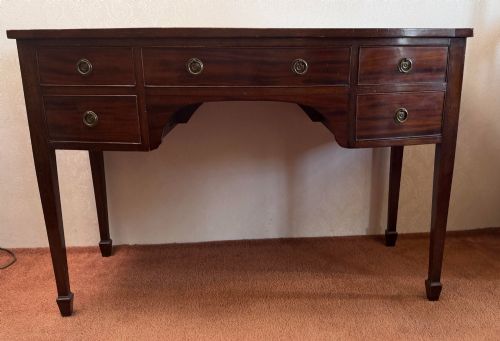
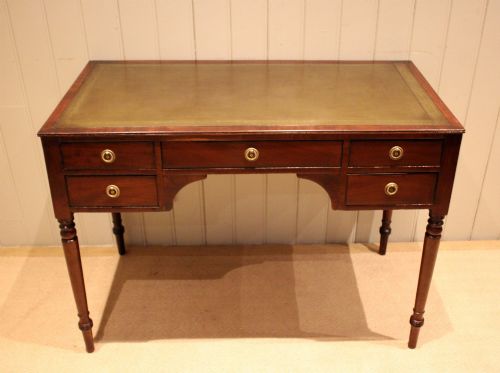
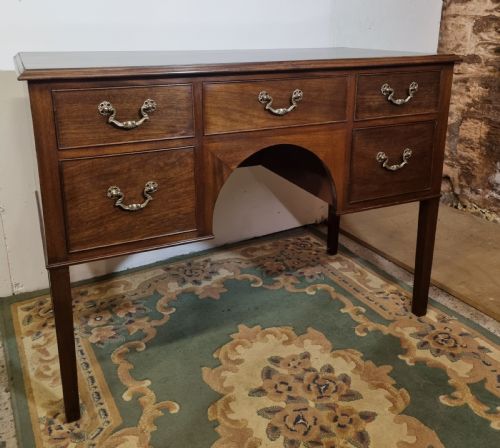
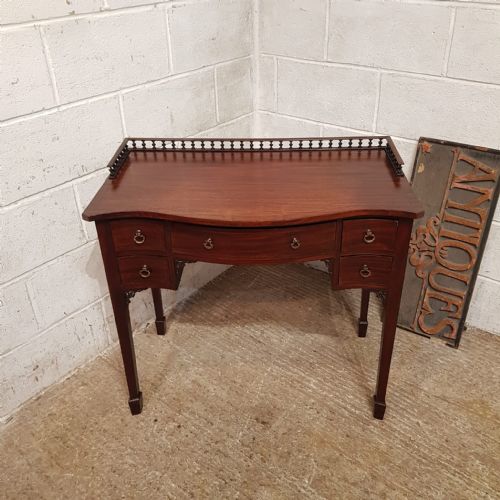


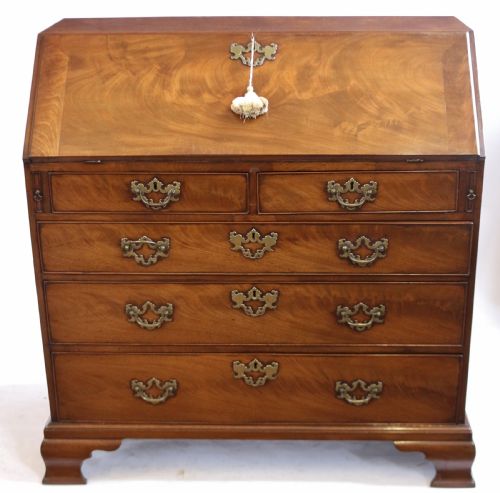
Five Drawer Writing Desk
A five drawer writing desk offers practical surface space and tidy compartmentalised storage, making it a timeless addition to any study.
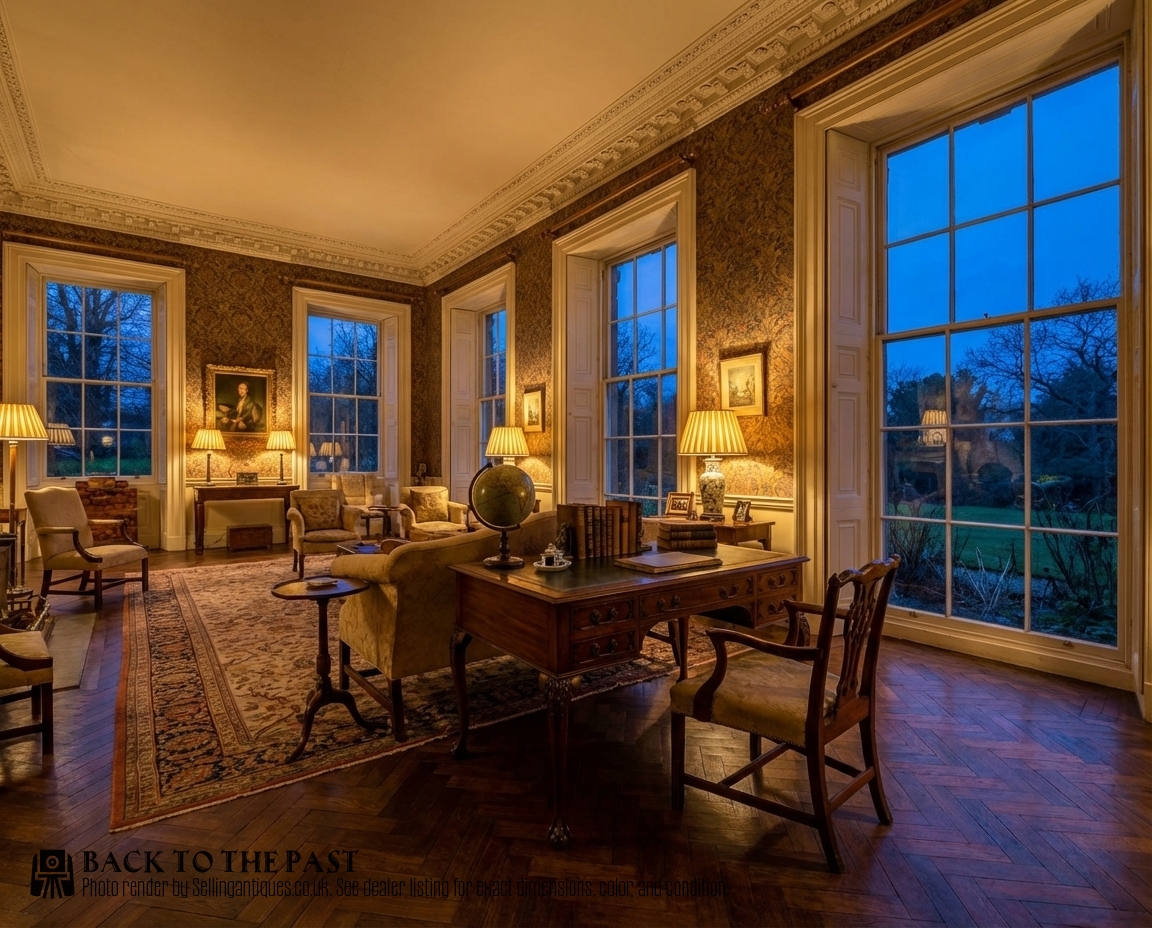
Five Drawer Writing Desk
A five drawer writing desk brings together traditional cabinetry and functional workspace, designed primarily for correspondence and paperwork. You will encounter various iterations on this page, including kneehole dressing tables, bowfront side tables, and bureau desks from different eras.
The pieces listed here span several distinct periods, notably the Georgian, Regency, Victorian, and Edwardian eras. Mahogany is the predominant wood across these examples, often complemented by secondary materials and specific stylistic revivals.
Materials and construction methods
Cabinetmakers relied heavily on mahogany for its strength and rich grain, occasionally incorporating burr walnut for decorative effect. Brass hardware, leather inserts, and bone details complete the construction of these refined pieces.
Joinery techniques from the eighteenth and nineteenth centuries ensure structural integrity, while hand-applied paint and polished wood surfaces highlight the natural figure of the primary timber.
Some Edwardian desks hide secret compartments designed for stashing love letters.
Assessing craftsmanship and design
Quality in a five drawer writing desk rests upon the selection of timber and the precision of the cabinetwork. Pieces featuring burr walnut veneers or serpentine and bowfront configurations demonstrate a higher degree of joinery skill.
Finer examples integrate proportion and detail seamlessly, from the shaping of the top to the execution of period stylistic revivals like Chippendale or Queen Anne.
The Five Drawer Writing Desk Glossary
- Mahogany
- A durable tropical hardwood prized for its deep reddish-brown colour and stable grain, frequently utilised in fine antique furniture.
- Kneehole
- A recessed central space beneath a desk or dressing table designed to accommodate the user's legs while seated.
- Serpentine
- A gently undulating curved front shape popular in high-end cabinet design during the eighteenth and nineteenth centuries.
- Bowfront
- A convex curved furniture front that projects outward from the centre, adding visual softness and depth to case pieces.
- Bureau
- A sloping desk fitted with internal compartments and small drawers, often positioned above a set of larger drawers.
Five Drawer Writing Desk: Frequently Asked Questions
What is a five drawer writing desk used for?
These pieces function primarily as compact workspaces for writing, correspondence, and household administration. The multiple drawers provide convenient storage for stationery and small documents.
Historically, they served in libraries, parlours, and private chambers as dedicated writing furniture before evolving into general domestic tables.
How do I identify a Georgian desk?
Georgian pieces typically display restrained classical proportions, solid mahogany construction, and understated brass pulls. Stylistic details often align with Chippendale or Queen Anne revivals.
Examining the secondary timbers inside the drawer boxes and the hand-cut dovetails helps confirm the period of manufacture.
Are Edwardian desks antiques?
Edwardian furniture dates from the reign of King Edward VII, spanning the early twentieth century. These pieces often revive earlier Georgian or Regency styles.
While they possess significant age and traditional craftsmanship, they are distinct from pieces made during the actual Georgian or Regency periods.
How do I care for a mahogany desk?
Keep the wood away from direct sunlight and heat sources to prevent the timber and leather inserts from drying out. Dust regularly with a dry cloth.
Apply a microcrystalline wax sparingly to nourish the mahogany polish when the surface appears dry, avoiding silicone-based sprays.