
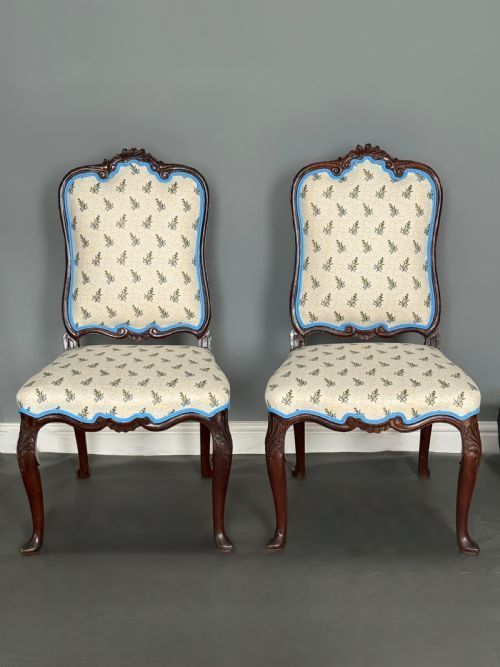
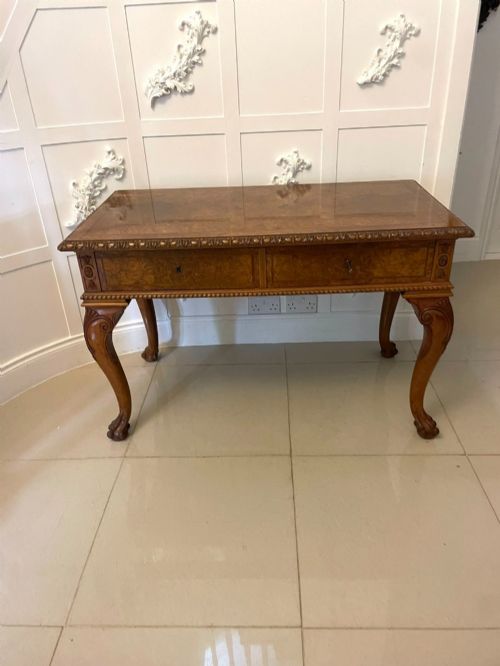
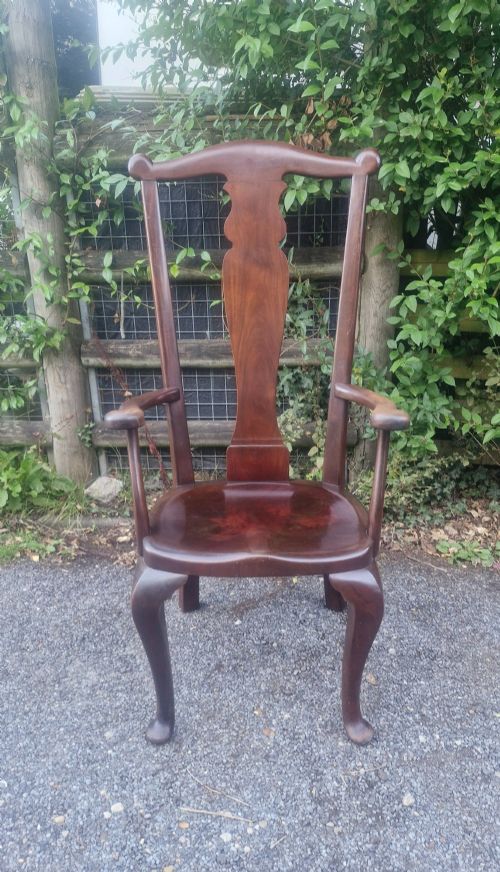
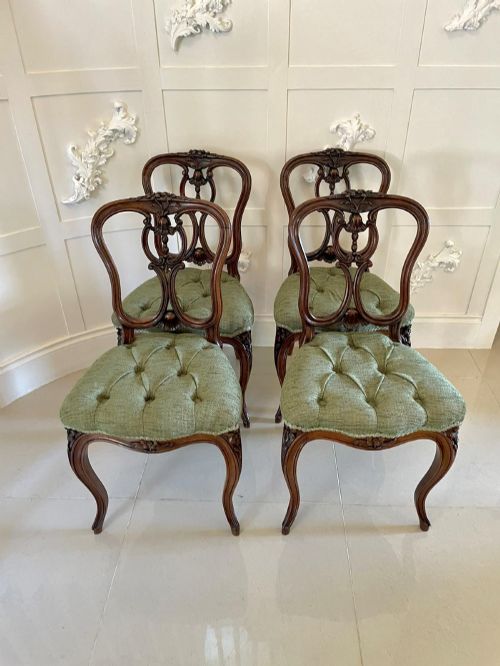


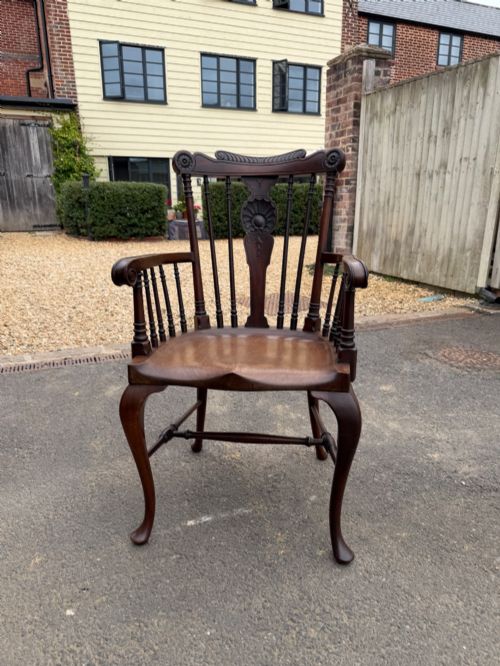
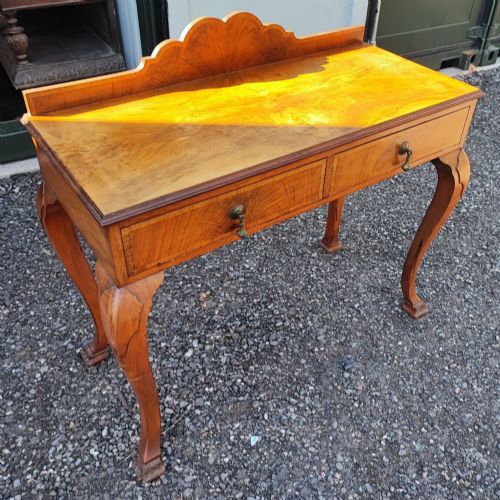
Carved Cabriole Desk
A carved cabriole desk brings fluid movement and functional workspace into a room through curved wooden legs and traditional writing surfaces.
Carved Cabriole Desk
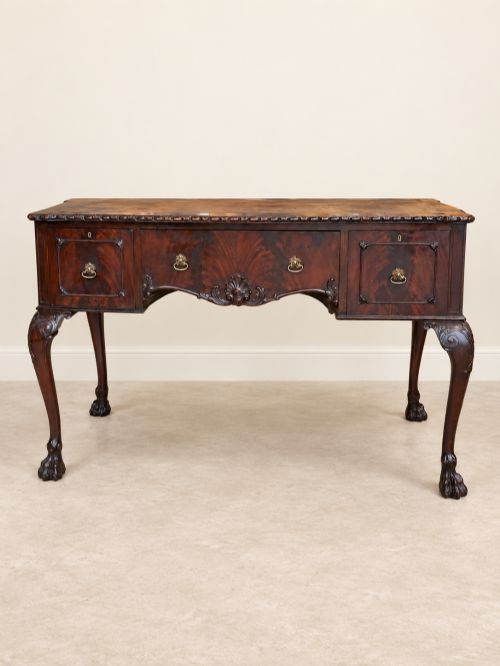
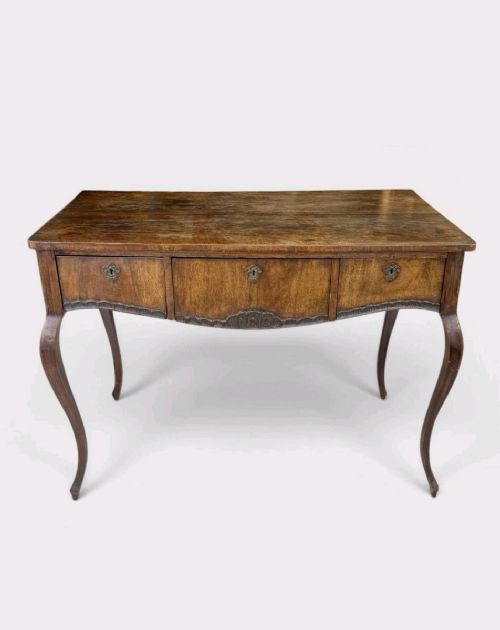
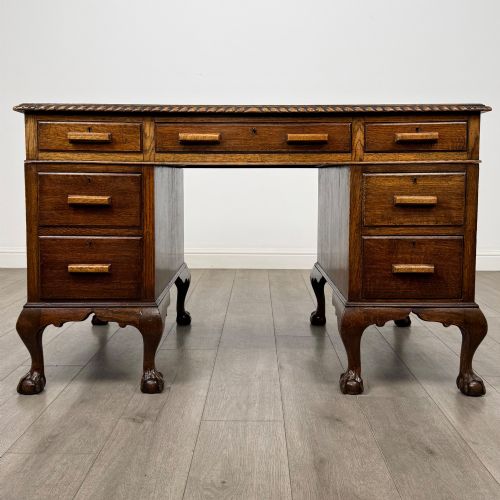
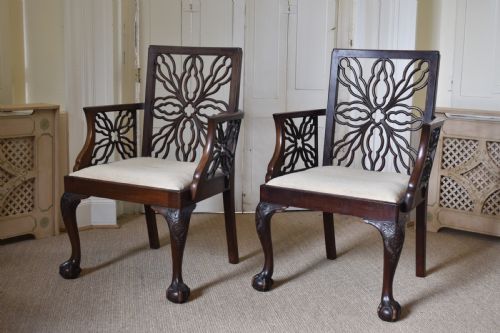
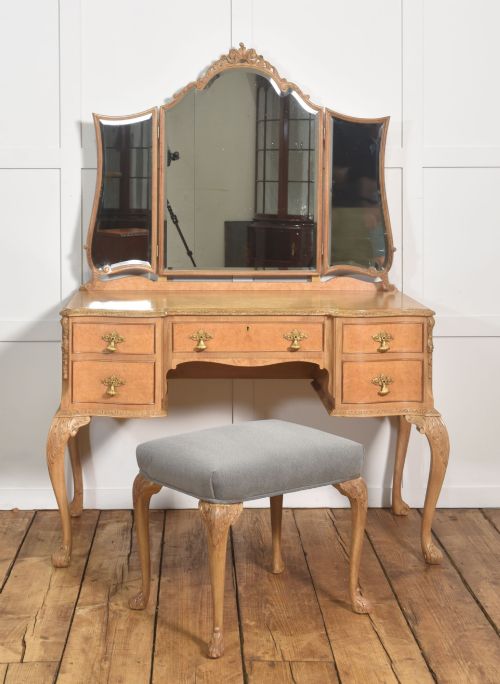
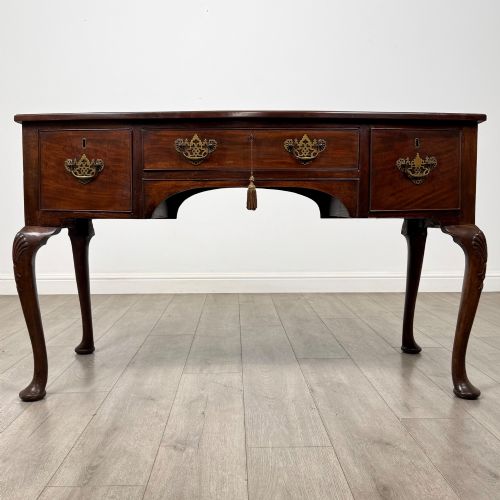
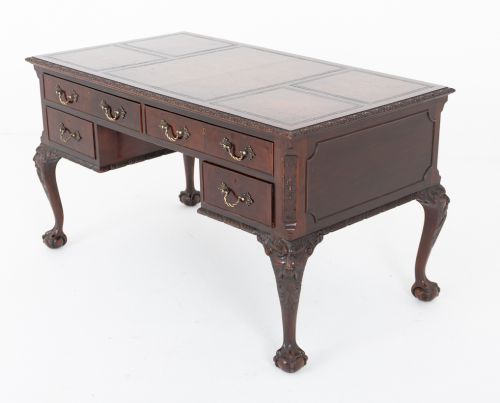
A carved cabriole desk combines a functional writing surface with distinct double-curved legs that swell outward at the knee and taper inward toward the foot. These pieces emerge across periods from the eighteenth century through the Edwardian era and the 1930s, taking forms such as pedestal desks, writing tables, and lowboys.
Buyers seeking a carved cabriole desk will most frequently encounter walnut and mahogany examples from revival periods and the early twentieth century, alongside earlier Georgian and 18th Century originals. The form often incorporates leather writing surfaces, carved paw feet, and elaborate woodwork influenced by Queen Anne, George II, and Chippendale styles.
Materials and construction
Cabinetmakers constructed these desks using dense hardwoods like mahogany and figured walnut, frequently selecting burr walnut veneers to create rich grain patterns across the writing surfaces and drawer fronts. Oak also appears in earlier pieces, providing sturdy internal framing and structural support.
The characteristic legs are shaped directly from solid timber blocks or integrated frames, requiring skilled carving to achieve the smooth outward sweep and detailed knees or feet. Secondary details such as tooled leather inserts and brass hardware are fitted precisely into the timber framework.
Distinctions in quality
The standard of a carved cabriole desk rests on the crispness of the woodcarving and the selection of timber figure, particularly on primary surfaces like burr walnut or flame mahogany. Superior examples display balanced proportions where the sweep of the leg harmonises with the scale of the top.
Internal construction and drawer assembly reveal the maker's hand, distinguishing finely joined pieces from mass-produced alternatives. The integration of high-grade materials, such as heavy brass pulls and neatly tooled leather writing panels, elevates the standing of the piece.
Charles Tozer·Wylie & Lochhead Glasgow
The Carved Cabriole Desk Glossary
- Cabriole leg
- A furniture leg that curves outward at the knee and tapers inward to the ankle, mimicking animal limbs. This form became a defining feature of 18th-century design and later revival styles.
- Lowboy
- A small, low dressing table or writing table typically featuring one or more rows of drawers beneath the top. They frequently stand on graceful cabriole legs.
- Pedestal desk
- A heavy freestanding desk comprising two supporting pedestals of drawers with a central writing surface bridging the gap. Many incorporate leather tops and carved detailing.
Carved Cabriole Desk: Frequently Asked Questions
What is a cabriole leg?
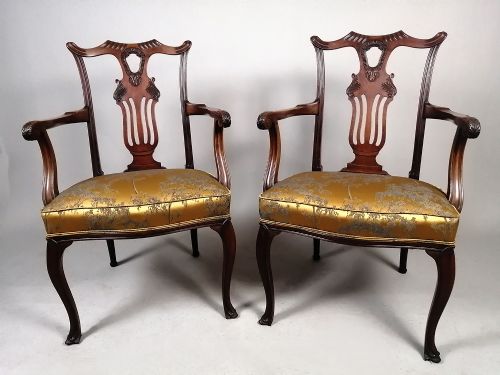
A cabriole leg is a stylistic furniture support modelled on an animal's leg, featuring a convex curve at the top and a concave curve below.
This design appears frequently on desks, tables, and chairs across eighteenth-century and revival periods.
How do I identify an 18th-century desk?
Eighteenth-century desks display period construction methods, hand-cut dovetails, and timber patination developed over centuries of use.
They often utilise native oak, walnut, or imported mahogany without modern mechanical fixings.
Where should I place a freestanding desk?
A freestanding desk is finished on all sides, allowing it to sit away from walls in the centre of a room.
This placement showcases the polished rear panels and detailed pedestal construction.
What woods were commonly used?
Cabinetmakers primarily relied on walnut, mahogany, and oak to build these writing surfaces.
Figured veneers like burr walnut and flame mahogany were applied to prominent areas for decorative effect.