
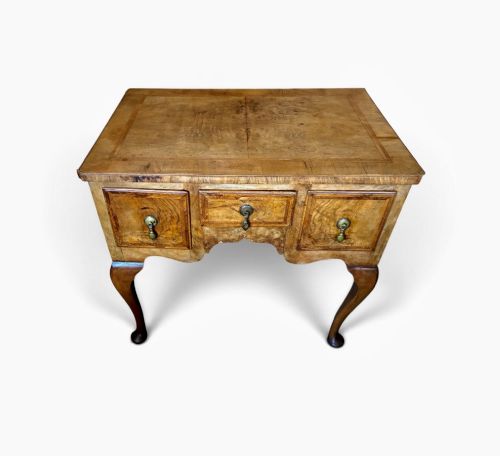
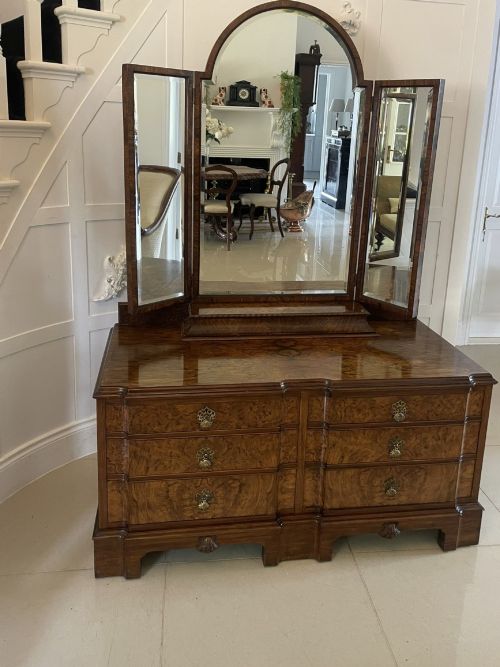
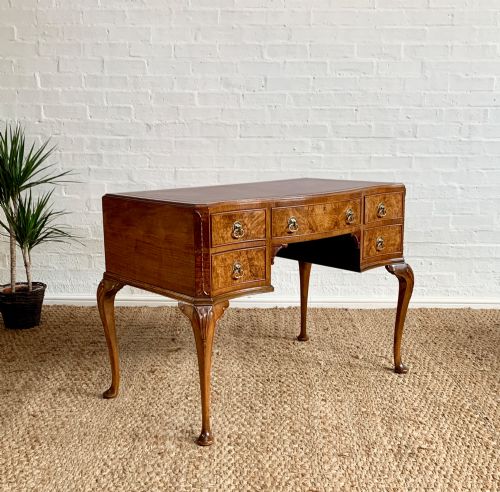
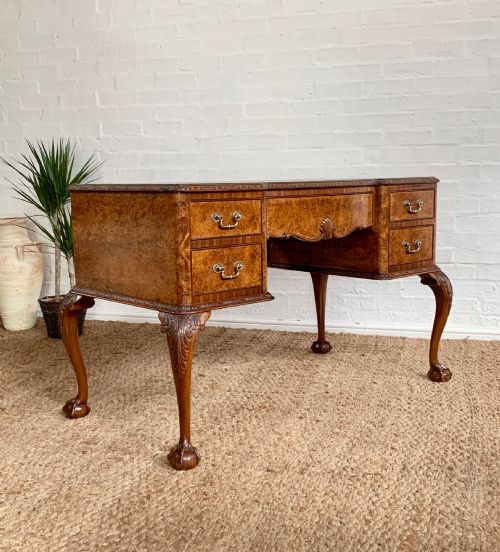


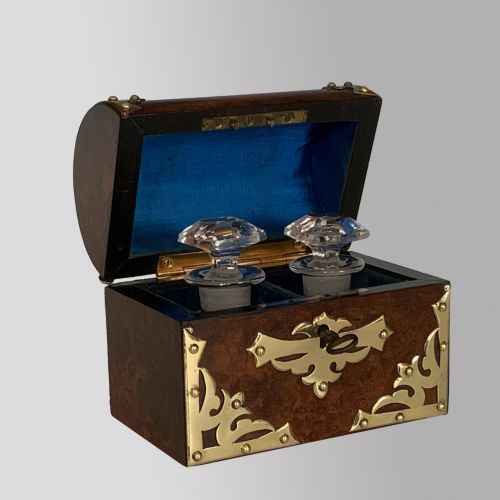

Burr Walnut Vanity Table
A burr walnut vanity table brings distinctive swirling grain and warmth to a room, offering both a surface for grooming and period presence.
Burr Walnut Vanity Table
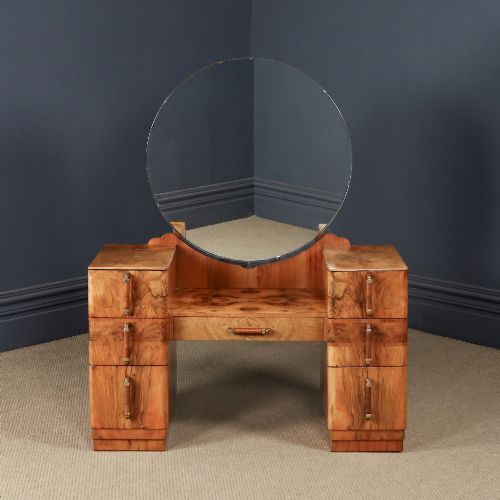
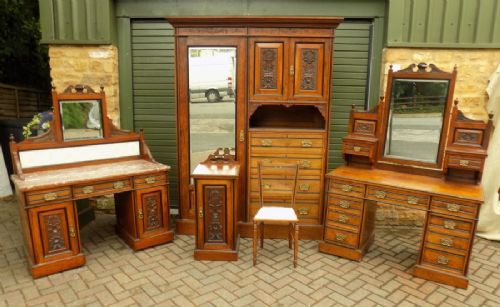
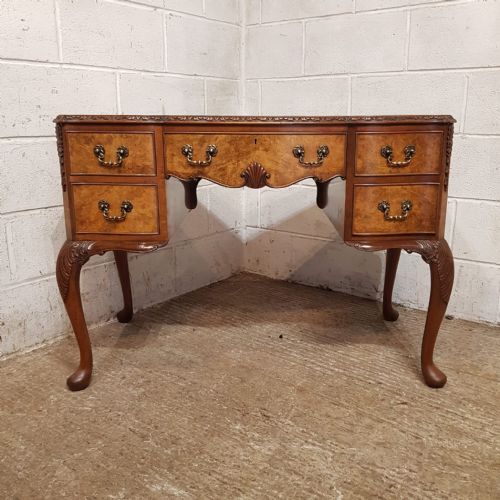
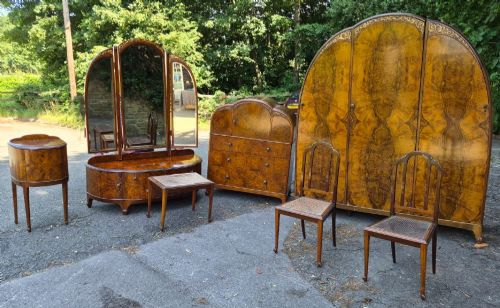
A burr walnut vanity table is a dedicated piece for personal grooming, combining storage drawers with a mirror surface. When you search for a burr walnut vanity table, you encounter forms ranging from Victorian pedestal designs to streamlined Art Deco dressing tables.
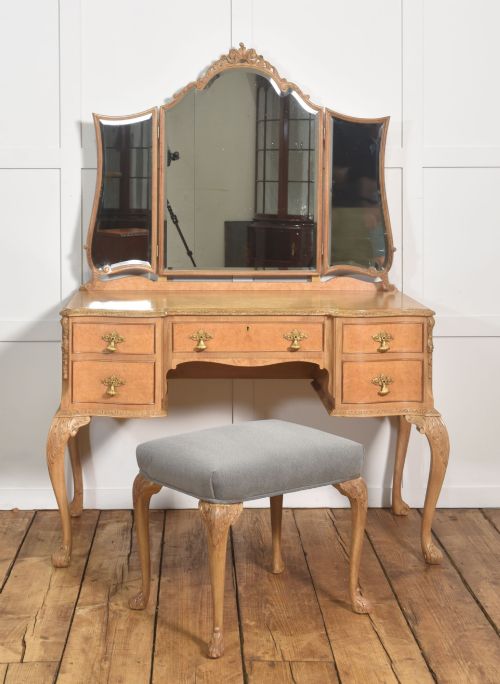
The selection on this page relies heavily on Victorian and 1930s pieces, alongside Edwardian examples and earlier Georgian styles. Many items feature matching mirrors, triple glass configurations, or accompanying stools.
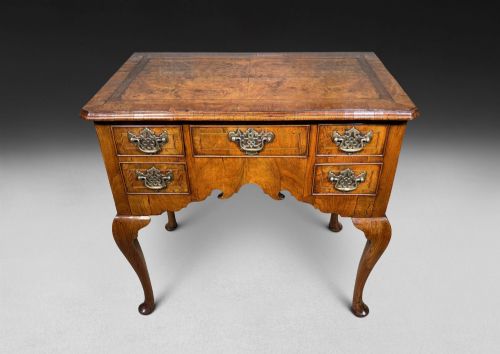
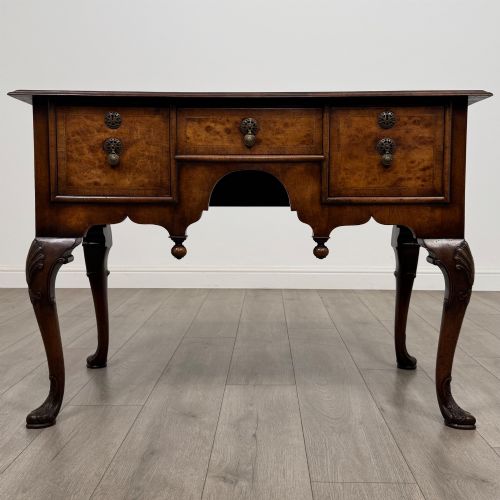
Makers and designers from the nineteenth and twentieth centuries utilised distinctive burl veneers to elevate standard bedroom furniture into statement pieces. These tables frequently appear alongside related writing desks, lowboys, and dressing chests.
Materials and Construction
Cabinet makers constructed these pieces using solid walnut frameworks overlaid with carefully matched burr walnut veneers to display the complex, swirling grain patterns. Secondary timbers provided internal structure for drawers and carcasses.
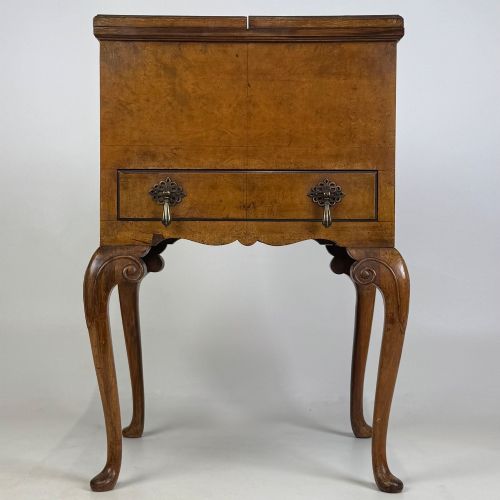
Fitted interiors often incorporate mirrored glass, glass surfaces, and tooled leather writing inserts. Brass handles, mounts, and hinges provide functional hardware, while velvet sometimes lines internal compartments.
Scent caskets and jewellery boxes appear alongside full bedroom suites, proving that Victorians took portable luxury very seriously indeed.
Markers of Quality
Quality reveals itself in the choice and matching of the veneer across large drawer fronts and top surfaces. Superior execution ensures symmetrical grain patterns that wrap cleanly around edges and corners.
The integration of original mirrors, robust drawer linings, and refined hardware elevates certain examples above standard production. Maker attribution, whether through stamps or distinct stylistic execution, also distinguishes finer pieces.
Wylie & Lochhead Glasgow·Frank Taylor & Co.·maples of London·Maurice Adams·Harry and Lou Epstein·Maple & Co. London
The Burr Walnut Vanity Table Glossary
- Burr walnut
- A veneer sliced from the gnarled growth on a walnut tree, prized for its intricate, swirling grain pattern. This timber forms the primary visual appeal of these tables.
- Lowboy
- A small, low dressing or side table with drawers, typically dating from the eighteenth century or later revival periods. These pieces share proportions with early vanity tables.
- Duchess dressing table
- A large Victorian dressing table featuring a large central mirror flanked by smaller pivoting glasses and trinket drawers. This form defines many nineteenth-century examples.
- Pedestal dressing table
- A vanity table supported by two banks of drawers flanking a central kneehole space. Art Deco and Victorian makers frequently utilised this layout.
Burr Walnut Vanity Table: Frequently Asked Questions
What is a burr walnut vanity table?
A burr walnut vanity table is a dressing table surfaced with decorative burl veneer, typically incorporating drawers and an attached mirror for grooming.
These pieces span the Victorian, Edwardian, and Art Deco periods, functioning as both practical furniture and decorative centrepieces in a bedroom.
How do I date a vanity table?
Dating relies on stylistic clues, construction methods, and hardware choices. Victorian examples often feature heavy carving and arched mirrors, while 1930s Art Deco pieces display clean geometric lines.
Secondary woods, drawer dovetails, and veneer thickness also provide clear indications of whether a table originates from the eighteenth, nineteenth, or twentieth century.
Are mirrors usually original?
Many surviving tables retain their original pivoting or fixed mirrors, particularly when mounted within structured frames or pedestals. Some pieces accommodate triple mirror arrangements.
Due to the fragility of antique glass, replacement mirrors do occur while keeping the original walnut frame intact.
Where should I place a vanity table?
These tables suit bedrooms and dressing rooms where natural light can reach the mirror surface. Placing them against a main wall allows the figured grain of the walnut to catch the eye.
They also pair effectively with low stools upholstered in period fabrics such as velvet or leather.