




Walnut Sewing Box Table
A walnut sewing box table combines practical storage for needlework with a refined occasional surface, offering both a fitted interior and an elegant timber frame.
Walnut Sewing Box Table
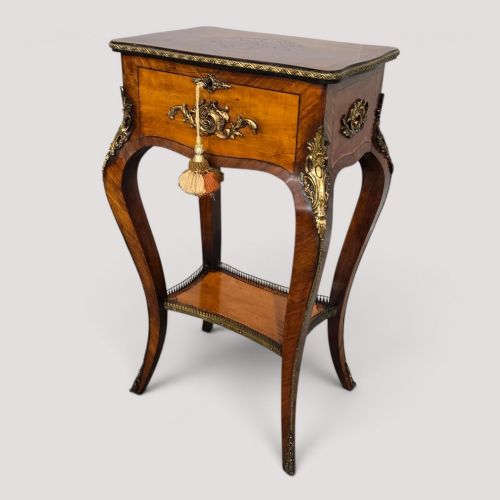
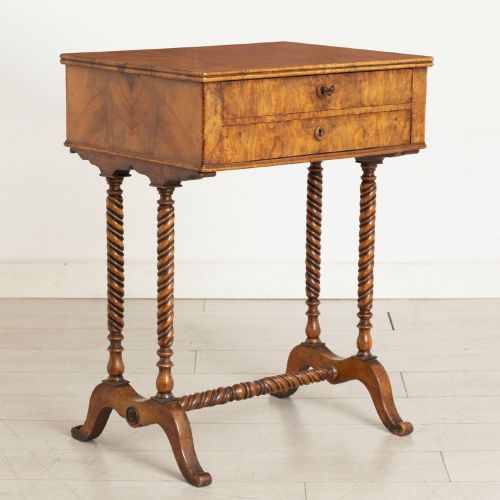
When you search for a walnut sewing box table, you find a specialised piece of domestic furniture designed to hold sewing gear, threads, and needlework. These items frequently double as games tables, side tables, or writing surfaces, making them versatile additions to a room. Most examples span the Victorian and Edwardian periods, stretching from the mid-nineteenth century into the early twentieth century.
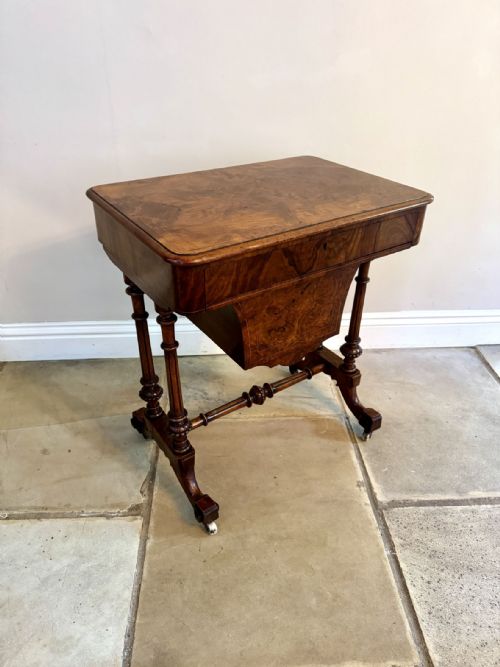
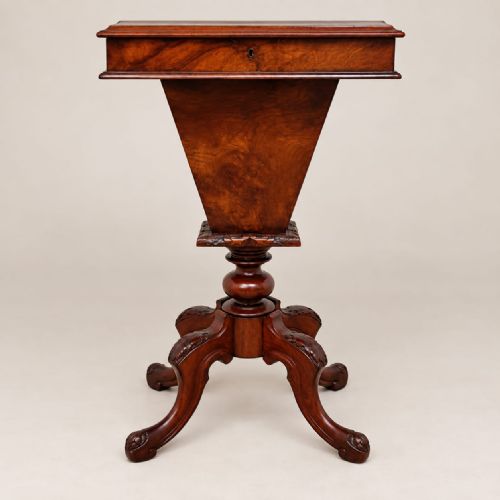
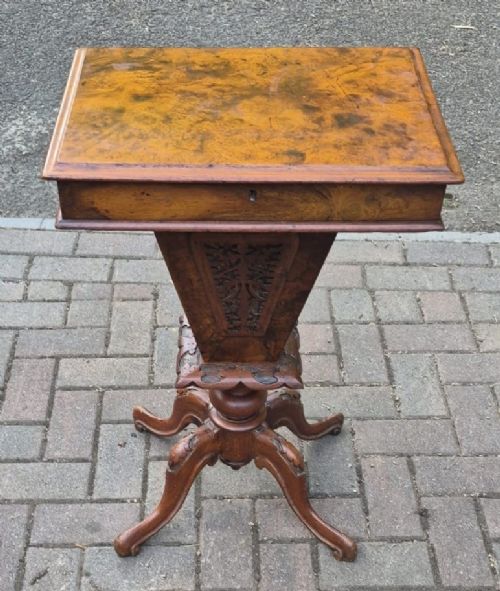
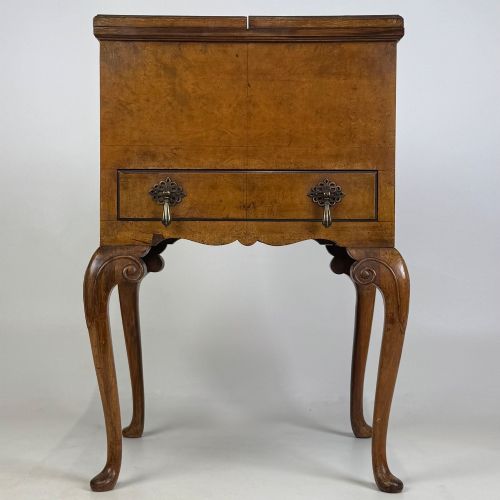
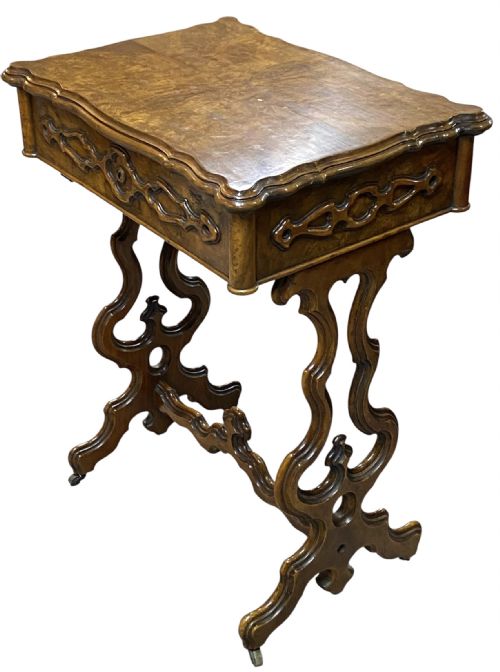
The most common version met on this page is the Victorian burr walnut work table, often featuring a trumpet-shaped body or a rectangular box top. These pieces typically stand on carved and turned supports, housing a fitted interior with small compartments for cottons and tools. Alongside these traditional designs, occasional pieces from the Art Deco era and Edwardian period appear in figured or satin walnut.
How They Were Made
Cabinet makers utilised walnut and burr walnut veneers to create rich, swirling grain patterns across the tops and sides of the boxes. Burr walnut provided a highly decorative surface, prized for its natural knots and complex figuring.
Inlaid decoration in boxwood and marquetry added floral or geometric motifs, contrasting sharply with the darker timber background. Structural parts, such as the turned pedestals and carved legs, relied on solid wood to support the weight of the sewing box and its fitted interior.
The periods represented span from mid-Victorian and Edwardian eras through to the nineteen-thirties.
What Varies in Quality
The distinction between standard and superior pieces rests largely on the complexity of the timber figuring and the crispness of the inlaid boxwood and marquetry. Finer examples display symmetrical burr walnut veneers that have been carefully matched across the lid and panels.
Internal architecture also separates the grades, with better tables offering intricately divided trays and original compartments rather than stripped or altered interiors. The solidity of the turned supports and the precision of the joinery further indicate the skill of the original workshop.
Waring and Gillow
The Walnut Sewing Box Table Glossary
- Burr Walnut
- A timber derived from the abnormal growth or knot of a walnut tree, yielding a mottled and highly figured veneer. Cabinet makers selected these sections specifically for prominent display on table lids.
- Trumpet Table
- A form of sewing table featuring an octagonal or flared octagonal body shaped like a musical instrument. It usually stands on a carved pillar with tripod legs.
- Marquetry Inlay
- The art of applying small pieces of veneer in various woods to form decorative pictures or patterns. It frequently decorates the top of nineteenth-century work tables.
- Fitted Interior
- A set of small wooden compartments, lids, and sometimes miniature ivory or bone tools built into the sewing box. These compartments kept threads and needles organised beneath the main lid.
Walnut Sewing Box Table: Frequently Asked Questions
What is a walnut sewing box table?
A walnut sewing box table is a nineteenth or early twentieth-century piece of furniture designed for needlework and small crafts. It combines a lidded compartment with an occasional table surface.
Inside, the box usually contains fitted trays and divided sections for threads, pins, and sewing tools. Many versions also incorporate boards for chess or backgammon on the tabletop.
How were these tables used?
Victorians used these tables to keep ongoing needlework, embroidery, and sewing supplies neatly stored in the drawing room or parlour. The top provided a convenient surface for resting a cup of tea or holding a lamp.
When closed, the table served as a decorative occasional piece rather than a utilitarian work chest. Some variants included sliding wool bags beneath the box to catch scraps of fabric.
How do I date a walnut sewing box table?
Dating relies on the style of the timber, the turning of the support, and the construction of the interior box. Mid-Victorian pieces from the eighteen-fifties and sixties often feature rich burr walnut veneers and heavy carved pedestals.
Later Edwardian and Art Deco examples tend to have cleaner lines, lighter satin walnut finishes, or simplified pedestal bases. Stamped maker marks inside the compartments can also narrow down the production period.
Can I use one as a side table?
These tables function very well as compact side tables next to a sofa or armchair. Their traditional dimensions allow them to fit into smaller spaces while offering useful enclosed storage.
The flat top safely holds books, lamps, or drinks, making them practical for modern living rooms. The internal compartments remain useful for storing small household items out of sight.