




Barley Twist Sewing Table
A barley twist sewing table brings distinctive turned supports and practical storage into a room, offering both charm and utility.
Barley Twist Sewing Table
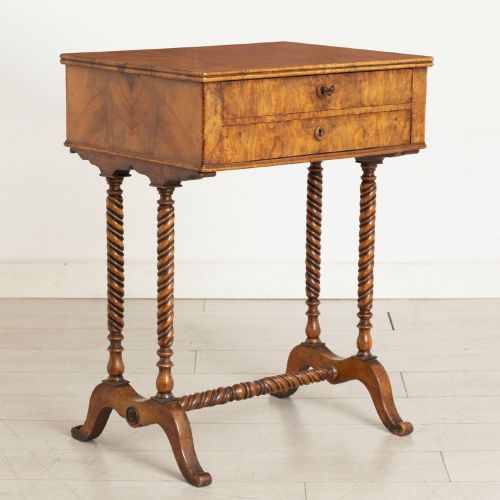
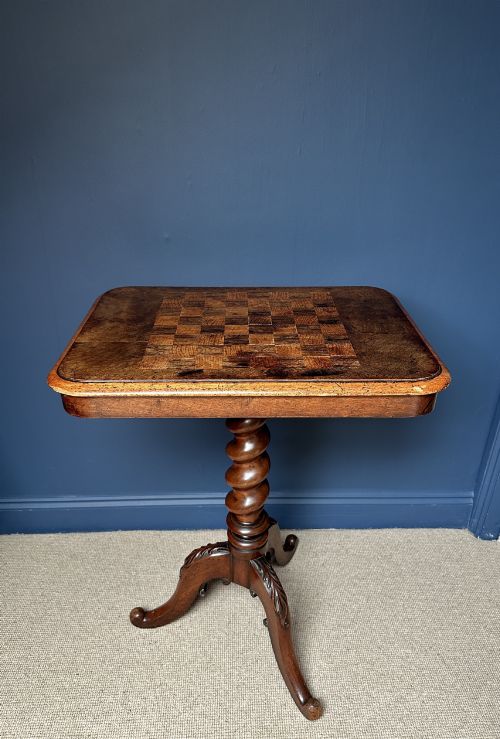
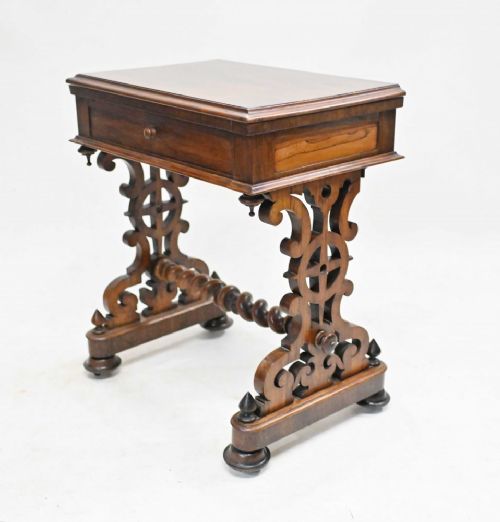
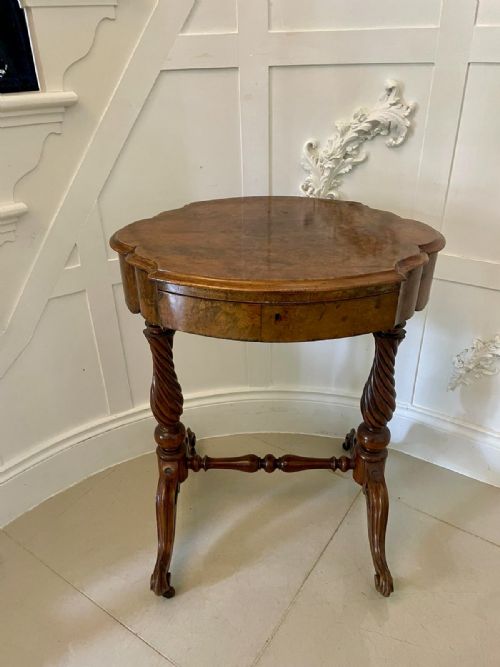
When you search for a barley twist sewing table, you are looking at nineteenth-century occasional furniture designed for needlework and small domestic tasks. These pieces combine turned timber supports with fitted compartments or fabric bags for storage.
Makers of the era utilised specific forms including oval tops and rectangular boxes, often pairing the characteristic spiral turning with burr walnut, walnut, or rosewood veneers. Their compact proportions make them suitable as side tables or tea poys in contemporary spaces.
How they were made
Cabinet makers constructed these tables using solid timbers and decorative veneers such as burr walnut and rosewood over secondary woods. The characteristic spiral supports were turned on a lathe to create the distinctive twist pattern.
Interiors frequently feature fitted compartments, sometimes paired with fabric bags or silk workboxes for holding sewing materials. Additional detailing included brass hardware, inlaid timber, and porcelain elements.
What varies in quality
The grade of timber selection largely dictates the visual depth of a piece, particularly in the figure of burr walnut or the grain of solid rosewood. Richly figured veneers and careful book-matching elevate the appearance of the top and the fitted interior.
Joinery execution and the crispness of the lathe-turned spiral legs determine structural integrity and aesthetic refinement. Tables that retain their original fitted compartments and internal trays demonstrate greater completeness.
The Barley Twist Sewing Table Glossary
- Barley twist
- A style of decorative wood turning resembling a spiral rope or column. This turned detail forms the central support or legs on Victorian occasional furniture.
- Work table
- A small nineteenth-century table equipped with drawers or a fabric bag beneath for needlework and sewing supplies. These items functioned as practical companions in the Victorian parlour.
- Burr walnut
- A specialised timber cut from the gnarled growth of a walnut tree, prized for its swirling, highly figured grain patterns. Cabinet makers used it extensively for veneering table tops.
- Tea poy
- A small decorative chest or table originally designed for storing loose tea leaves. They frequently share similar proportions and pillar-and-twist forms with nineteenth-century work tables.
Barley Twist Sewing Table: Frequently Asked Questions
What is a barley twist sewing table?
A nineteenth-century Victorian occasional table featuring spiral turned wooden legs and a fitted compartment for needlework.
They combine decorative turned woodwork with practical storage for domestic tasks.
How were these tables used originally?
Victorian households utilised them in parlours and drawing rooms for sewing, handicrafts, and holding small lamps or tea caddies.
The internal compartments kept threads, needles, and small personal items neatly organised.
What materials are typical for these pieces?
Cabinet makers built them using dense hardwoods like solid rosewood or walnut, frequently applying burr walnut veneers to the surfaces.
Additional materials include brass fittings, inlaid timber banding, and fabric work bags.
How do I date a Victorian sewing table?
Dating relies on stylistic evidence, timber choices, and specific construction methods recorded from the nineteenth century.
Pieces originating around eighteen-sixty to eighteen-seventy often display distinct veneer selections and turned leg profiles characteristic of the period.