
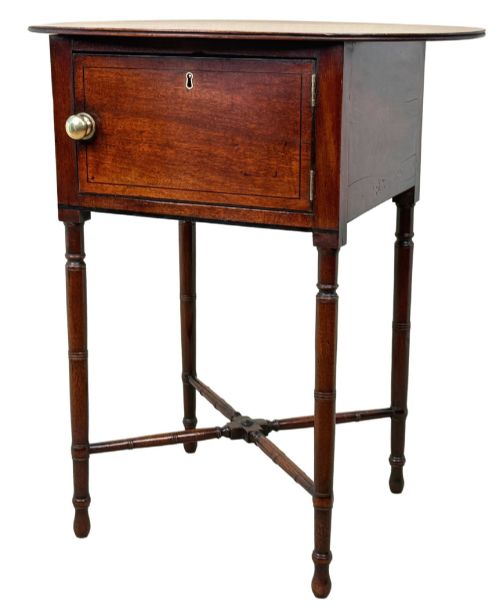

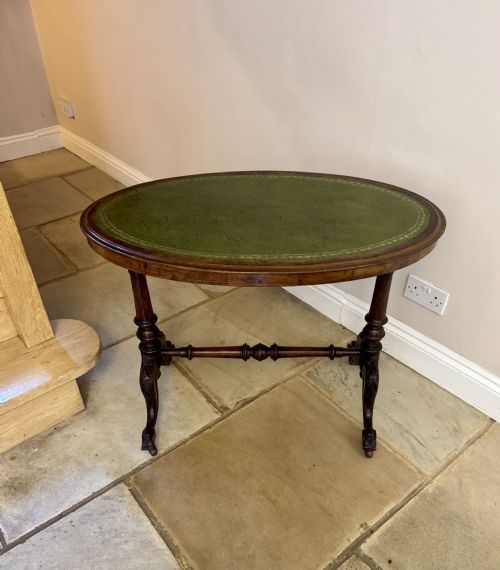


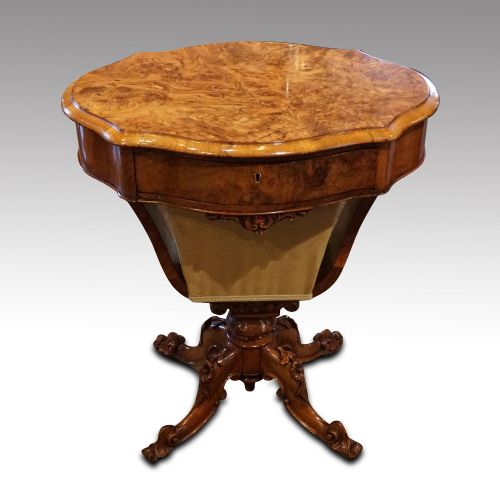
Antique Oval Work Table
An antique oval work table brings together refined timber work and practical compartments, offering an elegant centrepiece that holds needlework or small treasures.
Antique Oval Work Table
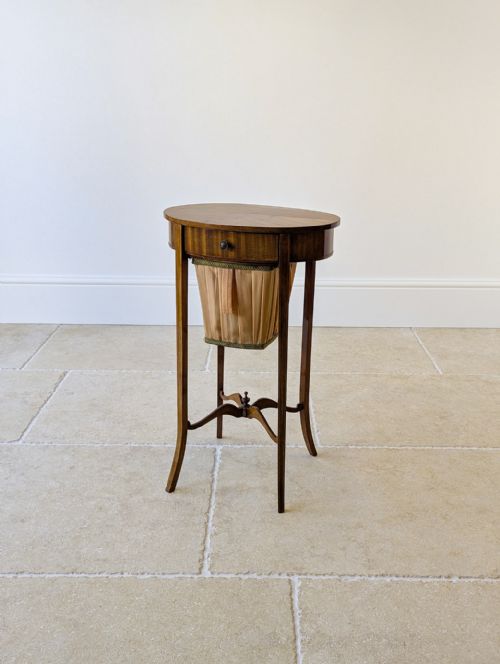
An antique oval work table is a specialised piece of furniture designed for sewing, writing, and small household tasks. These tables combine useful compartments with graceful curved surfaces, making them both decorative and functional.
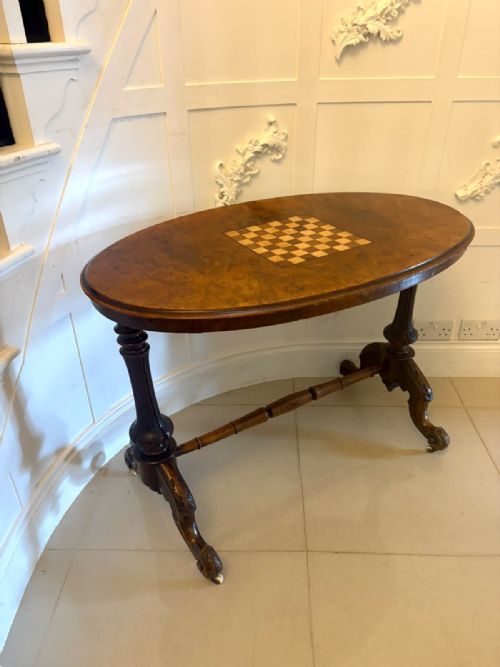
The versions most commonly found here date from the Victorian period and the nineteenth century, often fashioned from walnut or burr walnut. Many feature fitted interiors and drop leaves or hinged tops.
Makers across the eighteenth, nineteenth, and early twentieth centuries produced these tables in styles ranging from George III and Regency to Victorian and Edwardian. They appear in forms such as sewing tables, occasional tables, and side tables.
How they were made
Cabinetmakers constructed these tables using solid hardwoods such as mahogany and walnut, frequently applying fine veneers of burr walnut, kingwood, or harewood to the top surfaces. Inlays of boxwood and satinwood added contrast and decorative detail.
French polish and traditional joinery methods finished the timber frames, while interior compartments often incorporated fabric linings and secret mechanisms. Brass fittings and handles provided functional accents to the drawer assemblies and drop leaves.
Forms include occasional tables, Pembroke supper tables, writing desks, and specialised sewing tables with integrated compartments.
What varies in quality
The standard of timber selection and marquetry work largely defines the distinction between pieces. Superior examples display carefully matched burr veneers and crisp, detailed inlay without lifting or warping.
Complexity and preservation of the interior fittings also dictate worth. Tables retaining original fabric linings, working secret compartments, and intact brass hardware represent higher tiers of craftsmanship.
William Comyns·Charles Topino
The Antique Oval Work Table Glossary
- Burr walnut
- A figured timber harvested from the growth excrescences of walnut trees, prized for its swirling grain patterns. It was frequently used for veneering tabletops.
- Drop leaf
- A hinged flap on the side of a table that can be raised to extend the surface area or lowered when space is restricted. It relies on pivoting wooden brackets or legs for support.
- Marquetry
- The art of applying pieces of veneer to a structure to form decorative patterns and pictures. Makers utilised various exotic woods to create floral or geometric motifs.
- Table en chiffonière
- A small French bedside or sewing table fitted with multiple drawers and compartments. This form gained popularity during the eighteenth century and saw revival periods later on.
- Pembroke table
- A small, versatile table featuring two hinged flaps and a central drawer. It originated in the eighteenth century and adapts easily to different rooms.
Antique Oval Work Table: Frequently Asked Questions
What is an antique oval work table used for?
These tables served primarily as compact desks or sewing stations for ladies of the household. They held threads, needles, and correspondence within organised compartments.
Today, they function well as lamp tables or decorative side pieces in living rooms and bedrooms.
How do I identify a Victorian work table?
Victorian examples frequently utilise walnut or burr walnut timbers paired with carved pedestals or turned legs. They often include fitted interiors with silk bags or wooden partitioned trays.
Many incorporate marquetry inlay or chessboard tops typical of mid-nineteenth-century taste.
Are these tables suitable for small spaces?
The curved oval footprint and drop leaves make these tables exceptionally adaptable for compact rooms. They occupy less visual weight than rectangular furniture while providing surface space.
Interior compartments also assist with hiding small items that might otherwise clutter a room.
How do I tell an 18th-century table from a 19th-century revival?
Eighteenth-century pieces typically employ solid mahogany or harewood with restrained Sheraton or George III proportions. Their construction details and secondary timbers reflect period workshop practices.
Nineteenth-century revival pieces often display heavier burr walnut veneers and more complex mechanical interiors associated with Victorian production.