
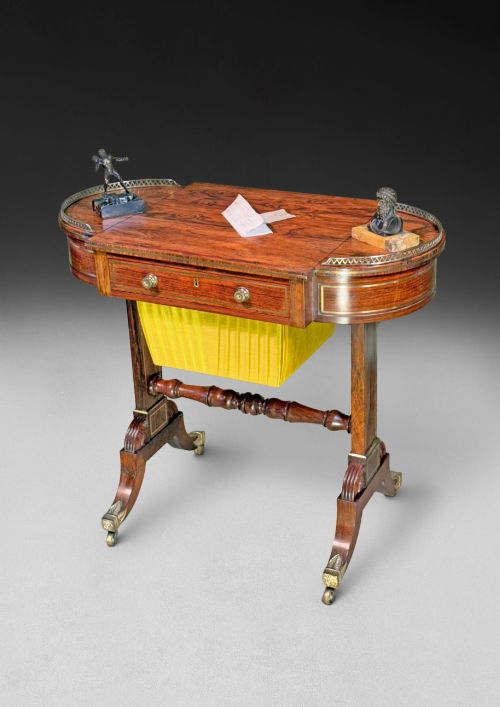
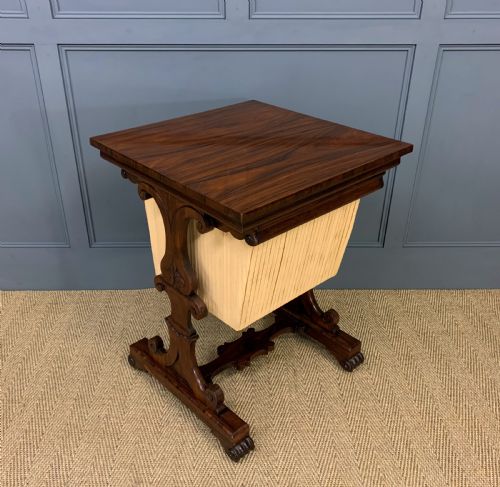
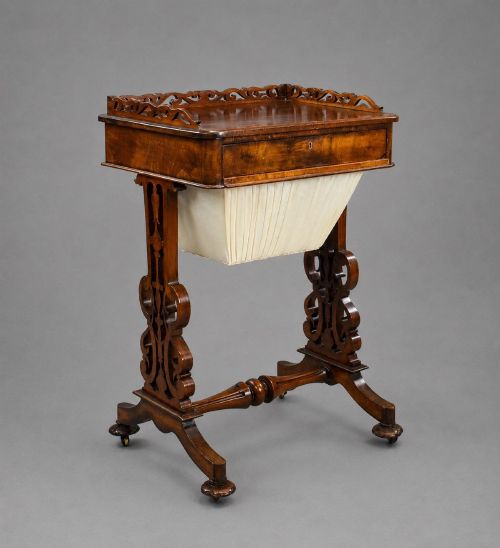
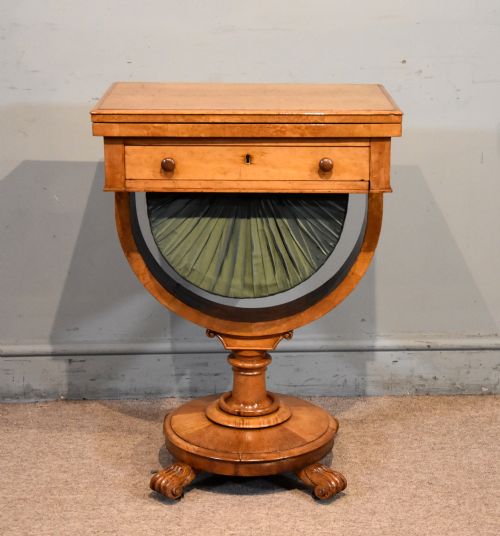


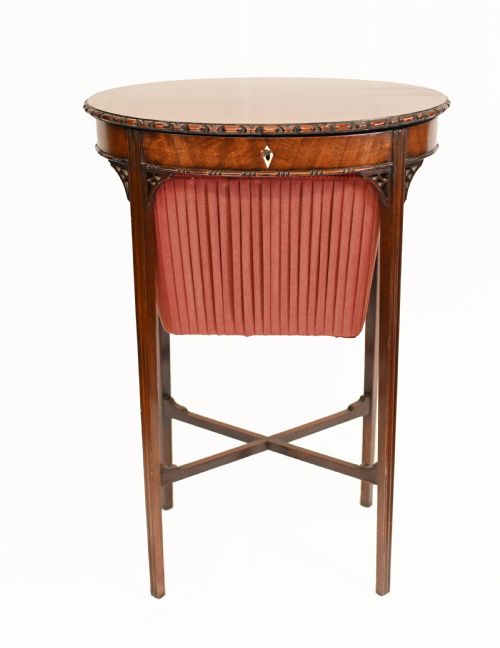


Pleated Basket Sewing Table
A pleated basket sewing table combines practical needlework storage with elegant display, offering refined craftsmanship for period interiors.
Pleated Basket Sewing Table
A pleated basket sewing table serves as a dedicated piece of furniture designed for needlework, featuring a suspended fabric or silk receptacle beneath a solid timber top. These tables appear across multiple periods in the evidence, spanning Georgian, Regency, William IV, Victorian, and Edwardian eras, demonstrating enduring utility throughout the nineteenth and early twentieth centuries.
Most examples function as multi-purpose items, frequently doubling as occasional tables, side tables, or games tables alongside their primary sewing capacity. The forms range from rectangular mahogany work tables and pollard oak drop-flap versions to oval burr walnut lamp tables, providing diverse silhouettes for domestic spaces.
How they were made
Cabinet makers constructed these tables using dense hardwoods like mahogany, rosewood, and walnut, often selecting highly figured veneers for the top surfaces and drop flaps. These timbers were shaped through traditional joinery techniques, creating stable frames capable of supporting the internal storage compartments and hanging baskets.
The characteristic pleated basket relies on textile skill, gathering silk or fabric into neat folds around a rigid internal framework suspended beneath the table body. Brass elements, including castors, hinges, and occasional mounts, provide functional articulation and structural support across Regency and Victorian iterations.
The listings span from the Georgian period through Regency, William IV, and Victorian eras into Edwardian production, utilising rosewood, mahogany, and burr walnut.
What varies in quality
Quality in a pleated basket sewing table often depends on the selection of timber veneers, such as figured mahogany or burr walnut, and the precision of the inlay work. Superior examples display thoughtful grain matching across the top and drop flaps, whereas simpler versions utilise plain secondary woods.
The sophistication of the internal compartments, such as partitioned work trays and well-fitted games boards, distinguishes finer production. Additionally, the execution of the pleated fabric basket and the robustness of the supporting framework dictate the overall refinement of the piece.
The Pleated Basket Sewing Table Glossary
- Work Table
- A specialised piece of furniture designed to hold sewing equipment, threads, and unfinished needlework projects. These items usually incorporate internal compartments and a suspended bag or basket.
- Drop Flap
- A hinged leaf attached to the side of a table that can be raised to extend the surface area or lowered when space is limited. This mechanism appears frequently on Regency and nineteenth-century work tables.
- Burr Walnut
- A highly prized timber veneer obtained from the burl growths of walnut trees, characterised by swirling, intricate grain patterns. Cabinet makers utilised this material to create decorative focal points on table tops.
- Pollard Oak
- Timber harvested from oak trees that have been pollarded, resulting in a dense grain marked by clustered knots. This wood offers a distinctive textured appearance distinct from standard straight-grained oak.
Pleated Basket Sewing Table: Frequently Asked Questions
What is a pleated basket sewing table?
A pleated basket sewing table is a nineteenth or early twentieth-century wooden piece featuring a suspended fabric bag for needlework.
These tables combine a solid top surface with internal storage and a soft pleated surround, serving both decorative and practical domestic functions.
How were these tables used originally?
They were utilised in drawing rooms and parlours by ladies engaged in needlework, embroidery, and mending. The integrated compartments kept threads and tools organised near hand.
Many examples also served as writing desks, card tables, or general side tables when the sewing basket was not in active use.
Which woods are most common?
Mahogany and rosewood appear frequently across Regency and Victorian examples, offering deep, rich tones and durable framing. Burr walnut and maple also feature prominently in later nineteenth-century pieces.
Finer decorative variations occasionally employ satinwood for lighter, more contrasting colouration.
How do I date a sewing table?
Dating relies on observing stylistic markers, such as the classical lines of Regency pieces, the heavier proportions of William IV designs, or the lighter satinwood of Edwardian items. Timber choice and construction methods provide further chronological clues.
Comparing leg turning, brass castor types, and veneer application helps narrow the period of manufacture.