
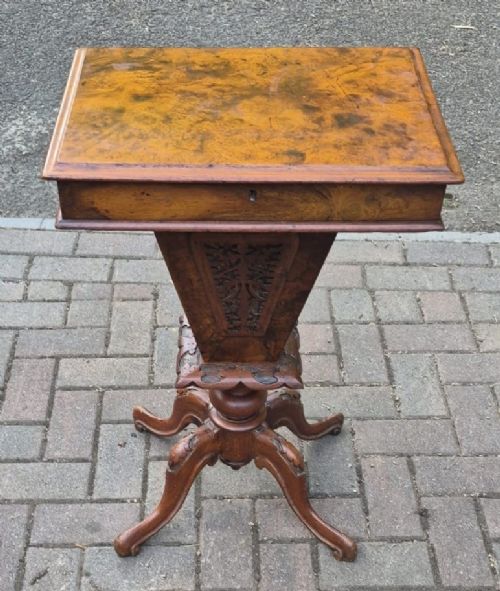


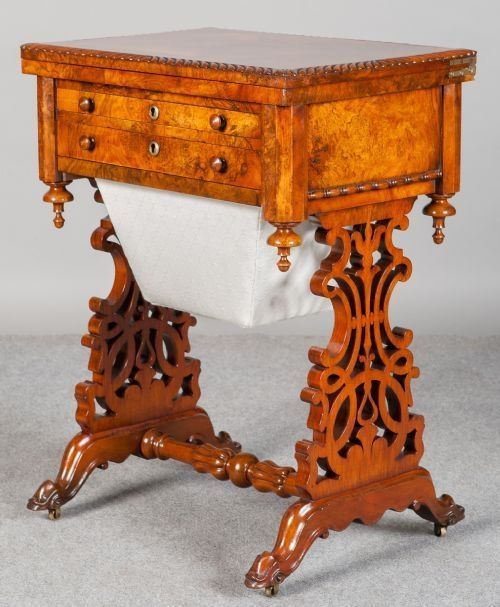
Walnut Embroidery Table
These walnut embroidery table pieces combine practical needlework storage with handsome nineteenth and early twentieth century cabinet work.
Walnut Embroidery Table
A walnut embroidery table serves as a dedicated sewing and work table, housing needlepoint materials within fitted compartments or under hinged lids. Buyers seeking this phrase typically find Victorian and Edwardian examples functioning as occasional tables, sewing boxes, or cradle base work tables.
The pieces on this page span from the mid nineteenth century through the Edwardian period and into the nineteen twenties. Alongside traditional sewing tables, the selection includes needlepoint stools and occasional tables executed in walnut.
Originating in periods of domestic handcraft, these pieces range from simple satin walnut variants to elaborate burr walnut specimens with boxwood inlay. Each form provides a surface for light tasks alongside internal storage for threads, fabrics, and implements.
How they were made
Cabinet makers utilised solid walnut and burr walnut veneers over secondary timbers to construct these tables, applying fine boxwood and wood inlay to the lid surfaces and friezes. The figured grain of burr walnut is selected to create decorative panels across the top and sides.
Structural elements incorporate turned supports, cradle bases, and freestanding frames, frequently joined with brass hardware and interior fabric linings for needlework storage.
Beneath the lid, many of these tables still harbour stray nineteenth century pins and remnants of bygone embroidery thread.
What varies in quality
Quality rests in the selection of the burr walnut veneer and the precision of the wood inlay, where finer examples display symmetrical grain patterns and crisp boxwood stringing. The cabinet work of the frame, from turned supports to the fit of internal compartments, determines the structural distinction.
The Walnut Embroidery Table Glossary
- Burr walnut
- A veneer taken from the wart or burl of a walnut tree, highly prized for its swirling, intricate grain patterns. It appears frequently on the top surfaces of Victorian work tables.
- Boxwood inlay
- A decorative technique where thin strips or pieces of pale boxwood are inserted into recesses in the walnut surface. This creates contrasting geometric or floral patterns.
- Cradle base
- A supportive framework that allows the upper table or box section to rock or tilt between upright pillars. This design is typical of mid nineteenth century sewing tables.
- Satin walnut
- A timber with a finer, lighter grain than standard dark walnut, utilised by makers during the Edwardian period for lighter domestic furniture. It provides a distinct contrast in colour.
- Needlepoint
- Hand-stitched canvas work used to cover the tops of stools and internal lids. This textile element links the table directly to its original domestic function.
Walnut Embroidery Table: Frequently Asked Questions
What is a walnut embroidery table?
A walnut embroidery table is a nineteenth or early twentieth century piece of furniture designed for needlework, featuring internal compartments for threads and fabrics.
These pieces function as sewing tables, work boxes, or occasional tables with hinged lids.
How do I date a walnut sewing table?
Dating relies on stylistic markers such as Victorian burr walnut veneers, Edwardian satin walnut finishes, or later nineteen twenties needlepoint forms.
Construction details, wood inlay types, and base designs help place each piece within its specific period.
What wood is used in these tables?
The primary timber is walnut, with many examples utilising burr walnut veneer for decorative surfaces and boxwood inlay for contrast.
Some Edwardian variants employ satin walnut, while internal sections incorporate secondary woods and fabric linings.
Were these tables used for sewing?
These tables were built primarily to hold sewing equipment, embroidery silks, and needlework projects beneath their fitted tops.
The surface provided a convenient space for handcrafts while keeping materials organised inside.