




Victorian Lady Work Table
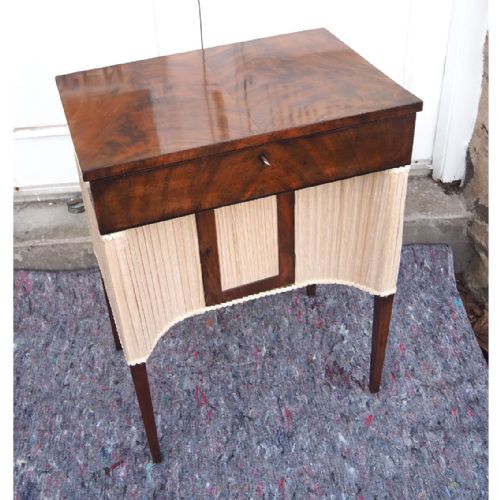
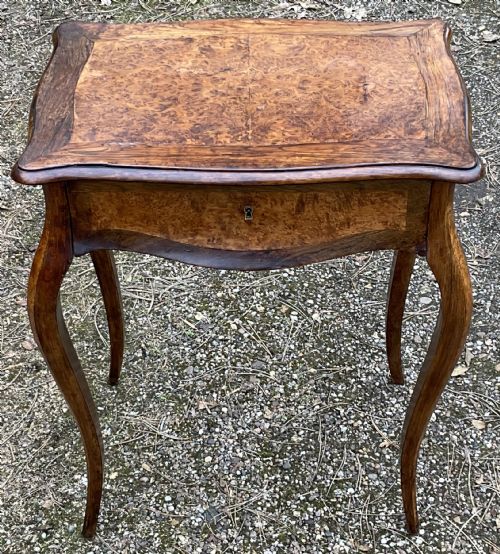
A victorian lady work table combines domestic craft storage with refined nineteenth-century reception room elegance, offering a fitted interior for needlework alongside a decorative surface.
Victorian Lady Work Table
A victorian lady work table is typically encountered as a compact piece designed for sewing, writing, or dressing, emerging in forms such as work tables, sewing tables, and occasional tables. These pieces date across the nineteenth century, including specific periods like the eighteen-eighties and late Victorian eras, reflecting the domestic habits of the period. The most common versions feature fitted interiors beneath a hinged top, supported by finely turned or carved legs.
Makers and craftsmen of the era utilised specific regional woods and revival aesthetics to suit formal drawing rooms and boudoirs. Examples span English and Irish workshops, occasionally displaying French Rococo or Sheraton Revival influences alongside straightforward Victorian utilitarian design. Buyers frequently encounter variations that double as writing desks or jewellery tables, demonstrating the adaptable nature of these nineteenth-century furnishings.
Materials and Construction
Cabinetmakers constructed these tables from dense cabinet timbers, heavily favouring walnut, burr walnut, flame mahogany, and rosewood. Decorative elements often included marquetry inlay, brass mounts, and ormolu detailing, particularly on pieces influenced by French Louis revival styles. Tortoiseshell and specialised fabric linings were integrated into the interior compartments of sewing boxes and poudreuses.
Structural integrity relied on traditional joinery suited to delicate domestic furniture, accommodating hinged lids and internal sliding trays. Surfaces were frequently polished to highlight the natural grain patterns of the wood, whilst ebonised and painted finishes appeared on later nineteenth-century examples. Ormolu mounts and brass hardware were mechanically secured to enhance both the structural corners and the decorative presentation.
A sewing table built to hide your darning whilst pretending to be a very serious desk.
Evaluating Craftsmanship and Materials
The sophistication of the internal compartments heavily influences the standard of the piece. Tables featuring fully fitted interiors with original fabric, lidded compartments, and integrated writing or sewing trays display a higher degree of initial craftsmanship. The integration of structural elements, such as smoothly operating drawers and well-fitted hinges, marks the distinction between ordinary utility items and superior parlour furniture.
Waring and Gillow
The Victorian Lady Work Table Glossary
- Burr walnut
- A highly figured wood grain obtained from the wart-like growths on walnut trees. It provides an ornamental surface pattern prized for cabinet veneers.
- Marquetry
- The art of applying pieces of veneer to a structure to form decorative patterns. Craftsmen utilised various coloured woods to create intricate pictorial designs on table tops.
- Ormolu
- Gilt bronze ornamentation applied to furniture mounts. This technique provides a metallic golden contrast against dark cabinet timbers.
- Poudreuse
- A type of dressing table equipped with mirrors and compartments for cosmetics. These pieces often overlap in form with nineteenth-century work and sewing tables.
- Sheraton Revival
- A late nineteenth-century design style inspired by eighteenth-century neoclassical cabinetmaker furniture. It typically incorporates lighter mahogany timbers and restrained inlay work.
Victorian Lady Work Table: Frequently Asked Questions
What is a victorian lady work table used for?
These tables served as designated stations for needlework, sewing, and correspondence in the nineteenth-century home. The fitted interior compartments kept threads, needles, and small personal items organised beneath the closed lid.
When closed, the upper surface functioned as an occasional table for lamps, books, or decorative objects within a drawing room or boudoir.
How do I identify different periods?
Early nineteenth-century examples often display Regency influences with clean mahogany lines, whilst mid-century pieces favour rich burr walnut and heavy proportions. Late Victorian items frequently incorporate revival styles such as Sheraton or French Rococo elements.
Material choice also assists dating, as ebonised finishes and specific marquetry patterns became particularly prominent during the final decades of the nineteenth century.
Where were these tables placed?
Owners positioned these furnishings in private sitting rooms, ladies' boudoirs, and formal drawing rooms where domestic handwork took place. Their compact footprint allowed them to sit beside chairs or against walls without obstructing room traffic.
The finished appearance of all four sides on better examples permitted placement away from walls as freestanding occasional pieces.
Are the interior fittings usually original?
Many surviving tables retain their original wooden compartmentalised trays and lidded compartments designed for sewing implements. Fabric linings and pincushions within the interior often show replacement over time due to natural wear during active use.
Buyers examine the construction of the internal framework to determine whether the layout matches the period of the outer cabinet.