

Walnut Pedestal Writing Desk
These heavy pedestals support serious study, and a walnut pedestal writing desk brings deep timber grain and fitted drawers straight to the centre of the room.
Walnut Pedestal Writing Desk
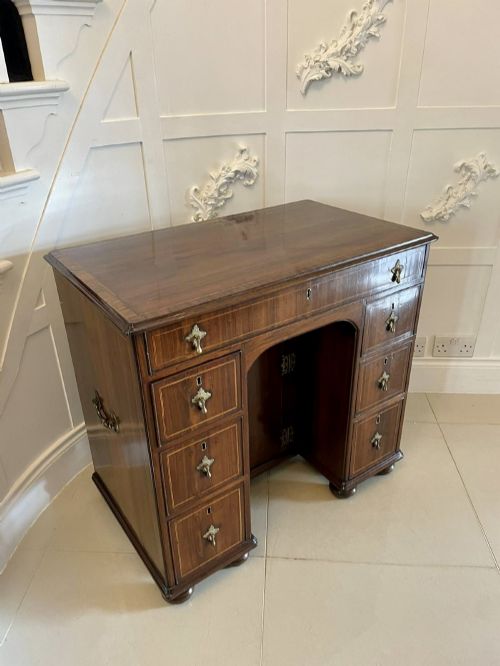
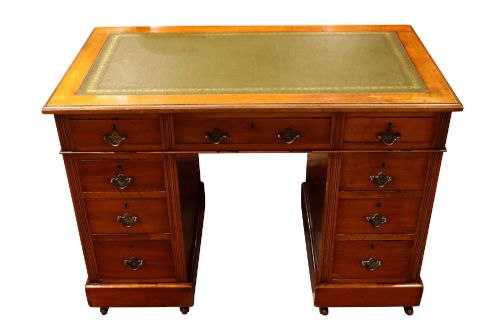
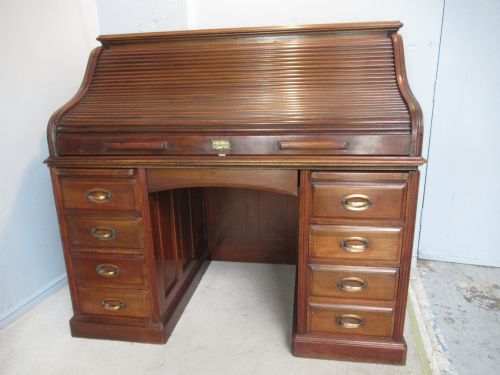
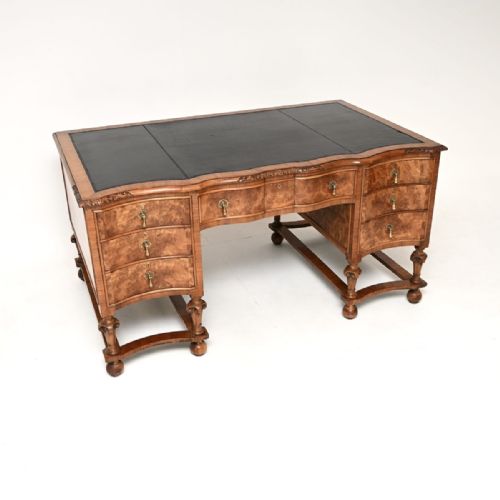
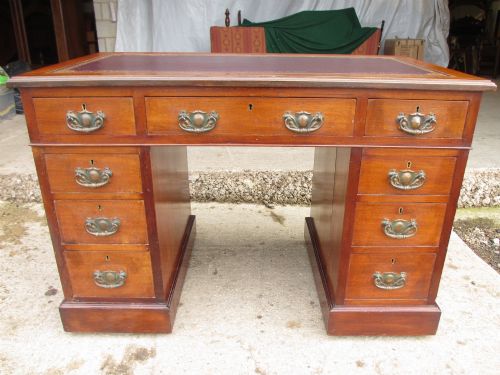
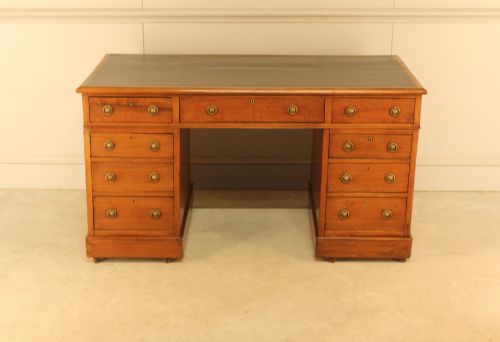
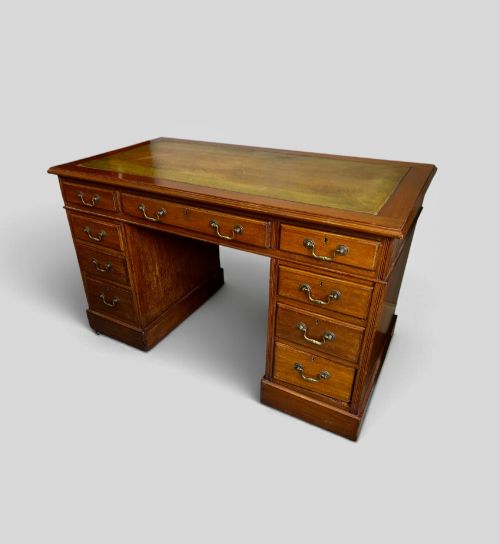
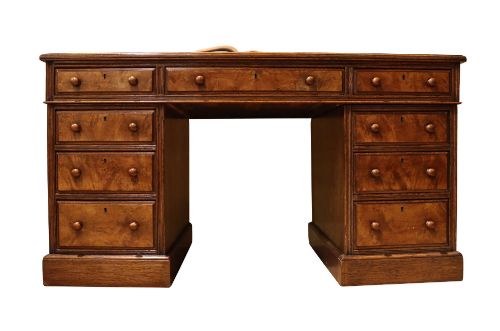
A walnut pedestal writing desk provides a substantial working station featuring twin banks of drawers supporting a central writing surface. The form accommodates seated writing while offering abundant enclosed storage beneath.
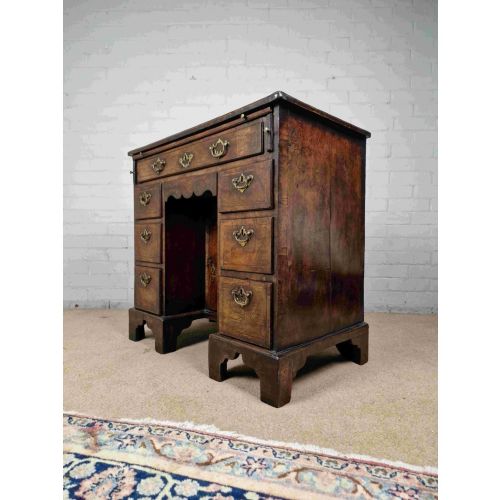
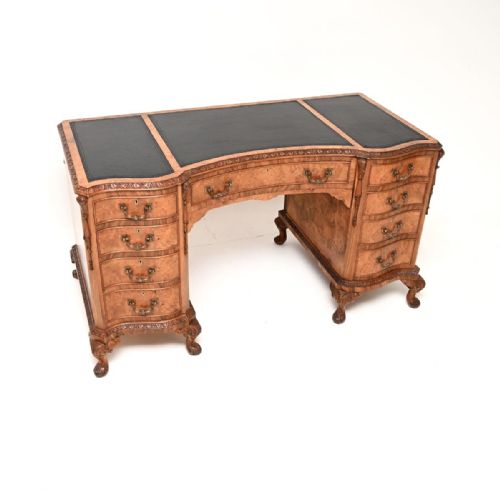
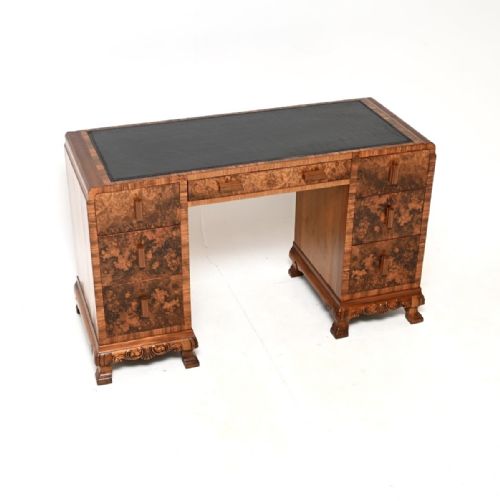
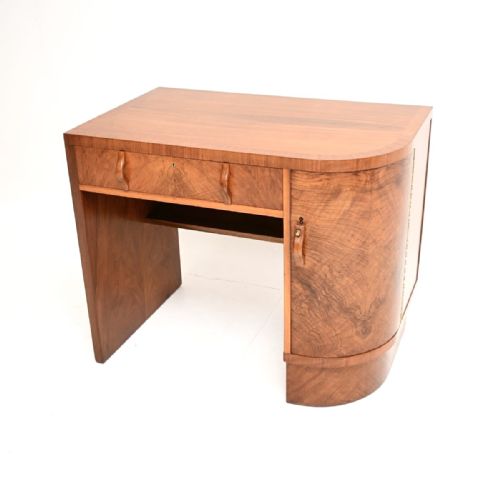
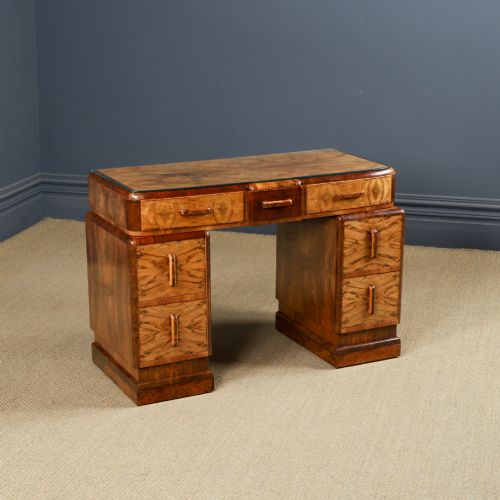
Victorian and Edwardian iterations dominate current selections, alongside Georgian kneehole examples and twentieth-century Art Deco interpretations. Buyers encounter compact nineteenth-century pieces as well as larger partners desks designed for simultaneous use from opposing sides.
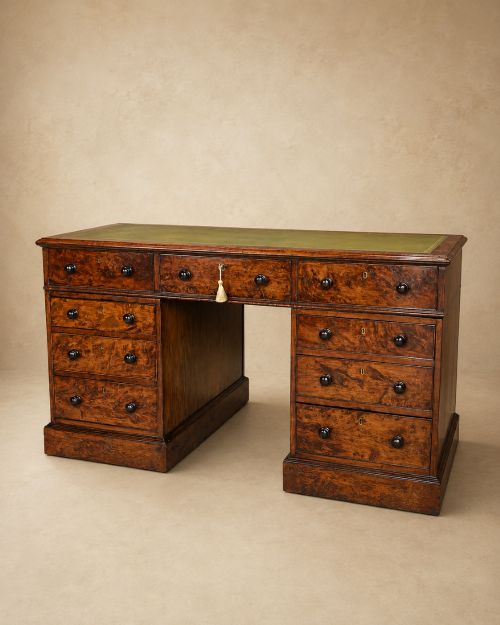
Surfaces frequently incorporate inset leather writing panels framed by rich burr timber veneers. These functional centrepieces suit private studies and executive libraries alike.
How they were made
Craftsmen utilised solid walnut, oak, and occasionally yewwood as structural carcasing, applying figured burr walnut veneer across drawer fronts and top panels to display decorative grain patterns. Secondary timbers like oak reinforce drawer linings and internal framing.
Brass hardware including drop handles, key escutcheons, and castors accentuates the warm timber tones. Writing surfaces are inset with tooled leather, secured with paste or hide glue above timber substrates.
Listings feature walnut pedestal writing desks spanning the 18th century through the Art Deco era of the 1930s, incorporating brass, leather, and oak.
What varies in quality
The selection of veneer dictates visual impact, with symmetrical burr walnut figuring commanding attention above plain timber surfaces. Uniformity of grain matching across multiple drawers signals meticulous workshop execution.
Secondary construction details separate standard commercial output from exceptional cabinetwork. Dovetailed drawer joints, solid oak drawer linings, and original brass fittings elevate a piece significantly.
Maple and Co·Betty Joel·Heals·Angus of London·Horrocks Desk Company·Shoolbred
The Walnut Pedestal Writing Desk Glossary
- Burr walnut
- Timber harvested from tree growths that produce intricate, swirling grain patterns highly prized for decorative veneer work. Cabinetmakers sliced these burls into thin leaves to cover primary surfaces.
- Kneehole desk
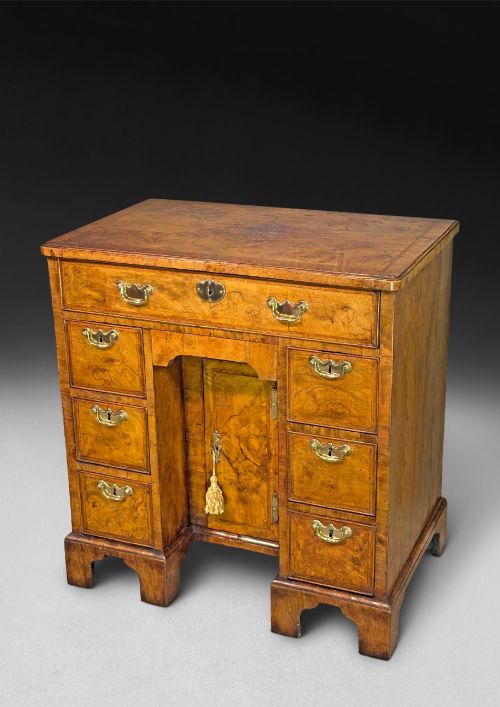
- A compact pedestal desk featuring a central recessed space for the legs beneath a single shallow drawer. This traditional form dates back to the Georgian era.
- Partners desk
- A large pedestal desk designed with drawers and cupboards on both opposing sides to accommodate two users simultaneously. These pieces typically occupy the centre of spacious rooms.
- Pedestal desk
- A freestanding desk comprising two supporting stacks of drawers connected by a desktop. The twin pedestals lift the writing surface from the floor.
- Tooled leather
- Leather writing surfaces decorated with gold leaf impressions along the perimeter borders. Bookbinders applied heated brass tools to create these ornamental patterns.
Walnut Pedestal Writing Desk: Frequently Asked Questions
How do I care for the leather top?
The inset leather writing surface requires gentle cleaning with a slightly damp cloth to remove dust and debris. Avoid harsh chemical cleaners that strip the original dye and gold tooling.
Periodic application of leather balm maintains suppleness and prevents the hide from drying out over decades of use.
What distinguishes an 18th-century kneehole desk?
Eighteenth-century kneehole desks are typically smaller in scale than Victorian counterparts and feature fine cabinetmaking details like herringbone stringing. They often display George I or Georgian styling with bracket feet and fiddleback walnut veneers.
These early examples emphasise compartmented storage within the central kneehole recess behind a small cupboard door.
Where should I place a pedestal desk?
Pedestal desks possess finished backs and sides, allowing them to sit prominently in the middle of a room rather than pushed against a wall. This positioning displays the timber grain from all angles.
Ensure adequate clearance around the desk for chair movement and drawer access before final placement.