
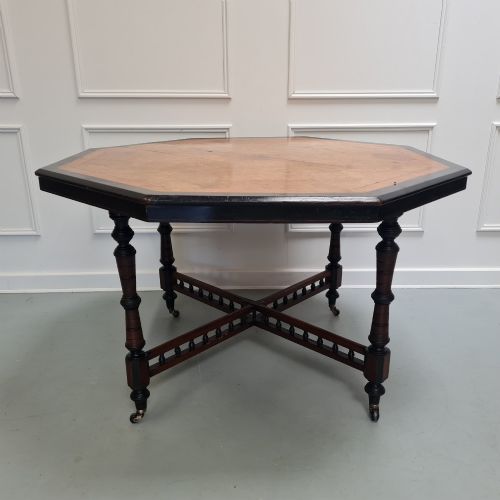
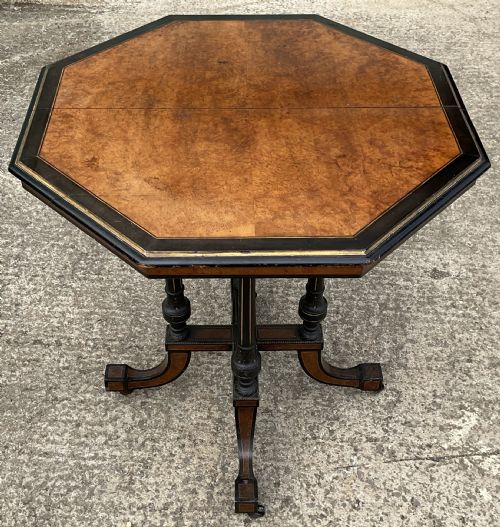
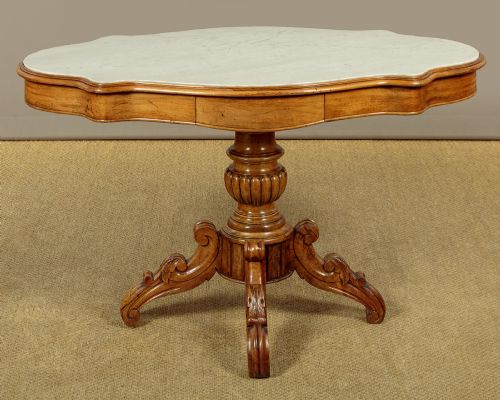
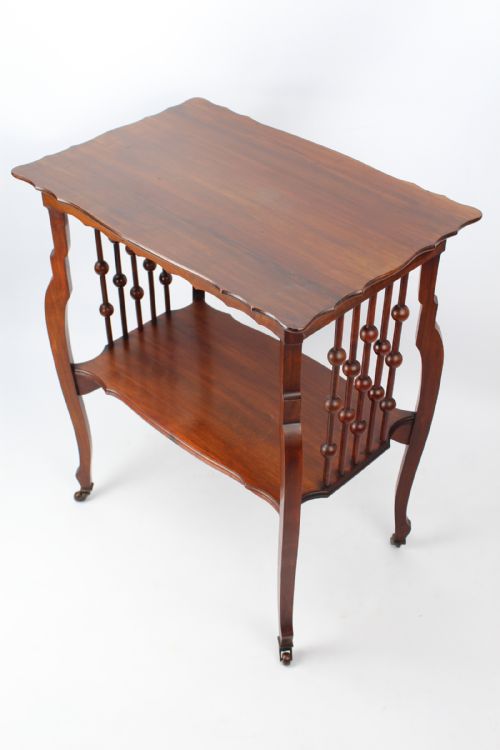


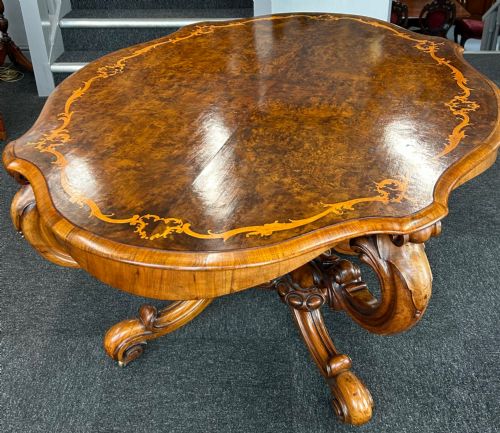


Walnut Parlour Table
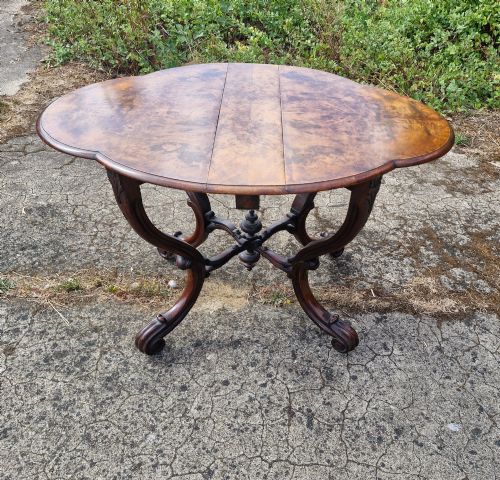
A walnut parlour table is a nineteenth or early twentieth-century centre or occasional piece designed to anchor a principal reception room.
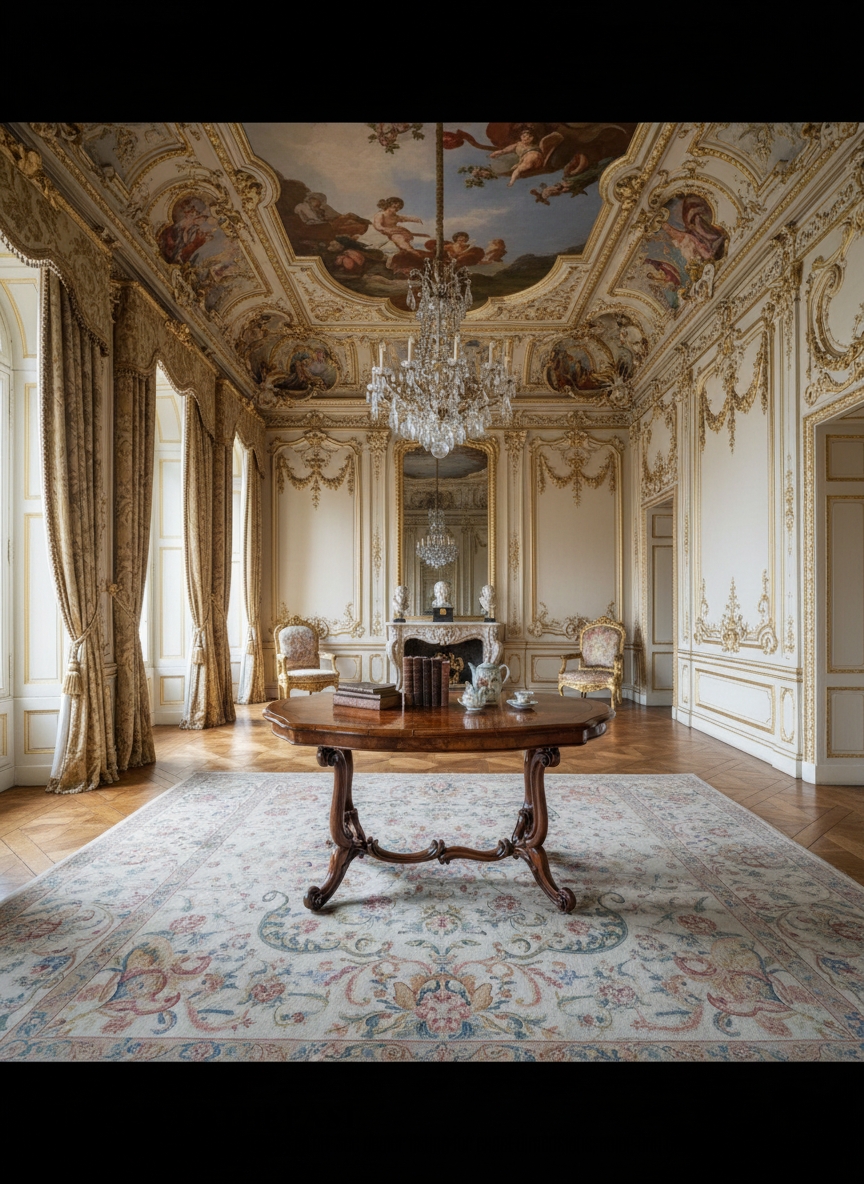
Walnut Parlour Table
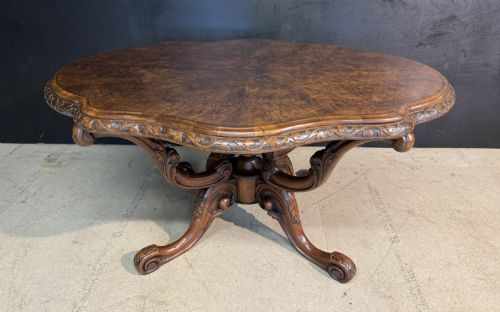
When you search for a walnut parlour table, you encounter nineteenth-century and early twentieth-century centre tables, occasional pieces, and loo tables originating from Victorian, Edwardian, and French workshops. These pieces served as functional display surfaces in formal rooms, often taking circular, oval, or octagonal shapes supported by pedestals, pillar columns, or scissor actions.
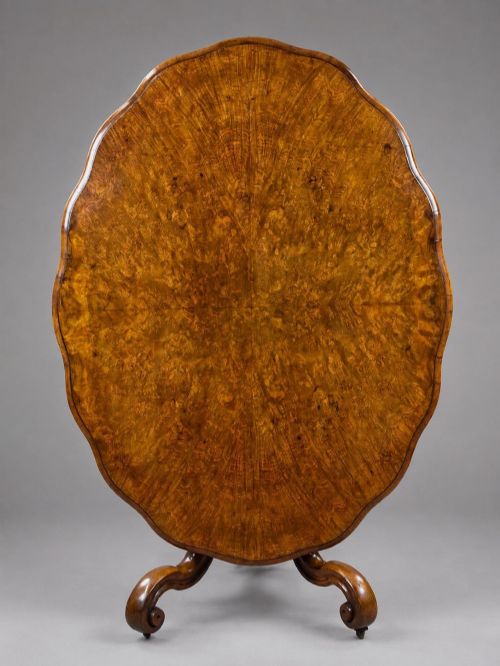
On this page, you are most likely to meet Victorian burr walnut centre tables and inlaid occasional tables featuring rich figured wood grains. Examples range from compact window tables and two-tier occasional stands to large pedestal tables and marble-topped designs built for display.
The material palette spans standard walnut and figured burr walnut, frequently enriched with boxwood and marquetry inlay, ebonised wood details, or brass mounts. Alongside English Victorian and Edwardian items, French Louis XVI style and Aesthetic Movement pieces appear, demonstrating diverse regional interpretations of the form.
Assessing quality in construction and design
Quality rests in the selection of the timber, particularly the depth of figure in burr walnut veneers and the crispness of marquetry and boxwood inlay. Superior examples display seamless veneer matching and precise joinery on pedestal bases and tilt mechanisms.
The ambition of the design dictates the tier of the piece, distinguishing standard occasional tables from elaborate library drum tables or large freestanding basket-base centre tables with intricate brass and ceramic details.
Listings span the Victorian, Edwardian, and Art Deco periods, featuring walnut, burr walnut, brass, marble, and marquetry inlay.
James Winter·Thonet·Gillows of Lancaster
The Walnut Parlour Table Glossary
- Burr walnut
- A figured timber obtained from the wart-like growths on walnut trees, prized for its swirling, highly decorative grain patterns. It is frequently sliced into veneers for table tops.
- Marquetry inlay
- The art of applying small pieces of veneer to a structural panel to form decorative patterns and pictorial scenes. Boxwood is commonly utilised within these designs for light contrast.
- Loo table
- A large Victorian card and conversation table featuring a tilting top supported by a central pillar and tripod or pedestal base. The tilt mechanism allowed the table to be stored against a wall when not in use.
- Ebonised wood
- Timber treated with a dark stain or finish to imitate ebony. This technique appears frequently on nineteenth-century Aesthetic Movement tables.
- Occasional table
- A small, versatile stand used for lamps, books, or decorative objects within a parlour or drawing room. These pieces emerged in various geometric shapes during the Victorian and Edwardian periods.
Walnut Parlour Table: Frequently Asked Questions
What is a walnut parlour table used for?
These tables served as central display surfaces in Victorian and Edwardian reception rooms for lamps, books, and decorative objects. Larger versions like loo tables functioned as gathering points for conversation or card games.
Today, they adapt easily into living spaces as coffee tables, lamp tables, or statement centrepieces in a hallway.
How do I tell a Victorian table from an Edwardian one?
Victorian examples tend to feature heavy burr walnut veneers, dark finishes, and ornate marquetry inlay with pillar and pedestal bases. Edwardian pieces often display lighter satin walnut or refined walnut frames with simpler geometric inlay and occasional two-tier structures.
Examining the construction methods and secondary timbers beneath the table helps confirm the manufacturing era.
Are marble top walnut tables original?
Many nineteenth-century French and English walnut tables were manufactured specifically with inset white or grey marble tops to provide a durable, heat-resistant surface for lamps and plants. These heavy stone slabs sit within a rebated wooden frame designed to support the weight.
Checking the fit against the walnut moulding ensures the top aligns with the period of the base.
How do I care for antique walnut furniture?
Keep walnut tables away from direct sunlight and heat sources to prevent the wood veneers from drying out and lifting. Regular dusting with a soft, dry cloth maintains the polish without building up residue.
Applying a traditional beeswax polish occasionally helps nourish the burr walnut grain and protect the surface from minor scuffs.