





Edwardian Window Table
An Edwardian window table is a light, versatile occasional piece designed to sit in a bay or by a casement to hold plants and lamps.
What an Edwardian Window Table Is
When searching for an Edwardian window table, you are looking at lightweight occasional and side tables designed during the Edwardian period, around 1900 to 1910. These versatile forms were made to sit in bay windows or alongside seating to hold decorative objects and lighting. The pieces on this page appear primarily in mahogany and walnut, alongside occasional examples in oak and fruitwood veneers.
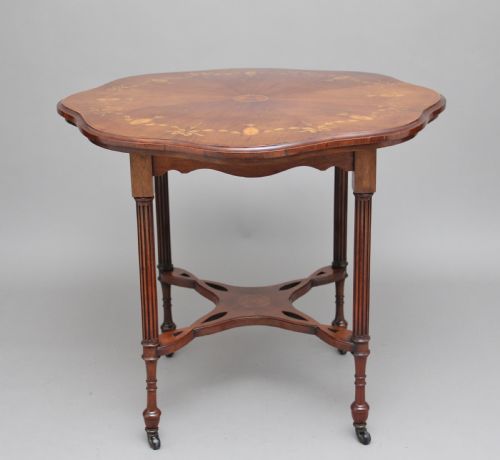
The surviving selection includes distinct surface geometries, ranging from traditional oval and octagonal tops to geometric parquetry decorated centre tables. Many of these forms double as occasional or lamp tables, while earlier archived pieces show occasional integration with rosewood and barley twist supports. Their compact proportions allowed homeowners to move them easily around the room to catch the natural light from a window.
How They Were Made
Cabinetmakers constructed these tables using a foundation of solid timbers such as mahogany, walnut, and oak, frequently applying fruitwood veneers to achieve smooth, patterned surfaces. Construction often involved turning techniques for supports, seen in details like barley twists on oak examples.
Surface decoration frequently relied on contrasting timber elements, incorporating wood inlay and satinwood inlay to create geometric parquetry patterns and delicate borders. These decorative techniques highlighted the natural grain of the primary wood while adding visual lightness suited to the period's interior taste.
Listings for Edwardian window tables feature mahogany, walnut, and oak, alongside geometric parquetry and inlaid satinwood.
What Varies in Quality
Quality in these tables rests upon the selection of timber and the precision of the decorative details. Examples featuring intricate wood inlay, satinwood inlay, or geometric parquetry demonstrate a higher level of cabinetmaking ambition than plain counterparts.
The handling of secondary timbers and the crispness of turned or shaped supports also distinguish finer pieces. Walnut and figured mahogany veneers applied with careful alignment separate standard production from more accomplished workshop output.
The Edwardian Window Table Glossary
- Window Table
- A small occasional table designed to fit within a bay window. These pieces typically feature an oval, octagonal, or hexagonal top to suit angled window spaces.
- Parquetry
- A geometric mosaic of wood pieces used for decorative floors and tabletops. This technique appears on finer tables to create patterned surfaces from contrasting timbers.
- Inlay
- A method of ornamenting a surface by inserting pieces of contrasting material into recessed areas. Satinwood and fruitwood were frequently utilised for this purpose.
- Barley Twist
- A type of turned furniture support resembling a twisted rope. This detail adds texture and visual weight to the legs of specific oak examples.
Frequently Asked Questions
What is an Edwardian window table?
An Edwardian window table is a light occasional table built around 1900 to 1910, designed to sit in a bay window.
These pieces typically feature oval, octagonal, or hexagonal tops in mahogany, walnut, or oak, providing a stable surface for lamps and plants.
How were these tables used?
These tables were positioned by casements and in bay windows to catch natural daylight while holding decorative items.
Their lightweight construction also allowed them to function as general side or occasional tables moved easily around the living space.
What woods were commonly used?
Makers relied heavily on mahogany and walnut as primary timbers for these tables, alongside occasional examples in oak and fruitwood veneers.
Satinwood and light wood inlay were frequently added to create geometric patterns and contrasting borders.
How do I identify the period?
The Edwardian period spans from 1901 to 1910, marked by lighter proportions and refined decorative inlays compared to heavier Victorian furniture.
Characteristic top shapes like octagonal and oval designs combined with mahogany or walnut construction point directly to this era.