
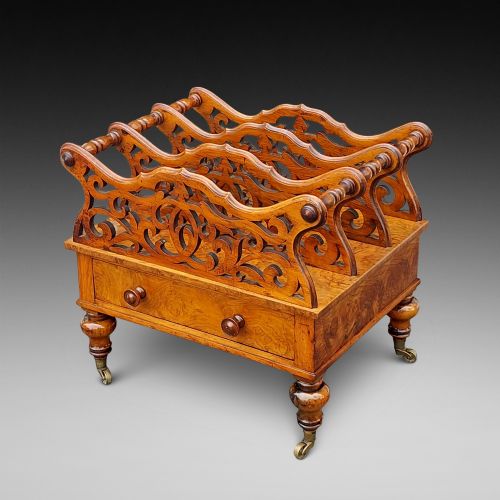
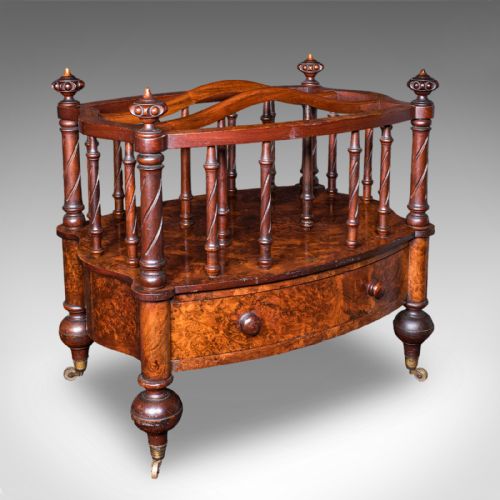


Walnut Newspaper Rack
These walnut newspaper rack examples combine rich timber and practical design, offering collectors a striking piece of nineteenth-century furniture for the home.
Walnut Newspaper Rack
A walnut newspaper rack, often catalogued as a Canterbury or magazine stand, serves as a dedicated receptacle for periodicals and journals within nineteenth-century interiors. These pieces appear frequently in Victorian and Regency iterations, ranging from freestanding stands to low compartmentalised tables.
Makers utilised timber varieties including burr, figured, and inlaid walnut, frequently combining the wood with brass details, copper, or boxwood stringing. These objects demonstrate the nineteenth-century taste for domestic organisation coupled with decorative cabinetwork.
How they were made
Cabinetmakers constructed these pieces primarily from solid walnut and figured veneers, often selecting burr walnut to create highly decorative patterned surfaces across the main panels and top tiers. Wood inlay and boxwood stringing frequently embellished the exterior faces, showing precise marquetry techniques common in nineteenth-century workshops.
Metalwork played a structural and decorative role, with makers incorporating brass spindles, carrying handles, and copper accents alongside iron internal components. Freestanding pieces utilised sturdy timber frames designed to support heavy volumes while remaining portable enough for domestic use.
Some nineteenth-century readers apparently required brass castors beneath their newspapers so the stand could follow them across the Turkey carpet.
What varies in quality
The degree of figuration in the timber and the precision of the inlay largely determine the standard of an individual piece, with burr and figured walnut commanding greater visual presence. Workshops such as Edwards and Roberts or Shoolbred produced furniture with superior timber selection and refined cabinet joints.
Proportion and structural complexity separate standard magazine stands from elaborate multipurpose items like lamp tables combined with canterburys. The integration of high-grade brass mounts and crisp boxwood stringing indicates superior craftsmanship during the Victorian period.
Edwards and Roberts·Shoolbred
The Walnut Newspaper Rack Glossary
- Canterbury
- A low freestanding stand fitted with upright partitions, designed to hold sheet music, newspapers, or magazines. The form originated in the late eighteenth century and remained popular throughout the Victorian era.
- Burr Walnut
- A distinctive timber cut from the abnormal growths of a walnut tree, prized for its swirling, highly figured grain pattern. Cabinetmakers used burr walnut veneers on prominent surfaces to create decorative effect.
- Boxwood
- A dense, pale yellow wood frequently utilised for fine stringing, inlay work, and contrasting details on nineteenth-century furniture. It provides a sharp visual boundary against darker timbers like walnut.
- Regency
- An English design period spanning the early nineteenth century, noted for classical restraint and refined proportions. Pieces from this era often feature clean lines alongside dark woods.
Walnut Newspaper Rack: Frequently Asked Questions
What is a Canterbury?
A Canterbury is a traditional furniture piece featuring upright partitions designed to hold newspapers, magazines, or music sheets. They typically sit low to the ground and may include castors for mobility.
Many examples incorporate additional tiers, drawers, or table surfaces, allowing them to function simultaneously as lamp tables or occasional stands in a nineteenth-century parlour.
How do I date a walnut magazine stand?
Dating relies on examining the construction methods, timber selection, and stylistic markers such as inlay techniques and hardware design. Victorian pieces often display figured walnut veneers alongside brass or boxwood details.
Cabinetmaker stamps or paper labels, when present, offer a direct link to specific nineteenth-century firms and precise decades of production.
Where were these racks placed?
These stands occupied prominent positions in nineteenth-century sitting rooms, drawing rooms, and studies where daily newspapers and periodicals accumulated. Their portable nature allowed servants or residents to move them near seating areas.
Freestanding versions were designed to be viewed from all sides, often standing beside armchairs or sofas for immediate access to reading material.
What is figured walnut?
Figured walnut describes wood grain that displays unusual patterns, swirls, or mottling, created by natural irregularities in the growth of the tree. Cabinetmakers sliced this timber into thin veneers to display the decorative grain across flat surfaces.
This material was favoured by nineteenth-century makers for high-status occasional furniture and canterburys, where visual richness mattered most.