


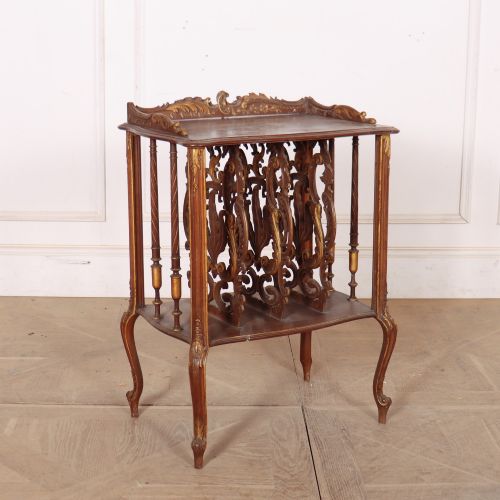


Carved Walnut Music Stand
A carved walnut music stand brings rich grain and practical tiered storage to a room, drawing the eye with warm timber and fine carving.
Carved Walnut Music Stand
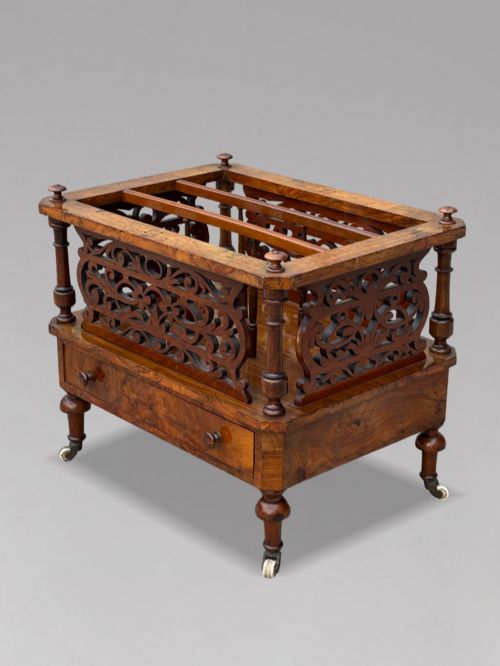
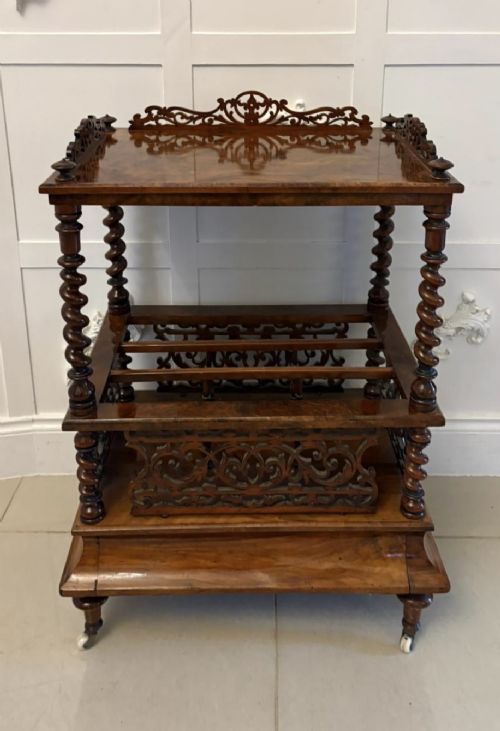
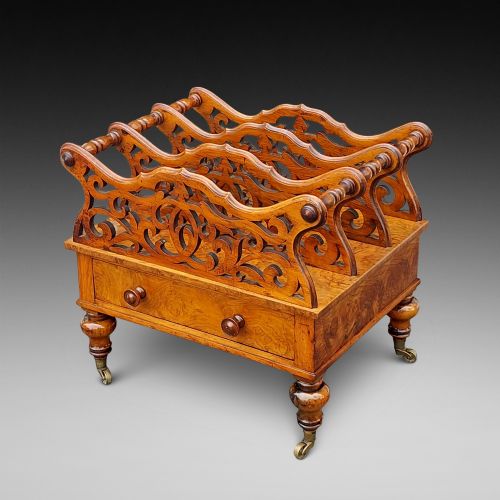
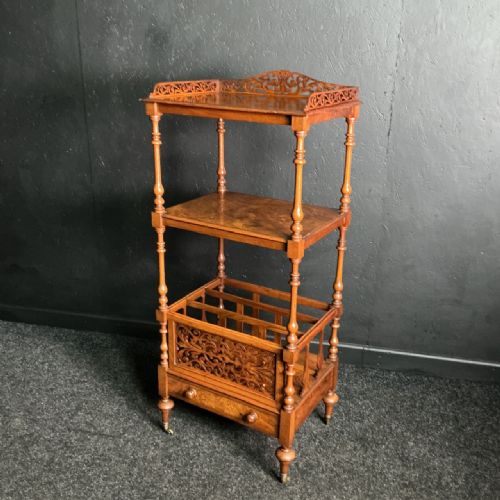
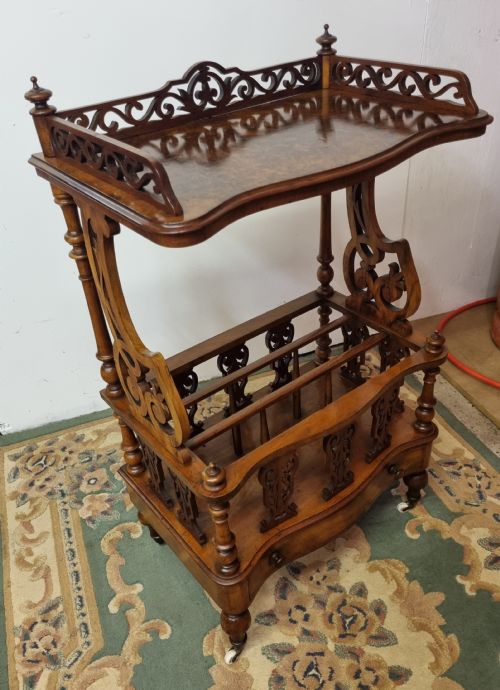
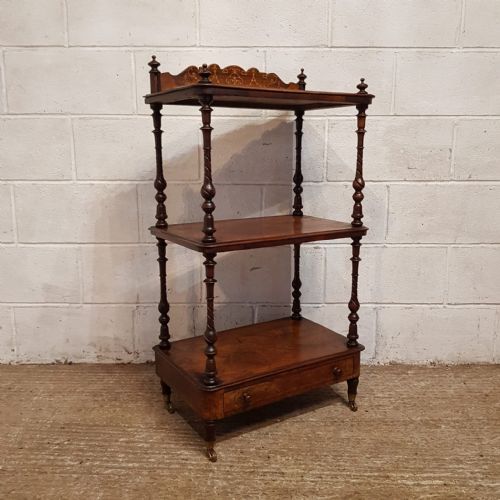
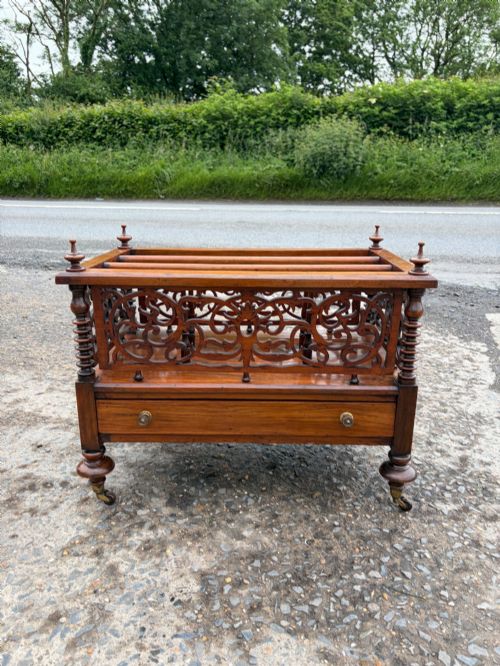
When you search for a carved walnut music stand, you find a collection spanning Victorian, Edwardian, and Regency periods, alongside forms like canterburys, music cabinets, and whatnots. These pieces serve as functional stands, magazine racks, and lamp tables, uniting timber storage with display shelves.
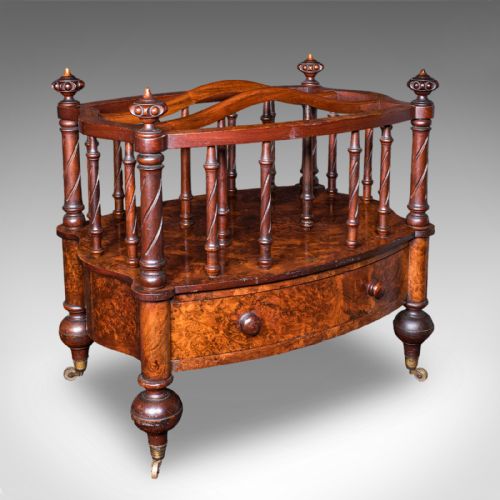
The pieces on this page are most frequently Victorian and 19th-century burr walnut canterburys, often featuring serpentine shapes, lower drawers, and carved supports. Alongside these stand Edwardian music cabinets and specialised folio stands.
Makers such as Gabriel Viardot contribute to the range with French Art Nouveau and Japonisme influences, while Black Forest pieces introduce deeply carved animal or foliage motifs into the selection.
How they were made
Cabinet makers utilised solid walnut and decorative burr walnut veneers to construct these stands, capitalising on the rich figuring of the timber. Wood inlay, fretwork, and detailed carving define the surface ornamentation across the period.
Metal elements appear in brass fittings, gilt bronze mounts, and handles, while ceramic and glass components occasionally form part of the detailing on cabinets and whatnots.
Some Victorian canterburys double as impromptu resting spots for sleepy household cats seeking warm burr walnut.
What varies in quality
The choice of timber creates the primary distinction in quality, moving from plain walnut to highly figured burr walnut with matching grain patterns across the panels. Crispness in the hand-carving and precision in the wood inlay separate standard production from exceptional examples.
Structural complexity also dictates worth, as pieces incorporating multiple tiers, serpentine shapes, fitted drawers, and integrated brass castors demand greater joinery skill than simple open racks.
Gabriel Viardot
The Carved Walnut Music Stand Glossary
- Canterbury
- A low stand with partitioned sections for holding sheet music, folios, or newspapers, often mounted on castors with a single drawer below. These pieces originated in the late 18th century and evolved through the Victorian era into combined lamp tables and whatnots.
- Burr Walnut
- A timber derived from the wart-like growths on walnut trees, yielding complex, swirling grain patterns highly prized for veneer work. Cabinet makers used it on the principal surfaces of fine Victorian and Edwardian furniture.
- Whatnot
- An open set of freestanding shelves supported by slender columns, designed for displaying ornaments, books, or writing materials. They frequently combine with canterburys and music cabinets in mid-Victorian interiors.
- Japonisme
- A late 19th-century style influenced by Japanese art and design, seen in asymmetric layouts and characteristic carved motifs. Makers like Gabriel Viardot incorporated these aesthetics into cabinet work.
- Serpentine
- A furniture shape featuring a curved front with a convex centre flanked by concave curves. This contour requires skilled carpentry to shape the solid timber and veneer.
Carved Walnut Music Stand: Frequently Asked Questions
What is a music canterbury?
A music canterbury is a low compartmentalised stand designed specifically to store sheet music, folios, and periodicals within easy reach of a piano or seating area. They often include a small drawer at the base for smaller accessories.
During the Victorian period, these stands evolved to incorporate display shelves and table tops, serving dual purposes as occasional tables or lamp stands in the drawing room.
How do I date a walnut music cabinet?
Dating relies on examining the timber preparation, the style of carving, and the overall form. Victorian pieces frequently employ richly figured burr walnut and serpentine shapes, sometimes featuring intricate fretwork.
Edwardian examples tend to have slimmer proportions and lighter framing, while pieces showing French Art Nouveau or Japonisme influences point toward the turn of the twentieth century.
Where were these stands used?
These stands found their place primarily in the Victorian or Edwardian drawing room or music room, positioned beside pianos, writing desks, or seating groups to hold reading materials and scores.
Because many examples double as lamp tables or whatnots, they also functioned as general display furniture for ornaments and small objects throughout the home.