
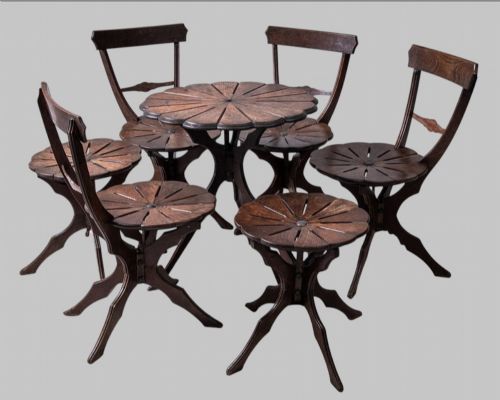


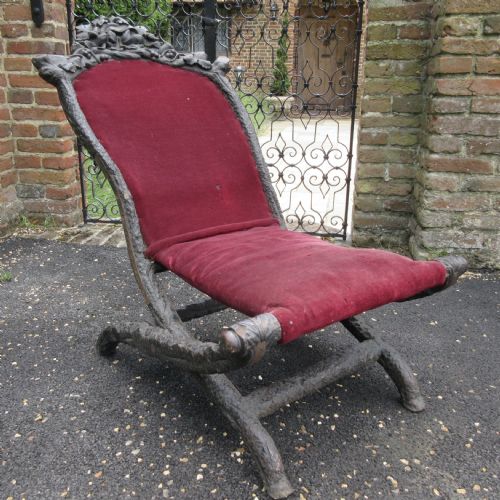
Black Forest Carved Furniture
Black forest carved furniture brings woodland animal figures and rustic alpine craft directly into the home through highly detailed naturalistic woodwork.
Black Forest Carved Furniture
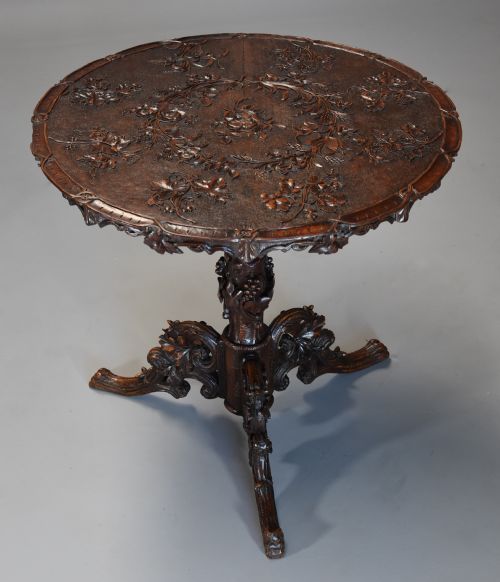
Black forest carved furniture encompasses functional household items embellished with deep, figurative woodcarving depicting bears, hounds, foxes, deer, and alpine foliage. Pieces range from large hall stands and benches to occasional tables, music stands, and parlour suites.
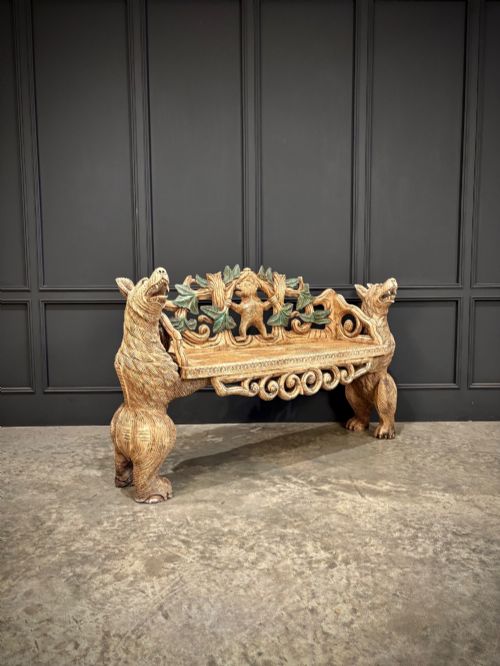
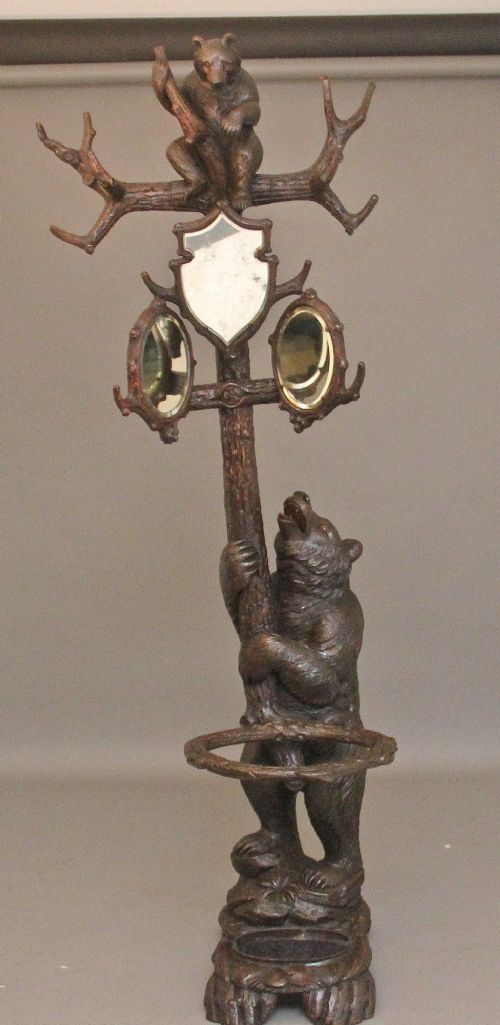
The objects frequently take literal sculptural forms, such as seated bears holding card trays, hounds supporting table tops, and deer antlers integrated into wall-hanging coat stands. You will most commonly encounter hall stands and benches featuring carved bears alongside smaller occasional tables.
Originating predominantly from nineteenth-century Swiss and South German workshops, these pieces bridge the gap between heavy Victorian utility and whimsical folk art. The style relies on distinct regional traditions where carvers transformed local timber into animate domestic furnishings.
How they were made
Makers utilised native European timbers, predominantly linden wood alongside walnut, oak, and general carved hardwood, which accepted intricate chisel work without splitting. Linden wood offered a soft, even grain that allowed carvers to achieve deep relief and lifelike fur textures.
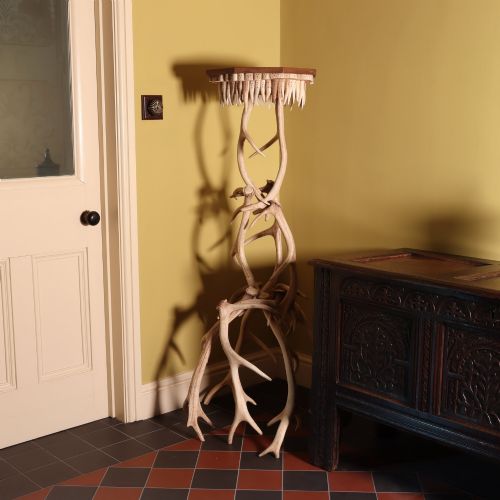
Structural elements frequently incorporated natural materials such as red deer antler, horn, and glass for animal eyes, combining taxidermy elements directly with timber frames. Joinery methods matched standard nineteenth-century cabinet making, while decorative surfaces received wax or oil finishes to highlight the grain.
Several pieces feature glass eyes peering out from carved bear fur, keeping a watchful, glassy-eyed guard over your hallway.
What varies in quality
The distinction between ordinary and exceptional examples rests entirely in the anatomical accuracy and depth of the carving. Master carvers rendered musculature, fur, and facial expressions with dynamic realism, whereas lesser pieces appear stiff and crudely proportioned.
Scale and ambition also dictate standing, as exhibition-quality exhibition pieces incorporate complex multi-animal groupings and architectural framework. Marquetry inlay, integrated musical movements, and unusual forms such as folding chairs or seated hounds elevate specific items above standard production.
The Black Forest Carved Furniture Glossary
- Linden wood
- A pale, fine-grained timber favoured by nineteenth-century carvers for its cooperative texture and lack of prominent grain. It permits minute detail in figurative sculpture.
- Hall stand
- A tall piece of hallway furniture combining a mirror, coat hooks, glove boxes, and a stick or umbrella stand. In this category, they often feature carved bears.
- Escabelle chair
- A traditional style of panelled wooden chair with a solid back and splayed legs, seen in Swiss alpine variants. They provide sturdy, upright seating.
- Marquetry
- The art of applying thin pieces of veneer to a structure to form decorative patterns. Walnut tables in this tradition frequently combine carved supports with inlaid tops.
- Torchiere
- A tall decorative stand or candlestick holder, sometimes constructed from natural antlers in alpine workshop traditions. They serve as vertical accent pieces in a room.
Black Forest Carved Furniture: Frequently Asked Questions
What rooms suit black forest furniture?
These pieces demand space and character, making entrance halls, libraries, and studies ideal locations for large hall stands and benches.
Smaller items like occasional tables and music stands integrate easily into living areas alongside traditional seating.
How do I care for carved wood?
Maintain the finish by dusting gently with a soft brush to reach deep into the carved fur and foliage crevices.
Apply a microcrystalline wax sparingly once a year to protect the timber without building up heavy residues.
Are all these pieces Swiss?
While the style centres heavily on Swiss alpine production, workshops in South Germany also generated significant quantities of carved animal furniture.
Distinguishing between regional origins relies on specific carving nuances and timber choices rather than strict stylistic boundaries.
How do I date these items?
Dating relies on examining construction methods, secondary timbers, and the integration of hardware such as brass coat hooks or mirror plates.
Most surviving examples date from the nineteenth century up to the early twentieth century, aligning with the height of Victorian rustic taste.